Okay, back to it with communications planning. After this and then this.
Once you know who your audience is you need to consider their relationship with the market, it's communications and your brand.
What's their relationship with the product/service? What about the category? What are th issues that matter to them? How do they choose? You need to get off your chair, away from the office and do this properly. Go and meet them, so you can find out what really matters – how does the product/category etc actually fit into their lives. How are people really using it?
In folklore, the cheeseburger was invented by JWT, although you can get they observed people making their own someplace.
Ikea knew that people were retreating into the home as recession bit, and was being reappraised as a safe place rather than an investment as the housing market crashed.
Pot Noodle found that it was an understandable weakness.
I think this bit is crucial – there's too much advertising in all it's guides, too many products. If you're going to cut through, you need to be relevant in people's real lives. You're competing against all sorts of stuff people find more interesting – so it makes to find what they're really interested in and work back from there.
Then you need to look at communications. What it everyone else doing? What are the rules? What can we challenge? If you've done the previous bit first, this should happen naturally. Once upon a time, all you had to do was look at what the category did and then do the opposite. That's how TBWA's Disruption worked and what HHCL used to base their thinking on. Problem these days, it that you can't assume the consumer's paying attention to anyone's work.
But still, directly breaking the category's conventions can and still can be powerful.
From Irn Bru poking fun at 1980 Coke's fresh faced teenagers.
To Dove challenging the perfect models everyone else tended to use (this went deeper of course, turning the beauty industry into a monster in general).
Finally, what's their relationship with the brand being advertised? How do they feel about it? How do we want to move the relationship on? It's very rare you ever need to re-cast a brand from scratch. But that said, it's amazing how many brands portray themselves as they want to be rather than how they actually are. Find out what positive associations people have, build on that. Pepsi will find it hard to not be about the youth generation, Sainsburys is about quality food etc.
Topline, this will all help you decide what strategy will deliver the objectives with the audience. What is the course of consumer behaviour, opinion etc you want to influence or change. In essence, what do you want people to think, feel or do that they are not right now, and what you know about the brand, consumer, market and especially culture that will help solve th problem.
Delve into the culture around the brand, delve into culture in the category – real culture, real lives. FInd the connection and bingo.
So that brings you to the core question.
What action to you want the target to take?
Successful, persuasive communication ends up in a change in behaviour. Of course you want people to think and feel different, but in the end, you want them to act. Communications may well change how they feel but that's always in order for them to act differently than before..carefully looking at the decision making process should help you define what behaviour you want to change.
Honda wanted people to test drive the cars, but they had to make the idea occur to them by making the brand interesting.
That Pot Noodle example before was about increasing frequency by making revel in their guilty pleasure rather than feel bad about it.
Lurpak wants people to take time over Saturday breakfast.
In one of the most famous case studies ever, Porsche wanted non-Porsche drivers to respect the drivers a little more as driving enthusiasts rather than image conscious wankers – so that considerers wouldn't be put off.
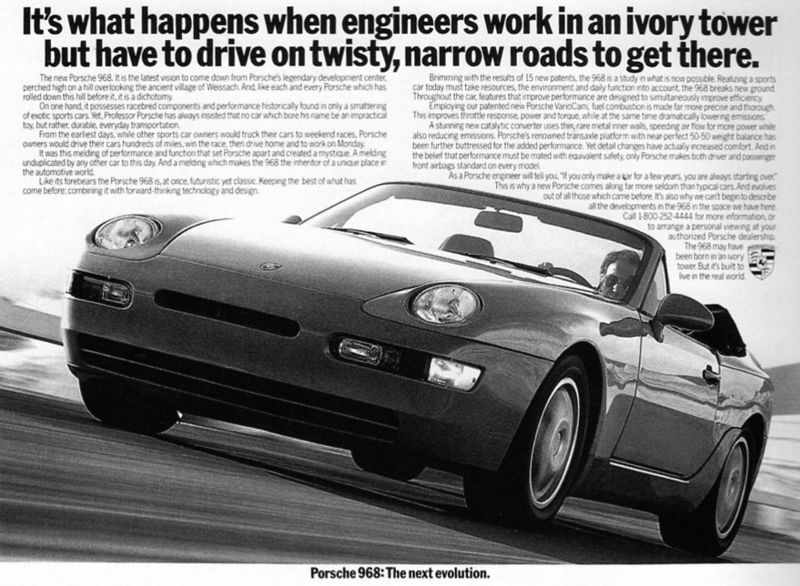
Playstation wanted to move beyond their loyal, cult fanbase by getting more people join in, making the games a fun social thing for all, rather than a solitary pursuit.
Morrisons wants new visitors by redefining the stores from cheap and old fashioned to th best place for fresh quality food.
So, to recap. What's the objective? What audience is big enough and has the right interests and characteristics? Delve into the brand culture and the consumer culture – pinpoint what you want them do. What behavioural change can you influence that will deliver the results you want.
Coming back to Sainsburys – if we can get every customer to spend one more pound with every visit we'll hit the numbers we need to.
We want to change their behaviour from sleep shoppers – a boring routine in the store and a boring eating routine at home, to experimenters.
The task for communcations is to encourage safe experimentation – 'Try something new today'.
That's all for now, promise this will be finished this week….


 NORTHERN PLANNER
Leave a comment