There's an old saying, "Ask 6 economists a question and you'll get 7 answers back", which sort of applies to creative, brand, advertising types too.
Look at this article about Tesco and the advice shared from industry luminaries. Look at how everyone has a different answer to the problem, in fact, one doesn't even think there is one.
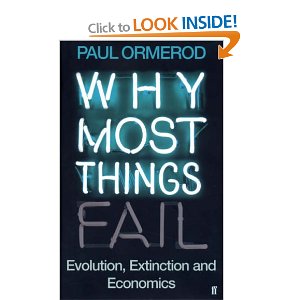
If you haven't read Why Most Things Fail by Paul Ormerod then you should. He shows with proper data (yet wonderfully readable prose) that organisations cannot hope to predict what will happen to their business, markets and the economies they operate in are exposed to far too many complex variables, at the heart of which you find capricious human beings who are wholly irational and refuse to behave like the textbooks say they do.
The only way to really future proof youself is to move forward or die, continuously innovating and creating that future, because no one, no matter what bollocks they spout really knows what will happen.
This what I think has happen to think has occured here. I agree that they forgot to make people care about them, but I also think they just stood still. Rather than innovating in a recession, or before it, not leading, they followed and cut prices.
Compare this to what someone once told me about Sainsburys. Back in early 2000's is was on it's knees. The 'experts' in this business said they needed to go back to advertising that made them 'good food heroes'. What this person told me was that the infrastructure was in pieces.Food quality wasn't quite as good, but even worse, basis distribution wasn't working.
Shoppers, first and foremost need to know the things on their lost will be on the shelves day in day out. They were not. Sainsburys new they needed to get their ducks in a row before even thinking about changing the communications. Even more telling, a considerable segment of Sainsburys shoppers WANTED Sainsburys to do well, they were frustrated and tried to shop there anyway, or would come back as soon as they believed the cock ups would end.They didn't need to feel good about the brand, they actually wanted it to be a succces.
How many people want Tesco to do well?
So it's probably fair to say that ads and stuff might help to recapture the public's imagination, but that's not Tesco's only problem because I doubt the problem is just a 'brand problem' . It's fundamental strategy on pricing, range and services – these are things that ads won't solve and need to be looked at too. But good agency partners can, and should, want to help with the strategy that informs this.
While Tesco sat on it's hands, Sainsburys and Waitrose changed their business model. When the economic shitstorm hit, they didn't just cut prices, they re-developed their entire offering with more value ranges and choice. Then they made people feel good about it. Morrisons on the other hand suffered orginaly by being too downmarket and re-developed their fresh 'market street' concept.
Which also says something about the danger of brand models that force a business to doggedly stick to a rigid positioning come hell or high water.
One final thing, look at the advice from Interbrand. Talk about giving someone a hammer and all he sees is a nail (Mark Twain), tone of voice? TONE OF VOICE!!!!?? Only a brand consultant could come up with that sort of advice. And I fundamentally disagree with Tesco cannot be a 'cuddly colossus'. Her insinuation is that very big companies can't make people feel strong emotions, can't make them feel something.
I know that these are very different markets, but here are some behemoths that make their customers feel something.

 NORTHERN PLANNER
Leave a comment