
The Smiths are famous for, shall we say, not having produced the sunniest cannon of music. For fans like me, the songs are witty, thoughtful and sometimes very funny, but, it has to be said mostly, they invoke an intense feeling of melancholy.This is good, in my view, human experience is not made of happy feelings, we're designed to feel all sorts of things and sadness can be good.
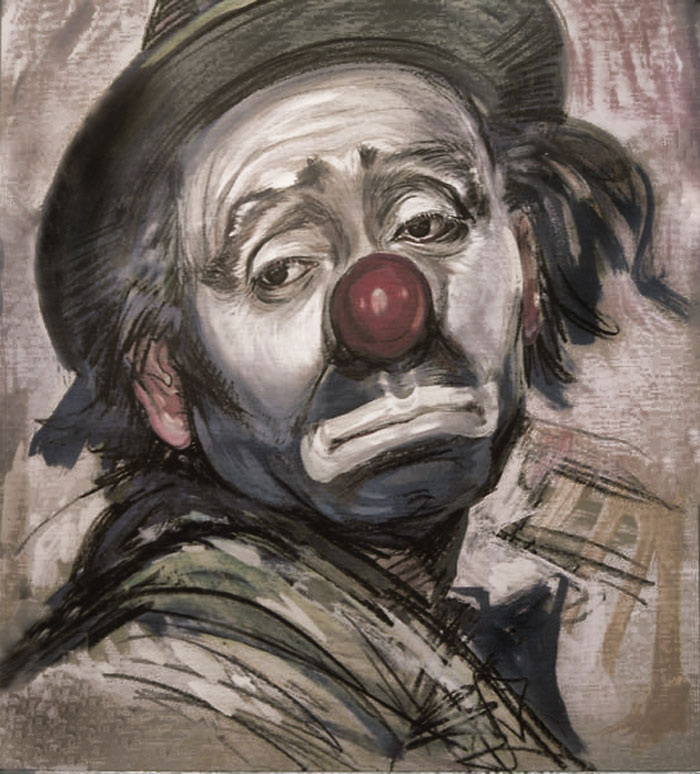
Anyway, this feeling of sadness is well established as a link to creativity as we'll see.
The professor of psychiatry Kay Redfield Jamison has studied the
biographies of famous English writers and poets, and concluded that
“famous writers were eight times as likely as people in the general
population to suffer from major depressive illness”.
The neuroscientist Nancy Andreasen performed a study on the dozens of
writers of a particular writer’s club (the Iowa Writer’s Workshop) and
came up with similar results – 80 percent of the
writers met the formal diagnostic criteria for some type of depression.
These findings have even been corroborated in the lab. For example,
the social psychologist Joe Forgas has repeatedly shown that sadness
tends to increase creativity. In one experiment, he
manipulated the moods of his subjects by showing them either a film clip
about cancer and death, or a neutral film clip. He then had his
subjects compose writing samples. What Forgas found is that his saddened
subjects composed considerably better writing samples. “Downcast…
subjects compose sentences that are clearer and more compelling… they
produced more refined prose, the words polished by their misery”
Yep, feeling sad would seem to make you more creative. Why?
The thread that unites the conclusions of all these experimenters and researchers is that sadness, melancholy etc makes us more attentive, focused and persistent in our work.
Just like amphetamines have helped famous poets and writers in the past, from Graham Greene to Auden, the quietness and heightened attention from sadness helps you focus on thoughts tumbling through your short term memory and connect them into new shapes, screening out the distractions and cacophany of extraneous stuff (and in Auden and Greene's case, producing a beatiful, sparing, taught writing style).
The distracting murmers of the mind disappear, and we are able to focus and persist with the hard work of focus, edit, precis, evaluate and edit precis and distil again. Continually looking at what is wrong with something to create something really, really right.
Two things on this.
First, depression is horrible, horrible and not worth any amount of creative firepower. Let's be clear on that.
Second, persistance and continual distilation is not the only form of creativity. It's the only guaranteed form, but the startling flashed of insight, those game changing epiphanies, tend to come from positive moods.
Sadness rarely brings a Eureka moment.
That's why there's such an incredible correlation between bipolar disorder and creativity. An illness that constantly lurches between intense sadness and over the top euphoria, while incredibly painful for the individual involved, can liberate both kinds of creativity.
The psychiatrist Hagop Akiskal found that “nearly two-thirds
of a sample of influential European artists were bipolar”.
In support of this, Nancy Andreasen—the same scientist who led the study
on the Iowa Writers Workshop—discovered that nearly 40 percent of the
creative people she investigated had the disorder – about twenty times higher than it is in the general population.
Naturally, only a fool would wish mental illness on anyone. But on the other hand, if you need craft a brief, write a proposal that sings or get a presentation taught, coherent and thought provoking. Listening to this just might help…..
But if you want to give yourself a chance to get a damascene flash of insight, make sure you change the mood, listen to this in the shower for example (the relaxing, comforting nature of the shower coaxes connections from the right side of he brain)………
And yes Rob Campbell, that really is a Queen track I'm posting, but I have to say that, personally, it makes me feel far sadder than the Smiths track.
Sources:
Imagine by Jonathan Lehrer
The back catalogue of the Smiths


 NORTHERN PLANNER
Leave a comment