This post about 'Would You' reminded me of one my favourite campaigns for police recruitment.
"Could you?"
Simple insight, we respect the hell out people who do what we cannot, in service of a simple problem – quality recruits, not quantity.
Great media thinking. Get to the chosen few by making them feel great in front of everyone else and putting off the undesirables at the same time.
Which brings me to a point about the merits of positioning the audience, rather than positioning the customer.
Now I don't do much 'brand positioning' stuff these days, now that most of what I do is comms planning. Which suits me fine as I don't really believe brand positioning is that useful externally.
Sure, internally for tone of voice consistency, media behaviour and all that jazz, but people really don't care how a brand is positioned and according to most of the data from Byron Sharp, they couldn't tell you what it's position is anyway, not even how the brand is different.
The only ones that can are the ones that matter little to growth, the wierdos that are loyal beyond reason. Not the lighter buyers who bring growth.
I don't believe most folks ever understood 'Just Do It'. The tag was so distinctive, it lodged in the brain. No one got what the hell 'The Future's Bright' meant, it just stood out.
As did '1984'. But in this case, just like Crazy Ones, in fact, just like 'Could You', it did the neat trick of not positioning the brand, but the kind of people who bought it.
No one got the sub-text of 'tools for creative minds' it just felt like it was the brand for people who didn't want to conform to the directives of 'the man'. We're back to the man-of-action archetype v the other directed man I guess.
Some of the most succesful campaigns ever focus more on behavioural reinforcement.
Not some trite mirroring of an insight or any of that rubbish, they play back an aspirational image of who their audience would like to believe they are, or could be. Usually resolving some deep tension in their lives.
Like Herbal Essences today, affirming a modern woman's right to choose her identity rather than conform to the expecations from all sides.
I reckon this approach unlocks a more integrated approach, by focusing on some shared attitude or behaviour with the customer (or something the customer would like to believe), lending itself to more social media and ideas customers can play a part in – the loyalists that might add some amplication I mean of course.
It's certainly less arrogant and self-absorbed than the usual 'tell people about yourself' approach to brand marketing.
Let's face it, who would you rather want to spend time with? Someone who talks about themself or someone who is more interested in you and what you care about?
Don't get me wrong, a brand needs a strong point of view (much more useful as distilation than an 'essence' or 'proposition') but it's so much more powerful if it's articulated- and the media is then targeted- as collusion with the hopes, dreams, issues and fears of your customers.
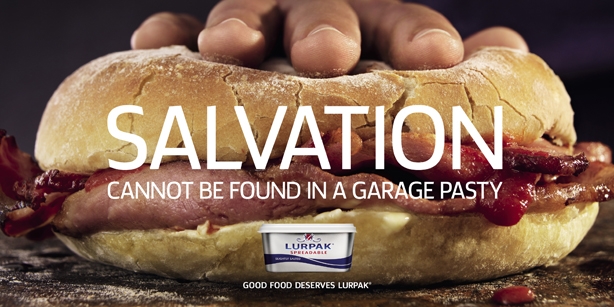
The ultimate reinforcement campaign in my view is Lurpak. It's only butter, but it's the butter for foodies.
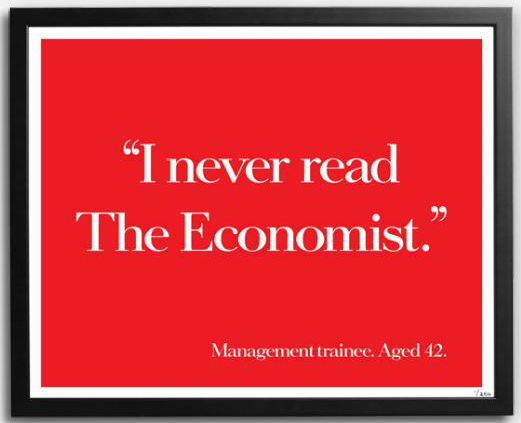
And look at the Economist, who neatly position their customers as more informed and therefore more succesful. But the creative us only half the story. David Abbot's writing was without peer of course, but the media buy was genius. A niche audience targeted through outdoor was horribly inneficient, but not when the small audience was celebrated in front of the great unwashed and it became 'self selection'.
While this great stuff from Chrysler neatly positions their luxury car drivers as hard workers, not pampered banker types – and taps into the unspoken American belief in grit and hard work.
So next time you get a brand position to work with, ask yourself WHO is the customer, why does the brand admire them? What could that mean and how could it get people talking?

 NORTHERN PLANNER
Leave a comment