This has been a long time coming.
I want to do this partly because decent media planning is a lot tougher than many think.
Partly because today's customer avoids brand stuff more than ever, and chasing them with re-targeting and spooky Facebook ads than know who are and what you've done are not the way to go.
Partly because good channel planning works with good brand and creative thinking. There's too much infighting between creative and media agencies. The more good thinking that goes into how to reach people BEFORE making ads and stuff, or at least, working together, the better for everyone.
And finally, I've learned a lot moving into media agency land from creative world, this is much of what I've learned, only fair to share with more creative minded planners, as those jobs continue to fade away, this might be a start of a Plan B.
So let’s start with a cliché that happens to be true.
Brands don’t exist in a bubble, they are part of culture and part of life. As culture changes, so therefore do brands and how they try and connect to people. Because in reality, brands are mostly a way to help us get through life without thinking too hard, perhaps the golden rule here is humility, assuming that no one really cares. Even the Guccis and Nikes of this world are not as important as your friends or the new Star Wars release, they’re not thought about that much and compete with other status symbols or tools for sporting confidence.
It’s also about behaviour, not just eyeballs. The context of where you decide to try and connect with people, your media ‘body language’ really matters. Just as it’s doubtful you would try and chat someone up in McDonalds, but likely you would try in a bar, when and where you decide to do things can matter as much as the creative work. Don’t believe the simplification that it’s just about reach, that’s the same as saying you just need to make people ‘aware of the brand’. I’m very aware of Donald Trump but believe me, I’m not a fan.
Now, like I said, life and culture changes. When I was growing up in the 80s there were four UK TV channels, then it was just the case of deciding over papers, magazine. Outdoor and radio…and direct mail of course. No wonder media folks were always down the pub, it was bloody easy. But culture moves on, people want more choice, they’re used to watching and reading what they want when they want.
It’s very, very complex. You can reach someone anywhere if you want. But don’t discount the unwritten deal you’ve made with people. They still know that if they watch TV for free, or at a small price, the cost is being exposed to advertising. The same with commercial radio, the same with the price of print and digital newsbrands. They don’t get that with social and also outdoor, which is polluting your out and about. Spam is still spam.
All that complexity requires pretty hard questions to cut through what you could do and get to what you should do.
Who?
What?
Where?
When?
Why?
How?
The when and where become critical as people control their own schedule. But ‘how’s is just as important as the channels themselves.
Channel planning is about how to influence what happens in people heads, not just ‘reaching them’. I can ‘reach’ some very good looking women in high end bars if I want, trust me, I can’t influence them to talk to me.
So you need:
- AUDIENCE UNDERSTANDING
- KILLER INSIGHTS THAT UNLOCK THE BRIEF
- THE ROLE FOR COMMUNICATIONS
- CHANNEL IDEAS: CONTEXT & CONDUCT
- THEN PULLING IT ALL TOGETHER
So…to audience understanding.
It’s quite simple and quite hard. You need to select an audience depending on how they interact with the category, your brand and even life.
This is based on work you should have done already…..what are you actually trying to do? What is the barrier to brand growth?
Then you drill into who this in among and the right audience to change this.
One of the most famous examples of car advertising was this Skoda campaign – the audience wasn’t just Skoda considerers, as they were already okay with the brand, it was rejecters who were stopping them by laughing at them.
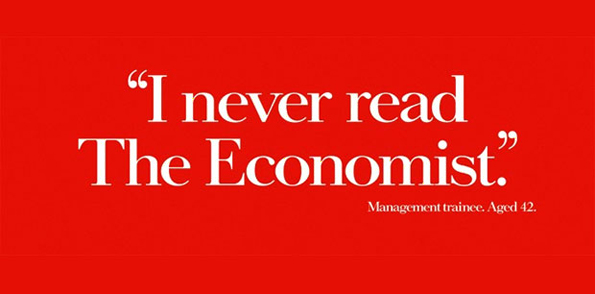
Look at this famous economist campaign that was mostly outdoor. These days some idiots would tell you to do a tightly targeted display campaign aimed at people interested in current affairs and over a certain net worth. But this only worked because it was wasteful – intentionally seen by the public to ‘celebrate economist readers in front of the less enlightened’.
Sometimes it’s removing barriers. Sky TV used to promote movies and kids channels to the partners of the men who mostly buy for the sport so they could get sign off.
Old Spice here targets both men AND women. Buyer and consumer.
As a rule of thumb, don’t make the mistake of replicating the creative target too tightly. That should be tightly defined and, in many ways, conceptual. You want to build a picture in the audience’s mind of ‘who buys this’ – something usually a little aspirational. Media is most efficient when it reaches as much of the buying market as it can. Persil Mums never really washed whiter and loads of fat over 35 men buy Lynx. In FMCG, if your target audience varies more than 3% from the category profile, you’re being too narrow.
Put another way, is your audience big enough to answer the brief? Get the client to share any awareness to consideration to sales data they have, look at past work they’ve done on how advertising build awareness (I should say salience really that’s the only thing that matters). Look at the frequency of purchase and a whole host of other things. But to be honest, build the broadest audience you can afford.
Look at Stephen Kings consumer buying system. What stage of the journey do you need to influence here.
Look at their lives, what is the most relevant place for the brand to show up (even TV, ITV does the numbers in the UK but if you want to appear cool and ‘discovered’ look at other channels and more innovation).
Consider that brands that connect closer to the point of purchase convert more – but also consider if you want context for the category buying behaviour or the creative idea. What I love about Old Spice is that it does both….the buying conversation and creative conversation are both about women buying things for men. Think about that, think the fact there is no such thing as a brand ad, only communication that addresses reasons people don’t buy. Even if that’s brand awareness, just because it doesn’t’ occur to them, doing stuff that isn’t relevant to the brand, no matter how much it’s recalled won’t cut the mustard.
The real task for us all is getting into the front of mind in as many situations as possible, that won’t happen if they don’t remember the brand and just remember the ad, and it won’t even then unless they can connect the ad to how they behave or feel about the category.
So, in a world where the audience filters our more brands than, don’t fall for the hubris of brand first, embrace people and go audience first – at least for channel planning.
How can you add value to their experience rather than interrupt or make it worse. Yes, it’s true that advertising people don’t like will work if you reach them often enough (based on shorter term metrics), but stuff people like can be more effective by nearly 11 times according to the IPA…and decent econometrics shows great advertising pays back over 3-5 years. The further out from exposure, the more folks remember only how they felt. We all tend to do and buy the things that feel right, not what are right in a logical sense.
Now, the best way to unlock the brief is still a killer insight. Doesn’t have to be a consumer one though, it just has to be an observation that you know will make people go, “Oh yeah!” At once obvious and refreshing.
This is rarely a stat. And while we’re at it, logic and evidence rarely work with clients and certainly not your buyers. And insight gets into the heart, where most decisions are really made. I don’t mean that brand love rubbish, I mean you take notice and makes you feel something that lasts in the memory.
And no bloody generalisations…like ‘young people like music’. No point using insights everyone else is talking about, like the fact young people are very serious minded and hard work is cool. Everyone knows this.
For example, few brands seem to cotton on to the fact that British Mums are sick of the protective parent label and are sick of the knowing, arch eye-browed resourceful one who sorts out the issues created by bumbling Dads. In fact, they hate their partners being portrayed this way. It may well be that a brand celebrating Dads rather than dissing them might work well with Mums.
A powerful observation is that stats mean nothing to people in charity campaigns. Most charities try to use ONE person as an emotional example, but the truth is, most stuff hits home when it happens to someone you really care about. I think this is fascinating for brands that sell stuff too, it’s how celebrity endorsement works.
Once you’ve got a tight insight, you need to have a clear role for communications. It will set your media (and maybe beyond) behaviour. It will drive direction and drive ideas.
It should never be something general…like ‘celebrate life’. It should be specific, audience driven and create a clear context for the media and other activity.
Instead of celebrate life it could be ‘shake up young people’s view of the world by delivering the joy of life outside the filter bubble’ (I’d like to do this by the way).
Or even better, connect with today’s young fogies when they want to remember they’re young.
THEN you can look at channels.
Some of this should be based on what, when and how the audience consumes media and life of course.
But it should be informed by challenge you are addressing and how comms is dealing with it.
The filter bubble idea above means you need to look at the times your audience goes outside the filter bubble…..when they’re engaging in mass media that isn’t ‘pre-selected’, when they’re looking to discover stuff. You might want to also want to ‘do it’ rather than promote it. That might mean the entire media plan is built on the element of surprise.
You could go further and build integrated idea around the fact we adopt new things that are just familiar enough. Have you seen ‘I’ve never seen Star Wars’. The entire media plan could be built on this premise.
But arriving at your list of channels and what to do with them requires rigour and hard questions.
Start again with you role for comms and turn that into three specific tasks (more than that is just a list, less is too narrow).
For the filter bubble thing that might be:
Land the idea where people come to together outside the filter bubble – TV, VOD, MAYBE out of home and mass experiential events
Broaden their horizons when they’re in discovery mode – search, Youtube, influencers
Deliver alternatives within the bubble – takeovers of genre specific radio, Spotify, Amazon
Narrow down channels and what to do with them with these questions:
Where can we be relevant? If we’re interrupting can we reward the attention? Are we able to be specific to the channel we’re using? What will people think/feel/do as a result?
And don’t forget looking at context. From selling a new water brand when people are most thirsty, to landing a new brand idea when it will have the most emotional punch.
You could even be topical, but in a new way. In the UK, the most likely birth times are September/October. Much of this is down to conception on New Years Eve, or in boring January where you’ve nothing else to do. Great context for condom brands, pregnancy test brands and also Pampers. Creatively fertile as well as media context.
If you want an over 35 married man to out on a ‘male’ get together, be that footie, the cimema or even laser quest, he needs sign off from the other half and it needs to be agree weeks in advance.
Then pull that all together into a simple one pager. Media and comms strategy needs to be complex these days because the environment is complex. But if you can’t explain in 30 seconds, you haven’t got something water tight.
To for example:
We need to get our brand tried by under aged 25 people
The problem is that they only try things from within their filter bubble – more of the same
So that means we need to shake up their view of the world by showing them the world outside of their feeds
We’ll use TV that’s big enough to reach them and cool enough to be credible to land the idea outside the bubble – contextual ads to objects and situations in the programming that inspire them to try just a little outside their comfort zone (even I like one Queen song and I hate Queen)
We’ll partner with Google so that in search and Youtube, they get served familiar but exciting alternatives just outside their comfort zone, endorsed by video influencers
We’ll broker a partnership between the Guardian (most trusted under 25 news brand), Netflix and Spotify to deliver free non-subscription content.
Finally, show them how the channels will work together, what the phasing is. This is best done by talking through the experience from the consumer perspective.
And you’re done.
Hope that was marginally useful.

 NORTHERN PLANNER
Leave a comment