I've always been a big believer in the importance of real insight fueling work. It's not that fashionable any more, but thankfully some people still agree.
To be clear, I don't mean 'consumer insight', you know, the stating of the obvious dressed up as revelation, the kind of thing that comes out of focus groups usually.
Although I had a good catch up with an old friend/workmate who reminded me that groups can be great if you plan the right stimulus, pre-tasks and are realistic enough to know you'll get group think.
Because, as we're admitting more and more, the role of much of brand communication is perceived popularity, looking like you are talked about and the obvious choice. So it kind of makes sense to understand what people naturally discuss around a subject.
Anyway, I digress.
My own view is that great brands find a way to be relevant and add to tensions and ripples in real life that are already there. You'll notice I didn't say culture, because I don't think what we do is that grand. Also, it gives folks in agencies and client companies the excuse to just look at what's happening in Clerkenwell, or sponsor some football and pretend it matters.
I mean getting into what people really think about and relate to everyday.
If you haven't seen 'An Uncivil War' then you should. On the surface, it's a film about how the two campaigns in the Brexit vote operated. Really, it's a masterclass in 'designing for a wider context' as some marketing buffoons would call it. Real people would say, find a way to be relevant to what lots of people really care about. In this case, that wasn't Europe, immigration or anything else. It was a, mostly not articulated, feeling that you had no control in your own life, and being left behind by an amorphous elite doing very well out of life.
You can get insight like that from primary research, but only if you train yourself to look at the themes and the motivations behind what people are saying.
You can also get it through looking at the data – people tell the truth to Google even if they lie to their best friends, usually in direct contradiction to what they project in social media.
So if you're just mining social data for insight, or just mining Google, you're only seeing part of the picture.
Like today's physicists who still can't account for most of what makes up the universe.
But you can get it from constantly building a scrapbook, mentally at least, of reference.
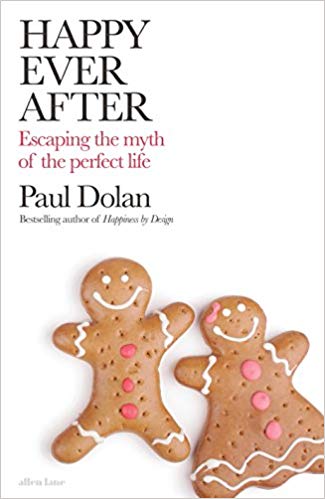
Which brings me to this book once more.
Of course, it's only one way of looking at things, but it's a treasure trove of real life tensions in how the UK (and some of the US) lives. The gap between the narratives that drive how we live, how we judge ourselves…. and what actually make us happy.
There's lots in here I'll use in work at some point, but it's only one of many, many reference points that get into real, complicated, fascinating life. If only we have the curiosity to look for them.
Of course, there is going out and actually meeting real people too, you'll get far more from observing real people in the environment you're aiming to influence. Just as you'll learn nothing from analysing Lions in a cage.
As I've said before, go to the jungle, not the zoo.
But also, master the art of looking sideways at stuff. If something doesn't make sense, or it seems contradictory, there is competitive advantage in embracing it, rather than ignoring it because it's not simple enough.
Real life is complex. To hope to find relevance, ignore this at your peril.
 NORTHERN PLANNER
Leave a comment