• It will take a lot for me ever choose Nike over Adidas. I know they're not different, they just feel it.

    Most of this is because I was teenager in a middle class tennis club, resenting the stuffy rules.

    When Nike came along with stuff like this that was it.


    I know teenage rebellion through tennis is pretty lame, but that's what got me hooked.

    Well, not hooked, deep in my make-up, Nike feels different. I choose it without thinking. Like everyone else. 

    That's the thing about brands, we can't articulate why we buy, there's just a a 'ness' about them that helps us buy them without thinking.

    There is a Nike-ness.

    A Brewdog-ness.

    An Audi-ness (or there was, what the hell are they doing!!). 

    An Apple-ness. 

    That 'ness' isn't about just about tone of voice etc, not even about point on view, although it helps. They just tap into something that  people are feeling.


    Here's how to think about it. 

    Without the usual fluff from the brand consultants. Keep it simple stupid!!!

    Draw three circles. 

    On one, what is the brand really good at?

    On the next, what really drives it? What does it care about? What is its enthusiasm?

    Then finally, what is the zeitgeist? Not one of the crap trends from the usual companies, the ones that put two names together,  'The Prosumer', 'Fremium'. What have you spotted that no one else has? What are people feeling that no one is helping with? I mean a shift that will stay shifted. 

    Un-resolved tensions. 

    The intersection between all three is where a brand can really come alive, get noticed and be remembered. The intersection between what they are good at, what drives the business and how they can be more relevant than everyone else.

    Take Nike tennis:

    Really good at? Tennis apparel that looks worlds apart from the usual stuffy tennis whites

    Enthusiasm? If you have a body you're an athlete

    Zeitgeist? The tennis establishment is stuck in the past and hates anyone upsetting their precious rules, so there's a young generation who love to play but feel alienated

    By the way, this becomes even more interesting when you try and apply it to you and what you want to do or how you want to work.

    There are lots of good strategy people, but how do you be the most wanted?

    Just saying. 
     

  • A few years ago I got my leg banged up playing 5 a side.

    I was in intensive training for something swimming related at the time, so I couldn't just stop the pool visits.

    So I had to do session after session with a pull float between my legs.

    Six weeks later, when the float was discarded, I found I couldn't swim without. My stroke was totally destroyed.

    My muscle memory had temporarily forgotten what it had known for years and years.

    What made it worse was that now I was thinking about every stroke.

    And the more I thought, the worse it got, until a coach finally sorted me out again.

    Just like when people who choke in high level sport.

    Suddenly finding the ability to not think about what they're doing taken away.

    Because that's what years of experience really is, the ability to not think about what you're doing. 

    That's why someone told me it would take seven years learning to be a planner, before I could hope to find my own voice.

    Do the basics without thinking, then you can start to experiment and mess around.

    This is why the groovy case studies with 'something new to tell the industry' can be so dangerous. 

    The brain is a muscle too and you need to build up that muscle memory to 'do' without thinking about it. 

    And when you stop 'doing' your powers fade pretty quickly.

    Like a Great White Shark, the moment you stop moving, you're pretty much fucked. 

  • In my twenties I once got to play tennis against someone who used to have a junior world ranking. It was about 1,000 but nevertheless they were good. 

    To my eternal pride, in the first set I managed to win a couple of games. Largely thanks to being supremely fit at the time. 

    At once point it was actually two all. 

    Then she just wiped the floor with me.

    Being exposed to pure talent like that can be intimidating.

    Just like when I sometimes cycle with people who actually race and, when we climb up long steep hills I'm hanging on for dear life, heart hammering against my ribcage, legs full of molten lava.

    And the bastards are actually chatting. 

    But I know myself, as a pretty good swimmer once, when you stop training, the supremacy disappears pretty quick. Just as ex-cycling pros become ordinary extraordinarily quick.

    Because talent only gets you so far.

    Talent helps, but mostly you just have to work at something. 

    And keep at it.

    Especially when you are young. When you need to learn your craft. 

    These are the investment years. It's hard. You put more in than you get out. 

    It's not easy. It takes patience. 

    You have self-doubt whispering in one ear.

    Blind optimism in the other.

    Some days doubt is up.

    Others optimism is in the ascendancy.

    More often than not its a score drawer.

    That's why you need absolute passion and love in your heart for what you do, or at least where you want to be. 

    That's what carries you through when optimism is too knackered.

    Talent helps, but in these years, sucking up all the know-how matters more.

    Ready to breathe it all out in your later years.

    Put another way, natural ability matters, but the real talent is the ability to work and work at something until you are its master.


  • Some things I've learned after living agency life for the same amount it takes to come of age.  

    1. It's OK to disagree, in fact, the magic rarely comes without some sort of positive friction. Just don't fight over it. 

    2. A fun place to work should not be confused with an easy place. Great work is never easy or anyone could do it. 

    3. So only hire people with the one thing you can't teach them, genuine passion and drive. If they love what they do, work won't feel like work.

    4. Everything you do will be watered down so make it better than it has to be. 

    5. So make sure it's water tight, because you'll have to fight like mad to defend it. Make sure the battle is worth fighting.

    6. Surround yourself with people who are able to tell you no. Your ego is your worst enemy. 

    7. Surround yourself with people who can do what you can't. No one can do it all. 

    8. Don't be a dick.

    9. Be prepared to allow for difficult people but never let it become self indulgence.

    10. Creativity really isn't just a department.

    11. Look for the briefs no one cares about, this is where you can really try new stuff.

    12. Never try to be cool, only try to be great.

    13. Nice people win eventually. You have to be patient though.

    14. Just because we can make stuff quicker these days, that doesn't mean it will be any good.

    15. I'm old enough to know I'm not young enough to know everything (thanks Oscar Wilde) but if your young, crack on, old folks try to keep things as they are, not as they might be. 

    16. If you don't do the basics well, nothing else really matters. 

    17. People buy things, data points don't buy things. Don't confuse tools with the thing you're building. 

    18. The more you build an instinct for how people really feel about things, the better you'll do. Few are capable or, or caring about the emotional truth around a thing. 

    19. Strong teams always do better than teams of strong individuals.

    20. Don't slow down, go faster, don't compromise – challenge others to keep up. 

    21. It's only a job, love it but don't let it consume you

  • I read a study of what kind of creativity drives effectiveness in marketing stuff. 

    Apparently, it's elaboration. 

    Not originality or artistic value. Simply adding unexpected detail, or adding to a simple concept to make it more intricate of complicated. 

    This shouldn't be new, it's only promoting the product in a way that can't be missed. It should be obvious.

    Sometimes it might be the old BMP approach of pushing the news or benefit as far as you can.

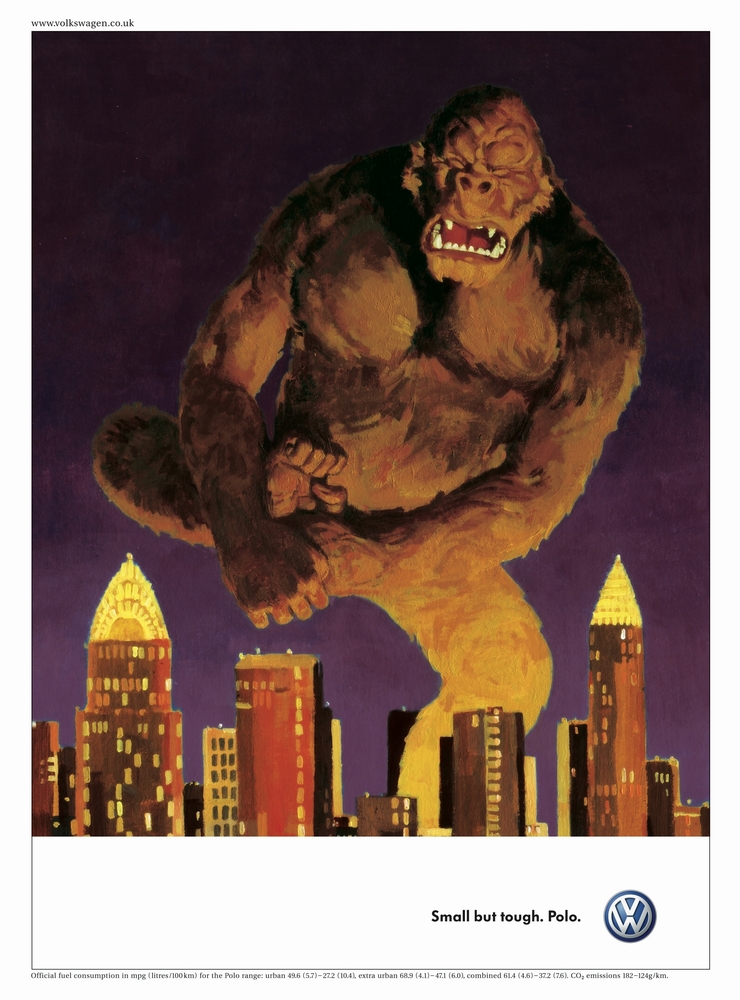
    Polo

    A small car so tough King Kong stubs his toe on it. In this case, insert the fact into popular culture in a surprising way. 

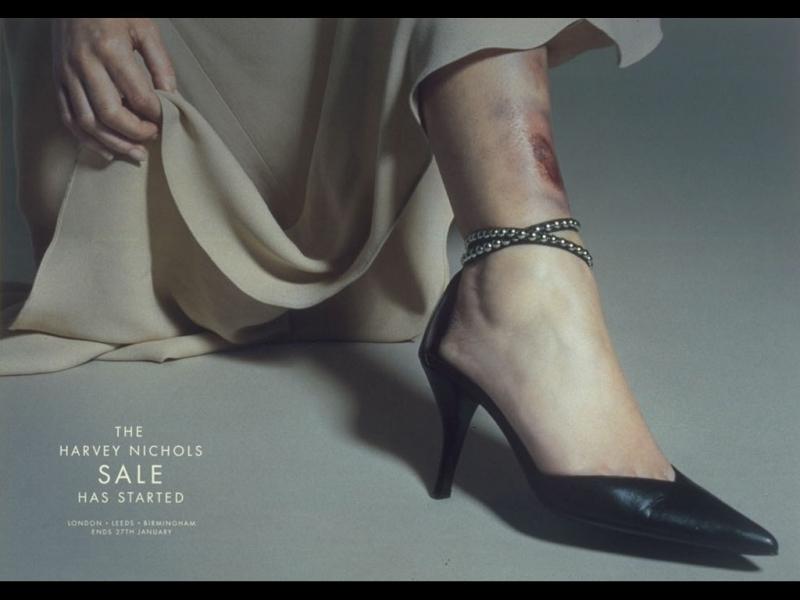
    Harvey nichols

    On the other hand, this is simply communicating that there is a sale on.

    It's also getting into the simple truth that the fashion forward will do anything to rush and get the best deals on prized 'pieces'. 

    Then there is the emotional truth that few dare to embrace, fashion has a dark side, which the uninitiated don't get, but true fashionistas embrace…and love the fact others do not understand. 


    Moving away from classic BMP ads, we come to good old Nike.


    This ad is purely about great cushioning preventing injuries.

    It's also about the painful truth that success in sport is 99% failure.

    I share this a lot because I really love it, sorry. 

    Some of the best, most creative, most revered work doesn't avoid the product bit, you know, the thing you're selling. 

    Like a diesel engine that doesn't make a racket and is nice to drive.


    Which is elaborated on with a true story about how it was made, with a surprising but true human trait that hate is force for good because it changes things. 

    This is some of the stuff the cool PR and content kids miss.

    You can get all sorts of coverage and traction (if you're any good) but it won't bloody sell ultimately unless it expands on something relevant about the brand or the product.

    The trick is finding the right message or desired 'take-out'. 

    Then making it un-ignorable.

    What's interesting with all the work above is that it works real life, not against it. 

    Because the sweet spot for things that get into our head and hearts is familiar novelty.

    Connecting the new with the easily recognised.

    Work with life, not against it.

    We all know King Kong.

    Fashionistas will instantly recognise themselves in the Harvey Nichols work (and love how it baffles everyone else).

    We have all sat on our hands until we got too cross not to act. Even if it wasn't for engineering excellence.

    Anyone who has watched sport responds to the heroic failures as much as the winners.

    Yet many creative director still get sniffy when asked to feature the product benefit. 

    That's a failure of creativity to avoid this, not a victory.


  • I was a hopeless account handler. 

    When too much time around too many people sucks your energy, when you don't love organising, you love doing, this was inevitable.

    It just took some time to realise what I was actually good at and what I enjoyed doing.

    More importantly, I could be realistic about what I hated.

    What felt good rather than what looked good. 

    Netflix understands we are at war between what we think we should be enjoying and what we enjoy.

    They base less and less activity on our watch lists and more on what we actually watch. 

    Because our watch lists are our idea of ourselves, things we think Friends would admire. When we're all actually watching endless repeats of Friends. 

    The more time you spend on things you enjoy, the more you actually enjoy them.

    This matters for work. 

    To do your best, you have to choose what you'll be bad at. 

    Not just the things you have no talent for, the things you won't make any effort on, so you can put more into what matters.

    You can't do everything. 

    One of those things for me is Slack. It takes twenty two minutes for the mind to recover from distraction, so I largely switch Slack off and make the most of the focus.

    I spend little time on something that's expected, more on doing better work.

    Yes, I miss important messages, it comes at a cost, but like all good investments, it tends to pay back.

    And if people really want me, they can phone. 

    The busy fool doesn't lack energy, but focus. 

    Seriously, multi-tasking is a fallacy. It's great for feeling and looking busy, but it's a Trojan horse for average work.

    Just as lots of interests are great, you can try lots of stuff on for size and find what you love.

    But doing less things well is the recipe for feeling alive.

    Multi-tasking means lukewarm. 


  •  

    When I was a little boy I used to love playing by myself on the beach on holiday. A lot of this was to do with being happy with my own company but not all.

    I was painfully shy and found it hard to go up to other children. Of course, eventually someone would come up to me, but not always.

    It's a genuine surprise to many people I meet, when I tell them I'm shy and introverted, yet that tongue tied little boy is still very much a part of who I am.

    It's just that years of making myself talk to people and, well, being comfortable in my own skin means it's less apparent.

    No one is fixed, we can go beyond who we are.

    What is happening on the outside isn't always what's going on underneath. 

    I'm not being in-authentic, it's just that I'm so much more than a planner, able to reveal different aspects of who I am in different situations.
    In work my passion and commitment simply overrides the urge to hide by myself in a corner.

    It's good having these insecurities and embracing them though. It means I'm a rarely too sure of myself not to listen.

    In the past the fear of being judged made me close myself off or be over defensive. It’s a relief to understand that vulnerability is a strength, not a weakness. 

    If more people in the world (especially the nauseating macho men) would try not to WIN all the time I suspect it would be a much better place.

    Those that have to be right all the time rarely are.

    Anyway.

    Don't believe that senior people where you work know what they're doing. They're just better at hiding they're just as confused as you are.

    Just as it's not helpful to compare yourself to Instagramers, showing a heavily edited version of their lives.

    In fact, all the people you look up to may have earned the respect, but they're still human beings like you and me. 

    They stress, cry, have their hearts broken, fail, feel lost unhappy and unsure of themselves.

    Yet we compare our whole, un-edited stories to the people who have left most of who they really are, in public at least, on the cutting room floor. 

    Of course that's going to leave us feel wanting. 

    It's more encouraging and real to know they are just as useless as you and I.  They've found a way to overcome their own personal barriers and demons to get to where they are today. 

    Usually, to great at something at the expense of being good at anything else. 

    So I think it pays to be inspired less by perfect stories.

    Instead, looking for truer stories of people who have found a sweet spot between what they love and the few things they're not hopeless at, to do something special.

    This goes for marketing case studies too.

    Great work emerges like a screaming baby from a chaotic mess.

    I wish this wasn't true, but just you rarely see anyone going for a wee in most films, most case studies never show no the late nights, moments of doubt and crisis.

    Fewer admit they just got lucky.

    No one talks about the pitch failures, which far outweigh the wins. 

  • There are some days when the the stars align and exactly the same ritual for making tea produces a beverage that just hits the spot. For no good reason.

    There are some days when I ride my bike and it feels like I have someone else's legs. Sometimes the legs of a pro, sometimes the legs of my Mum.

    There are some days when I get start swimming and I feel like a big useless balloon wading through treacle.

    There are days when I stare at a screen and by brain won't work.

    There are days when thoughts just pour out of me.

    There are days when the introvert takes over and I'll do anything to avoid talking to people.

    There are days when I love energy from being around others.

    Some days it all makes sense.

    Some days its just chaos.

    Some days you're the hammer.

    Some days you're the nail. 

    The good days are easy, the trick is get through the others. 


  • You wouldn't want to have been my boss in my twenties. I had a problem with authority. 

    I still have a healthy disregard for arbitrary rules that have no reason for being, just as I have a suspicion of 'always done it this way'. 

    In most cases, this is someone trying to keep things as they are because it suits them.

    It's why I'm nervous of templates and proprietary process, it becomes the point rather the actual work itself.

    Yet I've learned to value the constraint too. It's when you're boxed in that you tend to do your best work.

    Creativity and ideas actually love shackles. Some of the most wonderful songs still conform to two versus, chorus and middle eight. Haikus have very limiting, unbreakable rules, yet produce some of the most beautiful things ever written.

    Prince was at his best when his record company forced him to edit his work and it was the tension between Lennon and McArtney as much as the partnership that was the core of the Beatles.

    So as long as you have a goal bigger than compliance in the first place, the strictures of a formal process, brief template or whatever liberate great work.

    They force you to edit, distil hack all the fat from your work.

    Like a caged tiger, your mind fights harder because of the limits.

    Every hero needs an enemy, the better the enemy, the more profound the hero.

    And if you're a quiet rebel like me, there is nothing more motivating than being told 'can't'.

    So thank you budget restrictions.

    Thank you 'that's not how we do it here'.

    Thank you 'that will never work here'. 

    Thank you status quo.

    Thank you time servers.

    Thank you 'the client will never do that'.

    Thank you complacent creative directors.

    The more you tighten you tighten your grip, the more potent the response you fear


  • I hate it when people introduce me and my team as the 'brains'. Especially because, in my case, I'm not very clever, I just see things differently. 

    What can be worse than being presented as basically a smart arse?

    I think that's why I dislike so many planners or strategists because they actually believe what people say about them. 

    I'll cut to the chase.  I have a healthy disrespect of anyone who thinks they have all the answers. It smacks of complacency and failure to collaborate. 

    It forces you to right rather than great, or unlock the great in others. 

    And who has the answers really? Grown ups and leaders that's who. The ones who don't have the answers really, they've stopped asking questions and are beginning to fight to stop things changing. 

    Not children who live in a wonderful world of playing and little responsibility.

    Not juniors, just starting out in the job, who haven't learned the rules yet and, therefore, are limited by them. 

    When you're a child, the play goes on for years, yet that question starts to rear its ugly head.

    What do you want to be when you grow up? Naturally at first when you;re six years old or so, the question is a light one and the answer if blissfully innocent. A Jedi, a Princess an Avenger. 

    But when you get to fourteen, the question becomes laden with finality.

    Careers officers and subject choices, as if anyone really has a clue at that age about who they really are and what they really want to be. 

    I for one was had no idea. I'm still not 100%. Why should I be? I've only lived half my life.

    When I finished University I sort of fell into advertising based on an immature idea it would be cool and I could be Mr Charisma.

    It's not cool, it's hard work and I had yet to fully realise I'm really quite shy and engage people through passion, raw enthusiasm and authenticity.

    I do not own a room, the room devours me. 

    Even when you find something you want to do, answering that question with a life ending finality isn't really credible. Not only is the jobs market increasingly built for adaptability, life and culture are more open than they ever were. 

    You can see that uncertainty as a stress, or you can embrace the opportunity to not fully have the answers.  

    I've been a failing suit, an advertising planner, a digital planner, a media planner, a PR planner, a brand planner, a design planner and now probably find myself doing a little but of all of the above. And I still feel there is more to come. You could say I'm spread too thin, but I would say it makes me versatile. 

    And ready for the next adaptation that will almost certainly come. 

    I do have a driving life's work which is about doing work that actually matters rather than ticking boxes, but it's even simpler really, the reality I want to spend my time and energy on the things I care. 

    Sounds idealist of course, but why would you not want to live in an ideal world? 

    We all need a sense of certainty in our lives, but that need for control with control you if you're not careful. 

    It's why you need to be careful of most senior people, they exist to justify their existence and block change. 

    I don't think experience is about 'experience'. Its about the liberation of realising you know fuck all. 

    It's not just about Malcom Gladwell's 10,000 hours of practise (but don't think you can get out of learning by doing, all the information we can get at the click of a button isn't the same as actually putting it into action, just as a pile of books is useless unless you have actually read them).

    It's about having the experience to know you don't have all the answers.

    And constantly looking for better questions.