• These are dark times, which has brought into sharp focus something I've been observing for a while now. Agency/marketing/planningish blogs rarely discuss the bad times, the dark side of working in an agency for planning types/
    100_2471

    Things go wrong. I'll wager that a fair amount of blog authors have have more than fair share of hiccups during their careers. Just like I sometimes fear you could think planning is all blogging and coffee is you just read most posts, you could be lulled into thinking every agency experience is easy going, good natured fun.

    Let's be positive for one second. There is nothing quite like the people you meet, the variety of work, the constant challenge, the pride in a job well done. But it's not always like that. Bad things are very likely to happen at some point. Things go wrong. Campaigns will fail,  clients get lost.

    This happens on a personal level too, and in most cases, it not entirely your fault. Like much in life, some things will happen that are simply unfair.

    A big client will move on, even you'be done their best campaign ever. If you've ever wondered why so many brands are so schizophrenic, it's because most marketers change jobs about every 18 months. The new broom wants to make their mark, everything gets changed, usually the agency as well. Or there's a consolidation exercise and everything gets put into one regional or global agency – which leads to much of the 'beige' creative work we see. At best, simply inoffensive drivel. At worse, the badly dubbed insults that are all too common. Yes, it may go wrong despite excellent work and a great relationship.

    But sometimes you can be really good, but the chemistry simply isn't there. It's impossible to click with everyone and sometimes you cannot get along, no matter how hard you try. Sometimes you're both able to admit this and find a way to work together, sometimes your moved.

    This can happen with bosses and suits and even colleagues. Even a whole agency culture. It's not them, it's you, but it's also not them, it's you. If your boss leaves, the next one may be completely different in approach, temperament and personality.

    You may be smothered by the account team that wants to do everything, leaving you little space to find your voice. There's the suits who can't get their heads around the fact you don't just work on their stuff, who organise key meetings at the last minute when you've something else booked in.

    Then there's redundancy. By default, redundancy means it's not your fault but it still hurts – ultimately it means you're now surplus to requirements. All it takes is a few of the, mentioned above, account losses, a relationship with a client you just can't make work, maybe the new boss and suddenly it's the delights of Jeremy Kyle and the empty feeling on Monday morning as the rest of the world returns to their jobs.

    Yes, there are lots of things that can happen that are neither particularly good, or down to anything you've done, or not done.

    Be ready.

    There's no point shaking your fists at the cruel world. Life's unfair, get over it, get on with it.

    And be sure there isn't anything you could have done differently, learn from it.

    This is really important. Never, ever try and get revenge. Much of the above is NO one's fault, so there's no point. Even if someone has shafted you, this industry is small and just don't know when you'll bump into them, or when they'll bump into someone important to you.Remember, that same size means they'll get found out eventually.

    Sorry if all that's a bit depressing. Most things that will happen to you will be amazing, but every now and then they won't. So prepare for them, and be as good as you can possibly be as often as you can.

    Finally, make sure you're in agency you love, with people you trust that support you. Don't stay somewhere out of some sort of misguided loyalty if doesn't feel right. Find a place that fits.

  • There's rigour, hard decisions and lots of hard work required when thinking about strategy but, ultimately, good ideas come from feeling, daydreaming, watching, scribbling, abandoning and retrieving.

    It's never completely linear, there are many logical progressions with lots of lateral intuitive jumps and more retracing of steps than most of us like to admit to as well. I guess you could say that ideas are like organisms rather than mechanisms. They grow at their own unique pace and have their own independent free will. 

    Of course, this is no bloody help when you have to get a creative brief in, or a presentation deadline. You really don't need someone telling you to actively not think about the problem so it 'emerges'. You have to do your utmost to coax things out.

    100_2866

    I really like John Steel's method of keeping a board of post it notes, keeping re-arranging them and looking for connections. I also like mind mapping. Here's another approach which seems pretty quick and generates stuff that's a little more unexpected.

    We're all in-built to love stories, so much of how we communicate and socialise is done through stories. What is popular culture if it is not stories. Even a video game is story, you are simply enabled to be part of it. What is a brand if it is not a slowly evolving story?

    So try and create the germ of a dramatic story -a series of actions by which your protagonist (the brand, your consumer or even the product/service) brings about changes in their circumstance, lives, nature or the lives of others. Here are six, quick, killer questions that should help:

    1. Where? What's the world the story will happen in? Dove's happen's within the beauty industry.

    2. When? Choose the historical moment- what's the relationship between past, present and future?

    3. Who? What's the nature of the characters? Who's your protagonist? Who's the enemy? On who's side is the protagonist on?

    4. What events have shaped their lives and decisions? What events will?

    5. Why? What are the characters motivations? This will help us predict what might happen next and how they might respond to different events and company.

    6. How does all this feel? What's the genre? Soap opera? Comedy? What's the visual feel? What's the music like? Is it all filmed at night?

    I especially find looking at the events our characters are likely to face helpful. It helps crystallize objectives and uncover the context for what where we want to affect. For example, will the event (s) be:

    Ceremony

    Celebration

    Reunion

    Chase or pursuit

    Recruitment

    Seduction

    Investigation

    A game

    Discovery

    Holiday

    Quest

    Argument/reconciliation

    Battle

    Might help, might not. Have a go if your'e stuck in a rut. It's very useful if you're looking for something to span audiences and media, rather than traditional, reductive advertising.

  • Let's be clear, having an insight about how your audience is behaving, what they need,what's really bothering them is priceless. But you won't get that from the statements of the obvious masquerading as 'trends' many will try and feed you.

    100_0991

    For example. You can't move right now for sparkling reports telling you people feel a bit helpless, are cutting back and want brands they can trust. Well buy me a dress and call me Judy! You don't say. That's not insight, that's not a 'trend' that's common sense isn't it?

    The danger in slaveishly following trends that anyone can buy in, or what it simply happening right now, is that not only will someone else be doing exactly the same, you're in danger of simply replaying back someone's life to them, rather than surprising or delighting them.

    My other problem is that a trend, or an insight isn't really one unless it's a true revelation. But even that isn't enough – it has to be relevant to what you need to be doing and it has to be useful. I think a big part of a planner's task is t turn an insight, should there be one, into something that will inspire creatives into producing effective great work. For example, it wasn't enough for Pot Noodle to focus on the way post grads don't quite want to grow up yet, they pushed it to the fact they have understandable, guilt cravings. It wasn't enough for Nike to know that women feel left out of the version of sport that's about stadiums, they pushed it to the level of celebrating the sport lots of women love that never get's recognised – dance.

    So there you are. The challenge for me is ignoring the stuff everyone knows and getting some great insight of your own. That means primary research, but also mean simply going out and talking to the people you claim to know everything about.

  • Read this quote. It's from a fellow called Julian KYnaston. He runs a big-ish agency outside London:

    “We tried to distill down what we felt agencies will be facing in this tough climate and we came up with a one liner, that ‘clients need better strategic advice faster’.

    “I have not been a fan of the account manager and account executive role for years. Invariably, when an account executive aspires to be an account manager or an account manager aspires to be an account director there is an inherent compulsion on that journey for those people to make an enthusiastic attempt to offer clients strategic counsel or design critique. While that is fine for the structural growth of the agency I think that we have to be big enough to say that that is an awful lot of pissing around with a clients money.
    evolution

    “Our simple viewpoint here is that good business does not look like junior people trying to practice their art on a client’s budget. So, part of our evolution will see us remove the titles of account manager and account executive from our structure. In place of those titles we will simply have project managers. Those project managers will sit to the side or the back of the account director and we will see almost a return to the good old fashioned apprenticeships, where the apprentice learns their trade by watching their mentor deal directly with the client… but they do not learn at the expense of the clients.”

    This approach to only allow senior account directors to deal at a strategic level with clients certainly appears to answer the one on-going client gripe: “I saw the account director at the pitch, but I’ve not seen them since they won my business,” but what about at a staff level? Is this approach not cutting off promotional opportunities for staff?

    Kynaston says: “I suppose you can see the old agency head viewpoint on this. We are breaking down the sustainability of agencies, we are removing promotional and aspirational lines and even more so, we are daring to tinker with a structure that someone, somewhere has deemed effective for a long time. I do not think it is effective. The truth of the matter is that currently account managers and executives get a schooling in winning business and losing a piece of business in six to 12 months. That, to me, is not a great schooling. What we are abdicating here is a change in the account director’s role, a much longer apprenticeship, a much longer time to gain experience and a pegging back of the desire of an individual to hint it might be done a better way, but to watch the account director and learn from them – and one day we may very well have an account director recruit.”

    100_0974

    I don't know what you think, but I fundamentally disagree. I'm not trying to say youth is right, I totally believe in learning by doing too. But the thing about the young is they haven't learn to stop questioning, they haven't learned to accept the status quo yet, they're not afraid to ask annoying questions. Quite right they should learn from elders, but quite wrong they should shut up, not have the temerity to think until they've passed some arbitrary rights of passage. If you think young people are wrong, prove it. How do you know you're right if you're not nervous anymore?

  • Hello again. I've been stupidly busy over the last two weeks and, therefore, short on posts (did anyone notice?).

    Anyway, this weekend was a blissful release from a cycle of work,home, eat sleep, work, home, eat sleep.

    I got out on the bike on a bilssfully sunny morning, cooked some toothsome winter food, pounded some lengths in the pool, played some great music too loud and spent some time rambling with Mrs Northern in the pub. It reminded me of the copy below that Matt from work had written for something that never saw the light of day. It was about an escape from our jaded, cocooned over indulged lives where everything in now an assimilation of the real thing – but this is what felt like this weekend.

    Bike 

    Hope you don't mind Matt.

    Yes. This.

    This is what it feels like.

    Out of the blue, it happens, something inside you. You feel different. Rearranged.

    It’s like just now, only more so. It even tastes different.

    Like a numbness passed, it’s as if you’ve stepped back inside yourself and are looking out. Seeing anew. Switched on. Watching the moment passing in front of your eyes.

    You want to hear the sound of your own voice.

    ‘Are you feeling something?’ ‘Can you feel it too?’

    You don’t quite feel yourself, yet you’ve never been more certain of who you are.

    And then it makes sense. This is what it feels like to feel.

    __

    This is familiar. But.

    Something’s different, you know it. You can feel it. Something’s here that wasn’t before.

    You.

    You feel more present, more dense. More visible, more connected to the air around you.

    You feel more.

    Have you really ‘changed’? Or have you only just noticed who you are?

    Why are you smiling?

    If you’re heart is beating faster, it’s probably because you are a little more alive.

    Yes, this is you. This is what it feels like to feel.

  • 100_1881

    Like a lot of planners I know, I never intended to be a planner, it sort of just happened. After graduating and coasting nicely as a personal trainer, I had a vague idea that I wanted to work in an advertising agency. I started out as a suit, failed at that and realised I was better at thinking than doing. But even though I has worked in places with planners, I didn't really know what they did, it sort of crept up on me what they were for, and maybe I should be one.

    So the first reason I'm a planner is that it just happened.

    The second is that there isn't another job in an agency I'm any good at.

    Because, despite the hours, the stress, the low pay next to other professions, you just don't get the same colour, the same culture and the same people.

    Because you never stop learning. If you stop moving forward, you're history. Planning's really about culture and people, that never stops developing and changing, so there's always something to learn, even if you're global, executive, emeritis god of planning for the universe.

    Because it's always a little scary at the start of a project, wondering what the hell to do. There's nothing more rewarding than the moment you know you've cracked it.

    Because you're never done. You can always make it better, you're always wondering if there isn't a better way. That's at once frustrating and liberating.

    Because you're part of a global subculture – blogging's great. Planners are really nice, interesting, generous people, blogging has enabled me to rub shoulders with all sorts of planning people and learn from them, even though we've never met.

    Because this is the most exciting time to be a planner. Advertising's a mess – there's are dinosaurs who can only talk in single minded propositions and TV ads, but then there are Young Turks who are trying to throw the baby out with the bathwater. I argue that planners should be at the forefront of sorting this out. It's so liberating to be able to do literally ANYTHING in response to a client brief, but sometimes there's nothing more limiting than limitless choice.

    Because I can.

  • So 2009 looks like the most uncertain many of us can remember – but  anyone old enough to recall the UK recession of the 80's or the three day week would probably ask you to get some sort of grip.

    100_2871

    There's a lot of predictions at this time of year, I bet there will be an even more febrile statings of the obvious than usual this year.

    Already, lots of trend predictions point to a return to simple, the rediscovery of simple pleasures, slowing things down and relying on buying things to amuse ourselves a little less.

    Don't be so sure though, the relentless infantilising of western culture – instant gratification, celebrity worship and generally having whatever you want may well mean that people don't adjust and enjoy a 'Dunkirk Spirit'-  they'll stamp their feet and complain how unfair it all is. What do you think?

    Iceland knows what it's doing with these Christmas ads. Such a reflection of where we've been and maybe where we'll be going – more is better, no need to deny yourself, don't worry about where it's come from or what's in it, just have more. They totally understand their time pressed, budget stressed customer, for whom feeding the family is top priority, and full plates mean you're doing right by your kids, but when the UK is struck with generation of fat kids who will die before their parents, for whom exercise is playing on the Wii, is this really moral? Who will be brave enough to influence culture rather than follow?

  • 100_1964

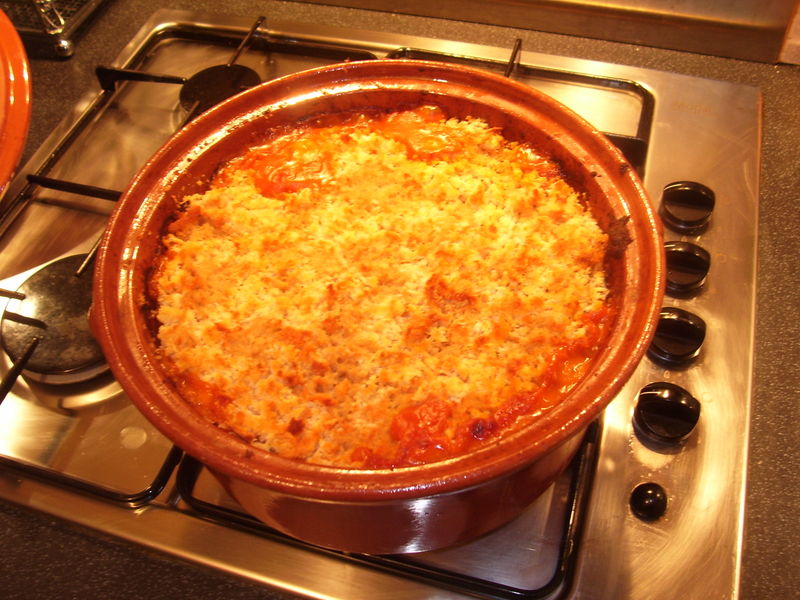
    Cooking for me is at once a selfish thing and an act of love…

    I cook because it's relaxing, a little dose of me time – you lose yourself in it

    Because making an effort for someone shows you care

    Because Mrs Northern hates cooking and I hate washing and cleaning

    Because I like showing off

    Because I care about what we eat, and the only way to make sure it's good is to do it myself

    Becuse the best way to show people you care is to make a bit of effort

    Because Mum always took the time to let me help in the kitchen

    Because Mrs Northern can only make lasagne

    Because it's really easy – good ingredients, a few tricks and you're off

    Because it's one of the few things I do really well.

    Because there's nothing more satisfying than making something good.

    Because I'm not good at much else.