• 100_1664 

    Because I've no cartilage left in my left hip so I can't run.

    Because when you're over 30 you can't eat what you want unless you earn it.

    Because it clears my head, pproblems always look a lot smaller after a good session in the pool.

    Because I'm useless at football. There's a joy in doing something really well – this is what I was born to be good at. I swim to feel good about myself, to feel empowered and confident.

    Because of the adrenaline,I buzz and fizz after swimming, no matter how I felt before I always feel happy after.

    Becausee I need to selfish sometimes, not be an employee, husband or friend sometimes. To have something for me.

    Because I can need a place to think on my own. Nothing clears like my head like being in the pool.

    To lose myself in a task that has no real point but means everything.

    Because there's no greater challenge than beating yourself.

    Because of the pain, the molten lead in the shoulder, the pounding lungs. To feel what it's like to feel. So much of life is about being cocooned, I need to really feel something. 

    To remember what it feels like to be a child. I spent most of the first fifteen years of my life swimming.

    Because I can.

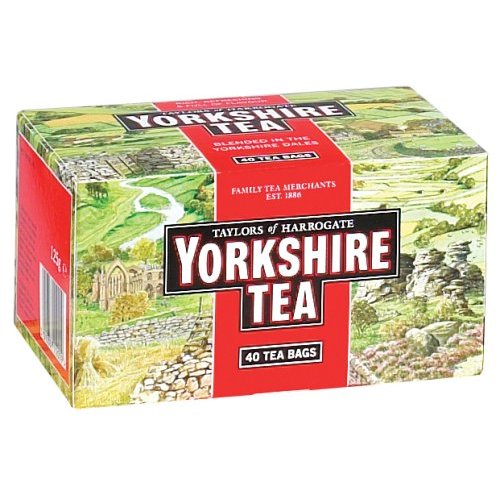
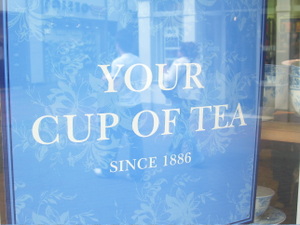
  • The Yorkshire Tea School of the Web project isn't quite finished. Stephanie Kelly's entry got lost somewhere between her inbox and mine. So we're going to take a look at her entry today. This is the very last post before Gareth or Rob pick up the next project.

    Yorkshire-tea

    Stephanie's focused on some rock hard truths about tea drinking. I love the observation that everybody has their own idea of their perfect cup of tea. Anyone who regularly suffers a tea round in the office would recognised this fact.

    There's also the idea of a cup of tea as chance to do something everyday for yourself. A little window in a plague of chaos.

    Now, I really like the way Stephanie's delivered this. It's simple, to the point, some chunky truths to play with. The imagery is really done well, it builds on her points, brings them to life. Really, really good.

    Now, I admire the way Stephanie's looked for a role for tea in people's lives, doing something for you. I like she's expanded it to find a voice that can talk about all sorts of things, really good, culturally significant…all that.

    Now if you're the kind of strategist that believes in building a voice with around a cultural truth and owning it, this is great. If Yorkshire Tea was part of a portofolio of brands from a Unilever, Arla Foods or something then, again, great. Lurpak is a great example of this type of brand really finding its voice. I think Dove is another.

    My view is that when you have a company with a clear culture already, you should find a way to bring it life, in a manner that's relevant to whoever you think your audience(s) is (are). It's not everyday you find a company with rich heritage and way of doing things, when this happens, thank your lucky stars and work from the brand out.

    Like I said, not everyone thinks this way, but as far as I'm concerned, I'd have been focusing on bringing to life some of the great truths they have. So well played Stephanie, it's not fair to re-judge what's gone before, but to make up for the mix-up, you get a copy of Adam Morgan's book too.Please let me have your address.

    For what it's worth:

    There's a consistent richness and flavour to Yorkshire Tea you don't get with any other tea. It seems to me that comes from a unique richness and flavour baked into the company culture……

    There's the obstinate sticking to quality levels that create the distinctive taste, a real family business since 1866 (I'll bet there's some great stories to be had), a real, small team of buyers (rather than made up Kenko characters), the attention to detail that means you have to choose the right blend for the right water.

    It all seems to add up to a brand that's about doing things properly or not at all. 

    If you take a look at their recruitment pages, there's a commitment to preserving traditional craft skills that seems to echo this.

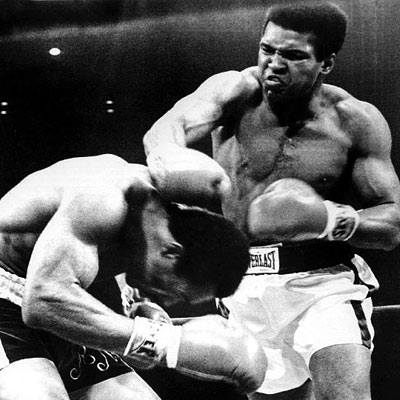
  • I watched 'When We Were Kings' last night for the first time in ages.

    Rumble 

    Another time I'll go on about the importance of knowing the past and where you came from, but not today. What I took out of watching that fight was the way Ali transcended mere technical brilliance, he was so good you didn't even see the great footwork, the jab that was, literally faster than the blink of an eye – just artistry. But the romance would have impossible without the craft.

    There are lots of example of great exponents of their chosen discipline who go beyond mere technical brilliance. Watching Ed Moses float over hurdles, Einstein's, watching a ball fall from a McEnroe drop-shot like a rose petal, The Brazil football team, Mozart, and whatever else doesn't just make you admire, but make you feel.

    Inspiration quite literally means 'breathed upon', Homer described it as coming direct from the Gods. It's a strange thing, as it stands outside of skill. A painter could spend a lifetime creating technically amazing paintings that inspires no one, while someone can have a in incredible idea for a film (or an ad) without a clue how to make it.

    When they both come together, it transcends description, it takes your breath away. But in the end, inspiration is pretty much impotent without hard work, practice and knowledge, but expertise can survive pretty well without inspiration.

    I think that means there's little point poncing around an agency waiting for an idea to appear from nowhere – it really doesn't happen often. So called inspiration is usually the result of lots of hard work, it's merely connections finally forming. That also means that iinspirational ideas need nurturing- they're rare.

    Also, we should celebrate the solid people that never let us down, the ones that always produce something good, something that works. Celebrate the doers, not just the stars.

  • This interview with Victoria Pendletonis rather good. In case you were wondering, she's an Olympic winning cyclist. I like the way she's so honest about how unsatisfying winning can be. She beats herself up to strive for things she'll never achieve, so that merely winning isn't a pleasure, it's merely a relief. Immediately she's thinking what next, when it's over there's no purpose.

    Sport is an unforgiving mistress, losing hurts, pain is an integral part of it, but no one talks about how it really feels to win.

  • Trqaffic

    If you're remotely involved with cars in any way professionally, your should read 'Traffic', by Tom Vanderbilt. Indeed, you should read it if you just drive.

    Especially interesting is sub-plot that the biggest danger to a driver is safety. The better you get at driving, the less you concentrate on it, the safer the road looks, the more you switch off.

    This reminds me to show you the way to Niko's post about doing strategy for your clients' competitors. I love the idea of forcing yourself to be better by making things as hard as possible. If you've made the market dynamic that much more challenging to be different and credible to, that's a good start. Make yourself 'awake at the wheel' rather than coasting and thinking about what you'll do when you arrive.

    However, while pressure forces you to be better, a level of 'not thinking' is needed too.

    When it comes to the crunch, it can be helpful to be able to do really skillful things on instinct. If your a sportsperson, that allows you to not worry about technique and frees you up to read your opponents. If your cook, not worrying about a sauce curdling, or burning a steak lets you multi task and become incredibly creative, until even being incredibly creative becomes second nature.


    That's why I think you can't avoid basics and hard work in this job either. No presentation goes as expected, there's always a question you're not ready for. You need to have what you're going to say so ingrained you're ready to be flexible, you need to have done so many presentations, you no longer need to worry about standing up in front of people, or how you come across.

    It's really hard doing strategy if you're worrying what the difference is between a brand idea and a comms idea, you can't make a creative brief sing if you're confused about the difference between a proposition and take-out, or when to use a task based proposition.

    I once heard George Bryant say that it takes seven years for a planner to find their voice. That's a bit steep, but I know what he means, before you can stir things up, you need to do the craft bits as second nature.

    Just like my old swim coach say that there was no physical pain we would ever go through a race that would come close to what we experience in training (bastard). He also made sure we never worried about ot stroke, it was second nature.

    But here's the rub. When you're a child grown ups look like they know what they're doing, when you become one of them, they'll be nothing to worry about. When you're an account exec, account directors seem to know it all, they make things look effortless. Planning directors look the same to me. 100_1987

    IBut it doesn't get any easier, or not if you're any good. Like driving on instinct, the more you can do without thinking, the more time you have to fret about other stuff, and there's always new stuff to make you feel like that kid, that baby planner or that account exec again.

  • 100_2520

    So. after much delay, finally we have the results for the Yorkshire Tea Account Planning School of the web task. Just in case you can’t recall what it was about, read this. If you can’t be bothered…

    This was a task about tone and manner – the hardest thing to get across to creatives. I wanted to see what you would do with Yorkshire Tea’s brand voice and how you would communicate it to a creative team.

    Feedback will take two distinct directions. Firstly, your idea, secondly, how you bring it to life.

    This is a joint effort between myself and Steve. I wonder if you can tell who wrote what….

    Anyway, well done to everyone. This was a hard one, very loose, thinking AND bringing it to life, but since that’s a big part of planning to life, something worth doing.

    So………………………………………….

    First up is Carlos Camacho and Juan Pablo Carrero, a planning and creative mash-up.

    Download brief_tea.ppt

    They’ve taken the angle that tea drinking itself needs to be redefined. They’re in a good area of finding something fundamentally human rather than mere category judo. They want to focus on pleasure as fundamental human right..and sipping Yorkshire Tea is tasting pleasure.

    Now we like this. We like elevating Yorkshire Tea from the other, everyday, unsung heroes. Tea is one of those everyday masterpieces we take for granted, like paper clips and washing machines. As we’re sure they’ve noted from their research, Yorkshire Tea tends to win in taste tests, it does deserve to be appreciated. So far, so good.

    We really like two bits about how it’s been brought to life for the creatives. Firstly, there’s that piece of writing…."A feeling nobody escapes from and everybody seeks". There’s real  meat in that, the idea of something you at once try to resist and constantly want. There’s a real tension in this, a real voice, a real truth, a real point of view. We would have made more of this.

    At first we liked the wall of images, a really useful illustration of the world you want to create. But then we got confused. We guess much of that comes down to wanting to know what Yorkshire Tea’s view of pleasure really is.

    We got a strong view that everybody has a right to it, that feels like a call to arms, a strong rallying call to unite a community behind. But the images range from a sensuous, sexy, almost dangerous expression of pleasure, to joyful, to contemplative. It would be good to explore the areas of ‘pleasure’ Yorkshire Tea should be associated with; those which reflect it’s brand values and heritage, and maybe those that don’t. This is where it began to fall down. Top marks for the use of imagery, but it seems to confuse what you’re talking about rather than solidify.

    Maybe you’re intending it to be open, to build with a team, but maybe this is a little too open.

    Next up is Anjali.

    Download apsotw_yorkshire_teaanjali_2.ppt

    In his email, he’s written that he’s certain he’s after tea drinkers who want to pay a premium for quality. Bang on considering Yorkshire Tea’s premium price. We quickly get to a strong point of view for what Yorkshire Tea will do for them.

    They’re stressed, no time to think, no time to just be. Yorkshire Tea will bring them satisfaction.

    On the idea front, the idea of a little island in the day to enjoy, to make the most of, to not have to think about it really strong. At first it wasn’t clear that ‘satisfaction’ would nail it. There seemed a disconnect between the idea of a mini- antidote to an overstuffed life, which feels very true of our relationship with tea and satisfaction, which suggested to us either rational quality, or something worth striving for.

    Then we looked at the slides and got interested in ‘satisfaction for free’.  Not sure what it meant, but the shots of the Yorkshire Dales, serenity, someone taking time to smell the roses made a bit more sense. We presume you’re saying that Yorkshire Tea is all about taking some time to clear your mind, some me-time. Liked this, it seems evocative and something ‘Yorkshire Provenance’ could own.

    It’s just that ‘satisfaction’ didn’t get us there. We guess that shows the weakness of words v images and associations. So great work on Yorkshire Tea’s role in it’s fans’ lives, great delivery of something creatively useful, but we would look for words that convey it a little more.

    There is a strong idea in terms of Yorkshire Tea taking you out of the day-to-day to a natural, peaceful place. Take that idea and focus on it, rather than complicate with other ideas of satisfaction. Great stimulus, just be clearer.

      Then we have Andrea

    Download fancy_a_cuppa.ppt

    The heart of Andrea’s thinking is Yorkshire Tea making a typical day a bit better. However that might be as true of any tea brand as Yorkshire Tea. She identifies the facets of the brand essence (the scone recipe, heritage, etc) but seems to believe tit will lack appeal to the (new) audience. We wanted to see you identify what you’ve got, who your audience is, what they think, feel, do and identify what aspects of the brand ‘connect’. For a brand as rich in heritage as Yorkshire Tea there must be something – how can make the brand truth’s relevant?

    So, potentially some good thinking but maybe needs more development and aligning to the Yorkshire Tea brand.

    The stimulus in support of this was inspiring and convincing – although there was possibly too much.   It confused rather than evoked.

    And finally we have Noako.

    Download yorkshire_tea_final_na.pptx

    ‘A delightful stubbornness’ is superb – really different, rich and above all else, true to the brand.

    The start of the presentation is equally inspiring – and it continues to make sense…

    …so stop there.

    A good idea is a good idea – it doesn’t need endless explanation and support.

    It’s rare that you nail an idea with words alone – in this instance you have. Anything else would be bringing it to life, but it feels more like further exploration rather than building on what you have.

    The more you explain something the less confident it feels.

    So once you’ve got an idea, stop, interrogate it, keep it simple and ensure it makes complete sense. Don’t over-elaborate. This applies to planning in general.

    So, lots of great stuff in everybody’s stuff. General feedback – stimulus is bloody hard. There’s lots of really great stimulus here, but absolute relevance is critical. It needs to solidify your thinking, build on it. Get your core thinking locked down, be confident about it and then work hard to make that interesting, rather than hedging your bets.

    SO THE WINNER IS NAOKO WHO WINS ‘THE PIRATE INSIDE’ BY ADAM MORGAN. Give me your address and I’ll get your copy to you. Close run thing, but overall, the thinking was simple, inspiring and something only Yorkshire Tea could own. Those first two slides were so good, there was almost no need to do anything else, there was compression of lots of meaty stuff in those two slides. Well played.

    So that’s it. Sorry for the delays. Hope the feedback was useful and fair. If you disagree, do let me know. What does anyone else think? 

  • There’s been two pretty big pitches in quick succession, almost concurrent, taking over my life until the end of last week. One was good news, the other not.

    100_2471

    100_2113 

    It’s not often you get to look both success and failure in the eye at nearly the same time, before post-rationalisation and self justification kick in. And loss is always a deeper feeling than the joy of getting the good news.

    In any case, it’s always such an anti-climax. Pitches are things you both love and hate, nothing in this business quite matches the feverish activity before that big date, the fear that the ideas won’t come, the magic when it seems to arrive all by itself, the late night takeaways, those nights when you can’t sleep with the Adrenalin overload and when you do, you dream about the bloody pitch. You form bonds with new people in the agency you don’t usually work with, you get closer to the ones you do.

    And then it’s over.

    At first it’s a relief to get a little of your life back and hurtle through the things you really should have been doing instead of pitching. But then you realise  you miss it.

    When good news comes it’s a pleasure to see all that hard work pay off, but there’s no time to enjoy it, suddenly it’s real, you have to make good on your promises. It never matches that heady brew of fear, expectation, creativity and sheer WANTING. And there’s no time, suddenly it’s real and you have to make good on your promises. 

    Only loss can come close, the bitter, helpless frustration. You know it was great, you know it was the right thing to do. Why can’t they see it? Like the feeling of being dumped by a partner, you have to fight the maddening urge to pick up the phone, even though it will do no good. In a little corner, you’re sure they’ll see sense and realise their mistake.

    They never do.


  • Boris Becker was a maddeningly frustrating tennis player. When he was good, he was breathtaking but when his bad was very, very bad. At his best he used a strategy only the very best would ever contemplate. He played to his enemies’ strengths.

    Beckerborisphotoxlborisbecker622377

    In most sport, most strategy for that matter, you tend to look for a weakness in your opponents’ armoury and exploit it. Not Becker. Ivan Lendl had the most terrifying forehand in the game, Becker didn’t play to the backhand, he let Lendl pound his trusty forehand at him, firing it back even harder. He wanted to show Lendl that his own forehand was better, ripping him apart by snatching away away the comfort of his best weapon. He usually cut him to ribbons.

    He would play to Edberg’s peerless backhand, beat the graceful Mecir with his own artistry and try stay back at the baseline against Agassi. It took incredible talent and strength of character to use a masochistic strategy like this, but then no one enjoyed bouncing off the ropes more than this German with his famous Wagnerian serve.

    It’s an interesting way to think of brand strategy too. We spend lots of time looking for gaps in the market, finding weaknesses in the competitive set to exploit. But what if sometime you were a little braver? What if you could find a way to make your opponents’ core strengths into liabilities or pure irrelevance? Wouldn’t that be fun? And more long term?

  • Morning. Remember me? Haven’t been around for awhile. 2 pitches, one Northern.

    100_0991

    So I’m really sorry to Account School of the Web entrants patiently waiting for feedback. It will appear tomorrow without fail.

  • One thing that really shocks you about getting older is how much you don’t change. The insecurity, the juvenility, the crapness with money, the inability to speak to attractive women. When does it all bloody stop? Seems that life over thirty is like being Tom Hanks in Big. Or so it seems.

    100_0489

    Like the way grown ups seem like giants when you’re five, but you don’t notice them getting smaller – it happens too gradually, you never notice how much you’re changing. If you met yourself 10 years ago, you’d struggle to have a drink with them. Or maybe that’s just me. You do grow up a little bit, it’s just a little hard to notice.

    A big difference between married men and those yet to settle down with the ball and chain is possibility. I’m not sure this is just a bloke thing, but since I’ve never been female (despite leg shaving and the worrying bag incident below) I can’t really comment on that. Anyway, men like having their options open.

    They may be perfectly happy with the partner they have, but that doesn’t stop them imagining life with someone else. Some of that is accepting there will  never be thrill of the chase, the first date, the first sleep over etc, but much is simply that once you settle down, you lose the possibility of meeting someone else. Like the way you browse the job section, or can’t resist accepting calls from headhunters, the possibility can be exciting, even if you’ll never do anything about it.

    It’s only when you get married/settle down that you realise that allowing yourself to be happy with the love of your life is MORE liberating. You have to work at it, don’t get me wrong, but not worrying about this stuff anymore lets you worry about lots of things that matter more. More bandwidth if you like.

    So there you go, I argue that being married is maybe more liberating than not being, it just frees you up for stuff that’s more important. Of course this doesn’t mean you won’t be an immature buffoon with your mates, but it might mean you get to talk about more than exaggerating your feats with the opposite sex.