
• So it was the Northern at The Northern on Thursday night. Everyone turned up,along with a few new faces.

    It was lovely to meet Sarah again, along with Ian who got my old job. Yet again, too little time to talk to everyone, but there you go.

    It was particularly nice to see Young Mortimer and Andrea. David’s working with me on this and that, less than a year since he spent some time with me on work experience, while Andrea’s in her final year of study and on the hunt for work experience and her first job. You could do a lot worse than getting her in.

    That’s right, the youngsters are coming. Feel comfy in your job? be ready to raise you game.

  • I was reviewing some European ads for something or other and noted how many brands claim to be for true individuals. It seems you can’t move for genuine one-offs in this continent.

    At first glance, it sort of makes sense for these companies to behave like this, a cursory look at the data sees more people in Western Europe agreeing that personal taste is more important than fashion every year. I don’t buy this  totally though, it sounds like ‘the right answer’. No one would want to  admit being one of the herd thanks to the cultural pressure in the west to be indivuidual.

    Anyway. as far as advertising and popular culture are concerned, there is nothing more obvious and common than individuality. Or so it would seem……..

    I propose it’s not who you are that makes you different, it’s what you do. There’s the old cliche that each human is an original of the species – 0.1% different to everyone else. But reverse that -we’re 9.99% identical. Biologocally, most of us really iare not that special. Buying stuff won’t do it either, whatever wrapping you give yourself,in the end, you’re not that physically different to me.

    What makes me different to you is what I’ve done. I have lived a different life to you. What I’ve experienced, what I’ve seen, what I’ve read, the good bits, the catastrophes – those are the things that make me who I am. And unless someone has experienced all these things in the same order, they’ll never be me and I’ll never be them.

    Now this feels like territory for those brands stuck in bland individuality corner – give them experiences that are truly unique, not ‘stuff’.

    It’s also pertinent for planners. We need to stand out as discipline – creatives and suits need to WANT us there. They got on quite well without us and can still if we’re not useful. You need to have experienced lots of stuff they haven’t. That means reading, doing and finding more. Of course, time is just an issue, but you’ll find a way. Just doing and reading the same as planners in other agencies means you’ll always come up with the same stuff. Be a one off through all those things that you’ve done.   

  • I think I’ve mentioned somewhere else that when you play a song you like to someone else you hear it through their ears. It’s something to do with mirror neurons firing.

    100_2001

    It’s a useful trick for practicing presentations, knowing that work is really both right and good and generally avoiding any pitfalls.

    It’s one thing to rehearse a presentation in your head, it’s quite another to do it to someone who has nothing to do with your project. Suddenly you can hear yourself from their point of view, you know which points are too long,too short, too fuzzy and simply not well though out.

    Same goes for creative work. I watched someone in my team present some work that’s been months in development. Being on the receiving end of someone explaining everything, sitting with clients really made me objective by seeing it all from a totally different point of view. Thankfully it stood up, and we even saw ways of making it better that hadn’t been clear before.

    So talk to someone, not just when you’re stuck, when you are totally sure. There’s nothing like having to explain yourself to see where you can make things better,

  • I did an internal session on creative briefing on Friday. You know –  how how to think about the various bits, top tips for writing one. Only to realise I was benefiting as much from this as anyone else.

    100_0969

    A fair chunk of the advice I was giving I don’t always follow myself. I should.

    That’s the good thing about trying to pass on what you’ve learned, it forces you to look at yourself a little bit harder. Bad habits can start as little chinks, eventually they can becoming gaping chasms.

    It”s not that easy describing what you do instinctively, not just creative briefing or thinking about brands.Try describing how walking works, or how to ride a bike. But trying to get to the heart of best practice usually exposes how much you’ve strayed from the path.

    By the way, top practical tips for writing a brief in a rush:

    • The quickest way to describe your audience well is to read what they read. Devour their world intensely and it soon comes.
    • Don’t stare at a blank page, just start. Fill out the section you can, you’ll soon find you’re writing too much and the excess belongs somewhere else – you’re on your way. If you start with target audience, it usually spills over into objective for example.
    • Talk to someone. Maybe the creatives you’ll be briefing, someone a bit like the target audience, but anyone really. Most ideas come out of conversation. Have a chat.
  • It’s hard to pick a favourite ad, but this commercial from Nike is certainly up there. The ‘Hurt’ commercial will connect with anyone who’s ever been an athlete at any sort of level, and to be honest, anyone who’s pushed themselves to anything difficult. There is pain and sacrifice along the way.

    Pain

    And the feeling of loss or failure is far more intense than the moment when you win or succeed. I did this and that as a swimmer, but the things I remember the most are the failures.

    I remember having a really bad year, but finally getting it together for the last big final before the Christmas break, only for my goggles to break. I remember getting a final stroke all wrong and coming second by a fingernail on a race I’d been preparing for all year. I remember winning big in America only to be disqualified on a rule I didn’t know they’d changed. And I remember training so hard I threw up.

    I do remember the successes too, but the thing about wonderful  moments, apart from never being as intense as the pain,is that what you really remember is the build up. That’s true of most things. Christmas Day is never as good as getting ready for it. Is there a more intense feeling than preparing for an important date? The possibilities, the desperate wanting it to go right?

    After meeting Mrs Northern for the first time I had a week to wait for the next date. I couldn’t sleep, could hardly eat, I just couldn’t stop thinking about her (the date was pretty good too).

    I think that goes for work too. I both love and hate pitches. The feeling of not getting it can be more crushingly intense than the euphoria of winning.

    But pitches or projects with clients you have, it’s great to see the work appear somewhere, but there’s also a feeling of loss, a bit like finishing a great book, a curry you don’t want to end or a great film. You realise that getting there was the good bit.

    The end is not as fun as the start.

    I think that goes for career ambition as well. Account Execs want to get promoted and stop having to write contact reports as soon as they can. Junior planners want to write some bigger briefs and be able to delegate more number crunching. Everyone is in danger of not appreciating the clients they have and going after newer, shinier, sexier ones.

    Stop, take a second, live in the moment, take it in and appreciate where you are now. As a junior, you’ll never have this freedom again, freedom from pressure, freedom to fail and learn from mistakes.

    In the midst of a stressful day, when you need to do everything at once, stop and consider this is what you really love. Most people who leave agency life or take a break miss the pace and the buzz.

    Smell the flowers while you can. 

  • A couple of people have rightly pointed out how/who to submit entries to. Just email them all for me, title the email account planning school of the web. You’ll find my email link on the sidebar of this blog.

    There’s no limit to the amount of slides, but this task is aimed at creatives, and even if it wasn’t, taking the time to write less is a good habit to pick up, so practise here.

  • Once upon a time, a rare species known as ‘planner in a Northern agency’ began to meet to shoot the breeze and have a couple of drinks. It grew a bit more and thankfully, some non-planning types began to turn up and it simply became a chance to have drinks with some nice people who loosely work in the same game.

    100_1213

    It’s been ridiculously long since the last one, but we’ve finally got out act together. Next Northern Planning night is October 2nd, The Northern in Manchester (in the Northern Quarter), from 6.30pm onwards.

    I’ll be there.

    Rob will.

    Gemma will.

    Ian will.

    Simon will.

    I’ll make sure David is.

    Andrea better be.

    But the more the merrier, come one, come all.

  • I was reading Campaign Magazine’s ten commandments for graduates last week and two things stood out.

    Firstly, don’t try and switch to planning after two weeks- account handling will become much more than contact reports and competitor reviews. They’re right, it is more than that, but there are two things to add to this. First; don’t even think about planning if you think it’s less work. It’s not – it’s as least as hard.

    100_0970

    Harder to get into meeting rooms (they can manage perfectly well without planners if they want), harder to squeeze everything in – too few planners, too many clients means you’ll always be running uphill, harder to multi-task – one minute you’re writing a brief, next you’re swimming data, next you’re running a workshop.

    Also, life as junior planner means you’re doing lots of so-called mundane tasks too. Endless TGI runs, preparing stimulus for workshops, swimming in Nielson…. and if you’ve got into this business thinking it’s all long lunches, glamorous shoots, blogging and coffee you’re in for shock. It’s more colourful, but a doddle it is not.

    Second was about keeping doing what you love. The first point makes this hard – where is the time? But as a planner, and person, you really have to find a way to do it.

    By default, a planner needs to be interesting. If all you can talk about is advertising, you’ll become quite the opposite. And there’s lots of pressure in this business – you need an outlet.

    100_2520

    And most ideas, most good thinking comes out of the office, when you least expect it. You need to give yourself that chance. Planners are never not working really.

    Put another way, planning is about understanding humans, so you need to be one, not an advertising robot. One way or another, you need to find the time. I couldn’t function without sport – I need to swim, cycle and stuff like I need to breath. I need to cook, it’s relaxing, it’s creative, it’s making something.

    That’s my love. What’s yours? If you haven’t got one, get one (or two!) quick.

  • Righto, it’s back.

    School

    Looks like the faculty is Rob, Gareth and Northern. I’m doing this round, then Gareth (his last one was a doozy, look forward to it).

    Anyway, this task is about tone of voice.
    100_1990

    Creatives find planning types useful for two things; getting the work through the client/research and providing useful stimulus.

    Getting the work through starts with a good brief that as many people have inputed into as possible – if someone feels they’ve had a part in developing the work, they’re far more likely to support it..but that’s not what the task is about.

    It’s about stimulus. There’s all the critical, non-official conversations around the diarised meetings that help you and the creative teams shape the work – as long they’ll let you in that back door, which requires them to think you’ll be interesting. But the briefing matters too, even more than the brief.

    No matter how short, how well written a creative brief is, it is still words. That’s not too great for creatives who think in pictures, associations and metaphor. It’s even worse for tone and manner, which is the part of the briefing (and brief) that usually gets the least attention, yet it’s the most important.

    About 95% if human communication is non-verbal, body language, appearance, facial expressions, these are what people react to and subconsciously remember. It’s no different with creative work. The core message that arises from the proposition still matters, but it’s the delivery that really matters – the brand’s body language.

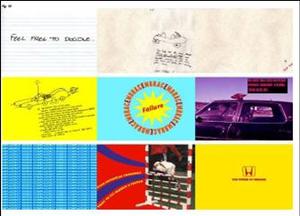
    Take Honda. Great ads, built around a brand based on optimism. But that’s just a word, the stimulus that informed the creative process was this:
    Honda

    (Sorry to WK from nicking it from your creds). Imagery, associations and sentiments that brought to life what the brand was about.

    I work on ghd, where the brand behaviour is everything – words cannot do it justice – but it’s critical a creative team know what it is – it produces work like this, this and this.

    Great brands tend to be built on a consistent view on the world, culture at large – some sort of long term, core organising vision, something that pulls together any objective you may have, put is flexible enough for virtually anything.

    Your task is to develop a vision for Yorkshire Tea, perhaps my favourite brand in the whole wide world – and make it real for a creative team. The only mandatory is that it should be done in powerpoint – as guide…analogy metaphor, pictures, video (pasted in or linked to youtube) are what works with creatives, so try and use them as much as you can. Something you would use in  a creative briefing, but also a reference for development.

    Don’t worry too much about core Yorkshire Tea short term objectives, or international v UK. Just have a go at creating something interesting, something meaty, something inspiring, something that feels right.

    All you need to know for now is that Yorkshire Tea is a premium tea brand sold mainly in the UK. It’s priced well above own label, and more than most tea brands. It does well in most taste tests, it’s a deeper, richer taste than most tea. As with most premium brands, they have to justify their price point, not least in defence against own label. They are proud of their Yorkshire heritage, owned by Taylors of Harrogate, who also own Betty’s probably the best tea shop in the world (based in Harrogate, a quintessential middel class Yorshire town).

    This is a hard one, and it’s very open, but I think it’s worth having a go- increasingly, as consumers segment, brands are going to have to be interesting enough to earn attention, rather than forcing things the other way. Developing the voice will be core planning skill amongst the billions of others.

    Deadline for entries is October 15th 11.59pm (GMT). Good luck, Any questions, put it in the comments and I’ll answer as we go along.

    And while the judges haven’t been appointed yet, it won’t just be me.

  • Until today, Nikki worked on ghd global with me. Now she’s off to see the world. God help the world I say.

    Nikki

    Nikki is a legend, works like a demon – always with the sunniest outlook on absolutely everything.She makes good tea too.

    Best Nikki quote ever, "I fancy everyone sometimes".

    Best Northern being worn out by Nikki quote, "If your going to be rude, be funny".