• Daydream. Scientists think it’s one of our most complicated activities, the way we shape ourselves and become aware of those things we’ve felt without thinking. We need time to allow those thoughts to unfold. Lots of empty spaces that precede stumbling on the unexpected. Being bored is important sometimes. The brain sometimes needs a chance to rearrange itself. Sometimes we just need to be free to do nothing.

    We all need some not thinking time.

  • The Northern Planning catch up thingy is confirmed for this Thursday (21st) at Common. People will start arriving at 7.30ish. Simon chose the venue, if it’s no good blame hime.

  • Hello out there. Can anyone help me understand a bit more about Dubai? If anyone has any data on:

    • How much flesh you can bare in advertising
    • Rules on religious reference in advertising
    • Any stuff on women’s relationship with hair, salons and who the style opinion formers might be..

    …….I would be so grateful that I’ll give you a free copy of John Steel’s Truth Lies and Advertising, or Edward De Bono’s Six Thinking hats.

    First useful response gets the goods, posted free of charge.

  • The trailer for Indy IV is out. Had a big stupid grin watching this, please make it be good.

    MY family were all in Blackpool at the national swimming championships when Raiders came out. It was chucking it down, so we decided to see a film. The kids voted – Clash of the Titans or Raiders. I sulked, Raiders won I wanted to see Perseus and the Kraken (Mickey from Rocky was hilarious in this). Half an hour later I was having the time of my life. Happy days…….

  • Adam from work has a blog called Adam’s ads (we’re also making some agency t-shirts together by the way).

    He’s set out to post an ad or two every Monday that will make you smile. Remember those? Ads you want to watch. This is my personal favourite we all used to copy the walk in school. And being clumsy, I’ve walked into the odd lampost or two…..

  • Planning

    The Northern Planning meetings resume Thursday 21st February, somewhere in Manchester. I’ll there, Rob will, Gemma will and so will Simon. Probably Mr Furlong too.

    Anyone else fancy a drink and a chat about stuff? Be nice to see you.

    I’ll post venues soon – as for time, about 7.30ish.

  • Sofa

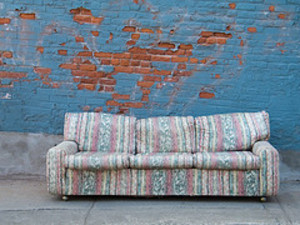
    Until very recently, I spent a lot of time working on a sofa retailing brand. I don’t regret a single minute, but I won’t miss it that much. That’s not because it’s considered the creative doldrums, more do with the wrongheaded way they stick to tshort term actics orather than developing fans. Ikea is an obvious exception of course! There is so much interesting territory to cover, but the norm is a focus on price and shoehorning upholstery into fashion.

    A sofa is at once commonplace and luxury. It’s the one piece of furniture that cannot be flatpacked – very much at odds with instant gratification society. In the UK, the average leather sofa cost £1,118, not cheap, yet nearly every household has one. In many ways, the sofa mirrors the gradual democratisation of luxury and opulence throughout society.

    Originally, in Arabic countries, the ‘suffah’ was a raised bit of floor festooned with lovely cloth and cushions. Only the very rich and important got to use them. It was symbol of luxury in Britain as well…only the postwar shifts to cheaper manufacturing and a different attitude to consumer credit brought them into most living rooms. This has been mirrored from the relaxing of the stiff, formal, rolled arms and spooned backs with ornate carvings into the low back, tall cushioned version we’re used to today. They’re all the same these. Only colour, fabric and size really distinguish them these days.

    All that sameness explains the category norm of selling fashion – how else would you convince someone with their serviceable sofa that’s relatively comfy that they need a new one? Ikea polularised a designer life with ideas like ‘Chuck out your Chintz’ in the 1990’s. But there’s a lot more going on here. First, in style – we live in times when there’s a tension between the need for personal expression and the expertise and time to do this well. This is less about telling people what looks good, and allowing them to live an illusion that they’re choosing for themselves.

    But there is far to talk about than looks. In a market saturated by style, they’re forgotten what a sofa is actually for – sitting on. And this has become more important than ever. A sofa has huge symbolic value – the living has become the the hub of the home, only the modern, multi tasking kitchen comes close. We watch telly on it, doze on it, surf the web, play video games…only the desk or the bed sees more of us. Yet most retailers throw style messages at us, as opposed to encouraging us to make sure that the thing we’ll be spending so much time on is absolutely right. Personal style is one thing, personal tastes in comfort and how we sit is one another.

    We all sit in different ways, the days of formally sitting up straight are long gone – we slouch, sprawl, curl.whatever. A lived in sofa has a memory of the people that sit on it, from the short term warmth it retains from your body, to the way the springs don’t bounce back and the frame gets mishapped after awhile – the sofa has moulded around your body. No wonder we all have a favourite seat.

    Sofa’s accumulate records of our lives – pet hairs. toe clipping, food stains, pens and, a financier has worked out, there about £1 billion down the backs of UK sofas in the form of loose change.

    In the end, even the comfiest sofa gets too creaky and we drudge out to the retail park to get a new one. A new sofa has been fetishised in our culture – the interior design revolution and demacratisation of luxury means they’re a symbol of good taste, easy opulence and social belonging.

    But this magic doesn’t last. The splendid new piece is delivered, and for two weeks is loved and admired as thing of beauty. Then it’s forgotten – just part of the everyday routine, something we watch Corrie on. That’s the real truth of these things – looks are fleeting, comfort should be forever. That everyday fabric of our existence that we only appreciate once it’s gone.

    There’s so much about in culture to bring this to life – time not cash, the growing need for more time with loved ones, the idea of us all cocooning in an ever more complex and worrying time in history. Since we spend so much time on these things, and need for this has gone beyond the negative ‘couch potato’ idea (or it could) ,surely there’s a narrative that go beyond fashion and price? About time with people, about going more and not staying in? About working all day and ,loving to flop down and be with each other (or by yourself?)

  • I wonder if slavishly following ‘lifestyle’ propositions can get in the way of good thinking sometimes. Much of strategy works make a ‘lifestyle’ available for purchase. If you don’t like your life, buy a new one…..have a garden makeover, a new ‘look’ for your wardrobe. This can make up for the tedium of life of life, but the tedium is actually pretty good, and it makes up the bulk of our existence.

    If you’ve read ‘Herd’ by Mark Earls, you’ll be familiar with the idea that we should be looking for influence interaction BETWEEN people, rather than individuals themselves (by the way, this echoes the way physicists think about the basic building blocks of matter – they don’t look at how particles behave on their own, but how they interact). This already suggests that looking at individual ‘lifestyle’ may be flawed. But here’s an additional view…

    You simply cannot buy your way into another life since so much of is made of unavoidable daily habits….things that involve too many other people to avoid. Collective daily habits are what makes life what it is – deadlines to meet, breakfast at your desk, theirs TV to view and sofas to slouch on.

    We learn these habits off by heart and forget them – at least until they’re taken away. There’s a reason most in the UK don’t go on holiday for more than two weeks – we miss a proper cup of tea, our own bed or decent TV. Things we usually take for granted. BT has a fight on its hands to remove a stack of unused phoneboxes – not because we think about them day to day, we’re just used to them being around, the predictability comforts us.

    But the grammar of our everyday lives changes imperceptibly over time – like the way we all got used to seeing mobile phones everywhere, or how the full English breakfast gave way to the two course toast and cereal, and now that is shifting.

    I think there’s a lesson for marketing folk in this. Maybe there’s a lot to be said to shining  light on the everyday. We know ourselves so little, exposing the truths about ourselves can be more interesting and useful than so called ‘novelty’….not just the truth in our own lives, but the truths corporations forget about themselves.

    What is Honda is not a story about how their people collectively behave? What is Vodafone’s ‘Make the most of now’ if it isn’t a discussion about the pace and complication of today’s daily life?

  • Following on from that ‘the world will be fine’ post, something else struck me on history teaching us about the future. Made me optimistic too.

    There have been some wonderful innovations in human history, but the real leaps in the development of our species have pretty much been forced by necessity. Like the way we had to develop agriculture when we ran out of large animals we could catch. We’re good at getting ourselves out of tight spots. We survived the ice age, we got through the last Yellowstone volcano eruption when humans we’re reduced to pitifully small number.

    That makes me feel a bit better about global warming. We’re finally realising we’re in a sticky situation, and like people you work with who leave it until they’re on deadline and pull through, we’ll suddenly fine we’re able to act. Things like the combustion engine, which has largely stayed the same for decades, will suddenly be innovated out of all recognition.

    Lets hope so.

  • Home sweet home.

    Cartoon_house

    Somewhere deep in our subconscious, there’s this idea of a perfect home. It looks beatiful, smells delicious and you’re always happy. There’s a little voice that won’t go away that tells you this is the home you should live in. Love will blossom in it, our lives will be this shiny vision of effortless perfection. And modern brands help us fool ourselves, and create all that style, and forget the substance.

    Of course this vision of home is total rubbish. Love is consequence of intimacy, not decoration. Home can be where the heart is, but it’s little to do with images of perfection.