…..as you can discover here.
-
As I hinted here, I’m not very good at sulking. The dark period ended a while back, but a wise head gently mocked me for it on Thursday – enough to do something about it.
As Rob pointed out, I’m hopelessly rubbish at being angry (good at grumpy though), so it’s time to make up for some very public flailing with some sunny optimism.
As far as I’m concerned there’s a positive in everything if you look hard enough – and too many of us are looking to the future and what they hope it brings, instead of the perfectly wonderful things around them now. That’s why I hope Russell ends up writing that book he’s not writing, and Funky Pancake is so brilliant.
But that’s other people’s stuff, not mine. I’m going to show how most things are pretty good if you look at them that way. Like the way my knackered hip got me back into swimming, how being a useless suit got me into planning. Or being old and past it has made me better at football. Things like that.

And it’s time for some more recipes. It’s getting cold again, so it’s time for comfort food. The kind of dished that fill the belly and comfort the soul.
Speaking of cheery things, I’m giving myself one week to post myself singing Boney M. That should make you smile since I’m tone deaf. You have until the midnight tomorrow to suggest a song.
-
I really wanted to write some stuff today, but the day from Hades put a stop to that. I wanted to post about:
My visit to the Howies shop
My first visit to the swimming pool for two weeks AND a spot of going back to being a suit today – both showing the danger of not keeping your hand in
Reflections on how I’m useless at sulking, and a lot better at being sunny, so I’m going to some very happy, optimistic things around here for a bit.
And more about what it’s like for a planner living where I do, I keep forgetting what this blog was supposed to be about.
Why am I telling you all this? Why don’t I just post it all next week?
I have no idea.
But in the meantime, official congratulations to Will and his job at Lowe.
-
Following on from some thoughts on how to select one, here’s some pointers on your respective roles.
When it comes to quant, there’s a big difference between ‘full service’ and ‘field and tab’.
Full service is doing pretty much everything from your initial brief to the their final presentation of findings and analysis.
A word about ‘analysis’. If they’re going to present stuff to you and the client, make sure both of you are very aware of where analysis ends and thoughts on how to APPLY that analysis start.
If they present well, they’ll have the client in the palm of their hand, right at that moment, they have the knowledge and the authority, you’re the charlatan. If they make any recommendations on what to do next, it’s very likely to stick. So I’d be very clear about where you want them to stop – and if they’re going to do some recommending, make sure you’re aware of what they are going to say, and hopefully have a hand in it.
I got caught out by a very good researcher who wasn’t used to working with planners. First project he went too far with his recommendations – and lost us the client. Why do we need to pay you when we can just go to researcher direct? Was the reasoning. Their campaign bombed. I take no pleasure from this, it’s just that the research guy concluded that the objective should be brand awareness. That was natural assumption since not enough people went for the brand as a matter of course. He hadn’t appreciated that emotional ‘image’ advertising wouldn’t work since people were after evidential assurances in a market with little trust betwen consumer and brand.
That goes for a quant agency are qual.
Field and tab is the service where you write the questionnaire and analyse the raw data. It’s labour intensive and while it’s cheaper, I really wouldn’t try and write the questions. Leave it to the experts. But if you’ve had lots of practice analysing data, the saving is one thing, it might make makes sense for ‘craft’ purposes too. It’s more work, but can be well worth it.
Analysis is not an exact science. It’s interpretation – and that relies on what you look for, and your background knowledge. You may find something the research agency will not. So, if they’re doing the analysis and report, I would still ask for the raw data and go over it with a fine tooth-comb. Not only could you find out something they’ve missed, you don’t know where the project may go……and something may suddenly become relevant. You won’t get that chance if you just get the summary. Look harder.
Here’s an example of looking a little bit deeper. I pitched for Stanley Tools many moons ago. We won through a bit more rigour. Nothing else.
They’d spent a fortune on an in-depth qual/quant study that was used primarily for NPD. They’d used the summary to highlight where the tools available were falling down – like staple guns needing too much force on the trigger sacrificing accuracy. But they didn’t have a clue about what the communications objective should be. The answer was in all the data they hadn’t even looked at. And the other agencies didn’t bother looking.
In case you’re interested, the trade pro’s thought the gear was for amateurs, they didn’t know it was all developed in tandem with professionals, to solve professional problems. And since since the pro’s influenced the DIY market – without getting them to re-appraise the brand first, a DIY campaign would be doomed. So we talked to the pro’s in places the amateur could see.
And further down the line, we had to encourage growth in the single female DIY market. Back to the data. Those same numbers showed that women felt very empowered doing it for themselves, more than blokes, not least since their experience/prejudice of male ‘experts’ was all talk and no trousers. And they never finished on time. The campaign sort if wrote itself.
Anyway. As far as quant is concerned, expect them to:
Guide on methodology, sample size, stimulus material. Expect them to DO the questionnaire, fieldwork and admin, along with data processing.
Decide if you want them to do the analysis and report.
YOU need to supply the research objectives and timing. Decide the sample size and target. Make sure the things the client want to find out are included. You will supply the stimulus material. And it’s up to you if you do the analysis and report. But make sure THEY analyse. YOU recommend.
With qualitative, we’ll just cover groups for now.
THEY guide on number and composition of groups, stimulus and any projective techniques.
They DO the recruitment and all the admin. They do the fieldwork.
These days, they do the group moderation and analysis and debrief. And the same goes here for what’s analysis and what’s recommendation.
YOU make sure they know the objectives, timings, you decide the final structure and number of groups. You make sure they know what your hypothesis is, what the current knowledge is (and that means YOU NEED A HYPOTHESIS!). You organise stimulus – and deliver it on time.
Two big points on qual:
The right stimulus can make or break the group. Work hard on getting it right. More on this in a later post.

These days, it’s less common, it’s even more to think about, but it’s really worth shouldering more responsibility and to do some of your own groups, seriously – if you can, you should. You can’t get a proper feel for emotions and reactions unless you’re in there with them. This matters more if you’re getting feedback on strategy ideas, or creative work, rather than gathering new information.
No one should know how the ideas are meant to work better than you, so no one should be able to use feedback better. And welcome negative feedback. It will be the start of being to make it better, in terms of more effective.
I didn’t do this once and saw a campaign die behind a viewing facility. It was work about people liking different things – each execution had a different person with a different quirk. They said they hated it since they didn’t like what that person did. But he didn’t probe about how we could make individualism work………and it was crucial since they said they’re selection criteria was highly personal. I know you know the solution’s simple, but many (our client included) take respondent quotes very literally.
And finally, coming back to quant, if you are analysing the data, here are some pointers.
- Mark up a questionnaire with the ‘total’ results’. It will give a broad picture of topline findings, and and idea of where to probe first.
- Go though each table and ‘read accross’ from the ‘Total’ figure – watch for anything that stands out as wildly different. Like men’s results being different to woman, Hello magazine readers different to non-readers.
- After you’ve looked at few, look for any patterns beginning to emerge. You’ll soon see different ‘trends’ coming out, Why is that? What are the connections? What are the contradictions?
- In short – read the data, analyse it into information – the patterns.
5. What story does that begin to tell you?
-
Here’s lazy Kato, being, well, lazy.
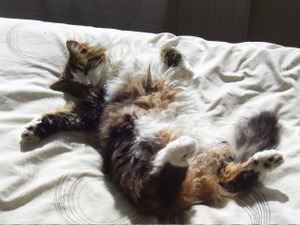

I want to come back as a cat.
-
Sometimes it doesn’t matter how much you know something’s the right thing to do, it doesn’t matter how compelling the evidence is, you have to show how it’s worked for something else.
It’s a bit like that silly rule some clients have about only shortlisting agencies with experience in their category.
It’s the ultimate planning Catch 22, you’re looking for a fresh approach, but ever now and then, you’re compelled to prove it’s worked for someone in the past. Right now I’m trying to show, beyond the data, how there doesn’t have to be a choice between product and price advertising and so called ‘brand’ ads. And I’m using case studies.
While I think it’s dangerous to use them as inspiration for your own thinking, they can be very useful to prove your point once you’ve got your ideas. I don’t like using other people’s work to get my own through, but if that’s what it takes, it’s worth it.
During my adventures, I re-read this KFC case study (Download kfc.pdf ) to show how a retail brand can talk THROUGH the product.
While were at it, it also shows how you need to be brutal with yourself. They found a differentiating truth about product quality, only to ask more questions and find product quality wasn’t compelling for the problem KFC was facing. Many teams would have stopped there.
-
I’ll be loitering in London for a bit next Thursday (4th Oct) afternoon if anyone’s around for coffee and stuff. Predictably I’ll probably be in the Breakfast Club.
-
Rob’s post about that Vodaphone Groundhog Day ad reminded me of why we’re all doomed to repeat our mistakes. And the value of doing research with people in real time, at the event.
It’s sort of obvious we’ll avoid repeating something that went badly wrong, but it’s just not that simple, since our memories are very good at misleading us and dooming us to making the same cock ups.
We don’t really remember everyday stuff, we remember the unusual. That’s why you can say where you were on September 11th but not 10th. That’s why we think we always pick the slowest supermarket checkout – we only remember the times it was a bad wait, not those times it was pretty okay. How many times have you gone WOW! This is average! Brilliant.
In other words, the least likely experience is the most likely memory. When you think about missing a train, you don’t call up those days when another one came along soon after and nothing much happened, you remember the day it really messed up your day. That makes experience very hard to learn from. How can you predict what is likely to happen if so much of is is based on what happened least? And it gets worse.
The biggest impact on our memory is the ending. That’s why couples who break up find it hard to remember when they were happy.

They post rationalise the whole relationship based on the painful end. That’s why the little the added gag after the call to action in TV ad can be so useful. You really don’t want someone remembering ‘subject to status, terms and conditions apply’ as the most powerful memory. Russell talks about ending well in presentations (Download toptentips_for_presentations1.doc ). Makes even more sense now doesn’t it?
Even scarier, cultural memes translate memory for us. We actually misremember our own past feelings and experiences based on what society has taught us to believe. Parents will tell you their children are lifes greatest joy, yet tell a researcher they are at their happiest doing things that don’t involve kids.
Like how so many people believe OTHER PEOPLE were more emotional than them when Diana died, since they believe themselves to have a stiff upper lip, thanks to how the British tend to view themselves. In some cases, if you ask a female how sad she felt after an event, she’ll believe she was more emotional than she was, so powerful is that cultural fallacy that women are more emotional than men. It can work in the opposite for men.
We even say yes to things in advance and regret it just before the time has come. Like babysitting -we agree wholeheartedly a week in advance since we’re thinking good about WHY we do it – to help, to be charitable, to be nice. But the day before we think about WHAT we’re doing – dealing with a screaming infant, missing a Saurday night out and stuff, so it doesn’t seem so appealing.
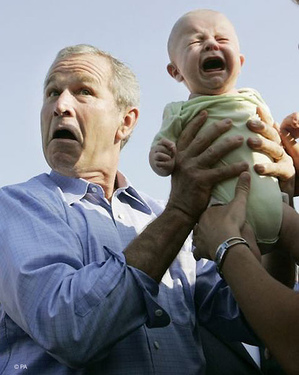
So you can’t always rely on your own experience, in fact you can’t rely on the advice of other that have gone through it, they’ll mis-remember too.

You can talk to people who are going through it right now though. I think this kind of stuff if interesting for the sake of it, but it also shows the value of being careful where you do your research in your job, and who with. The further you are away from the real experience, with people who are not going through it now, the less valuable it will be.Like they say….

-
I heard a great fact about expertise on Radio 4’s Front Row last night. Apparently, no matter how much talent you have, it takes 10,000 hours of practice and learning before you become a world class expert. Athletes, musicians, trapeze artists, philosophers – planners even.
That’s why reading things like Adliterate, Scamp, Russell, Gareth, Rob or any other home for experienced thinking is such a double edged sword. It’s seductively easy to quote them so much you end up believing the words were yours, or pinch some strategy instead of banging your own head against a brick wall.
And who can blame us? We want to do great, inspirational stuff too. Problem is, we have years to go before we reach that level (if we ever do) – and by definition, what’s right for one brand will be wrong for another. It’s so easy go insane not being able to make you’re thinking watertight thanks to the start being an APG case study rather than a good observation.
Of course, we should all be striving to litter every single creative brief with gold, no matter how dull received wisdom tells you the category might be. The bar is that high precisely so we can strive to reach it….someday.
One of the most rewarding clients I ever had was a B2B client who created computer software for labs. It was a victory to simply understand what they did, let alone turning it into a brief that sang. The work was good enough to make you weep and MY GOD IT SOLD! And what a way to learn.
So don’t expect it to be easy. And anyway, getting there is half the fun.
-
In case you missed it, Boney M ended up beating the Smiths 2-0. Each vote was close, but history will record that there was only one winner.

It got a bit heated at one point, after The Smiths camp pulled an ‘Obi Wan Kenobi strategy’ – "You can’t win Darth, if you strike me down you will make more powerful than you can possibly imagine". But hopefully Marcus is still talking to me.
No one else will once I sing on the web.


 NORTHERN PLANNER