
-
Right we’re on. Rob’s truly excellent project is over, so now it’s the turn of The North for a month on Russell’s School of the Web. And it’s all about rigour.
I’m keen on basics, and you don’t get more basic than working out what you’re objective is.
HOLD ON! Before you go beg Russell to start doing the APSOTW again, consider this. I don’t mean ‘sell more’, or ‘encourage footfall’, I mean a brilliant, insightful observation about what your campaign needs to do. Let me explain.
Your objective is NEVER, EVER, to simply sell more, or get them to contact you. It’s to use your communication to change opinions, behavior or LACK of knowledge. IT’S TO REMOVE THE BARRIERS to them doing what you want.
In essence, you need to get to the nub of what’s stopping people doing what you want, and what will make them change their behaviour.
Here’s a brilliant example from Pot Noodle. Research found it had two competitive strengths:
It was an all consuming eat.
It made no pretense to be anything other than artificial.
This was why core users loved the brand. But this was a weakness for lapsing users who saw Pot Noodle as trashy experience that left them with a feeling of dirtiness and guilt. They were at a stage in their life when they wanted to be a bit grown up. BUT HOLD ON! They weren’t entirely ready for this grown up world! They still craved aspects of their old lifestyle, and occasionally lapsed, you know….. nights out on the piss, the odd snog or a kebab. Now and again, they gave into their baser urges. Like Pot Noodle.
They still wanted to give into the urge to indulge in their dirty secret now and again. The communication needed to give them permission. So the objective became, "Reframe Pot Noodle users from sad losers to people with an understandable weakness’. You really don’t need much more of a brief when you have a brilliant objective like that. Here’s the result.
Or take the Flowers and Plants Association who needed to persuade women that men were too hopeless to buy them flowers, so they should buy their own instead of waiting.
Then there’s maybe THE example. The incomparable John Steel found that Porsche had an image problem. People thought Porsche drivers we’re ‘assholes’ who were too into image and conspicuous consumption. Yet when you get behind the wheel of Porsche you love the way it FEELS. So his task was to make people feel okay about owning a Porsche by casting them as driving enthusiasts.
Okay, you get the picture. The challenge is about DFS. Everyone takes the piss out of DFS’ communications, so here’s your chance to set that right.

You work on DFS, the biggest sofa retailer in the UK. Historically, they’ve focused all their marketing on discounts and sales, rather than any brand story, or product story for that matter. All the stuff you can read about here, never goes into any other medium. Should it? Especially when they have this (made up by the way!) business problem……..
They’re a bit worried that generalist retailers like Tesco (a supermarket) and Argos (a catalogues and website that sells pretty much anything!) are selling pretty good sofas at cheaper prices. Are they going to nick some share? You can take their sofas homes right away, they LOOK pretty good, while DFS make their stuff to order – which means at least 8 weeks to wait. Why would someone wait when they can have something that looks good now?
SO.
I want you to write a sparkling, inspiring objective for what DFS will do next with their communications to defend from these generalists. I want you to isolate the specific problem, and how communications will solve this. Your equivalent of ‘We need to make people think Porsche is for driving enthusiasts, instead of assholes with more money than sense’, NOT sell more more Porsche cars.
You can either do it as the ‘What do we need to achieve part of the creative brief, or do it in no more than 5 powerpoint slides. Creatives want a springboard – what will inspire them to reach for the layout pad and be able to start scribbling before they’ve even finished reading?
There isn’t much data apart from from that DFS web page on purpose. What can you dig out of all that information sloshing around the web to create a powerful idea? Here’s one clue, someone once said to me that when you’re going to promote an object, it’s useful to think about how it fits in with people’s lives. Another said look at the object, then look at it’s context. I want you to find a CONTEXT. I mentioned here that great strategies usually draw a connection between two things already in people’s heads that was not there before. What new connection can you find?
What about the dynamics of the category? DFS is the number one SOFA retailer, but the attacking generalists are far, far bigger and sell lots of different stuff. Should DFS act like a big number one? Should it act like challenger? What does it do what the bigger generalists cannot?
In the end, it must be true of what DFS does, and answer the business problem of defending against the generalist retailers.
And we’re not in the dark ages. Don’t assume you’re planning for an ad campaign, or any specific medium or discipline. You’re setting a task for finding an idea. You need to know that an ad creative, designer or anyone else for that matter can work to your objective – including media planners.
Please email me any questions. Deadline is 11.59pm (GMT) 6th August, entries by email only.
Only Microsoft word or powerpoint will be accepted. You’ll get feedback from me, and also from a creative, that man being Stuart.
And make sure you give it the overnight test. Don’t fall in love with your first idea – precis, edit, distill. You’ll be judged on your thinking first, but your delivery will be taken into account too! Take the time to write less.
There is a small prize for the winner. Being a bloody minded, and tight fisted Yorkshireman, it will be cheap, practical and useful.
Good luck!
-
Just wanted to give a heartfelt thanks to the people that helped out with my earlier cry for help.
Thanks to Marcus and Will. Thanks to Gemma for leading me to this post from Neil Perkin, which I think is pretty much required reading.
Particalar thanks go to James from the ever brilliant Future Foundation. You won’t get better cultural insights and if you’re not on their newsletter list yet, you should be.
-
1. Here’s some advice on something I actually know something about. Hope it helps.
Do swim frequently
If you don’t average about three swims a week you’ll lose your feel for the water – and that’s the thing that matters most, your technique will begin to deteriorate. No feel, no technique, no speed. If you look at some of the thrashing whales in your local pool, and compare the smaller, smoother ones swimming past them you’ll know what I mean. Swimmers seem to do better when they swim more frequently, instead of a few longer workouts each week. A few short workout are always better.
Do swim with good technique
Maintain the best possible technique at all speeds during a workout. If you try to go fast with bad technique, you are wasting energy. If you can teach yourself to go fast WHILE USING good technique, you’ll make bigger gains. It’s a bit like hitting a tennis ball as hard as you can and it never going in.Do drills as part of every swimming workout
Early in your workout, in the middle of your workout, or at the end of your workout (or any combination of the three!) do some specific technique work to improve your skills. There are tons to do, just google swimming drills.Do challenging workouts
One or two times a week (depending upon how frequently you swim) do part of your workout with oomph – push it. If all of your workouts are focused on technique, your technique will improve, but you won’t be able to go fast – if you try and speed up, your technique will go all over the place. Mix some hard stuff with technique work, let your body teach itself how to be graceful at speed.Do easy workouts
There’s no reason to kill yourself unless you want to compete. There’s no reason to do more than one or two tough workout sets a week, as long as you do one or two easier workouts, too. Work hard on the hard things, and easy on the easy things, and each kind of work will give better results.Do streamlines
It might be a start, a push-off, or the stroke itself, but you should always do things the same way – streamline, make yourself as thin in the water, as aerodynamic as possible. Quite simply, the less of you for the water to hold back, the quicker you’ll move through it.Do leave the wall the same way every time
If you’re bothered about racing, always push off the walls the way you would if you were coming out of a turn.. Most races have more turns than starts, and getting some extra practice with any part of a turn is a bonus.8 Do wear a swimsuit made for competitive swimming
This doesn’t mean spend £300 on the latest and greatest high-tech slicker than skin piece of swim wear, or embarrasing skin tight Wham swimming trunks. It does mean don’t wear baggy beach shorts if you are trying to improve your style or learn how to hold technique when going faster. That’s more resistance against the water, which messes up timing and technique. You don’t want that.Do ask someone to watch you swim
Better yet, get someone to video you. Getting some eyes to watch what you do is great for highlighting a problem with your technique you may have not noticed yet.Use flippers occasionally
Among other benefits, swim fins or flippers can help a better body position and you will learn what that position feels like while you’re moving. Then, when the flippers are off, you can try to recreate that position by feel, since you will already have a better idea what it will feel like when you get there. And if you care about a toned bum, the extra resistance a flipper creates will give you that too. That goes for hand paddles as well. -
Anyone got any evidence that proves or disproves that people HAVE or THINK they have a problem with the amount of time they have and the explosion of choices they’re faced with everyday?
Ta Mucho
-
Famous Rob’s post on Live Earth reminded me of something I was pondering yesterday. I’ve been slightly confused about HOW much the average Joe in the UK really cares about environmental issues.
Not least since a recent poll suggests that most of Britons believe the scientific community of still debating the role of humans in our warming planet. And the hitherto non-existent coverage in the Red Top tabloids.
Then yesterday, the News of the World devotes it’s colour supplement to Live Earth. Has the reader led the paper or is it the other way around? Either way it seems significant.
And does it matter if Maddona and co are doing the opposite of what they’re saying (private jets and stuff) if flawed celebrity is the only way to get issues into the true mainstream? Well, what do you think?
-
Just in case you didn’t want to take my word for it in the PSFK posts here, here and here, below are links to the first five videos so you can make up your own mind:
The Marketing Gap in Green Panel
Mike Butcher on how digital media screwed up the media business
Niku Banaie (Naked) offers Twenty-Five Signals for Change at the PSFK Conference London
Turning Trends Into Insights panel at the PSFK Conference London
-
Despite the training for last year’s swimming challenge REALLY hurting, I haven’t stopped training. I haven’t been killing myself, but I haven’t taken it easy either. Since it’s the only thing I’m good at it would be daft not to do it.
Now it’s time to push it again. Time for a new challenge. To be specific; Tortuous, ‘Why did I ever think I could do this?’ agony.
This a picture of Penzance pier, Cornwall, near St Ives. Half my family live here.
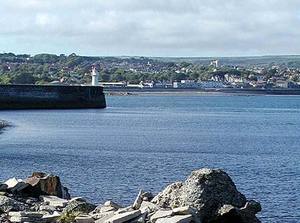
The photographer is standing in Newlyn, the lighthouse in the distance is Penzance. The expanse of water in between is the setting for the imaginatively named ‘Newlyn to Penzance swim’.
It’s a proper race this August. That’s a mile of currents, waves and freezing cold water. Just finishing it is hard enough, but I’m going to do it in under 20 minutes. Somehow.
There’s no way I’ll win (that takes a 17 minute swim), I’m not young enough, I haven’t got enough time to train and I’m not used to swimming in the sea. It’s going to take some seriously hard work to just do 20 minutes since this time since I’m going against what I do best.
I used to hate distance swimming as a kid, I wasn’t built for it and I’m still not. That just makes the challenge more fun. It’s on the 18th of August. That’s a month of excruciating mile after mile in the pool – and then a week of getting used to the sea.
To make matters worse, my nephews (16 and 14) are doing it. They swim everyday, they’re young fit and Cornish champions. I won’t beat the eldest, I may beat the youngest, but in any case, I can’t look too stupid. I won’t live it down.
What an idiot eh?
I thought about resurrecting Tired is Stupid, but no. If you want recipes and nonsensical planning stuff, you’re going to suffer with me right here. Every step of the way.
-
Okay, time to dive back into to quant research. Lee has added some useful builds on the first post, so take a look.
This time we’re looking at how to design a questionnaire, specifically one that is about FINDING out rather than testing work. We mentioned before that this usually happens after you’re pretty sure you know what you’re going to find out, thanks to working very hard on some qualitative work before. It may be a first dip into what’s out there. In any case, quant is mainly about proof.
What follows is a basic guide to some do’s and don’ts for putting a questionnaire together. If you’re a planner, I think knowing the specifics of what makes a good questionnaire will help you brief one in better, and give better feedback on the drafts you get back. Being able to be critical about methodology allows you to judge the validity of a research project the client’s doing without you’re input. And finally, there will be times when you’re pitching and very much up against it. You might want to do some quick numbers research internally – which means writing your own.
Questionnaires are a big part of that because they enable you to be more analytical (enables you to express answers as number), more practical (collate lots of respondent answers), consistent (everyone asked the same questions) and objective (interviewing done by non-researchers).
We mentioned before that quant is the bit that REALLY speaks the client’s language. So make sure it does what they want it to do. For the questionnaire, that means:
- Prove your answers to their brief.
- Have new ideas they can use in the future.
- Meet approval from their clients (the board).
- Fit their own style and standards.
- Prove something they (and you) suspect.
But they’re not the only ones the questionnaire needs to accommodate. Some poor bugger has to analyse these things, so lay it out and code it as well as you can.
The interviewer needs it to be easy to follow, written in conversational tone, short, with no difficult questions and avoid embarrassing or intimate ones.
And the respondent wants it to be easy to follow, they need to see WHY a question has been asked. And for them most of all, make it short easy to follow and never difficult or embarrassing.
Thinking about respondents, they’re the only inexperienced people involved, so take care of them. They want to be asked their opinion and feel they’re making a contribution. They want to be able to choose and answer that fits them. They want to be treated with respect and they DO NOT WANT TO BE BORED OR CONFUSED. And it may be obvious, but they want an incentive.
So avoid:
- Asking them things they don’t care about.
- Little eye contact.
- Machine gun delivery.
- Strange language (beverage?)
- Impossible feats of memory (how many books did you read this year?)
- Making them feel stupid.
The main questions areas are behavior (I wear Prada), attitude (Prada is stylish) and value (I want to be stylish even if if I go overdrawn).
Behaviour is largely who? When? How often? How much? How many? They need to understand the question, so leave out marketing jargon, and technical stuff. No one want to tell you how often they notice the viscosity of caramel. use THEIR language, like, "When did you last decorate your living room?"

Avoid ambiguous words, like dinner (lunch? Supper? tea?) and split things into the most basic elements you can, like:
Instead of, ‘If you were going to buy a new car tomorrow, which one of these would be the purchase price?’ use ‘Imagine you were thinking about buying a brand new car, roughly how much do you think you’d have to spend?’
or
Instead of asking two questions is one’ Do you enjoy watching a playing sport?’ Ask separately – ‘Do you enjoy watching sport?’ ‘Do you enjoy playing sport?’.
You need encourage them to answer truthfully – so avoid implying standards, or causing guilt. Gently lead people into a range of answers rather then coming head on with ‘How often do you brush your teeth?’. If you use self completion, and they know WHY you’re asking it you can get away with pretty much anything…’We all know we’re supposed to clean our teeth twice a day but it’s often hard to find the time..’.
leave sensitive questions until you’ve built up a rapport. Use projection is difficult areas..’Why do you think people pick their noses?’
Attitude questions allow objective measurement of how people feel about stuff? Those previous issues about embarrassment and ambiguity still apply. The main methods tend to be: open ended questions, alternative choices, rating scales or choosing adjectives to describe.
Open ended questions (why do you say that?) are easy to ask but difficult to analyse. There will be inconsistencies in how different interviewers probe – and respondents verbal dexterity.
Choices between alternative statements – like ‘Are you for or against a smoking ban?’ can be misleading due to oversimplification and not being able to choose.
Verbal rating scales are the most widely used – Agree a lot, agree a little, neither agree or disagree, disagree a lot, disagree a little. They are clear (I think so) but you MUST have a mixture of positive and negative statements to agree or disagree with.
Numerical scales – ‘How relevant is this boring post?’ 1. Very relevant. 2. Fairly relevant etc. They work well too. Same rule as above.
Getting them to choose adjectives when it gets to fuzzy problems they maybe don’t know how to answer. Here are a few words to describe the ‘Northern Planner’ blog’ which, if any of them would you use to describe it?’…appealing, distinctive, informative, boring, cheeky, irritating, dull, predictable, sloppy, smug, egotistical, opinionated, confusing (I dare you to answer). I find these the most useful for quantifying reactions to creative, and establishing attitudes to a category, or a brand personality.
‘Now I’d like you to do something a bit different that requires a bit of imagination.I’d like you to imagine Nike coming to life as a person. Which of these words and phrases would you use to describe them? Choose as many or few as you like.’
Which of these brands would you say is (read out statements)
Lion Bar Twix Crunchie
Chewy
Healthy
Popular nowadays
Doing brand image by association like above is great for market mapping.
Okay, here’s some final things to think about, for putting the questionnaire together…
- Tailor it to the interview situation. The telephone will have no stimulus material, no show cards, needs simple questions and needs to be short. It also needs a really good introduction. So although phone is always cheaper, you need to be aware of its limitations. Hall tests – shopping centres etc – give you more freedom to use stimulus, even video. HOWEVER, they can be a bit public so you need to work hard to overcome self – consciousness. Online allows very low cost AND stimulus, and it takes away the subjectivity of the interviewer. But bear in mind that people get bored, and they cannot ask for clarification. It needs speed, clarity and as much visual stimulus as it can take.
- In each case, you need to build a relationship with the respondent – let the structure do this for you – not least if you’re going to be asking prying or odd questions.
- The introduction needs a full and frank disclosure to put them at ease. Keep is short while allowing for rapport. Look for hooks – ‘we’re very interested in the opinions of dog owners like yourself’. Let them know how long it will take.
- Design the structure for variety and interest. Easy questions at first, complex in the middle, taboo at the end, move form general to specific, logical sequence, introduce fun questions, leave a pleasant taste.
- Get the flow right – avoid repeating questions, try using LINKING statements between sections, use as many involving activities as you can, vary the type of question used.
- Finally, try not to ask them to contradict themselves, do behaviour before attitude, do brand questions before advertising stimulus. And remember you want people to think through the issues – current opinion first, considered response to ‘new’ after.
So that’s it. I’m sure it’s too long, and a bit prescriptive, but sometimes it’s okay to just have a list of do’s and don’ts. It’s served to remind me what I’m looking for when I brief a researcher, and next time a I do a quick internal job for a pitch or something, I’ll use this to stop me being lazy.
The quick post would go something like this:
- Work from the client brief/objectives.
- List out and agree the topic areas before you do anything else.
- Be ruthless with questions- if you can cut it, do.
- Think about your key analysis breaks. How can the structure help?
- AND FINALLY AT ALL COSTS, PILOT IT! MAKE SURE IT WORKS BEFORE YOU START!!!
-
I had two very different chats about the same thing this week.
The first one was with a planner. He was describing all the things he did before planning – manual labourer and academic to name but two. He swears blind it makes him better at his job since it’s given him a much more rounded view of what life is REALLY like – and much more thankful to do what he loves now.
The other one was a joiner, who used to be a chef. He’s now decided on teaching and if you could see the joy at finding what he really wants to do, you’d know he was doing the right thing. Living a little, not having gone straight into teaching without living some real life will make him that much better at it.
Compare that with some of the marketing graduates on work experience you may have met. You know, the ones that think they know it all thanks to studying a bit of theory that only works in books, but never really seen how REAL people carry out their lives.
Some perspective.
Now I’m all for learning for learning’s sake, I truly think academic achievement is a must, but that needs to be enriched with the experience of doing something else too. Struggling a bit, failing a few times and, well just LIVING are very helpful for being a great planner, or anything else for that matter.
For my part, I learned as much from collecting glasses in a night club as I did from studying politics when I was at university. When you have to humour smashed revellers and tiptoe around steroid pumped bouncers, you learn one or two about diplomacy and the ugly side of human nature. You also learn never to wear shorts in a club, no matter how hot it is, or how hard you’re working.
I’ve been a gymn instructor, dole layabout, nursing home carer and telesales slave even before I failed at account handling. If nothing else, it showed me the everyday bravery and grace of people living out their daily struggle, and how insignificant all this marketing doodah really is. I wonder if more people could do with a bit of that too.


 NORTHERN PLANNER