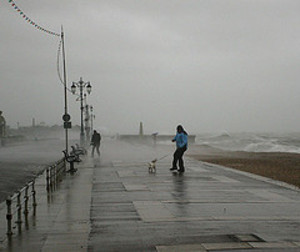
I can’t get home. The cursed weather has blocked off all my driving routes home. Good excuse to stay late and do some work, but first I’m going to tidy my disgusting desk.
I’ve already posted in Lets See what Happens for the first time in months.
I can’t get home. The cursed weather has blocked off all my driving routes home. Good excuse to stay late and do some work, but first I’m going to tidy my disgusting desk.
I’ve already posted in Lets See what Happens for the first time in months.
There’s a fascinating debate over at Adliterate asking if blogging is killing planning or not. It’s developing into a facts/logic V ideas and intuition debate.
From my point of view, I like planning blogs because:
a) Most good planning blogs don’t just talk about planning, which makes it a great source for finding thoughts to store for a rainy day.
b) Even better, l like the way good ideas get better and bad ideas get smoked out, a kind of blog Darwinism I suppose. Lots of new thinking is put out there, good ideas get talked about, commented on, developed and improved. The not so good either gets ignored or crumbles under the sheer weight of ananysis is gets. I think this helps us all to experiment, try new stuff and learn from each other. I for one get very lonely in a one man department.
Apart from calling me cool, in her comments on the John Steel post Carol wondered if John Steel began to explain what planning really is, and if it’s at odds with the realities of where some of us work:
"Do YOU think he explained what ‘account planning’ is? With all this talk of not being stuck in a professional evironment, well, wouldn’t that make an employer (and a client) a bit nervous? I’ve got friends who are actually clocking on.
Can you imagine it? "From 10:45 to 12:30 I did some account planning". I think we do it 24/7, funnest job in the world."
For what it’s worth, I think he did. He showed planning as stimulating the best ideas that will solve the business challenge. Information is crucial, but that’s nothing without the intuituion that helps start looking in the right place, and using what you find correctly. That needs freedom to look and think in the first place.

Carole took this picture last time we met in London. She thinks I look cool in it. Assume she means not hot since no one has ever said I look cool in the groovy sense before (including Her Indoors come to think of it). At least the forehead isn’t too shiny in this one.
This evening’s Northern Planning get together has been cancelled thanks to the stormy weather buggering up all forms of transport. We’ll do it in a couple of weeks or so and let everyone know. I’d polished my bald head specially too.
Beeker’s done a far better representation of last night than I. I’ll go back to nonsense about tea and swimming.

Another reason all that training was worth it. Did all 195 steps, not even out of breath.
Only thing I had time for last night, I just wanted to feel that overwhelming rush of humanity you only get in London (if you live in England).
By the way, it’s so much milder down there. People drinking coffee outside, it’s freezing up here.
So I did a flying visit to London to see John Steel’s talk on pitching. While I didn’t have time to catch up with some people while I was down there, I was hoping to bump into some familiar faces at the event. Carol was one, but she couldn’t make it. So for her and anyone else that couldn’t be there, here’s what happened. Sorry if it’s been post rationalised into my blinkered view of the world – I’ll be interested to see what others think. Incidentally, I wonder who was there that I ‘know’ as a blogger?
First of all, I was expecting more on actual pitches and less on working practices, although much of what he said was useful and made sense. He talked a lot about good powerpoint, which most people would know (wouldn’t they) – specifically, less slides, more visual, use as props, not script.
By the way, he’s a terrible name dropper, but maybe if you’re working peers are Martin Sorrel, Andy Berlin and Jeff Goodbye, I suppose hat’s unavoidable.
He recycled much of what was in ‘Truth Lies and Advertising’, but it was great hearing. Like the way the Porsche work would never have happened with normal work practices, or creative ways of doing research. He also used blinding good anecdotes.
Anyway:
Working environment:
Pitching

By the way, I managed to do my swimming challenge. It’s official, in late December I was as fast as I was at fourteen. It’s taught me one or two things:
This article from The Independent discusses the UK’s increasing love for fine foods and throws up some interesting stuff:
The growth of retailer premium private label food ALONGSIDE organic and fairtrade maybe shows how much ethical buying is status as much as morality.
Intersting to see that M&S may well lose out on two fronts – from competition from the supermarkest AND cooking from scratch (largely thanks to celebrity chefs).
By the way, I love Sainsbury’s ‘Try something new today’. Rousing customers out of ‘sleepshopping’ uses a great insight, but it’s the way the idea can be executed down a mundane product and price ad that I you see how well it works.

Of course Sainsbury’s returning to a ‘real food hero’ positioning was obvious, but few appreciate that doing it any earlier would have been a mistake. They had to sort out distribution first. I used to work on another supermarket and we all knew that Sainsbury’s shoppers WANT Sainsnburys to do well. They love it there and feel closer to it than customers of any other supermarket. Simply making sure the shelves were stacked properly would win old customers back – not sorting this would just piss them off again.
The genius of the current strategy is that encourages current customers to to buy more, and possibly upgrade, while giving new customers a reason to visit, forage and explore. Very, very clever.
 NORTHERN PLANNER