• I once worked on a big UK sofa retailer. It wasn't always fun to be honest.

    They were well known and kind of the default choice.

    But they were always in sale. Few buy a sofa because they really want to, they're not cheap, they buy it because they have to.

    And they put it off because they don't expect a nice shopping experience.

    I told them they might be doing well now, but there would come a time when they should try and make people actually like them, and put the experience at the heart of the communication, not just the product (it was a lot better than people thought).

    They didn't then, but eventually they did and apparently the commercial success is off the charts.

    Tesco made a mistake when they were seen as the titans of grocery shopping,. There was an under current in culture of people thinking they weren't using their powers for good. If Tesco was down the road, folks would shop there because there were few alternatives, but few really liked them.

    Dictators always end up suffering revolutions. 

    So when they were hit by nimbler discounters on one side and scandals about provenance on the other (horsemeat etc) few shed a tear.

    I  also worked with one of the best creative agencies in London. They were really good, no they were amazing. But even the best make mistakes and have dud campaigns. This is fine if clients and partners like you, but part of their 'brand' seemed to be about being rude to everyone. The client we shared loved their work but hated them. 

    Of course, as soon as they messed up, their was no love to get them through it and they were fired.

    This is why tech companies all end up investing in emotional brand campaigns. They eventually realise that disrupting the market only gets you so far. Eventually you'll mess up, and someone will disrupt you.

    Put another way, it's not enough to get people to buy you, eventually they have to like to buy you.

    This is missing from much of what Byron discusses about the fallacy of differentiation. It's true that most people don't know that much about the brand they buy or why it's different. But we buy stuff not just because we remember it (distinctive) the brand and they have 'removed reasons not to buy.

    It feels right, and that's something that rarely shows up in quant surveys. 

    This is what is missing from those who believe the future is about precision targeting and conversion. There will always be someone else with better data. 

    Everyone thought Microsoft was invincible, like they do about Google now…
  • I have no evidence why but I suspect this will work

    Which shows you should ignore a creative who wants to make the logo really small

    Kfc

    It's based on a truth in real life about local lookalike shops. We like familiarity, this reminds us that KFC is so established in culture others are copying it. It's real life, we all recognise it, it's not made up. Which means it goes into the busy consumer mind so much quicker…and builds cut through. 

    It's based on a truth about KFC – it's about really great chicken

    It's based (I imagine) on a proper commercial objective – we're losing our specialness and therefore share to inferior competitors

    And subtly, it's mental availability – the whole ad is about the brand name and logo

    And I know that's four things, but the problem with the quest for single minded simplicity is that simple is boring. 

    It's a simple ad, with lots of interesting compressed into it

    Anyway

  • There are some things you are formally educated on when you join an agency.  Like most clients expecting a clear role for communications, or the framework of issue/insight/thought.

    Then there are more informal and craft rules you mostly get taught. For example, make the creative briefing as inspirational and focused as you can, because creatives always have briefs they'll put everything into… and briefs they'll just get out off their desks.

    But there are things few really tell you, that you have to learn yourself, usually the hard way.

    Much of that is about the work you do, even more is about how you do it.

    Let's start with a 'how you do it' one. The best strategy types are like waiters, or like Satan.

    We do our best work when people forget we exist.

    It's a hard lesson to learn, but we rarely make anything. We create the framework for others to. The launchpad and the little nudges for the best, most effective work.

    There's nothing more annoying than a waiter, or shop assistant who marks your every move, or asks if you need any help when you clearly don't.

    Just as them not being there when you DO want them is equally frustrating.

    The best feedback I ever got from a client was when they said, "We're not quite sure what he does, but when he's involved it's all easier and the things we get are just better". 

    The worst feedback when I was a lot younger was, "Stop trying to do my job". 

    Which means a big part of how you go about your day to day is losing the ego and being really kind and generous with your thinking. 

    Because suits. creatives, media planners and whatever all get judged on the quality of their work and naturally need kudos for stuff that does well. If they get a sniff that you'll steal some credit (even if an idea is yours) they'll do everything they can to do the opposite.

    Strategy types ultimately get judged on the quality of other people's work, the creative output, the media plan, if the work get bought without too much pain and suffering.

    For example, the dark art of the imperfect creative brief (more on that another time)

    The trick is strike the balance between appearing invisible and the people who matter knowing what you contribute. 

    Of course, there are moments to own and shine. The trends presentation, the comm planning day, but still, it's amazing what happens when you approach it as time to energise others, rather than a chance to look good. 

    This also applies to clients. Don't let anyone tell you you're the 'brains of the operation'. Especially clients – clients are the brains of the operation. Our natural response to smart arses is either to ignore them, or compete with them. Another time we'll go into the sneaky ways of making people feel it was their thinking all along.

  • I did some research with British young folks a while back.

    I went in wanting to find out how miserable they all were with older generations messing things up, leaving them with zero hours contracts, university fees, uncertainty and whatnot.

    Of course they obliterated my misconceptions, by communicating how sorry they felt for people my age. How rubbish it all must have been with no internet, four TV channels, nothing on demand and Thatcher (they didn't mention Thatcher but in my head they did). 

    Reminds of a pretty universal truth that every generation (since the 1950s anyway) thinks it's special and rejects whatever came before.

    And people look at their heyday with rose tinted spectacles. 

    You know, everything was brilliant in the 1970s when Star Wars came out and we played out on rally choppers. Despite the fact there was nothing on TV on Sunday, everything was beige and The Smiths hadn't formed yet.

    Or everything was better before the internet in agencies when it was simple and clients loved creativity and had big budgets. Except 12 hour days were the norm, everyone had to wear suits and bullying was tolerated – or in some creative quarters encouraged. 

    I was reminded by this campaign, I really like it ..


    ..because it embraces life as it looks for THEM, not old grumpy folks like me. 

    Yep, one of the tricks when thinking about a 'target audience' is not to look at their lives from your frame of reference.

    Look at it from their point of view. 

    It's rarely the same. 


  • So I was given a Golden Bungle for stealing a client's phone.

    Golden bungle

    Accidentally of course, hers looked exactly like mine.

    She saw the funny side (I think). 

    This proves I'm not perfect, but this is mostly a good thing.

    Recent data shows people like brands to embrace imperfection a little bit more these days.

    I'd argue they always did, it's why Jennifer Lawrence falling over and then being so human in her speech and interviews was so powerful.


    The pratfall effect is really powerful. Tests have shown that you're more likeable if you spill coffee over yourself. I can't say if I'm likeable or not, but I can say a workshop that started with very blank  faces when I kicked off the day, instantly transformed when I spilled a whole cup of coffee on myself. By accident.

    I really does work when you put a little error into your presentation for folks to correct. 

    Of course, feckless as I am, you'd expect me to be the most popular person in the world. This clearly is not the case.

    But perfection is boring and exhausting. 

    Goop

    Emotion trumps perfection


    Humanity beats logic


    I really love in meetings with other London of global based agencies how easy it is to stand out by  talking like a real person. Or translating their jargon into normal language. 

    Obviously the typos etc in my posts are all intentional……….

  •  

    I really like all this new KFC stuff.

    Obviously it's great to watch and funny. But it's also an idea that means you talk about as much product as you like, rather than getting all sniffy about product features and benefits.

    It's an idea that works as a 2 second GIF, as ideas have to these days.

    I think the real lesson is looking at how people relate to you already. Let's be honest, everyone knows the Colonel. What they've done brilliantly, is found new ways to use him (refresh memory structures as some would say).

    Sometimes the obvious is great, as long as you use it in a way that maybe isn't. 

    Compare this to the way the Meerkat in the UK is looking so, so tired. 


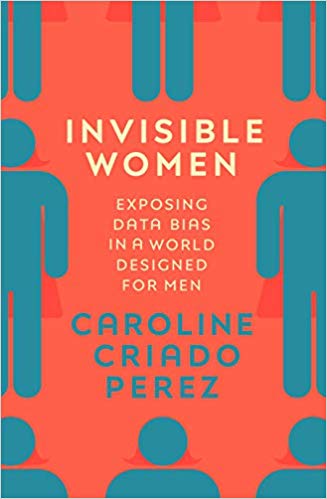
  • 41T2w2gPlCL._SX325_BO1 204 203 200_

    I haven't read this yet, I've got it on pre-order but it looks interesting. 

    You can't move for female empowerment focused campaigns right now. 

    From a cultural perspective, this has to be a good thing.

    From a brand perspective, you don't want your brand to look like it's jumping on the bandwagon, however good your intentions (let's be honest, the intentions are rarely altruistic). 

    So it's essential to find a new angle. I love how this book might show how inequality is deeply hidden in the fabric of life and culture. Because it has mostly been designed by men. 

    Apparently, Google's speech recognition software is 70% more likely to respond to men.

    Smartphones are designed for the hands of a man, not the smaller hands of a woman.

    There's anecdotal evidence that fitness monitors miss steps made when pushing a pram. 

    Also, most of it is built from data, that a reviewer describes as 'being used as like a laser'.

    Why should you care? Data doesn't have to be a pain in the arse, or a barrier. If used intelligently, if you know how and where to look, it can build a new perspective even on subjects that are getting a bit crowded. 


  • Someone reminded me today of the Abraham Wald story. 

    If you can't be bothered to click the link, he was a World War 2 statistician who helped improve the armour on planes to protect against enemy bullets. 

    His major contribution was to tell everyone they were looking at it the wrong way.

    They were putting more armour on the spots where planes, that made it home from battle, had the most bullet holes.

    The right answer was to put more armour where there were NO bullet holes – because you had to assume the planes that didn't make it home got shot somewhere else.

    There's some obvious learnings here when it comes to research about researching the whole sample.

    But it also shows us that data is a waste of time if you don't have the skill to analyse it properly, and sometimes work out what it isn't telling you.

    Sometimes we forget that planners were invented to make sense of research, because research can sometimes be very dangerous in the hands of researchers.

    Step forward New Coke. Where, decades ago, they changed the Coke recipe to be sweeter, more like Pepsi. But they tested the new recipe on one sip, when many sips, which is how people actually drink, made the sweetness too cloying.

    Or that's one side of the story. The other is that even getting the 'functional' research methodology right can be flawed, as the real reason everyone kicked off about New Coke, forcing Coca Cola to change the recipe back, costing millions, is that most of our relationship with brands isn't built on function.

    It's built on belief and not having to think about it. 

    They kicked off about New Coke because we don't like change.

    But then sometimes we do, we just don't know we do. 

    There's the cliche that Henry Ford telling us that if he asked people what they wanted, they would have asked for a faster horse.

    There's the way Apple made the Ipod when MP3 players weren't getting much traction, because he realised it just needed to be simple and nice to use one.

    There's the fact that the data from social media tends to contradict the data from search.


    Why Should you Care?

    It's easy to ignore data, or leave it to the data scientists. But there's gold in this stuff if you know how to look.

    Just as it's unfashionable to see any use in focus groups, but loads of clients still use them, and believe what people tell them, or even worse, believe the analysis of their moderators. 

    Research doesn't make intelligent decisions for you, it helps you make more intelligent decisions. 

    Planners, strategists or detectives? Maybe a bit of both. 

  • I was interested in what my better half would think about the Gillette masculinity work.


    This stuff hits a nerve with us, because our beloved nine year son is already trying to figure out his place in a world where the messages he's beginning to take in are at best, well, mixed.

    Her response was brutal.

    "What Gillette ad?"

    The Gillette ad everyone was getting worked up about if they worked in marketing. That most people didn't notice, or have forgotten.