• Stanley We won a pitch for these guys recently. I really enjoyed it for two reasons. Firstly, there was loads of research that had just been sitting there. All it needed was someone to make the connections

    It really showed what planning’s for. You can have as much research data as you like but it’s pretty useless if no one turns it into something interesting. It was great to see the creatives grab hold of the brief and turn it into some fantastic work.

    The second thing was that I have no idea about DIY, but I can’t stop wanting to play with all the tools.

    Stanley_1

  • On the subject of setting the agenda,  here’s some scary stuff about trans fats. They are artificial, they last longer than normal oil, but the body can’t process it. How would consumers react if they knew how much they were imbibing, and what it does?Vegoil2  How much would they appreciate a food related brand standing up for them? It’s not a big issue in the UK, but there’s some territory to be gained for the brand that makes it one.

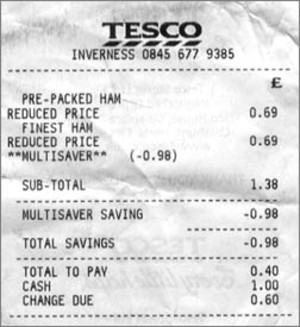
  • Sales of Fairtrade products Tescorose by 40% this year. No wonder supermarkets are replacing price with ecology as the new selling point for winning loyalty ( In yesterday’s Guardian). A good example of how consumers can make even the biggest companies change if they tell them forcefully enough. Imagine the possibilties for a supermarket that had set the agenda instead of echoing the trend when it became too big too ignore.Full article here
    The big chains all want to be green grocers – but it’s nothing to do with that inquiry

    Ecology replaces price as the selling point that aims to win shopper’s loyalty

    Julia Finch, city editor
    Thursday May 18, 2006
    The Guardian

    For years the supermarket’s main battleground has been price: "every little helps", "everyday low prices", "value to shout about" and "Asda price" have been their cries. But in recent months they have found a new territory to tussle over: the environment.

    All the big chains are engaged in a battle to prove their green credentials and portray themselves as caring, sharing protectors of the planet. Last week Tesco unveiled a 10-point plan to change the image of the monster grocer into that of a "good neighbour". Items ranged from sponsoring mass running and walking events to erecting wind turbines on store roofs.

  • In

    lithuania

    , if you break a glass you have to eat onions for a week or  else you suffer 4 hours bad luck.

    (although It may not be Lithuania, and I’m not sure if it;s onions)

    Melv


    From:

    Andrew Hovells

    Sent: 09 May 2006 14:50
    To: Publicity Bureau
    Subject: Don’t go in the kitchen in bare feet

    If you’re anywhere near the kitchen, watch out for broken glass.

    In classic Frank Spencer move I managed to throw one on the floor.

    Susan couldn’t stand to watch my lame attempts at clearing it up and helped, but even then, watch out for any bits we missed.

  • Hollinwood_1 Oldham_werneth P1010006

    One day last week the motorways were impassable, so I took the train. It went through loads of places I’ve never been to and probably never will, just like most marketing teams and boardmembers. It reminded me that a planner’s job isn’t just to make brands relevant to people, it’s also about bringing the opinions and lives of real people into boardrooms.

    I got talking to one of our creatives about this. He told me about a new homes client that was convinced people loved his houses. They got him to watch consumers rip his enthusiasm to pieces in a focus group and he transformed his business.

    On the other hand sometimes it’s simple. My gym is next to a nightclub called ‘Evolution’ (three for two for Turboshandies on a Wendesday – you get the picture). I saw this Lucy_pinder_poster_1poster outside. Why complicate things further?

  • Tim_1

    There’s no getting away from having to do the factory tour. Insights into your audience are important, but obsessing about them can make brands forget to talk about themselves.

    Getting to meet the people who work there is a great antidote to this and can teach you something fresh and interesting that the people in marketing may not appreciate. The information is nearly always there, it just needs to be found.

  • Big Shiny Thing has a post about Google Trends. After a quick look, Mumbai beats New York and London for searches on Account Planning. Also, in most UK cities far more people are searching for Arctic Monkeys than Mcfly.

  • Grant McCracken has put up a thought provoking post about BMW. They seem to be positioning themselves as an ‘enemy of the enemies of ideas’. Interesting since, in the UK at least, BMW drivers tend to be seen as conservative and rather dull. I wonder, has the new ideas culture led to them to look for a new audience? Has it simply forced them to make their current drivers re-classify themselves? What do you think?

  • Aprica_1 Saw this ad in the Observer. I thought it was good visual idea, dramatising the line ‘avoid getting old ahead of time’.

    The problem was, I was damned if I knew what they actually do. They probably wanted to intrigue me enough to go to the website. They did, but then I had to play an irrelevant game. It took another three clicks to find out they sold childcare products. It’s no good engaging with your audience if they don’t know who you are and you don’t tell them why you should care.