I read something in the Observer at the weekend about young British people. I can’t find it and I guess you won’t bother following the link anyway
It was about a real tension and contradiction on their lives and how they go about culture, as we all know, or I hope we do, really great brands try and resolve tensions in culture.
That’s the problem with pen portraits and segmentations, or God forbid, focus groups, they try and reduce things down to simple, one dimensional observations.
Real life just isn’t like that.
If it was, I wouldn’t crave being by myself on my bike after a great holiday with the kids…..and yet miss them so much I can’t think straight if I’m away with work for more than three days.
Anyway, this article persuasively set out that the ‘hard work, growing up young, neo puritans’ side you will have heard about is live and kicking, but so is the instant gratification, show my life on Instagram, ‘Everything Now’ ‘Infinite Content’ without being content (I like Arcade Fire) side of their lives too. At once down to earth and tremendously floaty.
Who, buy the way, pity my generation for having such a boring up bringing without Wi Fi.
These two polar- opposites are real life. There’s power in contradiction, play in it.
I’m sure you’ve heard the children playing football metaphor, the one about how everyone just chases the same ball
It’s usually used by creative folks to show clients the need for distinctive creative strategy, my media agencies to show the need for thinking harder about media channels where no one else is playing…..well you get the picture.
The thing is, it’s happening more and more to agencies themselves. Creative agencies finding it hard to sell ads, so moving into the world of content, digital strategy and even media planning, while the media folks continue to move into content, pretending that data is the only answer to everything, tech and all sorts of special services, from creative designed for programmatic to the kind of partnership planning previously owned by the PR folks. Meanwhile PR folks are coming up behind with all of the above, with the advantage of knowing about influence.
And digital agencies continue to pretend that digital media is still a ‘thing’.
And the pace will only increase.
Now, you’ll be used to agencies squabbling over territory, with the familiar land grabs over core communications strategy, earned digital and the like. In the past, that was because most people in agencies never learned how to play nice. Creative agencies are possibly the biggest culprits, but I’ve worked with some very aggressive media agencies too.
But now, the battle isn’t about egos or landgrabs, it’s going to be about survival. Clients can’t be bothered to manage lots of agencies who don’t get on or try and do the same thing, it’s all a bit too complex these days and what we all do was only ever 10% of clients’ world in any case.
So we’ll winners from the organisations who can deliver great, neutral advice and ideas, nimble enough to be expert in a number of, what to be used to be known a disciplines. Planning, media and creative specialists, the consultancy folks if you like, who can’t think across the whole marketing piece will be seen like a football manager who is only any good at managing the midfielders.
There will be a small but robust group of specialists in implementation, probably the stuff that can’t be done by robots…great video production and imagery for example.
Hopefully researchers who can work across data science and ethnography, surely despite the need for arse saving in clients companies and agencies alike, we’ll see the death rattle of artificial qual like focus groups…or claimed quant survey only analysed on a short term basis (not to mention social sentiment being seen as anything but a picture of how people want to be seen, rather than what they do), I bet there’s some next generation insight gatherers who could make a lot of money.
This should be great news if you want to be stimulated, challenged and be prepared to be flexible, if you’re good or want to be. If you prepared to build value rather than follow the latest trends.
Because the thing about chasing the ball is that eventually it’s no fun and very few actually get to kick it, let alone score.
It's good being in a job that's about people. What is more interesting than the wonderful, scary, frustrating, contradictory human race? The ones in real life, not the pen portraits I mean.
It's also a constant challenge because while basic human behaviour, tech and stuff means that the culture ad folks are really competing with (not the market) is shifting faster than ever. Certainly the media, paid and otherwise we exploit to try and reach them is evolving right in front of our eyes.
And the pace is only getting faster.
Knowing when an how to adapt is the trick, and when and how not to change, but adapt we must.
The industry, your organisation and most most importantly, you.
You'll find if you don't keep your eyes and ear open that sometimes your employer has become obsolete and you go down with them.
Sometimes you wake up and see you have become obsolete in your organisation. Like the moment someone switches off a fridge and you only then notice the buzz, all of a sudden, something has been happening under your nose, your place has moved on, you haven't just like that, you don't matter any more.
This shouldn't frighten you, it should excite you. If you're a planner, wisdom rather than information (data!!!) will always matter, as will the ability to look at things in the way others don't. But how you apply that, the tools you use and who you work with is, and will continue to constantly shift. You won't get bored and if you're one those who can embrace change and also keep core competence, you'll have a fine future.
In other words, keep soaking up stuff from the world around you like always.
But keep a sharp eye on yourself, your specialism and your employer. Sometimes they need to change, sometimes you need to change, sometimes other places have magically evolved into the perfect place for you, where you're at and where you want to go.
Keep moving, like a great white shark, you'll be fine, its only when you decide to stop moving forward that the problems start.
You may have watched Finding Nemo, you may have liked it (your kids will if you have them). It's one of the most successful animated movies of all time.
It nearly flopped.
Previously, Pixar relentlessly put in an open feedback loop, on all elements of the script development of all projects. That's right, one of the most successful creative company of our times have more in common with Team Sky than you might think. Marginal gains, relentless, little improvements of all tiny aspects leading to a game changing whole. Think about it, all aspects of the creative process open to honest criticism. In fact, with it built in.
They tried to streamline the process for Nemo, and it bombed in every audience pre-test. It was only when they went back to the constructive criticism that the genius movie began to take shape.
Compare that to most agencies, creative, media or whatever…the worship of the creative types or the grand strategists, the obsession with the proposition, the simplified comms strategy or the purity of the game changing creative idea.
The worship of the beginning, the leap of insight (or the re-hashing of the obvious in many cases).
Another comparison, Lord Dyson and his game changing new hoover. He wasn't the only one to have the insight about bagless vacuums. He was just the only one who could get it to market, could get it to work. After the insight, he relentlessly prototyped until the game changing machine evolved, emerged if you like. Flashes of insight are fine, brilliant ideas that word in the real word seem to require lots of hard an failure built into the system.
The Japanese have a phrase for this, Kaizen…graduallist. Everyone in a Nissan factory is tasked with spotting little ways they can improve the whole.
You could say that proper brilliance is a little like Pointillism, a fantastic piece of work is actually made of of lots of little dots that gradually make up the bigger picture.
So, thinking about marketing services agencies that tend to pride themselves on great ideas, originality and obsession with the best work. Perhaps the truth is that they obsess with great initial ideas, but miss a trick in making them truly the best work, because they're not stress tested enough. Also, once campaigns are signed off and they get made, it could well be that they should still have room to develop…..rather than 'don't fuck with the idea'.
Maybe the lead agency, who tends to define the core strategy and creative, should welcome early feedback from partner agencies and clients alike.
God help us, maybe the tissue session in actually a good thing.
Now before you object and tell me about the magic of true creativity, I give you the myth of great poets, the romantic legends of yore. Most of them took copious amount of drugs, not to alter their mind and dredge of insights from the ether. They took drugs that let them work harder, so they could chip away at okay prose and gradually transform it into the stuff of legend.
No doubt you've heard of cognitive dissonance. The unfortunate situation where people will ignore facts when they disagree with their views, line of thinking or long cherished beliefs. They'll also jump all over the facts that support their line or argument. instead.
It's why you should be very careful when you're using any research or data, it's odds on you'll ignore the real implications and use what supports the direction of your thinking. In other words, research tends to be useless because your mind is already made up (you just don't know it is).
Just as you need to be really careful changing the minds of others, clients etc, with research – they will only believe what they want to believe.
It's amazing by the way how many strategy types are very dismissive of any research they haven't managed, but it's gospel if they've managed it. Also, think of the amount of focus group bashing that goes on from planning rockstars -compare this with the practice of using groups to support your pitch.
The big problem with cognitive dissonance is that it gets worse as the stakes get higher. Few junior account execs or planner buyers will dig their heels in arguing with the boss, not only will they get fired, their reputation at work isn't built on being right(yet), it's getting stuff done on time.
It's the agency leaders you need to watch out for. The creative directors, the heads of strategy, the social media director and the CEO's.
Not only is their entire career built on knowing more, being more expert, basically being infallible, the process means they have to land on something and then stick to it. A head of strategy will want to jump all over an insight or killer observation or comms strategy, a creative director will land on a core idea, a CEO only makes big strategic decisions, it's just they're more about the agency and less about clients. And of course, agency culture means that bigger egos and those great at persuading towards a line of argument tend to rise to the top over more thoughtful and maybe more open minded folks.
In other words, the stakes are simply higher for your boss than they are for you, and agency culture tens to lock this in as they have to make big decisions in more of the showpiece bits of agency life……they can't be seen to wrong and their personalities only make it worse.
In other words, don't trust a think your boss says. I you want to make the most of them, use their ego, their clout and their persuasive skills to sell YOUR THINKING, by helping them to think of it themselves.
Unless you're the boss, then you're part the problem.
"We all have a tendency to think that the world must conform to our prejudices. The opposite view involves some effort or thought, and most people would die sooner that think – in fact they do so"
Bertrand Russell
Read the usual stuff in The New Scientist about how us, 'The Thinking Ape' have all been honed by years of evolution to not think that much, you know, cognitive short-cuts and all that.
You'll be bored of planning types applying this to selling to the people who buy the brands we peddle, but, as the condition sort of predicts, we're not that good to applying it to ourselves.
Not only do we all buy stuff we don't need (you don't think so? how many pair of trainers have you got and how did you choose them?), we don't apply it to how we go about the job.
Here's the list of shame, how agency types can't help thinking along the path of least resistance..
We see life as a zero sum game. Early in our evolution, with finite resources, my loss was your gain, end of story. That small piece of land we fought over for example. It's built in that we see everything as win lose, not win win. So partner agencies fight over core strategy and fall out. Clients and agencies fall out over the success or failure of a campaign rather than what worked and what didn't. Brand babblers can't see the point of response, shopper agencies talk down brand building, when both are right and both are wrong. Brands need a purpose and nothing else and so on.
Folk Knowledge. The stories we were told as kids, the rituals we followed, they stick with us. The nonsense kids pick up about animals who are think and talk like people, we can't totally shake it, any more than we have a little reverence in a Church even if we're atheists. Is there more folk knowledge in any industry like there is is in marketing land. Being brought up on rational buyers and the importance of single minded messages, or even young folks instinctively thinking that TV ads are old hat next to native or pre-rolls, this stuff is hard to shake. Hello proprietary planning processes!
Stereotyping. It's also impossible to not pigeonhole people. We evolved to judge all living things by how they look, so we knew if they eat us. Just as we judge others to quickly know if they're a threat to our status, if they'll make good baby making partners. This also means we expect planners to be a bit quiet and awkward, creatives bad tempered and temperamental and of course, UK advertising still thinks UK Mums are put upon but wily and resourceful while Dads are bumbling and useless, but their heart is in the right place. Not to mention dismissing the over 40s. What is worse, we conform to the stereotypes to fit in, creating a massive echo chamber where everyone knows their place.
Sycophancy. We're suckers for celebrity. We love status. Because back when we were monkeys, or in tribes, we deferred to the alphas and because they were the most succesful, copied what they were doing. Let's be clear, no one knows what they're doing in this business, but we have to pretend something totally unpredictable (it is because its a part of economics, can you think of an economic prediction that turned out to be true?). So we defer to our bosses and listen to rockstar planners, creatives and other gurus, who don't know what's going on, but their very success depends on looking like they do. The blind leading the blind.
The Status Quo. We've evolved to hate change. As our lives have got busier, this has only increased, we need reliable every day habits and and predictability to get through as complex world. which is why, despite what they like to peddle, agencies are horribly conservative. Coupled with the folklore we've already discussed, in many ways, it doesn't matter if it's the right or wrong answer, only that it was arrived at in the usual way.
Religion. It's the most successful social idea ever, far older than capitalism. Big groups need some sort of higher purpose to keep them together and deliver a moral compass. There's a God shaped hole in all of our brains, it's just that without God to fill it these days, we need something else, On a social level, arguably that's Brexit. On a marketing level, the Kool Aid of Disruption and Media Arts springs to mind, Maybe, Byron Sharpe is the equivalent of The God Delusion.
Next time you're on a project and in full swing as yourself, are you thinking or just telling yourself you are!!!
I want to do this partly because decent media planning is a lot tougher than many think.
Partly because today's customer avoids brand stuff more than ever, and chasing them with re-targeting and spooky Facebook ads than know who are and what you've done are not the way to go.
Partly because good channel planning works with good brand and creative thinking. There's too much infighting between creative and media agencies. The more good thinking that goes into how to reach people BEFORE making ads and stuff, or at least, working together, the better for everyone.
And finally, I've learned a lot moving into media agency land from creative world, this is much of what I've learned, only fair to share with more creative minded planners, as those jobs continue to fade away, this might be a start of a Plan B.
So let’s start with a cliché that happens to be true.
Brands don’t exist in a bubble, they are part of culture and part of life. As culture changes, so therefore do brands and how they try and connect to people. Because in reality, brands are mostly a way to help us get through life without thinking too hard, perhaps the golden rule here is humility, assuming that no one really cares. Even the Guccis and Nikes of this world are not as important as your friends or the new Star Wars release, they’re not thought about that much and compete with other status symbols or tools for sporting confidence.
It’s also about behaviour, not just eyeballs. The context of where you decide to try and connect with people, your media ‘body language’ really matters. Just as it’s doubtful you would try and chat someone up in McDonalds, but likely you would try in a bar, when and where you decide to do things can matter as much as the creative work. Don’t believe the simplification that it’s just about reach, that’s the same as saying you just need to make people ‘aware of the brand’. I’m very aware of Donald Trump but believe me, I’m not a fan.
Now, like I said, life and culture changes. When I was growing up in the 80s there were four UK TV channels, then it was just the case of deciding over papers, magazine. Outdoor and radio…and direct mail of course. No wonder media folks were always down the pub, it was bloody easy. But culture moves on, people want more choice, they’re used to watching and reading what they want when they want.
It’s very, very complex. You can reach someone anywhere if you want. But don’t discount the unwritten deal you’ve made with people. They still know that if they watch TV for free, or at a small price, the cost is being exposed to advertising. The same with commercial radio, the same with the price of print and digital newsbrands. They don’t get that with social and also outdoor, which is polluting your out and about. Spam is still spam.
All that complexity requires pretty hard questions to cut through what you could do and get to what you should do.
Who?
What?
Where?
When?
Why?
How?
The when and where become critical as people control their own schedule. But ‘how’s is just as important as the channels themselves.
Channel planning is about how to influence what happens in people heads, not just ‘reaching them’. I can ‘reach’ some very good looking women in high end bars if I want, trust me, I can’t influence them to talk to me.
So you need:
AUDIENCE UNDERSTANDING
KILLER INSIGHTS THAT UNLOCK THE BRIEF
THE ROLE FOR COMMUNICATIONS
CHANNEL IDEAS: CONTEXT & CONDUCT
THEN PULLING IT ALL TOGETHER
So…to audience understanding.
It’s quite simple and quite hard. You need to select an audience depending on how they interact with the category, your brand and even life.
This is based on work you should have done already…..what are you actually trying to do? What is the barrier to brand growth?
Then you drill into who this in among and the right audience to change this.
One of the most famous examples of car advertising was this Skoda campaign – the audience wasn’t just Skoda considerers, as they were already okay with the brand, it was rejecters who were stopping them by laughing at them.
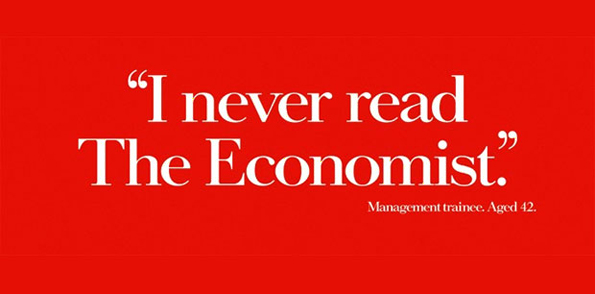
Look at this famous economist campaign that was mostly outdoor. These days some idiots would tell you to do a tightly targeted display campaign aimed at people interested in current affairs and over a certain net worth. But this only worked because it was wasteful – intentionally seen by the public to ‘celebrate economist readers in front of the less enlightened’.
Sometimes it’s removing barriers. Sky TV used to promote movies and kids channels to the partners of the men who mostly buy for the sport so they could get sign off.
Old Spice here targets both men AND women. Buyer and consumer.
As a rule of thumb, don’t make the mistake of replicating the creative target too tightly. That should be tightly defined and, in many ways, conceptual. You want to build a picture in the audience’s mind of ‘who buys this’ – something usually a little aspirational. Media is most efficient when it reaches as much of the buying market as it can. Persil Mums never really washed whiter and loads of fat over 35 men buy Lynx. In FMCG, if your target audience varies more than 3% from the category profile, you’re being too narrow.
Put another way, is your audience big enough to answer the brief? Get the client to share any awareness to consideration to sales data they have, look at past work they’ve done on how advertising build awareness (I should say salience really that’s the only thing that matters). Look at the frequency of purchase and a whole host of other things. But to be honest, build the broadest audience you can afford.
Look at their lives, what is the most relevant place for the brand to show up (even TV, ITV does the numbers in the UK but if you want to appear cool and ‘discovered’ look at other channels and more innovation).
Consider that brands that connect closer to the point of purchase convert more – but also consider if you want context for the category buying behaviour or the creative idea. What I love about Old Spice is that it does both….the buying conversation and creative conversation are both about women buying things for men. Think about that, think the fact there is no such thing as a brand ad, only communication that addresses reasons people don’t buy. Even if that’s brand awareness, just because it doesn’t’ occur to them, doing stuff that isn’t relevant to the brand, no matter how much it’s recalled won’t cut the mustard.
The real task for us all is getting into the front of mind in as many situations as possible, that won’t happen if they don’t remember the brand and just remember the ad, and it won’t even then unless they can connect the ad to how they behave or feel about the category.
So, in a world where the audience filters our more brands than, don’t fall for the hubris of brand first, embrace people and go audience first – at least for channel planning.
How can you add value to their experience rather than interrupt or make it worse. Yes, it’s true that advertising people don’t like will work if you reach them often enough (based on shorter term metrics), but stuff people like can be more effective by nearly 11 times according to the IPA…and decent econometrics shows great advertising pays back over 3-5 years. The further out from exposure, the more folks remember only how they felt. We all tend to do and buy the things that feel right, not what are right in a logical sense.
Now, the best way to unlock the brief is still a killer insight. Doesn’t have to be a consumer one though, it just has to be an observation that you know will make people go, “Oh yeah!” At once obvious and refreshing.
This is rarely a stat. And while we’re at it, logic and evidence rarely work with clients and certainly not your buyers. And insight gets into the heart, where most decisions are really made. I don’t mean that brand love rubbish, I mean you take notice and makes you feel something that lasts in the memory.
And no bloody generalisations…like ‘young people like music’. No point using insights everyone else is talking about, like the fact young people are very serious minded and hard work is cool. Everyone knows this.
For example, few brands seem to cotton on to the fact that British Mums are sick of the protective parent label and are sick of the knowing, arch eye-browed resourceful one who sorts out the issues created by bumbling Dads. In fact, they hate their partners being portrayed this way. It may well be that a brand celebrating Dads rather than dissing them might work well with Mums.
A powerful observation is that stats mean nothing to people in charity campaigns. Most charities try to use ONE person as an emotional example, but the truth is, most stuff hits home when it happens to someone you really care about. I think this is fascinating for brands that sell stuff too, it’s how celebrity endorsement works.
Once you’ve got a tight insight, you need to have a clear role for communications. It will set your media (and maybe beyond) behaviour. It will drive direction and drive ideas.
It should never be something general…like ‘celebrate life’. It should be specific, audience driven and create a clear context for the media and other activity.
Instead of celebrate life it could be ‘shake up young people’s view of the world by delivering the joy of life outside the filter bubble’ (I’d like to do this by the way).
Or even better, connect with today’s young fogies when they want to remember they’re young.
THEN you can look at channels.
Some of this should be based on what, when and how the audience consumes media and life of course.
But it should be informed by challenge you are addressing and how comms is dealing with it.
The filter bubble idea above means you need to look at the times your audience goes outside the filter bubble…..when they’re engaging in mass media that isn’t ‘pre-selected’, when they’re looking to discover stuff. You might want to also want to ‘do it’ rather than promote it. That might mean the entire media plan is built on the element of surprise.
You could go further and build integrated idea around the fact we adopt new things that are just familiar enough. Have you seen ‘I’ve never seen Star Wars’. The entire media plan could be built on this premise.
But arriving at your list of channels and what to do with them requires rigour and hard questions.
Start again with you role for comms and turn that into three specific tasks (more than that is just a list, less is too narrow).
For the filter bubble thing that might be:
Land the idea where people come to together outside the filter bubble – TV, VOD, MAYBE out of home and mass experiential events
Broaden their horizons when they’re in discovery mode – search, Youtube, influencers
Deliver alternatives within the bubble – takeovers of genre specific radio, Spotify, Amazon
Narrow down channels and what to do with them with these questions:
Where can we be relevant? If we’re interrupting can we reward the attention? Are we able to be specific to the channel we’re using? What will people think/feel/do as a result?
And don’t forget looking at context. From selling a new water brand when people are most thirsty, to landing a new brand idea when it will have the most emotional punch.
You could even be topical, but in a new way. In the UK, the most likely birth times are September/October. Much of this is down to conception on New Years Eve, or in boring January where you’ve nothing else to do. Great context for condom brands, pregnancy test brands and also Pampers. Creatively fertile as well as media context.
If you want an over 35 married man to out on a ‘male’ get together, be that footie, the cimema or even laser quest, he needs sign off from the other half and it needs to be agree weeks in advance.
Then pull that all together into a simple one pager. Media and comms strategy needs to be complex these days because the environment is complex. But if you can’t explain in 30 seconds, you haven’t got something water tight.
To for example:
We need to get our brand tried by under aged 25 people
The problem is that they only try things from within their filter bubble – more of the same
So that means we need to shake up their view of the world by showing them the world outside of their feeds
We’ll use TV that’s big enough to reach them and cool enough to be credible to land the idea outside the bubble – contextual ads to objects and situations in the programming that inspire them to try just a little outside their comfort zone (even I like one Queen song and I hate Queen)
We’ll partner with Google so that in search and Youtube, they get served familiar but exciting alternatives just outside their comfort zone, endorsed by video influencers
We’ll broker a partnership between the Guardian (most trusted under 25 news brand), Netflix and Spotify to deliver free non-subscription content.
Finally, show them how the channels will work together, what the phasing is. This is best done by talking through the experience from the consumer perspective.
The great Rob Campbell is one of the most generous individuals in advertising (or whatever we call it these days).
I own him one or two favour, it has to be said and recently he's once again revealed much kindness to a friend.
The only real downside of Rob is that he likes Queen.
I mean, seriously?
That said, I own him some thanks and to display my gratitude, I'm going to admit a dark, terrible secret. I actually do like a Queen song and it's this one..
This will make him very happy, trust me.
I'm now going to shower in bleach to try and cleanse my soul.
No one knows what they're doing in this industry. That Global CEO who looks like they have got their shit together? Not a clue. Not a scooby.
Seriously, the more senior you get, the better you get at making folks believe you know what you're doing.
Just like the bigger and more venerable the agency, or even client, the more skilled they've become at inventing rules and practices to make it look easy and predictable.
It's not. Advertising and marketing are just parts of the wider discipline of business and economics. Now you find me an economist who looks like they know what they're doing.
Most ad campaigns are, at best solid. Most don't get entered into IPA Effectiveness Awards. And yet the IPA Databank is venerated as some kind of list of Golden Rules. Simply, it's another way to look like we all know what we're doing.
That's why, for an industry built on ideas and new thinking, we're horribly conservative. No one wants the apple cart upset, you know, look like the rules and guidelines are great, when everyone works in chaos and then makes it fit the accepted wisdom.
You might think this is dispiriting.
You shouldn't.
Byron Sharpe kind of helps, but even there. the data often looks to fit the argument. The great disruption is beginning to turn into accepted received wisdom………we all need a story to sell after all.
So yes, TV is dead, or it isn't. Programmatic is not to trusted, or it is. Young people hate advertising, until they do. Media agencies are going to be extinct when robots take over.
The reality right now is people know what's going on less than ever.
Which means every person working in this industry has the chance to invent the future. In fact, no they don't. They have the chance to do what the hell they like.
The role of planning folk was never be the voice of the consumer really, it certainly isn't now there are more kinds of planners then there are grains of sand in the Sahara Desert. It was, and is, to get the best ideas out of others and make those ideas palatable and seem predictable to client partners.
Because, Back to that Why Things Fail book. The best chance of avoiding extinction is to continually innovate – but as a rule, perhaps you should ignore that too!
In other words we're all planners now.Who's have thought that?

 NORTHERN PLANNER