• Halloween

    It shows you how the British are looking for any excuse to indulge these days, in a world where sobriety is cool.

    It shows how parents are under pressure to perform like never before. Have a prefect party, the kids dressed just so, the perfect image on Faceook.

    This picture though was on our own trick or treat run. A pumpkin the size of a car. to out do the other decorations on the street. It's a bit like advertising these days.

    There's a truth that folks are getting wise to the act, especially young folks. They're becoming adept at filtering out the annoying dross. Like the 'impression' some media agency will count as a hit, which in reality is an annoying display ad that may as well not be there.

    Or the massive grandstanding campaigns that still happen.

    Walking down a street at Halloween with the increasingly , competitively, decorated houses is like the desperation of brands with ever bigger grandstanding efforts to get the attention, with this picture the apotheosis.

    All the more ignored because of its blunt desperation. Like women avoiding those overdressed guys in nightclubs furtively dancing with the white man's overbite, people can smell the desperation.


    Once upon a time, even when you could buy interruption, as opposed to the JWT fear model (Domestos ads let you know about the nasty germs in your toilet, scaring you into buying), some opted for charm and intelligence as opposed to calculation or brute force. Maybe we need to think about going back to that a bit.


  • It's amazing how folks talk about post truth and fake news, because when it comes to persuading people, facts have always been a bit useless.

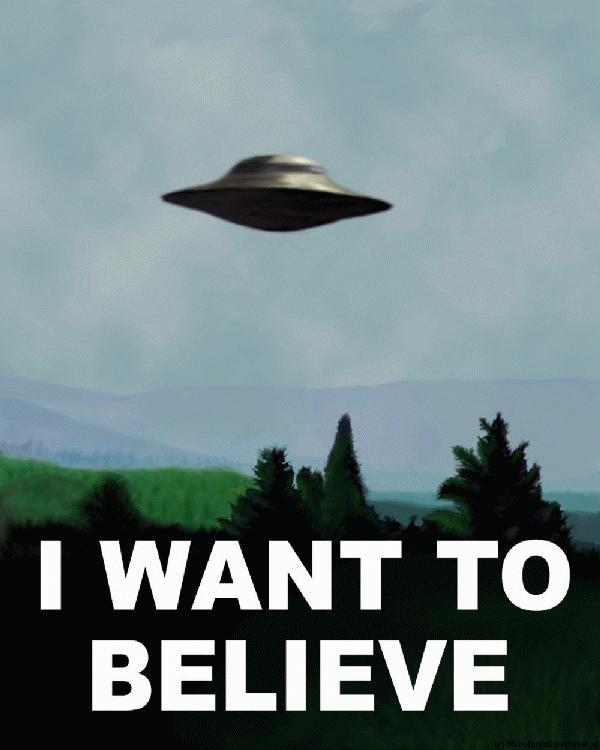
    I want to believe

    Fox Mulder from the X-Files was on to something. It's about the desire for something to be right, no more, no less.

    It's a bitter truth about people that we make up our mind and then find the facts to fit. Blame evolution, no one had time to evaluate the evidence of being eaten by a Sabre Tooth Tiger, they just saw big teeth and claws and legged it.

    Mostly, we decide things based on a long build up of experience, frame of reference and general world view. Facts are simply used to fit what we already believe or what we already want.

    Worth thinking about when you navigate your own life, you won't change people's minds however good your evidence, in fact, you'll probably reinforce their beliefs. It takes a much longer build up of experiences, references and general change of world view…and changing how they feel before you change what they believe.

    Which makes the role of a planner a hell of a lot more complicated than the textbooks would have you believe. Most research is, of course, a waste of time because what people do is very different to what they say.

    But the role of research in dirty planning is also a waste of time. You know, making the research make the ideas, plan or whatever easy to buy. Because if the facts don't fit with what the client believes, they'll reject your thinking. Just as creatives, media buyers, suits or whoever else will reject your carefully developed, insight based strategy and briefing if it's at odds with what they have in mind.

    It also means the role of value propositions in advertising, and reasoned arguments in general are waste of time with target audiences. No will believe you if they want to.

    In other words, you have to be a lot more cunning.

    The role of a planner and the role of most advertising is making people want to believe things, or think things without knowing they do. Clients, consumers, everyone.

    Don't make the mistake of finding out what people think and then trying to change their mind, make it easy for them by finding out what they WANT to believe, or what they want to do, and making that fit your own agenda.

    It's why most advertising works in the long term. It's not just that people are light buyers and so on, it's that changing what people think and how they feel about something takes time.

    Or in the case of short term response stuff, getting the hell out the way and getting people who have already decided to buy to do it now.

    It's why the most efficient predictor or advertising effectiveness is likeability. If you really like the ads, you'll then find the facts to fit why you want to buy stuff.

    It's why borrowed interest, cultural appropriation and sponsorship can be so powerful. If it's familiar and fits with what we know, but retains just enough novelty, we'll give it a go.

    Of course, now I've told you all this, you'll want to believe the opposite.

    Tricky isn't it?


  • Watch The Empire Strikes back and then the Force Awakens

    Blade runner

    Or Blade Runner and then Blader Runner 2049 (especially Blade Runner 2049).

    The gaps in the stories for you to fill in.

    The less obtuse humour (in Star Wars, Blade Runner hasn't any humour).

    Worth noting the themes of grown ups dealing with the chaos and disappointment of a future they proved helpless to prevent.

    And young folks doing everything they can to make sense of universe beyond their control.

    Anyway

  • You may or may not remember Bruce Wayne's Dad telling him the reason we fall down is so we can learn to pick ourselves up.


    Or, in My Rules..Toughen the Hell Up.

    In this industry, you'll get told no more than yes. You'll get all sorts of knock backs.

    A lot of the time it won't be fair. That's because there is not such thing as THE right thing to do, there is no such thing as an unarguable logic. There are only half truths in research, patterns in data and people's world view.

    You'll get made redundant probably. People will get promoted above you.

    Three options….

    Give up and do something else.

    Pick yourself up, ignore everyone and follow your own challenging path.

    Pick yourself and forensically understand what went wrong so it never happens again. Don't pretend when it goes well it was all perfect either.

    Some people get to the top through route two with a great strength of will and even more luck. But they fizzle out, it's knackering fighting everyone all the time.

    Most of the people who get somewhere follow path three. They know stuff wasn't fair, but they learn they could have manipulated events and people to get another result (for example, creatives will always ignore the brief and try and do the opposite, there's a lot to be said for getting them to think of stuff for themselves).

    They also learn to discern when actually, it was totally fair and they were not up to scratch. This always the hardest, it's much easier to blame everything but your own approach, sub-standard work or sometimes even lack of talent.

     Believe me I know, I was told more than once I would never cut it as a great account man and chose to ignore the advice, failing twice before I realised I should be a planner. It was easier to get angry than to get real.

    Anyway, you end up with two kinds of successful agency folk.

    The first is the incredible operator who can read people and situations and always knows what buttons to push and what not to. They know they are not the best at the craft skills  but manage to surround themselves with great people, get the best out of them and recognise their contributions. They're usually fully aware they're not the best and try to make the most of themselves.

    The second is the craftsperson who has chipped away at the big rock of their talent, learning from each project, what worked, what didn't, what got great things to happen and what got in the way. Confident of course, they're never arrogant and ever ready to listen to others and bang their own heads against a brick wall to turn good into great. They might be shy, but learn to let their passion for their work shine out and infect others. They usually think they're nowhere near as good as they really are, so always end up doing great stuff because they try harder….and never look like a show off either.

    Some bastards are combination of both.

    One thing both have in common is that they've learned to be resilient, to welcome knock backs and, above all else, never ever lose their cool.

    One tip for getting there.

    No one, I mean no one, knows what they're doing. Everyone burns inside wondering what on earth they're really doing. This isn't physics, it's not even law where there are rules and truths for everyone to conform to. This job is about influencing people to want things they don't really need – unpredictable human beings.

    Throw in the messiness of culture and there are no rules, simply theories that sometimes produce great results but often fail too. It's quite liberating to always sympathise with the individual who is ruining your life at this precise moment, rather than want to eviscerate them, know they're like you too, they haven't got a clue (even if they don't know it sometimes). Think about what's going inside – what is really driving them, what are they afraid of, how has their day been going?

    Trust me, I still fail myself with this.

    We're all people after all.


  • It can be hard sometimes to empathise with a target audience. Agency folk live in bubble most of the time, but even those with some feel for real life can struggle to connect with their bullseye customer.

    For example, I used to work on haircare  brand aimed at fashion forward women. I'm a bloke with no hair and no sense of style at all.

    Many women I know don't understand why men think football is life or death.

    It would be hard for most blokes to get their heads around handbags that cost hundreds of pounds or dollars.

    But it's not that hard. Our surface backgrounds and motivations may be different, but to quote the Dad in 'My Big Fat Greek Wedding' some of us may be apples, some may be oranges, but we are all fruit.

    The basic needs and motivations of human beings do not change, if you can find the find the right frame frame of reference, you can get into the heads of anyone.

    For example, for a bloke to understand women's relationship with handbags, which is all about the right label and specific design making you feel a certain way about yourself and displaying status to others, it might be worth thinking stuff in your life that does the same thing. We all seek and display status, it's basic being human. Maybe think about the overpriced trainers you are wearing and how you decided to buy them, or maybe even a car if you're that way inclined (some bags cost the same).

    Just as a women might want to think about a bloke and football by understanding how it feels when the girls get together. We're all social beings, we need to belong, men don't have that in the same way, they need football as glue. That might be one angle.

    For the haircare thing, I happened to think about football because I know  both are about fitting in with complex rules and codes you need understand. I also thought about how it felt to lose it (not a tool for all of you of course). Men is part of bloke's confidence as much as a women's, you just don't have to bother with it the same, but the crushing realisation it was going I thought was the equivalent of a bad hair day. 

    So…

    Think about what you're selling.

    Think about what basic human need it fulfills (they all do in some way)

    Think of something in your life that performs the same task. What does it mean to you? Why and how do you buy it? What is the decision making process?

    Works for me anyway.

    Great for presenting too ,think it's the MC Saatchi model, but steal away.

    Consumer truth +universal  human truth + brand/product truth = core thought


  • This may well be THE iron law of advertising, media stuff and brands.

    It sorts out how to manage people. Make sure they feel like you have their back, provide guidance of course, but people in modern organisations crave autonomy.They also want to feel part of a higher purpose. So let them do what they can, make them feel they're part of something they care about that's achieving stuff they couldn't do alone.

    Not to mention, we're all working faster and haven't the time to duplicate work. Most importantly, having folks operate just at the edge, or even just outside of their comfort zone is the most stimulating for them and how they'll progress and learn the quickest. We all want 'mastery' too, the sense of accomplishment, the joy of doing something well.

    Sometimes it's quicker to 'just do it yourself' but it's a false economy.

    This iron law also neatly skewers the folks who think consumers are stupid and need to be spoon fed messages and overly simple ad constructs. When people need to hold multiple plot points together in Eastenders or your country's equivalent soap, you really don't need to do their thinking for them and simplify stuff down to banality. No one wants to work hard as decoding cryptic advertising, but a Howard Gossage said, "When baiting a mousetrap with cheese, leave room for the mouse".

    It answers the dilemma of 'content' 'brand experiences' and 'ad funded programming'.

    All this has a role. But don't make stuff for people they can get elsewhere, which us usually better. That's why it's normally better to work with people already doing it well, be that people already making great content people like media owners, vloggers or whatever…but even here, what have you got they might want? Why on all earth would they want to make it for you? Above and beyond paying your way into culture, you need to add to it.

    It informs challenger brand mentality. People are organising themselves these days, sometimes they just need a catalyst. Rather than helping people (or pretending to) how can we empower THEM to achieve what they want. Connect them to people like them in a way social media might not be right now.

    Or at least move them to do or buy something they wouldn't usually. Make them think, provoke a reaction.

    I always use The Old Spice guy as an example (sorry). It's hugely funny, entertaining advertising, much of the television programming (or YouTube drivel) it interrupted isn't as good. But there's a bigger tick – it provokes men and women to think a little about masculinity and the rules of their relationship.

    This simple rule also questions 'brand purpose'. So many brands decide they want to do a variation on 'make the world a better place'. Not only is usually made up and not true, someone is already doing it much better.

    It crucifies planners who decide to interfere in the creative process. Or media agencies who wade into creative agency business, or bloody ad agency planners who think they can plan media. Be very, very sure you are adding something that people genuinely want, or if they don't want it (let's face it, they don't) it's better than where they're currently at, or at least adds to it.

    Creatives who think they can do strategy – of course they can, but it's usually very biased to something that will win an award or 'open on a palm fringed beach'.

    Media owners who think they're ad agencies.

    Propositions as thinly veiled campaign lines. Creative starters. Channel recommendations in a creative presentation. Content ideas in a media presentation. We're all at it aren't we?

    Agencies telling clients their job, clients telling agencies their job. There's a comfortable overlap in the best relationships, but so many client briefs are really a solution, or even a series of orders with an unrealistic budget. So many responses to brief challenge that brief because the business context doesn't free up the work the agency wants to make, or fit the deal the agency has in place.

    Most advertising in all it's modern forms is still interruption. Most new innovation is chasing people ever more sneakily as they avoid ads. In many cases, that means 'native' ads, where we actually give up on actually being able to make people care and produce stuff specifically designed to add nothing at all. Even re-targeting that shows you the product you looked at 30 seconds ago – if people wanted to look at it again, they're perfectly capable of doing so.

    Yep, Never Do for Others What They Can Do For Themselves. Perhaps the only rule that matters (apart from don't listen to social media planners).


  • Not much is probably the answer.

    What I do know, I put into one little guide for a couple of people, intended for presenting in the real world, not the imaginary one that exists in the case studies and most industry advice.

    Anyway, for better or worse, here it is……

    IS IT A PRESENTATION THAT’S REQUIRED?

    Be sure what is really required is a presentation. If you want (or the client wants) a discussion, or there is less than 5 people in the room, you really need a meeting and probably a proposal or word document. Use powerpoint if you have visuals you need everyone to look at, or you need some data or charts for everyone to analyse together – but be clear, these are for people to talk about, not a presentation where you mostly talk and people mostly listen

    STRUCTURING AND BUILDING IT

    1. Always tell people what you are going to tell them, tell them and then tell them what you told them
    2. People tend to remember only three things from a presentation. Make sure you structure your presentation around the three things you want them to remember, tell them the three things at the start, remind them at the end and spend the bit in the middle convincing them why they should take the three things seriously
    3. Getting to those three things should come from audience analysis. What do you and PHD want out of the presentation? What does the audience you’re presenting to want? There will be clashes of agenda , motivations and world views. Frame your three things around persuading your audience to buy into what you want out of the presentation
    4. Find out as much as you can about the people you are presenting to, make your deck relatable to them. Find a hook, write a film log line for your presentation, based on the key tensions that will be in the room… if you know the biggest client dilemma is getting more budget out of the board, make that the key sub-plot. If you know you have two people in the room with opposing views, make your deck open up the debate
    5. An easy way to win people over is using emotion. We remember how we feel longer than what we’re told. Make them feel something….don’t be afraid to use emotional blackmail
    6. Tell stories, frame your entire presentation as a story with a beginning, middle and end. Think about stuff like this or the Pixar structure,
    7. Use examples to bring the points you’re making to life. People react well to personal stories, so try and use them
    8. Will all this in mind, don’t start with powerpoint, start with a succinct one page wonder – your summary script for the presentation. If you can’t get it down to a page, you haven’t got a tight enough story. Share the one pager with someone else, get buy in from the people internally you need to also.
    9. Once you’re happy with the one pager, you can move to powerpoint. The purpose of powerpoint is to deliver exactly the right slides to deliver your story, always think about the deck as an illustration of what you will be saying, not the actual script.
    10. Use a picture instead of words, bullets – no more than 5 – instead of a paragraph. Never write something people will read instead of  listening to you, write something that makes what you will say more powerful.

    HOW TO PRESENT

    1. Don’t worry about memorising a script. If you’ve developed your deck as above, you’ll know it all.
    2. Most people (me included) are naturally not great presenters. Great presenters just prepare more.
    3. So, re-hearse. Present to at least one person who doesn’t know the project. Make sure it’s the right length of course. If they get it, so will your audience. Also, the mirror neurons will fire and you’ll see the deck from their point of view and know how to refine it
    4. Practise talking slower than normal. We all talk faster when we present, slow it down
    5. Always stand up, accentuate confident body language. Stand up straight, imagine trying to get your head to touch the ceiling. Open stance – when you act confident, you feel confident.
    6. Shy people like me talk quietly, practise in social situations talking a bit louder. Get your lungs used to working harder, I sing in the shower (seriously) Disney songs so the kids laugh at me.
    7. Always stand to the right of the screen not the left. We read left to right, people will focus on you more if you stand where a sentence might finish
    8. Never pretend to be something you are not. I’m not funny and never pretend to be. Be yourself – the universal rule is find a way to really care about what you are presenting. Your enthusiasm will be infectious. You don’t have to be slick, just look like you care

    SOME CUNNING TRICKS

    1. Edit, precis and distil at least three times. Every deck is too long, editing makes you see what is important and what isn’t
    2. It’s a quirk of human nature that the more complex your language, the less seriously people take you. To be seen as totally on top of your game, make everything clear, simple and human. The more jargon you use, the less credible you will seem
    3. Remember the Ikea effect. We tend to like things we feel we have helped create. Insert a mistake in your deck, let your audience correct you and they’ll feel they own in. Include your audience in the deck creation and they’ll support it even more
    4. Only share the numbers and data that matters. If they ask for more, make sure you know what you left out, you’ll look totally ace when you nail it
  • I'm not the biggest fan of brand consultancies. Of course, some brand agencies are amazing, but they tend to be the exceptions.

    When it's good,  they make stuff. Rather than charge £1000,000 for changing one word in the positioning statement and then churning out a stream of powerpoint to justify it, the good brand consultancy stuff is usually based on developing a product.

    I'm convinced it's because they have no choice but to dig into how people will buy and use whatever they're developing, rather getting caught up with what it means for their identity.

    You wouldn't believe the stuff I've 'borrowed' from product development research for comms planning. Loads of primary research on need states, buying behaviour, context and semiotics.

    I find it much more useful to think about the connection between what people are doing and what they're motivations, mind-set and general flow is at various points – and what the brand is doing.

    Now I don't buy all that talk about using data and stuff to precisely show up at the right place and the right time. That's the route to looking great in terms of cost per impression, but not actually changing much behaviour, or even worse, using a few clicks t look like you've people buy what they were going to do anyway.

    New products fill gaps in people's lives, they ad something…functionally and emotionally.

    Media, content etc should be doing the same. It might be a traditional message, but increasingly we need to ask what we're doing, not just what we're saying at this point. 

    Think of some of the great ads (yes ads) people talk about. I find it easier to think about them in terms of a task based proposition rather than a 'message proposition'

    For Old Spice -  create conversations between men and women about what a real man is.


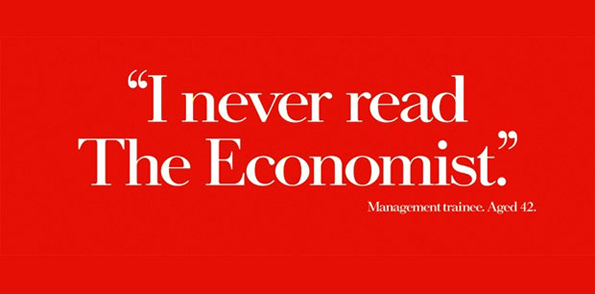
    The Famous Economist Ads sought to  celebrate the intelligence of their readers in front of everyone else.

    Economist

    Get the Lego Movie out of child's play and into the adult entertainment world (which ended up as a total ad break made of Lego..brand owners had their ads remade in Lego)


    I think task based propositions are more useful these days that 'message propositions'. They unite creative media and 'content'. They make a brand not just say things, they make them do things.

    Anyway.


  • I mentioned some rubbish about being a former swimmer recently. I'm not a former planner yet, but I bet there would be some habits and quirks that would be difficult to shake off.

    Being a planning strategy type is obviously a mix of skills, but I think it is really a whole mind-set, a way of being.

    Of course you can learn the skills, but the mindset takes longer……………….

    Never really stopping working, in the back of your mind you're always collecting new bits of information and new frames of reference.

    You're confidently ego free. Less interested in having a killer observation or thought and much more passionate in spotting one from others and building on it. At the same time, you're ready to fight for the right direction when you know it has been arrived at, but always with a mix of reasoned evidence and passion.

    You love facts but you know they don't win arguments, so you're really good at pushing the right buttons of the people around you, not just the target audience.

    You know what the right direction might be straight away without knowing why. Much of your project work is understanding why, and getting other people to tell why you're barking up the wrong tree.

    You're like Neo in the Matrix, you know all the rules, all the processes and schools of thought. So much so you can bend the rules whenever it's required.

    You're really good at making people think of whatever outcome you're looking for, all by themselves.

    You wait for everyone else to speak then throw in a couple of grenades to totally transform the debate.

    You tend not to get ruffled when things are not very fair, but you quietly find a way to change your situation.


  • I was a competitive swimmer for 7 hard years. I started at 8 and foolishly decided as a teenager I'd had enough, only to regret it many years later. I never stopped training and there was a wonderful period at University when I raced again, and then it was fun to rediscover what my body was built to do when I dived  back into competitive level training in my early 30s. But the re-entry was also bitter sweet. There's a truth to top tier sport that the athlete's may learn to love their sport after their prime has gone, but it's ultimately frustrating when your body won't do what you believe it should.

    Your mediocre may be war speed next to others, but it' still mediocre to you.

    But some of my best memories from childhood came from the poolside though, permeated with the indelible whiff of chlorine. It's amazing how those times affect my life today. It takes years for the chlorine to finally leave your skin, but I don't think it ever released its grip on the DNA.

    There are lots of signs one is a former swimmer:

    You're the most flexible person in a yoga class, your upward dog is the most streamlined, even if you now weigh 17 stone

    You instantly recognise the bleached hair of someone who still trains every day

    Hard word and dealing with difficult moments are second nature, nothing will make you suffer like 10 x 200 meters butterfly at full gas

    You crave the feeling of flow, losing yourself in a task – you didn't realise how great it was when you got it everyday

    You have to stop yourself buying swimming costumes a size too small (it reduces the drag against the water)

    You're amazing at shaving the body even if you're male. When I started cycling properly and shaving my legs, not only did it not feel weird, I was about to start on the chest until I realised what I was doing

    You refuse to buy baggy swim wear, you can't stand how it flaps in the water (your family is always ashamed of you on beach holidays)

    You hate wearing shoes

    You don't care about going barefoot in a locker room, or indeed anywhere

    You have a lingering shoulder injury, or you we're a breastroker, it's probably the knee

    You stretch your shoulder in the morning even though they're not stiff anymore

    You find it hard every day not to do some sport that makes you properly suffer

    You're kids are not allowed anymore swimwear that isn't acceptably branded

    You're the best person you know at getting up at silly o clock

    You know the exact degree of seperation between you and any Olympic swimmer

    You hate all cultural entertainment with competitive swimmers in in, only Muriel's Wedding escapes this, they get the swimming wrong here too though

    At least half of your friends from childhood do mental physical sports, ultra marathons, iron man etc

    You don't remember most of your training sessions, but you remember every second of the sessions that made you cry, and the other where you reached some sort if state of grace and everything just worked

    You secretly, simultaneously  hope and dread your children will become racing swimmers. You know the intense joy and pain it will bring (and the fact you'll have to get up at 5am to take them morning training)

    If you haven't quit yet, here is some advice:

    Regular people think excessive nudity in the changing rooms is a bit weird

    Some day, you 'll have to take the amount of food you're used to eating and eat and at least half it, this will not be easy. 4,000 calories a day is not remotely normal

    One day you'll find your shoulders don't hurt – it will be like when you switch off a fridge and you realise it was buzzing. You didn't notice the pain until it stopped

    You will never ever have the chance to see this group of your best friends every day, even twice a day, or go on so many trips away with this many friends. Appreciate it

    You don't realise the deep joy in doing something sublimely well until you don't do it anymore. Enjoy every stroke while you can

    Nothing will be as hard as those sessions that make you want to throw up. Life gets tough when you get older, but you'll be ready