There's a useful quote from Byron Sharp, "The task for marketing is to reduce the window between someone seeing an ad and deciding to buy".
There's much debate about the Ehrenberg Bass stuff, usually by folks with a particular agenda. Lots of folks trying to make things more complicated than they need to be.
But, like most things, the more complex things are made, the more likely they'll go wrong.
This single quote cuts through lots of rubbish on both the side of the brand babblers and the sales promotion merchants. Both are right, both are wrong.
There is no point having incredible distinctive brand communications if there isn't some stuff that nudges people to buy, or at least build some relevance to how, when and where it's bought or consumed.
Just as incentivising people to purchase doesn't mean they'll buy next time of their own accord.
Just as creativity isn't the only thing that builds so called salience and distinctiveness. Donal Trump gets America noticed more these days, not sure that's a good thing. You have to get noticed for the right stuff.
Basically, the more the brand comes to mind in more buying or consuming situations, the bigger it is and the more people buy it. It is that simple.
My advice? Strategy is is this simple and this hard:
Get the brands reason for being known about by as many people as possible, build consistent triggers the brand can own….every piece of communication should be building this
Get known in as many category entry points as possible. Deal with the obvious first….The Old Spice re-launch that pushed the envelope with 'The Man your Man Could Smell Like' dealt with fragrance first, as that's probably the main discriminator for men's shower gels. Just as the brilliant UK Honda work deal in the obvious, it's just it was brilliant- Cog was about the fact we don't want cars to break down, Hate Something Change Something was about the fact some people want diesel engines. The rest is creative magic.
Make sure you're front of mind in consumption situations, buying situations and other related situations. If you can, link them together…look for weaknesses in the purchase journey, focus on that. This one is critical. TV is still the most efficient way to reach the biggest audience and get the best result, but most TV is still watched in the evening. Don't add another channel, or 'non-tv' execution to the mix just to extend reach, when most products are bought during the day, and a huge amount are consumed at this time, get people thinking about your brand when they're most likely to buy it!
I like staying in Premier Inns. This of course is part post rationalisation, as corporate travel budgets rarely anything fancier, but that's not the whole story. You know where you are with a Premier Inn, they all look the same, booking and checking in is pretty standard and you know you will get a comfy bed.
I also like Pret a Manger. You know you'll get a decent porridge on the go for starters.
Even McDonalds has nice reliability. On the go with a hangover, it's salty, stodgy breakfasts take the pain away for a bit.
You've got to hand to Channel 4 and ITV in the UK, as telly fragments, as does all media, there's something to be said for places where you know what you'll be getting, with only a touch of innovation.
Let's be honest, Jacob's Creek Wine is OK and you know what you'll be getting.
There really is nothing wrong with being quietly reliable and just wonder, in a world where is hardly beer anymore, but grapefruit beer made by monks and food needs to be ever more inventive, the stoic, relieble companies that do basics right, or at least make things a little easy to navigate, might just do more than OK.
It doesn't surprise me that there have been some queries on dress code, it's one the most contentious and thought about issues in agency land.
So I got this question:
"I've just started work at one of the most sought after agencies in town as a junior planner. As you can imagine, as a junior planner, I'm not paid a lot, but it seems the dress code for the agency is way out of my league. Not only do I not have a clue what is cool to wear (and I don't want to be seen to be copying everyone else), I just can't afford the stuff. You mention ditching the suits, I reckon a tailor made three piece from Saville Row would be cheaper!! What do I do"
To respond to this question, I'll take you back September 1990, the year I left from secondary school and returned a 'sixth former'. Sixth formers choose to stay and do their 'A Levels' the entry qualifications required for university. As school wasn't compulsory, neither was school uniform.
Naturally, we were all excited to liberated from the tyranny of itchy grey trousers, the school tie and light blue shirts designed with the sole purpose of making you sweat bullets, even in winter when they had the added power of making you simultaneously cold.
All this at the age when young men naturally sweat if an attractive girl moved within 10 metres of them.
So we were all gung ho to express ourselves, joyously wearing what the hell we liked. Only to find freedom was a living hell.
Suddenly, every morning, you had to decide what to wear. The fine balance between looking like an individual and fitting in.
Having to know what was fashionable, avoiding the crushing shame of turning up wearing the same as someone else. The horror of being caught out for wearing the same thing twice in a week.
So much pressure and thought, many of use quickly pined for the bygone days of the school uniform. Sweating through the polyester of your uniform shirt if Gabriella Bentley even threatened to looked at you seemed like nirvana.
I often feel this way about the bygone days of suits in ad agencies (the simplicity, not the sexual tension).
I remember going to an APG training thing in London, when the venerable planning director running the session, (expensively dressed like a poverty stricken skater) commented, "The thing I always notice about the North is that they're still wearing suits". This was 2002 and he was right, the suits still wore suits while the planning types tended to opt for smart jeans or chinos and some sort of suit jacket, with polo shirt usually.
It was blessedly simple.
Then everyone started to wear what the hell they wanted and a Pandora's Box of pain and suffering opened up on us.
Media agencies lasted a few years longer. Even now, you can get away with jeans, brogues the size of ships and a designer suits jacket, if you are 45 or over.
For the rest of us, it's the deliberations over how smart do you go when you see the client, are flip flops acceptable, shorts in high summer and what sort of image you want to put across. And, of course, spending loads of money on garb only agency folk will appreciate, while to everyone else, you look like you dressed in the dark.
In other words, a world without uniforms still forces you to conform, but without the comfort of easy to follow guidelines.
I used to work with Mother and loved the way the creatives all managed to look the same.
Three years ago, walk around Clerkenwell, all you could see was agency people with selvedge jeans turned up so far they were nearly shorts.
So, back to the question of what to do about it if you're in an extreme case, like the author of my question.
This brings us to the Devil Wears Prada (the film never read the book). It's not a classic, apart from the performance from Meryl Streep and the fact the hitherto unknown Emily Blunt stole the film.
Our hero, Andi, joins Runway magazine (Vogue basically) to find she will never fit in unless she loses weight (from thin to emaciated) and starts to wear the gear in the magazines with suitable panache.
By the way, this scene reminds me a many a discussion over two words in a 100 slide powerpoint presentation at work.
Oh, and I've worked for Meryl Streep's character twice. They know who they are.
Anyway.
After fighting the inevitable for a bit, like a racing cyclist in the 1990's trying to win without EPO, she gives in, loses a few pounds ad starts to rock the latest styles….and of course sees her star ride within the office.
If this doesn't look like the drip of folks walking into Mother then I don't know what does.
Of course, our hero eventually realises she has lost her identity and what she really cares about, ditches the wardrobe and leaves for a very different kind of publisher – always knowing she came so close to being seduced forever by the dark side.
My correspondent faces a similar dilemma. Clothes send out social signals, they always do. Not just on a personal level, they say something about the organisation. What you wear represents you and your employer, it's a fact, get used to it.
If you work at a place where you're under pressure to look amazing, or achingly obscurely cool, you know it will have a certain kind of culture. Probably, it will have a certain kind of work – usually, sometimes great, more often than not, up it's own arse. But always, always, a place people will die to work for.
That's for some, not for all.
Others will have some sort of uniform, sometimes more relaxed, sometimes it really is 'be yourself' we don't care. These places do great work, have a deeper relationship with the client because they care more about the actual relationship, rather than intimidating clients into buying what they're told.
This is for some, not all.
So, clothes, totally tangled up in identity on a personal and corporate level really matter. If you can find an overlap between your attitude to clothes and your employer's, you'll most likely find a cultural fit too. If they don't blend, get the hell out before it's too late.
Or at last until you've done enough time and got some 'cool work' on your CV – just don't stay too long to forget you're only pretending.
Back to the cycling metaphor, Lance Armstrong only started taking drugs when he realised everyone else was, we all know what happened next.
One more thought – the more you try to look different, the more you usually ending up looking like everyone else .
It might surprise you that people have asked one or two questions about it. This worries me, I didn't think of them myself, they are merely the sum total of years of observing what really goes on.
I thought I would nevertheless publish some elaborations I have shared based on requests for clarification here and there.
Today we'll focus on Rule 30. Getting out the bubble. Someone asked how they were supposed to do this when they are chained to their desk and also required to support their thinking with 'established' forms of research….you know, primary surveys, Google Trends or TGI and Touchpoints.
The response to this begins with a sad truth about a close friend and the breakdown a the person's relationship with their girlfriend. The individual got the job of his dreams, you would want to work there, everyone does. He soon found that the new employer new this, and demanded the highest commitment and work ethic. 14 hour days in other words. He didn't mind, it was fun, it was stimulating. But a year later, the love of his life left him. She liked the income he was bringing in, she didn't mind seeing a lot less of him, she was quite a catch, very independent, lots of hobbies, lots of friends. One of those girls you hate because she was stunning AND searingly clever and interesting.
She left him because he was boring. Just doing his job made him a one trick pony, he ended up having nothing to talk about apart from work. Dull, dull, dull.
This is what happens with clients, and indeed agency employers. Clients like you to make them think, to look like you're one step ahead of them. Planners need the right to be in the room, creatives can do strategy, so can media buyers, even suits…. as well as their proper jobs.
A planner is there to do two things:
Make the original, new stuff safe to buy
Share interesting stuff no one has thought of (grounded in truth of course)
Like my friend, if you can't keep things interesting, or make the interesting easy to get to grips with, you are not needed.
Now let's look at that in more detail, based on the question.
First, if you're chained to your desk, and I mean you haven't time to wander around a shopping mall once a month, or chat to people you've never met on the tube, or read stuff only slightly connected to the day job and the client business, or just reading their annual report…then get out while you can, or manage your time better. Otherwise you won't be chained to your desk anyway, you'll be fired.
Second, once you create some time, and you have some proper insight from the real wold, the trick is to THEN apply it to some of the accepted tools – use TGI, touchpoints or some survey, or street interviews to make what you've discovered easily digestible. The real craft of planners isn't to simply find a strategy, or insight nugget, it's to make it easy to buy for clients who don't like taking risks.
In other words, the real craft isn't about insight, it's about how you tell the story.
Which brings me to another relationship. The one with my 5 year old, Star Wars loving daughter. She's a little headstrong, I need to make her WANT to do things. How?
I read "How brands grow" as it was something mentioned in your blog and have a question. Sorry if this is a dumb question, but I didn't understand what the implications are from a communication perspective and wanted to understand what your take away was. I currently work on a brand where the laws in his book serve as a bible. When we have conversations around this topic, I can't help but feel the clients and I have different interpretations of what the laws mean from a communications perspective. Take the idea of reaching light buyers. The clients interpret that as having a message that can resonate with everyone (literally) while, I still feel it's important for a brand to have a clear POV in order to provoke consideration.
Another thing we debate over is distinctiveness vs differentiation. Can you please help me understand the difference based on your understanding? It seems we use these terms interchangeably. Isn't distinctiveness based on a differentiation? I'm confused"
The response (this is my view, please form your own!!!!!!):
Got to agree, don't take any marketing book as law. However, stuff in here is really useful, it's how you apply it!
For me, the book is saying:
Reach as many people as you can afford, because growth comes from lighter buyers
Keep on reaching them, folks are not very loyal and forget brands very quickly
The role of advertising is simply salience – get the brand to be the first one that comes to mind in buying situations
That means from an execution perspective, the worse thing you can do is produce formulaic advertising because no one will remember it
It also means make it stir the emotions, they get the brand encoded into the memory better than 'rational messaging'
It's more than that, you need to make the brand distinctive.
Sharpe says most people can't tell you why the brand they buy is different, but I don't buy that, they just can't articulate something that is instinctive and about how something feels. Nike FEELS different to Adidas, just as Apple feels different to Samsung. That's why media like TV is still so efficient, it provokes emotional response best.
Sharpe says be distinctive which I get, basically, don't mess around with 'differentiation' especially rational stuff, just make your brand and product stand out
You should read the follow up book, there's some really useful stuff on building salience. Because simply standing out is waste of time, every piece of advertising needs to get people to think of the brand in as many entry points into the category as they can – remove reasons not to buy and create new reasons to buy. Sometimes that's because the brand is uncool, sometimes they think it's overpriced, sometimes it's a fizzy drink they don't think of consuming at lunchtime.
I agree with the client that you should try and make the communication appeal to as many people as possible. That means if you sell soap powder, it's a massive audience of anyone who is the 'main shopper'. If its golf, it's only relevance to middle class men…and increasingly women. Once thing Sharpe does really well is dispel the myth of segmentation. If you look at what makes people different, you'll find it, but equally, most people care about the same things and are never as different as you think. Even in this age of fragmented media, Star Wars s still a massive hit, in the UK the media that does the best numbers are the big TV channels. Just make sure the brand has something new and interesting to say about something about the category people are interested in.
I tend to find going out and talking to real people soon shows you most brands are talking to pen portraits and miss what people really care about. For example, you can't move for soft drinks brands in the UK talking about low sugar and health…and forgetting that they are bought because they are supposed to be a treat and taste nice….and they like them with food, especially these days as people are drinking alcohol less. I've found they are drunk on an evening more and more by young people out and about and also gaming at home, or watching telly, I can't name one soft drinks brand with am interesting point of view on the evening routine.
Also, we're seeing more and brands getting bought on peer recommendation. That's another reason to target mass media and provoke conversation, getting talked about sells, I wonder if targeting conversations and the intersections between people is getting more useful that targeting 'people'.
A short answer to distinctiveness v differentiation is that distinctiveness means you target getting remembered for anything at all costs, even talking about generic stuff in a way no one else does. Differentiation means something clearly unique to the brand. in many cases, something folks don't care about. People are looking for short cuts in choosing stuff, simply having heard of you and feeling good about in many cases is a great start.
That's why building up ownable assets is so important. Visual symbols, emotional territory and triggers. Take alcohol. Nearly every beer brand talks about masculinity. Stella Artois grounds this in ownable french sophistication, despite being from Belgium, a chalice to drink it in and white, grey and red colour palettes. Heineken is green, about being a capable male, discovery, football and possible one bloke being at the centre of the party.
All fizzy soft drinks are about refreshment. Coke is about making you happier, Pepsi is about enhancing the moment, IRN BRU in the UK is about fortification and so on……………
When is the last time the advice you gave a client turned our perfectly in the end? Seriously.
Of course, if you're in the shifting brand health scores business, I guess you might answer pretty recent and very frequently. But about the job we are supposed to be doing? Transforming business?
We're very sure of ourselves most of the time, I've seen many cases when agency folks berate clients who 'just don't get it'. Sometimes that's genuine belief in some great thinking or work, sometimes it's clients not buying into the usual questionable evidence from the industry.
Like the IPA Databank taken as the be all and end all, when the research base is tiny next to all the campaigns that really happen…and fail or. For example, would you put your own money on outspending equivalent market share, with supposed guarantee it will pay back? Based on evidence from a pool of case studies that the authors strongly believed worked. What about the massive budgets on campaigns that didn't?
I think the Byron Sharpe stuff is fantastic, but a brand I work on has grown 10% this year because current buyers are purchasing a lot more frequently. Penetration is not always the only game in town. We've built penetration with an NPD launch it's true, but the volume and value are dwarfed by people buying the core product more. Guidelines are great, but many 'iron laws' are a lot more bendy than we think.
Just as someone I know wrote an awards paper recently where they made the data look like loyalty had built growth, when in this case it was recruiting new buyers, because 'disrupting' conventional wisdom always plays well with judges.
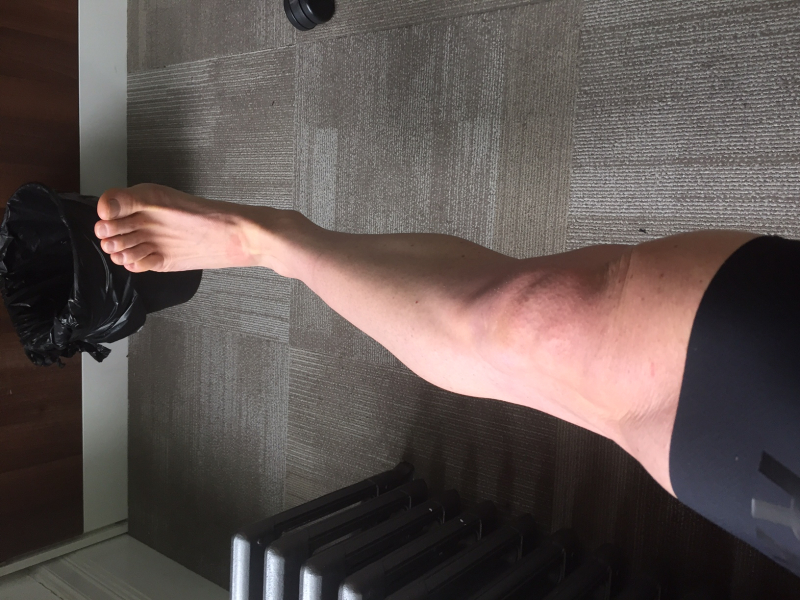
Which brings me to my left leg.
Shaven, as is normal for cycling types, but with a persistent niggle in the hamstring and sometimes knee that is only just going away after six months. I've done some decent miles and put some okay power down, but lost a big training block overall.
I have also gone through three physios. Each an expert, each totally confident in their expertise. After years of hard sports stuff, I know my way around the human body, but still desperately wanting a problem solved and totally at the mercy of 'experts' is a sobering experience for someone who earns a living giving advice to people.
And each physio gave different advice. The first made it worse. The second made no difference, while on correct diagnosis of the core issue, the third has cracked it (thinking about brand stuff, the first two identified symptoms, not the core driving problem, sound familiar!!!???).
It's like that being a client. Pounded by confident advice by experts with no room for being wrong, being admitting you don't know it all shows weakness and in our macho culture where loudmouths tend to do best, this isn't allowed.
In a pitch, you'll get three agencies with three different solutions, all totally sure they're right. You'll even get 'partner agencies' arguing in front of the client.
Advertising and stuff is not an exact science. Science isn't an exact science either, not just physios, the best physics minds in the world can't agree what the fundamental basis of reality is. In fact, no one knows why you get a headache.
Look, I bet you're good. I bet you're smart and rigorous and all the rest of it. But from now on, when I'm advising clients using my so called 'expertise' I'll be remembering how it felt to desperately want my physio to help me and how crushed I felt when the advice was so wrong.
And angry.
We've all been to the doctors, we know how it feels to be patronised by someone with knowledge in a field we haven't.
Or even worse if you've moved house in the UK and had to pay a solicitor wads of cash for making your life harder, you'll know what it feels like being helpless in the hands of a charlatan.
The more we remember how that feels, the better we'll all be.
(of course, there are clients who self diagnose and just order the agency to apply the medicine. That's a very, very different story)
Years ago I worked on a pitch for a car brand. The main idea we came up with was 'the brand that makes you feel more'.
It came from the observation that modern middle class men were pretty jaded, with oversupply of stimulation on all fronts, they had become 'numb'.
Thought, and still do, this is an open goal and not just for men, as we're all more stimulated than ever, but do little that's real.
A was re-watching Life on Mars recently (UK version!). A man who comes back from a purgatory set in the 1970's for police. Eventually he wakes from the coma that put him there, but prefers the 1970's version because in real world, he realises he 'feels nothing'. Certainly compared to the simpler, but more visceral 1970's life where experiences are real and not 'simulated'.
He kills himself to feel alive.
That's the real need behind the rise of more extreme sports for both genders – the need to feel something, for flow etc in a jaded, distracted world.
Basic premise, most acts or shopping, especially in the supermarket are fundamentally social and mostly an act of love.
Think about the main shopper, rushing around the aisles. The list has been carefully put together mostly thinking about others. Not just what the kids like, increasingly tough love, what is good for them. There's the pressure to deliver much loved familiarity but also variation, surprise and delight.
It can be argued that budget pressured families are MORE materialistic than luxury laden well off folks, it's they who fret over stuff like children's birthday parties – the right birthday outfit and gift matter more when you can barely afford them. Just as brand cereal can be seen as much bigger sign of loving your children than 'compromising' on own label. It's why people with the least earning power tend to display the biggest logos…and tend to be the most snobby.
It's there in clothes shopping. Even those who claim to buy to please themselves are picturing a series of social situations and what the clothes might convey. Few men get that women dress for other women, and this points to the fact that many women are closer to their friends than their male partners – are at least share very different things.
Would be interesting to do a study on online shopping, but I suspect the same sort of principles apply. Might bring up even more importance to integrating social media with shopping.
It's less to do with taste and smell and more about as, as yet, hard to define third set of receptors that are mostly about touch. We don't taste chilli as much as feel it, our mouths think they are feeling actual heat.
Which brings me to my beloved tea, where the astringent properties of the tannins work on the 'feel' senses, not just the taste ones.
I always knew tea was better than coffee, now I have proof.
Also. in a shameless segue into brand stuff, this is how really good brands work. Above the obvious stuff that folks report in research, the best brands just feel better – an indescribable 'feel sense' which is where I struggle with Byron Sharpe.
When folks can't describe what's different about their claimed favourite brand, it's not as he claims just because they don't really have a preference, it's because they can't really describe a vague fuzzy feeling. It's just feels better. Or it doesn't.
Just like most of use can't describe why we really like chilli. We just do.
Back in 2003 I was at an APG lecture that was pretty compelling. It was basically a call to arms for a role for good planning in the modern age.
Except that modern age looks a bit antiquated. Talk was of websites and blogs as the future. Facebook was mostly unheard off, no one had smartphones (although people were talking about the death of TV and the end of paid for ads, some things never change I guess).
The premise was that if you go back to the time of Henry Ford and his 'you can have any colour as long as it's black' it was easy for the advertiser. We had, if anything under-supply. One commercial TV channel in the UK, lack of choice on the supermarket shelf, bored people looking for novelty. Planning media and advertising was easy – reach people on the obvious channels, tell them a product benefit, mix in a little emotion. You're done.
Fast forward to 2003 and were already making too much stuff. Multiples of the same thing on supermarket shelves, hundreds of TV channels. Roughly 3,000 ad messages fired at the average person per day.
A call for smartness to become the brand that got noticed and wanted in the avalanche of advertising.
Now let's go to the present day. Not just even more hundreds of TV channels, video consumption on every device you can think of, gaming overtaking film and TV as entertainment in some quarters, dark social leading to a whole generation finally able to block out brands and prying adults very soon. Precision advertising with programmatic, re-targeting and stuff that is beginning to wear thing with the recent Google scandal, the estimate that programmatic reaches perhaps 1/3 of the supposed paid inventory and the dumbness of re-targeting that sees you being served as ad for the thing you bought an hour ago.
Then there is ability to buy whatever you want wherever you want, where spontaneity might matter more than creating a slow burn of long term desire, where people can decide on what to buy based on each other rather than an authority, where we're making so much stuff, real and virtual that realness of paper and the need for mindfulness mean colouring books for grown ups are big business.
And yet the response from most advertising and brand advice suppliers is to try and re-badge the past without learning from. The same hollow arguments on what a brand model might look like these days, when business has changed so much, perhaps the golden rule of building a strong brand and then adding scale might actually be going into reverse. Where advertorials are re hashed as Native and somehow it's cool to be ashamed that you have something great to sell and pretend not to be advertising at all, where agencies fight over roles by re-branding advertising as content, where the need to fuse media planning and creative planning (not as different as folks might think is lost as agencies compete over 'comms planning' media agencies invent 'ideation teams' and creative agencies invent stuff like Media Arts so they can force the media agencies to go back to putting an 'x' on a schedule.
You might say the future looks bleak. But I say that's wrong.
In a market where where there's too much stuff, brands, agencies, channels, theories, process and everything else. Where no one knows what they're doing. With some ignoring to the learnings of the past, from pioneers like Stephen King, Gossage, and yes Rosser Reeves, or even modern folks like John Steele. While others fail to embrace change, new challenges and new opportunities thrown up by culture.
This market has never been more ready for folks who can marry invention with best practice. Blend logic and emotion. Borrow from the new and old. Planners I mean.
There's so much adwank (and digiwank to be even more precise) flying around, sheer common sense can take you very far.
But there's also so much trying to cling to the past that re-inventing the familiar can be perhaps more propelling.
It's human nature to be contradictory. We cling to the familiar while going ga ga for novelty. The sweet spot perhaps has always been innovation done in a way that looks safe.
Or safe in a way that looks interesting.
Either way, it was a time for planners in 2003, perhaps that time is even more ripe now.
I think it's exciting to be around in advertising these days.
Advertising, let's be proud of that word. That would be a nice start.


 NORTHERN PLANNER