• I love this insight into what makes relationships last. 

    Basically, never failing to make the effort to be kind and generous everyday. 

    Always looking for positives in the other and opportunities to show the other you care and are interested. 

    That's not really an insight though is it? It's bloody common sense. 

    Especially when it comes to agencies and their clients. 

    Some agencies have it in their DNA to be aloof and difficult to work with. They believe it makes them cool.

    Even fewer get away with it because they are very, very good.

    So clients stick with them because, we'll, they provide ace value.

    Until something goes wrong.

    And it always does. 

    The edgy work that was sold in this time, it just doesn't connect with the customer and all measures, hard and soft, are awful. 

    Somone has got the numbers wrong and the agency has to fall on the generosity of the client to pay more than was quoted – even though they're not obligated to. 

    A new CEO takes over the client company with a favourite agency and no one in the marketing team LIKES their agency partners enough to stick their neck out. 

    Everyone gets caught out in the end. 

    I'm not saying you have to constantly over deliver. 

    I'm not saying you can get away with second rate work. You can't, being nice only gets you so far.

    But actually making people feel appreciated goes a very long way. 

    Now the problem with any relationship is that the novelty wears off. What was once fresh and wonderful becomes expected and even unnoticed. 

    Even supermodels get cheated on. 

    The trick is to always suprise others with the unexpected. 'I saw this a thought of you'. Doesn't cost much, just a little bit of effort every now and then.

    A little extra in the response to brief. 

    Noticing they've taken up running and paying a few quid for Strava premium. 

    Being brilliant gets you far. Being brilliant, thoughtful and kind gets you a lot, lot further.
     

  • So it's the first week in the new job. 

    Important findings so far…

    Everyone is lovely. 

    No one makes tea in the pot, time for another revolution. 

    It doesn't matter how many times you change jobs, the first two weeks are all about mouth shut, ears open, working out who can sort IT for you, remembering names, making friends with reception and office managers and nodding a lot while you work out what on earth everyone is talking about. 

  • I really like Tales of Things. Basically, digitally tag an object and add people's stories behind it .

    It's not incredible digital tomfoolery, it's bloody simple. Most things are. 

    I first came across it reading case studies about the Scottish National Museum and Oxfam. Now you can pretty much tag anything. 

    I feel I want to attach memories to the stuff we keep in a couple of little boxes for the kids- one or two artifacts from their childhood that were important to us. 

    Let's face it, few objects are valuable for their qualities, it's what we believe about them and the stories behind them. 

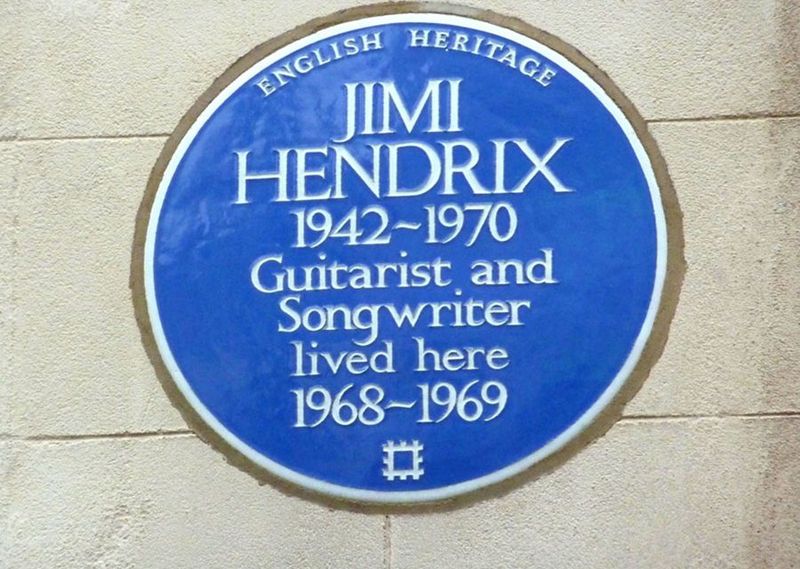
    Imagine how you could transform those plaques in cities that tell you where a famous person used to live. 

    Hendrix

    This plaque could be tagged with recollections from people who were alive when he first exploded onto the scene, YouTube videos of his best moments, who knows.

    Of course there is History Tag that makes this kind of stuff dead easy. 

    I'd love to tag my record collection and books. The kids might never read them or listen, but I'd love them to know what some of it meant to me. 

    Imagine getting a brand new, overly priced racing bike with stories from the folks who made it about the materials, craft and artistry that went into making it.

    Why on earth has Patek Phillippe with it's 'You don't own a Patek Phillippe, you look after it for the next generation done something with this other than a hateful 'image' press campaign?

    I'd love to see static outdoor posters that share the stories and dreams of other people. I had hoped that this wonderful Art Everywhere campaign could have gone one stage further. 

    Anyway .


  • Most recieved wisdom about society in England (and the UK to some extent) describes a nation that finds it hard to express emotions. 

    It drives our obesession with owning a home (to shut out other people) and our distaste for public transpot (being thrown together with strangers). 

    But that doesn't mean we are devoid of emotion. Humans need to feel, they need to express themselves, it's part of who we are. 

    It's just that we used to express this in what we believed in, what gave us ballast and comfort, by way of our institutions.

    The Empire, The Church, the monarchy, our constitution and democratic tradition, our industry, our education system, even The Unions. 

    In short, we expressed our emotions through symbols of what we believed in. 

    But for a variety of very complex reasons, this stuff doesn't have the role it once did.

    We're a mostly secular nation, without an Empire, with an uncertain sense of our place in the world, where the monarchy isn't revered like it was, where teachers, politicians, the judiciary, the police and other cornerstones of our old beliefs are, at best mistrusted and at worse treated with disdain. 

    So it's little wonder we have found new ways to come together, new hooks to hang our feelings on. Football is the perennial expression of this, something to belong to, somewhere to feel. 

    But then there is the resurgence of big Saturday night TV (X Factor etc), the very un-British national grief at the death of Diana, the way we grasp at social media to belong, the way we use music and musical tribes to express ourselves and, unfortunately, our obsession with materialism. Many people believe in the awesome power of the Mulberry bag lot more than they should. 

    There's the middle class obsession with cycling, the love of driving, the way certain people born in th 1970's still love Star Wars. Lots of ways to try and feel and express emotions, now the big instutions and sense of shared beliefs has dissapated. 

    Which brings me to work, specifically working in agencies and such.

    Work has the potential to matter more. I enjoyed Alain De Botton's The Pleasure and Sorrows of Work and the idea that, despite the fact that our daily toils matter little in the grand scheme of things, but the illusion that they might can deliver great comfort and meaning in our lives. 

    But the problem with many agencies is that they can be pretty good at creating meaning for their clients (if only to get them noticed in a sea of indifference), in some cases giving a sense of purpose to the staff there – but pretty useless at doing this for themselves. 

    There are exceptions of course, you know quite clearly what some outfits believe in and there is a real sense of everyone grafting towards a clear purpose. 

    But the majority can seem like it's a perennial treadmill in service of profit margins, status reports and even worse, simply not getting made redundant if you lose some clients. 

    Or who can work the hardest and stay the latest. 

    For a sector that is now competing with tech industries, the city, gaming companies and everything else that is probably seen as more rewarding and certainly better paid, you'd think we would be better at creating organisations that feel greater than the sum of their parts. 

    Anyway. 


  • I'm lucky to have a great relationship with my father.

    It wasn't always thus, we had the familiar late teens rocky patch when we struggled with re-adjusting to 'he's not quite man, he's certainly not a boy anymore' thing. 

    What really frustrates me is how I didn't respect him as much as he deserved until I was going through some of the stuff he did. 

    Working for a living.

    Thinking for two instead of one when you get married. 

    The terrifying responsibility of looking after the wellbeing of your children and the sacrifice and joy that brings.

    Every decision suddenly loaded with implications, the way work can never be about ego or personal growth in the same way, it's about buying shoes and food. 

    You cannot know what you're Dad is going through until you experience it yourself. 

    I only know now how much he loved me, what he did (and does) for me now I feel the same way about my own children. 

    And you realise they were winging it, as uncertain and basically using The Force as much you. 

    It's the same in the office. There were some people in high places when I was younger that I'll never forgive. There are others I'll never be able to thank enough.

    I understand them all better now. And respect them a lot more. 

    Because we're all winging it at work too. Anybody who claims to 100% know what they're doing is a charlatan, or at least self-deluded. 

    The salary gets bigger, the responsibilties and stakes grow perhaps, especially when the salary pays for shoes and school books, not just rent and beer, but the general Making Things Up as You Go Along persists. 

    Bugger.

  • When I was a lot younger, I wanted to leave something behind.

    After agencies and marketing in general consigned me to the scrapheap. 

    No prizes for guessing that was a body of good work. 

    I still want to leave something, but it's nothing to do with the vain pretensions above.

    I still believe in doing great work, because I know it has a greater effect, but as I increasingly find myself tasked with guiding more junior people, I find what excites me is leaving behind some great people. 

    As some of the interesting people that have worked for me or been daft enough to listen to my advice become great senior planners and beyond. 

    I want to generate people who are great, and nice at the same time. 

    I have worked for, and with some exeptional people. To tell you the truth, many of them were not that great to be around. 

    Many of the heroes I got to meet in the flesh were disappointing people. 

    But just as many were super generous, super nice and great to be around. 

    Despite his protestations to the contrary,his taste sartorial leanings, preference for Queen and taste in football teams one the best planners on the planet is also the kindest

    Rob

    I know the argument that great talent tends to be difficult, but I just don't buy it.

    I do believe we should expect the best from each other. We should expect each other to try hard, to never accept OK, to be honest even when the truth hurts. I believe in mutual tough love.

    I don't believe anyone has a right to be arrogant, to bully people, to not take the time to care about how people feel, to kidnap their entire life by making them work 12 hour shifts every day and generally make people's lives hell.

    I certainly don't believe people should be dismissed becasue of where they might have/not have worked and what they worked on. 

    Most of Weiden and Kennedy Portland's original staff, the founders of maybe the best agency –  whatever discipline you choose –  came together because no one else would hire them. 

    AMV/BBDO, arguably the most enduringly successful UK creative agency has a reputation for being non-ruthless. 

    Epitomised in Peter Mead's new book. 

    Be nice

    PHD where I am now is full of people who are noticably nice to be around.This is a place that cares .

    And where I'm going was chosen, amongst other things, simply by the fact that the people I've met look like okay people I actually would want to spend time with. 

    So what I try to instill people is threefold.

    1. The importance of trying hard and always trying to do it that little bit better. 
    2. The importance of remembering to be be human and not a 'marketer' in all your dealings and have a healthy disrespect of sophistry, needless complexity and industry best practise/awards. 
    3. Respect for everyone, clients, target customers and especially your colleagues and agency partners – their time, their hopes and fears and gaps in yourself they fill. 

    If I leave a few people that are great on both counts, I might feel I've done something that matters slightly. 

    Certainly more than a few IPA's or Mediaweek Awards or even D&AD's. 


  •  

     If you haven’t read Steven Johnson’s book, ‘Where Ideas Come from’ you should. It might challenge some of your long held beliefs about where great ideas really come from.


    A ‘slow hunch’ is much more valuable than a Eureka moment. Flashes of insight rarely happen, most great innovations are the result of graft.

    Of edit, précis and distillation.

    A connected, open and collaborative group is always smarter than a lone thinker.

    The best ideas come from building on the inventions of others.             


    Peer behind a Darwin, Einstein or even Google and you’ll find a great body of thoughts and ideas from other people they recombined into something greater, over period of time where, along with talent and genius, there was a lot of hard work and patience.


    Which also means that where you work and think is just as important as HOW you work and think. Environments that naturally throw a lot of people together, with a strong culture that encourages them to share ideas and collaborate, these are the hotbeds of the great leaps forward.   


    Which is why Manchester is such a great place to work if you’re in media and marketing.  Because good ideas pay back.  


    We know from all sorts of sources that innovations and creativity pays back disproportionately – the IPA Databank for a start – and the city I work has long been an engine of ideas and innovation.


    Going back to Johnson’s book, cities has always been hotbeds of ideas and innovation. The sheer density of people and the buzz this creates simply makes things happen.

    Communities of skilled and like-minded people spark each other and create a critical mass.

    It’s just as true of San Francisco and digital innovation today, as it was Florence and the birth of the Renaissance in the 14th Century, or philosophy in BC Athens.


    And it has certainly been true of Manchester. This dense city with its open, cheerful and generous culture was where John Dalton’s theories paved the way for modern chemistry. It was at Manchester University that Rutherford discovered how to split the atom. More recently, graphene was discovered here.

    In the Midland Hotel, just around the corner from where I work, Rolls first met Royce.

    We have seen the snowballing of communities and movements here too.

    Manchester was the cradle of the world-wide Co-operative movement, feminism, the first professional football league and the Guardian. 

    Culturally, Manchester birthed Coronation Street, and, at the other end of the spectrum, it was where Charlotte Bronte sat down to write Jane Eyre.

    While Joy Division and their later incarnation, New Order, along with my beloved Smiths, sparked a movement of Manchester music that created The Stone Roses  the Charlatans and later Oasis I don't like Oasis but you can't deny their impact).


    It feels like the Manchester media and creative scene has its own special community today. The BBC produces much of its output in Salford, next door to ITV, and with all the important media owners here too, we have a thriving, collaborative culture where we can bounce off some of the best innovators in the business.

     I think what makes Manchester special is our tight knit media community, constantly feeding of the cultural buzz of the city. This is a city that has always driven things forward and right now, it feels like we’re doing this more than ever. 


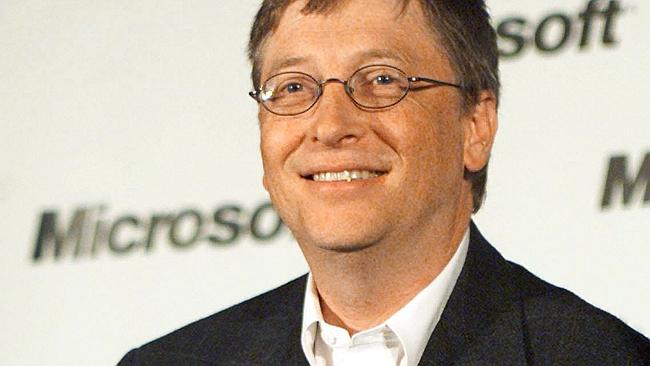
  • Someone once told me that everyone at Microsoft in Seattle used to be ace at crisply describing their what they were working on  - in about 30 seconds. 

    Reason was simple.

    The office only had two floors, consequently, the lift took about 30 seconds at most. 

    Gates

    Bill Gates was socially inept and was even worse than the rest of us at lift small talk.

    So he only said one thing. "What are you working on". 

    Everybody got extremely good at distilling their current project down to its bare essentials. 

    Something planning folk should practise more. 

    What is the one thing you're presentation is really about?

    What is the core jumping off point of your brief?

    If you can't desribe it in a few words, there are holes in it.

    I don't mean leaving out complexity, intelligence or anything like that.

    But if you can't compress stuff down, like chinese whispers, the more it gets passed on an talked about, the more it will change.

    Think about your client presenting on to the board.

    Think about the creatives discussing the brief.

    Think about partner agencies. 

    That's a lot of potential for stuff to get fiddled with. 

    Like an machine with lots of parts, the more knobs and whistles you add, the more opportunties for it to break. 

  • I was asked by someone recently what planning was like in the North of England. 

    Someone from a very good London agency, good clients etc, looking for a better quality of life. 

    Here's what I said…


    What you need to prepared for, in general, in the creative side of things at least, is that you just won't get the same kind of clients and do the same kind of work. 

    You'll find though, that while there are less big TV campaigns, there are lots of really interesting, more integrated projects. You'll need to be good at getting how channels fit together and creating strategic platforms for IDEAS, rather than advertising ideas. 

    That can be really interesting. Especially when the silos between discipines are not like they are in a London outfit. Or between outfits even .

    But prepare for a certain lack of sophistication. Not much, but you might find that a few folks are a bit complacent and don't have a big enough frame of reference of what good looks like these days. But that's ace, it's a chance for you to have some impact.

    But then again, you'll need to roll your sleeves up and get stuck in.

    While suits will be suspicious of you and creative types will see you as an unnecessary evil at first, if you can help suits with the client relationship in non-threatening way, while helping creatives get their head around the complex media choices –  and give them a great springboard -generally mucking in and being  generous with your ideas and freeing up the skills of others, it can be really rewarding. 

    But you'll have to prove yourself. More than someone from around here. No one will take your word for it about anything. But good places will give the chance. 

    So choose your agency wisely.

    There are less of them and much less planner roles.

    Good planners are always sought after, but perversely, the good jobs don't come up much. So make sure you've found out what the culture is like, if it fits your general world view and you like the people. 

    Because you might end up there for a while.

    And some places ARE horribly 'regional'. The kind of places with the creative director dressed head to toe in  All Saints, who thinks he can do the strategy, not to mention the writing and art direction, when really, he's an okay designer. The kind of place with the head of clients services or MD who has only ever worked on small regional clients and don't really get it either. This is fine of course, it works for them. It won't for you!

    Coming back to that 'blur' between disciplines. Even at a big London place like yours, you'll have found the media folks trying, and doing, more of the core comms planning and even content. It's really happening out here. 

    That's why I've ended up in a media agancy and have found it really enjoyable. Planning folks are naturally curious and get bored quickly. Grappling daily with the sharp end of new media innovations and the realities of the modern media landscape is tremendously interesting. And working directly with Google or another media owner, the real experts at communications that captures the imaginations of people.

    Nothing is more stimulating than that. You get to brief creatives, but the creatives are real content experts!

    So, if you want to move up North, the place with a real COMMUNITY, is Manchester. There are great places elsewhere, but less concentration of organisations. 

    And if it's on the cards, if you want to muck in, if you're prepared to take people with you, if you choose your employer carefully (watch out for the complacent lot) and might even consider a different species of agency…

    You'll find that job satisfaction and quality of life are not mutually exlusive. 

    See you soon maybe!

  • Evie, my lovely little daughter is a bit of a Daddy's girl. 

    Photo 2

    I won't pretend not to like this. 

    But not even Daddy escapes the darker elements of her current stage of development. 

    Namely, the power of repetition. 

    When it's time to brush her teeth, Evie miraculously loses the power of hearing. 

    Ask her ten times and nothing. Diddly squat. 

    Until she get's bored not hearing you and just leaves the room. 

    When the tables are turned, when she wants TV on, despite knowing full well it has been switched off until after tea time, she'll ask over and over until you are trembling with the need to give in. 

    Or when she wants to know what's for tea, and doesn't want it to to be boring chicken, she asks for pizza over and over, even while she shovels forkfuls of the fown passed her – butter wouldn't melt – lips. 

    Most of advertisers are like Evie when she wants something. Over and over, no let up in stalking you, even with hateful re-targeting these days until you can take no more. 

    But so are most consumers when the roles for Evie are reversed, evolving a fantastic ability to filter out unwanted rubbish, even when it's right in your face. If it's a mobile display ad that freezes the site, like Evie leaving the room, we'll just leave. 

    Impacts/impessions/reach figures are not a measure of efficiency or value. They're usually a sign of inneficiency.