• I bloody love Haruki Murukami. 

    To the point when I usually get his new book as soon as it is published. Forget paperbacks, I want it now. 
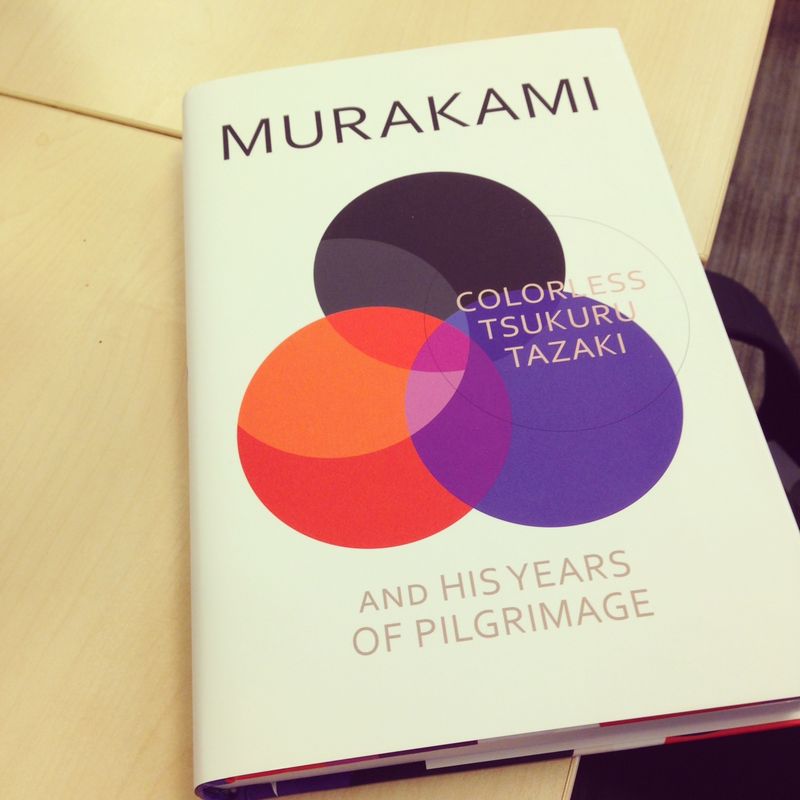
    Murukami

    Over a number of years, he's built up quite a following for largely writing variations on the same them. 

    A lonely man with unrealised ambitions, who cooks a lot of spaghetti, has a lost love and a past he cannot reconcile, with a new, enigmatic girl in his life, meanwhile a parallel world full of possibility begins to bleed into this one. There is a lingering sense of sadness and loss of what could have been, with a coming to terms of what is and what could be. 

    It's never boring because there is so much invention in every page. Every book is a surprise and delight, yet it always feels like coming home.

    I think brands have something to learn from this.

    I've often found that 'brands as people' is too artificial, not to mention that a rigid 'essence and values' model is just too limiting, especially for a fast moving media landscape like we have today. 

    But I've never bought 'brands as conversations' and 'relationships', which all the data tells us is, as far as generating business growth, hogwash. 

    I do like the idea of brands thinking of themselves more as content creators and less as advertisers. This shouldn't be news to anyone – the best advertising has never felt like an 'ad' it has always rewarded the viewer – but it's fair to say that more and more of what we do needs to add value where it shows up and what people are looking for.

    But of course, we also know that brands need to build consistent, yet distinctive. Continously interesting, yet familiar. 

    I venture being more like a Murukami, with a big flexible theme, rather than a tight, never to be messed with brand triangle/onion/key. 

    I reckon brands should think of themselves more like authors than advertisers. 

    You know what you'll be getting from Murukami, a Phillip Roth or even a Stephen King or Hillary Mantel. 

    You will be entering a familiar world in which you'll be entertained and surprised .

    In fact, you enter a particular world when you're listening to Radio 4 or watching HBO. 

    Maybe that's what we should start asking if we were an author, what are the constants in how we tell our story. Or what is the equivalent to 'Radio 4-ness' or 'HBO-ness'.

    I'm not saying that people are sitting and waiting for our stuff (and I'm a heavy Murukami buyer, most folks will have read two of his books  bet). But when we do stuff that hopefully get's us noticed by folks that don't care, it needs to build up a picture, a world, over time. 

    If you like, boil down any Lego construction, no matter how amazing, it's made of the same simple collection of bricks. 

    Anyway. 
     

  • I feel very lucky to be a planner/strategist or whatever you fancy calling it these days. I find it continually interesting and challenging and have come across some lovely, talented people. 

    But there are some things about the job that drive me up the wall. Tiny next to upsides of the job – anyone doing this job is incredibly fortunate to be doing this rather than real work. 

    Bu just like the only who can moan about my mother in law is my wife, I reserve the right to good naturedly point out the increbibly daft. 

    1. The tried and tested methodology of using human relationships as a metaphor for how people buy brands. You know, stuff like 'creating brand love'. 'Like marriage the secret is to show you care'. When the most appropriate human relationship for how most people buy brands is the annoying stalker who won't leave you alone no matter how much you try and ignore him.

    In fact it's not even that. It's that person in meeting you know you've met, you recognise the face but can't remember much about. 

    2. The habit of talking about brands like they're people. It's OK up to point of course, but like any 'model' it's only there as a representation, not fact. Loads of scientists have models of how stuff works, but when new evidence or insight comes to light, they develop the model.

    A rigid brand onion no one can mess with, based on a tenuous comparison between an intangible impression in folks' heads and real, capricious human behaviour seems plain daft. 

    3. The worship of the brand per se. Too many planning folks seem to hide under the comforting blanket of brand scores, rather than actual business performance.

    It's lovely not actually having to prove you sold anything, but eventually just shifting salience etc will get you fired, even the biggest, dumbest client companies. 

    4. Intelligent fools. You know, the poor sods who have been taught that complex language and even more complex powerpoints gives them gravitas and makes them look clever. It really doesn't .

    5. The over-use of culture. It's quite right when planning folk bring cultural insight to the table. You know, what matters in real lives rather than fake focus groups. But while the context of real lives to frame a task is a must, there's lots of over-use of how 'were going to change/influence/make culture'.

    You're really not.

    With very, very few exceptions, you're going to create stuff that might actually get noticed because it has some relevance and adds some value – a few people might interact with it to amplify your reach, but it's rare you have an Old Spice Guy on your hands.

    Even for the people who made the Old Spice Guy. 

    6. Mistaking what interesting to planners for what is interesting to real people. Thinkbox did some usueful research on the difference between media folk and the public at large, in terms of media habits and consumption.

    It's pretty big.

    So it the gulf between what media folks think people do and what they actually do. No wonder we see lots of obscure ads with clever references, genius apps no one uses and lots of augmented reality and such left untouched.

    Not enough planning folk get the bus, read the Sun or watch Corrie or Keeping with the Kardashians. Our job is not suprise and delight other agency folks, it's to get noticed by people who think Mrs Browns Boys is funny and have never watched Game of Thrones. 

    7. Seeing the brief and the strategy as the idea. I remember being taught at an APG thingy that a brief is 'your ad to the creative department'. 

    I dislike this sentiment as it suggests a brief is a piece of craft that should be worshiped all of itself. Most creatives barely read it to be honest. They remember the briefing. It should feel a great start and juicy challenge – the more it feels like a problem to be solved rather than an unchangeable solution, the more folks will want to work on it.

    In later years, I've found that a broad direction to talk to media owners is far better than 'give us a price for this'. I'm not as clever as YouTube or the Guardian. Like with creatives, you would be stupid not to take advantage of the brains of some really clever people who REALLY DO influence culture. 

    I'm talking about good creatives of course. I can't help you with the useless ones who ignore briefs AND can't get any good ideas – yet they are celebrated as untouchable Gods. 

    Just as there are media owners who come in an bombard you with chart after chart of the bleeding obvious. 

    8. Competitive planners. Many of us have been brought up to own the thinking. That doesn't work in real practise. Generosity does. That means sharing your thoughts, but also spotting someone else's greatness, using it and fully giving them credit.

    That goes for agencies working together. It's tough of course, you want the client to value your input, and it's really annoying when you've had an idea and credit gets lost on the chaos of getting an intregrated campaign out the door. But it's not as frustrating as getting fired when you're seen as not being able to get on with your clients' other partners. 

    I'm sure folks I've worked with would accuse me of much of the above too, we're all guilty I suppose. I wonder what I've missed (the habit making lists, planners who blog?). 

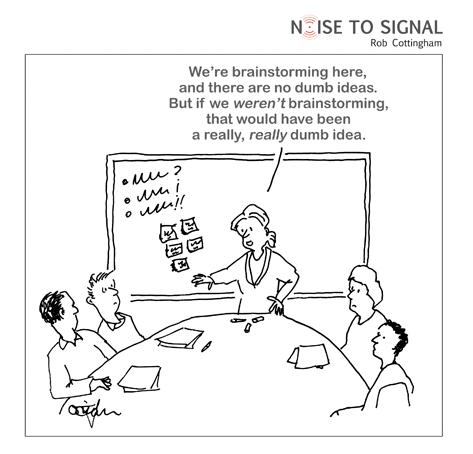
  • Noise-to-Signal-Brainstorming

    It's no secret that I'm not too fond of brainstorms. 

    They are mostly a waste of time. Unless you want to get buy in from members of an external or external team by making feel part of the idea creation. But that, of course, takes very careful meeting design and a masterclass in moderation. 

    There's simply too much evidence from all sorts of psychology that they don't work.

    I won't bore you with the evidence, but read it here if you're interested. Take it from years of the collective experience of great folks I've worked with – brainstorms should be avoided by the plague. 

    There is a school of creativity that's about the solid, hard graft of the individual. Start with stuff that that isn't much good, then continuously work out what's wrong with it until you get something ace. Work that emerges, evolves through sheer patience and determination. 

    But there is an easier way. 

    If you're in a hurry, take a small amount of people, I mean no more than four, away from the usual office environment for an hour. Clever people who trust each other, with slightly different skills. Present a clear problem and just talk. That's right, a simple conversation. 

    Because if you trust each other, you don't have to bother with that, 'any idea is a good idea'. You can be honest about what is ace and what is dreadful – and take rejection on board. 

    Because small teams bounce off each other while big groups stifle.

    Because a change of scenery immediately invigorates the brain. 

    Because it's the sparks that come from people who fill each others gaps that matter. 

    And in the longer term, talk about the project all the time with the team. It's the conversations that generate ideas. You just need to the awareness and humility to spot when someone else has a great idea, and the generosity to acknowledge it. 

    And, from a personal perspective, I'm rubbish at thinking in my head, but okay at thinking out loud. The act of writing things down too early destroys my thought process, but talking it through seems to when ideas finally come out of my tiny brain. I literally talk ideas into coming out of their hiding places. I suspect I'm not the only one. 

    You just need to THEN write them down before they disappear like a puff of smoke. 

    It's good to talk as the saying goes. 

  • Blackberry


    Apparently psychologists have found that the key to a happy marriage isn't the grand gestures and lavish gifts. It's little daily selfless acts, that's what makes up the fabric of good relationships. Which is music to the ears of a tight wad like me. 

    Obviously, my relationship with my kids is different. You don't have to work at it (but it is work!). It just is. But then again, my little boy is old enough to remember little things and he's a caring little soul. 

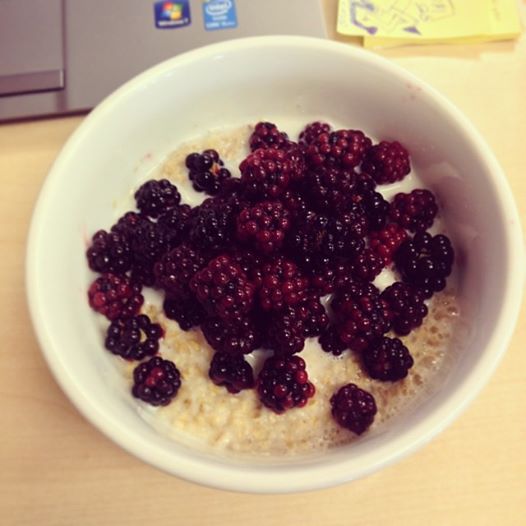
    Hence his insistence that he got to pick blackberries at Grandma's because he knows Daddy loves blackberries on his porridge. He was so pleased with himself when he gave me these, and I just melted. 

    Happiness isn't free of course, but some things that make you happy certainly are. 

  • So I got the news about Ian Thorpe coming out with zero interest.

    Really? Does it really matter (apart of course from the fact he had to keep it quiet, now that certainly does matter)?

    But some of the footage made me extremely whistful for the pool. Because I don't go swimming that much any more.

    I just don't have the time. Because of these two beautiful monsters. 

    Photo

    Which means my once a week thrash on a Sunday morning, while the kids have their lessons is that much more precious.

    And after watching Thorpe's freestyle stroke, in the recent 'revelation', and realising my arm was coming in the water too low, the last time felt sublime. Even once a week, the simple joy of doing something well, for no reason apart from that, is so precious.

    But that's not the end of it. Roughly 33 years of addiction to pain, suffering and the sheer endorphin rush of doing sport to the point where your muscles are running with molten lava and your heart might burst demands to fed.

    It's not a recommendation, it's quite the opposite, but by the time you get to forty you realise what is a part of you, like it or not and what is not.

    And this obsession is as much part of who I am as Star Wars, tea or and constant fear of not being good enough at my job, or the ever deepening joy of my children.

    Bike


    Enter cycling stage right.


    What began as an experiment in grasping at something I liked doing as a teenager, has become an obsession.

    To the point where I ride around 20 miles a day as a minumum. 

    To the point where I can see a justification for my bike costing more than my car.

    Much of this is simply the joy finding out I'm sort of okay at it.

    A lot is to do with doing something completely knew.

    Mostly it's about convenience. Excruciating fitness stuff built into the commute or a Saturday 2 hour blast before family breakfast time.

    But it's more than that. It being allowed into a new world.

    So much history, legends, myths.

    So much of brand stuff is about pretending. You wear an Omega watch and pretend to be Bond. You wear handmade selvedge jeans to feel a bit artisan and bohemian. You buy Chanel to get as scrap of what it must feel like to be Linda Evangalista.

    When I get on the bike, it doesn't matter if I'm only doing 40 miles in Yorkshire. I'm in a black and white grainy shot somewhere in the Alps. . 

    I'm free.

    It's no accident that road biking has eclipsed mountain biking by the way.

    The archetype of the 'the man of action' in response to the 'other directed man' is one of the constants of marketing to men (and let's get with the 21st century, to women, it should be the 'other directed person') and meant towards the end of the last decade the non-conformist bourgous bohemian to acres of middle class folks. On the mountain bike in slouchy gear. 

    The rebel.

    But with austerity etc, I'm convinced road biking with it's graft and sufferng is to do with the reaction against complacency and relative coolness of discpline and hard work. 

    And road biking has a timeless 'nobility'. 

    Me? Swimming gave me a hateful work ethic. I like it hurting and those feel like the clothes road biking gives me out of the pool. 

    It's hilarious discovering some of the 'rules' and distasteful elitism that come with the territory. But the generosity of most people on the road to help with a spare inner tube or a breakdown, the sense that 'we might be different but we're the same' is ace. 

    And how you get up a hill is a bloody great leveller. 

    So swimming will always be a part of me, but now so is cycling. 

    What does this mean for brands? Not much you'll be pleased to know. 

    But I do think it's worth thinking about the 'other directed man' in his current incarnation. And what needs are driving big shifts in culture like cycling. Marlboro has a solitary cowboy on his horse. Now he's wearing a helmet a lycra, on a carbon steed. 

    I also think it's shows how you shouldn't take any buyer for granted. Few love swimming more than me, but things change in customers lives. Culture moves forward too. You need to plan for it. 

    One of the great joys if riding is that a shy awkward man like me has something to talk about with so many strangers. Men's relationship is side by side, they need an activity to talk about or do. Worth thinking about. 

    I love that I could chat to so many strangers at the Tour De France. And that our socially stunted Country (or at least Yorkshire) could be happy together for one weekend withour a drop of irony or cynicism. The British are always looking for social ice breakers, especially the blokes. 

    So I guess cycling and swimming tell you something about me, but also where British culture is at and certainly what glues men together. 

    Or not. 

  • I did read David Meerman Scott's Newsjacking, I admit it.

    Maybe because I just love anyone who has Meerman in their name, imagine sounding like a mythical half man/half fish everytime you introduce yourself. 

    Anyway, I did like the collection of case studies of tactical ads and ideas. 

    But let's be clear, Newsjacking is not some crossing of the Rubicon for brands, it's not even a bad attempt at it like, say Lovemarks. It's just using current events in the news to do tactical ads. 

    "The rules have changed. The traditional PR model—sticking closely to a preset script and campaign timeline—no longer works the way it used to. Public discourse now moves so fast and so dynamically that all it takes is a single afternoon to blast the wheels off someone’s laboriously crafted narrative.

    Enter newsjacking: the process by which you inject your ideas or angles into breaking news, in real-time, in order to generate media coverage for yourself or your business"

    This has been around for ages, as long as advertising itself. It's just that the best brands do the long term and short term very well – and build a constistent story over time with a big idea with 'width' as well as 'legs'

    However, perhaps it's more of use since it's fair to say it's harder to cut through than used to be. 

    Correction. It's harder to interrupt folks with banal, over focused grouped dross. 

    So it makes sense to start in life, culture, or work back. 

    But then again, the best examples of this stuff are when a great brand idea is applied to a timely event. 

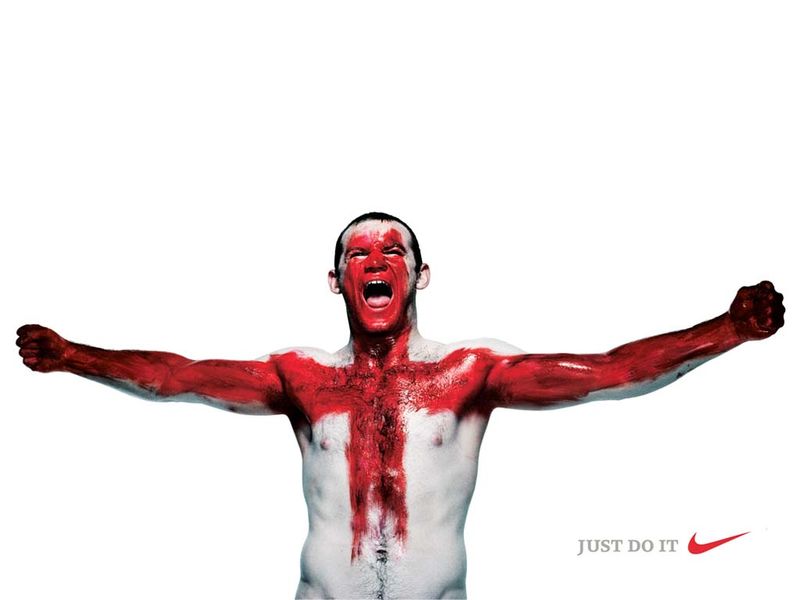
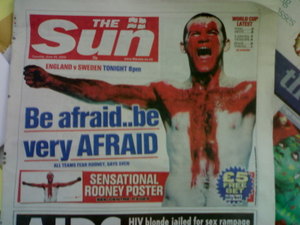
    Perhaps this poster is one of the best examples. It was the World Cup, Rooney was the great hope for England and all the talk was over if he would be able to play after a broken foot. 

    Wayne_rooney

    Rooney


    The biggest risk with this stuff is that people don't remember the brand. Let us not forget the work of Byron Sharp around memory structures  -be distinctive AND consistent. 

    An even bigger risk of Newsjacking in general is mistaking the latest wheeze for something groundbreaking. Especially when it's really a clever (ish) name for a tried and tested tactic. 

  • I found myself loving the new Silicon Valley comedy. While the satire was a little obtuse, it already feels funny and warm and neatly skewers the hubris of digital folks who claims to saving the world, making it a better or whatever. They're not. Obviously. 

    It also made me want an advertising version. Mad Men is one of the best, most human dramas of our times, but it's not satire, it's a story about people set in advertising. Of course, no one would care, advertising hasn't a big cultural frame of reference, but thinking about what one would look like would be a useful reality check. 

    You know, the claims about being curious, wanting to be a creative company rather than an advertising company, claiming to be able to make lots of lots of people care and generally trying to pretend we're not here to make them want to  buy stuff they don't really need. 

    Just me probably

  • Brains

    I get really uncomfortable if soneone introduces a planner as 'the brains'. 

    Especially if I'm that planner. 

    First because of the obvious, I'm not very clever, I just read more and then pass off other people's brilliance as my own. 

    Second, I get all nervous about the pressure to say something remotely interesting and intelligent, since any colleague who has worked with me will tell you that has rarely, if ever happened. 

    Third, I just don't believe in putting strategy folks on a pedestal. Just as I don't believe in putting creative folks, digital folks, suits or even (especially) social media gurus on a pedestal. It's about the magic that happens when collaboration happens. 

    Especially strategy folks actually, as the best thing planners can do is surrender their ego, get involved and liberate other's work, rather than be a barrier.

    People don't like planners because they're too clever by half, over complicate things and get in the way of getting great stuff out as efficiently possible. 

    That means NOT being the brains of the operation or having great, clever ideas, it's about helping others to have them, having the ears and eyes to spot them and the generosity to help them come to life and develop in a way that will work and can be bought by the client. 

    So I don't think the role of the planner is just to be the voice of the consumer or make sure the work works, it's to make sure great work works. We know the basics by now, reach lots of people, build distinctive memory structures, build fame.

    In other words, suprise and delight people. Get great work made that is also right. 

    Anyway. 


  • 1. The silky skills of the best suits mean they can deliver negative feedback or outright criticism and make you feel like you just won the lottery. A common trick is taken straight from marriage guidance counselling – deliver five complements in relation to one piece of negative feedback. 

    2. If someone delivers some great news, some wonderful complements or even heated agreement and then says 'but' we all know they didn't mean a word they just said. I has a junior suit who used to say, "I agree completely, but….". He was a bit of a joke. The cunning suit will say, "I agree with you AND…." Hoodwinking the less subtle of us into thinking they're building on your argument rather than destroying it. 

    3. They will never speak negatively of anyone behind their back, as they know there is a wierd quirk of psychology that when we do this, the traits we asign to the people we're talking about are actually asigned to us! So what they do instead is pretend to be enthusiastic about the person and find away to be enthusiastic about their deepest flaws. For example, "I love our creative director, it;'s amazing how he managed to overcome that untrue scandal about the scam work". "Oh yes, Jenny, isn't it great how she's managed to not be judged just on the fact her Dad is one a shareholder".

    4. They never rise to conflict. No matter how much someone winds them up or tries to shaft them, they kill them with kindness. They evil bastards know that nothing winds an aggressor looking for a fight more than you not wanting them. They know that no one looks more like bigger person in the eyes of others than the one who happily lets others vent spleen and use underhans tactics – they're just extremely cunning in makin sure others know about it (see above). 

    5. They never win arguments. They always find a way to con you into thinking you got more out of it than you did, or making think you won, when you lost horribly. And they behave in victory in manner more akin to a loser. 

    6. They let everyone else speak first. They know that excitable creatives, planners and clients can't wait to get their word in. They'll let a discussion run it's course and then insert their point like a rapier precisely when it will the most effect, mostly when everyone is exhausted and can't remember what they were talking about. 

    7. There are interested. Suits are great at making you feel like the most special people in the world, simply by making you believe they care about what you care about. They can, of course, talk about all sorts of stuff, but they're great at listening a lot, especially when you're talking about things close to your heart. They'll have learned that you love obscure Brazilan cinema and will have developed a working knowledge of it, or got you to teach them. 

    8. They never flap. Inside. they might be burning and ready to get a McJob rather than deal with the fact Clearcast have just put a big no on the script it took months to develop, or the fact the client won't pay because they hate the work, but they know they need to lead by example and project an aura of calm and optimism which is infectious enough to pull everyone together to solve the task in hand. 

    9. Suits are devious. They always make sure they know the people that really make agencies tick. That means in creative agencies traffic, and in all places the PA's who are the gatekeepers to directors and such, internally and externally.

    10. They dress better than you.