To make sure we give them the attention they deserve, myself, Rob and Gareth will give ourselves until June 9th to share feedback.
One final thing. This isn't about winning. Someone will be judged to have answered the brief in the best manner, but it's about trying and learning. It's about putting yourself out there. Well played to everyone for having a go.
I'm away now until May 28th, on the annual Easter pilgrimage to Mum and Dad's in St Ives. My children have been there for a week now, on the beach all day, I miss them very much. The internet is bitter sweet, my wife sends me pictures of what I've been missing, great to see them happy, painful I'm not there.
Anyway.
Hopefully you're working on your APSOTW project. Don't forget the deadline is 2nd May.
If you have any questions, I'm afraid they'll have to wait until I get back.
I was lucky enough to be invited to a client conference last week.
I'll admit it was fun, late night drinking, bungee jumping, shooting and so on.
But there was some serious business too. Seriously great performance to share, even more serious objectives and challenges.
Most of that came from, and would continue to come from a stroke of luck with in-costs, brilliant productivity and canny distribution and innovative NPD.
Not brand equity, not advertising. Hard business.
I'm not devaluing what we do by the way, but it's very sobering to be reminded of the real role of 'brand' and 'advertising'. It's one of many, many fundamental pillars of business growth.
I was humbly reminded what we do is about 10% of what clients actually do. No wonder they don't always answer the phone, get excited about the Polish cinema reference in the TV ad or go bananas on making that nice to have Snapchat thingy go live. They've other stuff on.
That's right, our stuff is not the be all and end all, it's a tenth of it at best. Clients do all sorts of stuff I can't do and don't want to do.
If you've ever had to deal with a supermarket buyer, you'd be thankful it's a regular feature of your day job for example.
A trick of getting insight into customers is to find something to admire in them. I venture that's at least as important with clients. People who actually make and sell stuff, people who get complex things to market, not just words, pictures and the odd event.
And as the performance of this client shows, they're at least as good, if not better at their 90% than I am at my 10%.
The greatest enemy of brands is consumer indifference, they've got stuff on.
The greatest enemy of agencies who love solving advertising, digital or even brand brand problems is the indifference of the clients who actually care about business issues.
Or clients who would rather solve ad issues and then fire you when nothing good happens to the business.
We are the ten percenters. Worth remembering now and again.
This is my little boy and his Mummy being taken up to the ward for his (thankfully successful) operation. His little hand gripping hers with all his strength.
He went to the anaesthetic room already in his bed, little determined face set firm, apart from one little tear from eye, betraying the fear.
Arguments over the what is an idea or an execution, the minor victories, the constanr disappointments. It doesn't really matter.
Today's project will be forgotten tomorrow. It's only a job. It doesn't win wars, it doesn't save lives. It doesn't even get noticed most of the time.
This is what matters, this. The little hand in his Mother's, that one tear.
I hated being made to do presentations when I was younger. I still do to be honest. Because I'm shy, dislike big crowds and am not a natural orator.
I also share a personal truth, I moved from being a suit to planner and always have this nagging doubt I'll get found out as not a real strategist. Despite many years doing the job and not doing too bad overall.
But that's actually quite a good place to be. Because confidence is massively over-rated.
The human brain is a sneaky little bastard and cons us into all sorts of un-truths about how we percieve ourselves and our skills. It also helps us make mistakes about others.
Con-trick number one is that human beings are chronicly guilty of over-stating their aptitude and skills. Most people would agree they are above average in attractiveness, when of course, most people statistically cannot be. Experiments run with chess players have shown most believe their actual skill is better than the ranking they have.
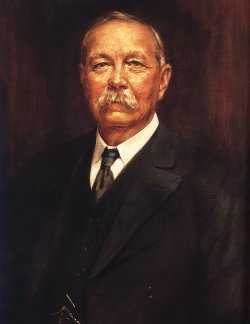
Even scarier, the LESS experienced and accomplished you are, the more likely you are to over-estimate your brilliance. In other words, that Arthur Conan Doyle quote was spot on "Mediocrity knows no higher than itself, but talent instantly recognises genius" .
That's a problem in this industry that tends to celebrate the young and new. Of course, young turks shake everything up and challenge the complacent out of their comfort zone, but we shouldn't forget that it's axiomatic for novices to think they're better than they are. They need help for reality to bite.
It's also a problem for regional agencies in the UK and people that have never worked anywhere really good (I don't mean a the right name over the door, just, well good).
The new business director who got the job through politics and thinks they are a strategist.
The creative director who has only worked on logos and has landed the job in an integrated agency.
The small agency that has only worked with small clients and think they can take over the world.
But also the agencies with the Shoreditch address, who mistake post code for greatness.
And if you believe you're ace, you won't take constructive feedback too well, you'll take on too much, you might even suffer from a dose of arrogance. You won't learn. But if you have the fear, you'll be great because you'll never allow yourself to mistake good for great, or make an avoidable error.
What's worse, is that we naturally believe in confident people too. It's not what people say, it's how they say it. In an industry full of self-confident showmen, you can imagine the amount of bad advice that get's through because of how it's delivered. I personally get through the confidence barrier by making people see I care, and because of endemic self doubt, preparing more and working harder.
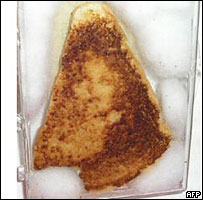
And then there is the danger of confidence in information. Confirmation bias. We tend to make the information fit our point of view. We see patterns in things that are mere coincidence. Which is slightly scary when interpreting research. It's why religious folks see the Virgin Mary in a slice of toast, and people with arthritis think their dodgy hip hurts more when it's going to rain, when they only remember the times it rained and their hip hurt, rather than the occasions it didn't.
But confirmation bias can be used for your own ends of course, if you give into the temptation of dirty planning.
When you know what the suit, creative or client tends to like, their values and belief system, you can hone the argument for your thinking and how it's delivered to make them see what they want to see.
Anyway, I'm saying that confidence is a false God.
Not believing in youself too much will make you more effective.
Getting out of your comfortable little frame of reference is a must.
Don't look for people who will agree will you. Look for the awkward folks who will challenge everything.
Not falling for over-confident colleagues will stop the team selling over-polished, badly thought out work.
And being hard on yourself will help you avoid confirmation bias and stop seeing the Virgin Mary in research data that means nothing – but it can also help you sneakilly get stuff through.
Patience, forgiveness and turning the other cheek to win in the long run.
Let me explain.
If you believed the way some of the case studies and awards entries were written, you'd be forgiven for thinking this was a lovely little industry where you had bags of times to find an issue, change your mind a few times, hit a few false starts and then have a damascene revelation that everyone will agree with straight away.
Of course, we wear t-shirts more than average people, get to work with colourful people and so on. But underneath all that, it's a hard life. And like most things you need to try on, it's worth it if you love it enough.
The secret to succeeding in agency land isn't being clever, it's not being cool, or imaginative or anything like that, although all of those, of course help greatly (you can learn creativity) .
It's determination and grit. It's hard work. It's being hard. The people I've seen succeed tend to work harder than others. I don't mean hours, they're just more focused, resilient and take the path of least resilience the least.
As a starting point……
If you're a creative, you get used to rejection as most of your work ends in the bin.
if you're a suit, it's dealing with the resulting sociapath tendencies of creatives defending their work and clients defending the bottom line.
If you're a planner, with no power, you're constantly in the line of fire of all of the above who don't want to overthink stuff, they want it off their desks. Constantly persuading and being a good natured liberator of others' stuff and giving away your best ideas for now credit makes you weary.
if you're not a 'lead agency' you're always beaten up by the lead for not staying in line.
If you are lead agency, you're knackered trying to defend your patch and guiding unruly partners who don't like your idea because they didn't think of it.
If you're traffic you're managing the epic struggle between demanding suits and creatives who want more time.
If you're in production, TV, print, digital, you're under fire from the ideas folks who want their idea preserved, who gave you it too late, and the suppliers on the other side.
If you're the client, you're always selling mad agency ideas to stony faced boards, managing squabbly cross relationships and partners who tell you your brief is wrong and badger you for more money you don't have, all the while Tesco are pushing you on margins and the government are beating you up about sugar etc,
And so on.
Yes, you need to be hard. I don't mean a hard faced, aggressive person by the way, quite the opposite.
(I also don't mean someone who wants to be seen to be working. Presenteeism is a disease in some agencies that harms performance, where the numbers of hours becomes the criteria for success, rather than would you do in them!).
Agency life is not short of the aggressive types, the ones who will fight partners agencies over a single word in a powerpoint deck, or 1% of budget. The managers who (this is real quote) "love recessions as a chance to squeeze more work out of staff fearing for their jobs", or the creatives who enjoy torturing account execs.
But I've found few of these endure. Because the thing about this business is that we all need each other. I've made major cock ups, we all have, I've needed help and I'm proud that, by and large, there have always been people to turn to internally and externally to help because I've done stuff for them and I've made a point of being nice and decent. I've also been hung out to dry when I've forgotten thos.
Bastards always get found out in the end.
One of the best lessons anyone taught me was to kill with kindness. The bastards enjoy it when you react. If you smile, endure and just crack on, they respect you a hell of a lot and let up the next time around. It's harder, it requires patience, but turning the other cheek always works in the long term. Bullies give up if they're not seeing you respond.
As does patience in general (I've learned this the hard way). Rejection hurts, of that creative brief you've been really excited about (especially a great proposition, I have tended to write bad ones and let creatives, clients and partners improve them themselves), the presentation you know is great, or even something that dies in procurement. Then there's the moment the client fires you.
As bald,funny looking bloke I lost me ego a long time ago. Thankfully. Rejection is a way of life for me.
I've learned that great ideas are only half of it. If someone doesn't accept what you're selling, you've failed to convince them. Either it wasn't that good, you didn't make it risk free to buy or you didn't sell it properly.
Getting angry is a waste of energy, channelling that frustration in doing it even better next time is productive.
Don't forget, creatives can be quite conservative really, they're still used to messaging briefs. Clients take a while to get where your head is at. Right now, I'm finding it hard to develop comms plans that are not 'get the TV cracked and see what we have left'.
Great ideas are new, they make you uncomfortable at first. They take time.
Change and innovation takes a while to bed in, to quote Alan Partridge, most people don't 'Evolve, they revolve'. You need to play the long game.
Just as it is with job progression.
You don't make much money before 30, it's a slog. While you see other people your age doing easier jobs for more money (but probably a lot more bored). Then it comes in a bit.
And good managers will wait until you're doing the job already before they promote you, because what you think is your job by right, is actually a leap you don't know you'll be able to handle.
So I'm saying you need to be hard and doggedly determined. You need to work at being nice and unflappable, which is much harder than being nasty and reacting to everything.
There's a great quote in Boardwalk Empire about rage. it's about nurturing and channeling that rage to propel you forward, but never let anyone know it's there.
Planners have to fight in any city or region they work in. No one thinks they need them, they need to justify their existence every day. In the North of England, where I work, it's even more so. I've been fighting all my career, against complacency, mediocrity knowing no higher than itself, the politicians and the small mindedness from people who don't know what great looks like and don't care. The suits (even Heads of Client Services) who think they're planners, the creatives in the latest All Saints Gear who just noodle on art directing obvious ideas and so on.
I've many times learned the hard way, but believe me, patience and good manners always win. And every knock back and challenge is just an opportunity to get better and stronger.
Oh, and have an outlet. One to channel pent up frustration and another to relax. There are few problems that cannot be improved by an hour on the bike, messing around cooking or painting with my beloved kids.
Invitably, on the rage thing, Nike said it better..
Right, sorry this is later than previously billed, work stuff and a son with broken arms has to take priority.
Anyway.
Hopefully you will have absorbed the launch post and subsequent case studies and you're raring to go.
So here's you're challenge.
SoBe V Water is a zero sugar, high vitamin drink with natural sweeteners. It's only 10 calories per bottle.The sweetness comes from Stevia leaves, a totally natural source, that isn't well known in the UK.
It comes in a range of flavours you can explore here. The product comes in clear bottles, and it looks like coloured water. SoBE know this is important, because the clearer the drink, the better people think it is for them.
They have great distribution in two major UK supermarkets, where you'll find it in the aisle between energy drinks and juice cordials. These are in six-packs. You can also find it in the chiller, in single bottles, in the fresh sandwich section. SoBe Water is also stocked in the chiller in major service stations on busy UK motorways -in chillers again.
They are not in gyms or anything like that, which are mostly sown up by Vitamin Water already, the undispited leader of healthy flavoured water.
They have invested little in the brand in the UK, sales have mostly come from distribution.
Those sales need to build rapidly, or the brand will be de-listed by the retailers and probably pulled out of the UK all together.
They are selling two million units a year and they need to double those sales in the period June 2014 to June 2015.
90% of those sales are coming from the supermarkets, 10% from the service stations. What is interesting is that those sales are coming from people who have tried the brand and seem to quite like it. SoBE always wins hands down in taste tests against Vitamin Water.
According to their panel data, the top 20% of buyers purchase SoBe Water drink it 20 times a year, while the rest drink it on average 5 times a year.
They did a sampling exercise with Hot Yoga, as they suspect there's something in natural, active health. It went quite well, in that those that trialled claimed they'd buy it themselves.
While that core 20% of heavy buyers over index on being interested in Yoga and pilates .
This was done because, while there has been little investment in the brand, and there is no clear brand essence or anything like that, the brand comes from South Beach, an upscale part of Miami, all sunshine, outdoors and perfect bodies. They were scared that in modern, austerity Britiain, the luxury US health image wouldn't play and wanted to give natural health a different role in the UK.
The rest of the buyers do not, but they do ALL agree with statements like, "I believe you get out of life exactly what you put it". "I prefer to be active but I don't have the time" "I like to choose products that feel more natural" and "I want to look my best whenever I can" "I would consider holistic medicine".
And they're 80% women.
The product is 10% less expensive that Vitamin Water, the main rival in the market.The marketing team believe this has driven sales performance, such as it is. So price cutting isn't really an option.
Whatever is done, the retailers are demanding a national campaign that shows SoBe is prepared to invest in the UK market.
So your brief is, present to the client, in more that 20 slides, sift through that very wide brief with a very specific business task to show how communications can help with the problem.
I want you to:
Define the issue at the heart of business problem. What does that sales target look like in human terms? What do you need people to DO?
What is the core insight that will unlock the problem? It might be a consumer insight, it might be cultural, it might be about how people shop
So what is your core idea? What is the fundamental task communications will address?
And what does that look like as a plan? I'm not expecting a detailed media plan, I am expecting you to define the two to three pillars of your plan and the role for media within this.
Add some value with what communications cannot do but they should consider.
This is not about creative exectution, it's about a core task for creative, media, experiential (or whoever needs to be involved with where you're getting to) to work from. This is everyone's jumping off point.
Your budget is £1million pounds. That's not enough to a do a big national campaign. It's enough do something integrated including TV with a VERY defined national.
Finally, the brand is owned by a US company. They don't care too much about what you do in communications, brand is VERY loose, as long as you make sure the brand comes accross as natural and healthy.
You have until Friday 2nd May to deliver a (no more than) twenty side powerpoint by email (link on this blog). It will be judged by myself,Gareth and Rob. Be aware that your submission will be published unless you tell me your prefer otherwise. I'll edit the collective feedback into one document.
More case studies for the APSOTW project. All being well, the task will be set on Wednesday.
Dead busy, I'll apologise for even more typos and stuff than usual. Need to priorities getting this stuff out there.
Hopefully, you're getting familiar with the comms planning format….
ISSUE
The new Sherlock Holmes film is action packed re-boot, but viewers right now have unhelpful associations with old fahioned deerstalkers and crusty Sunday evening telly on ITV
INSIGHT
James Bond films are having a renaiassance thanks to the Daniel Craig re-boot tapping into the growing 'Bourne Identity' complicated man of action archetype.
IDEA
Project Sherlock as cooler and more original than James Bond
IMPLEMENTATION Credibliity – partnerships with authorities in modern 'maleness'
Scale – act with confident swagger in places where lots of young men with something about them come for entertainment
Encouragement – interactive tools that draw you into a world at least as exciting and dangerous as Bond.
ISSUE
We haven't been able to repeat the success of the Cadbury Gorilla
INSIGHT
The Gorilla was naturally adopted and shared like wildfire, therefore our young audience felt involved, like the best of modern entertainment, the story was shared with it's adopters.
IDEA Act more like Walt Disney and less like an FMCG - bring alive the spirit of Glass and Half Full Products in the manner of the worlds largest entertainment brand, where the film is only the tip of the experience
IMPLEMENTATION
Create magical moments for people to participate in from Saturday night TV to mass participation games in cinemas and at the O2 through to interactive eyebrow jiggling competitions on the MSN homepage
ISSUE
IRN BRU's share is being threatened by the growth of energy drinks
INSIGHT
Today's youth generation is dealing with austerity by knuckling down, but perversely, this also means they're also looking for moments of release
IRN-BRU is Scotland's original energy drink, it fortified steel workers a hundred years ago and today is Scotland's favourite hangover cure
IDEA
Dramatise the fact that IRN-BRU gets you through difficult situations, no matter how tricky and enendurable
IMPLEMENTATION
1. Fame – Get the nation talking about IRN-BRU core role in their lives, with that familair maverick twist
2. Entertain the youth audience where they seek non-broadcast entertainment
3. Get people talking about their own 'gets you through moments'
OK on to the next case studies for the APSOTW project.
Sainsburys. I use this this a lot. Because it’s great. Search for Sainsburys 'Try Something New Today' for how it panned out.
ISSUE
Sainsburys had overcome massive flaws in their infrastructure. Now they could fully re-engage with shoppers…in order to add the £1 billion in revenue the business desperately needed.
INSIGHT
Huge insight, massive. The usual approach is to try and recruit new buyers. When they broke down the objective, they realised they only needed £1 for every EXISTING customer visit. That was easy, that was do-able. It wasn’t behavioural change, it was situation change.
The situation was that people sleep shop, buy the same stuff every week because they cook the same stuff every week. They’re stuck in a boring food routine, they can’t be arsed with fancy recipes on a rainy Tuesday night, but they Do want to sprinkle some magic dust into humdrum cooking.
IDEA
Get customers excited them about £1 sized bits of ‘safe experimentation’ to shake up the shopping routine and get that extra item in the basket
IMPLEMENTATION (this is all observational, I didn’t work on it)
Inspiration – get the nation excited about the idea of shaking up the routine and win credibility using a trusted authority
The long list – excite customers with regular, actionable recipe ideas to get new stuff on the shopping list
Activation – little doses of fresh inspiration in-store to wake up the sleep shopper and make the stuff that excited them in the first place easy to fine.
Staff morale- get staff both knowledgeable and excited about this. If they don’t get behind this, it won’t work
Now, a purely digital one from a few years back – the re-invention of Lynx’s digital strategy (this is largely from a memory of a Lynx APG case study, sorry to the BBH folks if this is slightly incorrect, I think the point still gets across)
ISSUE
The LYNX EFFECT was a brilliant piece of brand image work aimed at TV advertising. But the young men who bought Lynx were increasingly living on line. The brand needed to evolve.
INSIGHT
Digital is about doing and experience, not ‘saying at people’. So what could Lynx DO? Young men have always needed confidence in the mating game, but now they had a virtual world (Youporn etc) where they were engaging with women on screens rather than real women in the real world.
IDEA
Lynx had an opportunity to move from ‘image maker’ to ‘genuine wingman’. Encouraging them to ‘Get out there’ and provide the tools they needed for success.
IMPLEMENTATION
SHOW UP IN THEIR WORLD ON THEIR TERMS- map out all the places young men played online and design bespoke tools and experiences for the context of those platforms. Always with that knowing Lynx ‘twist’
BUILD A GO TO RESOURCE-connect them up with a website hub that would act as the collection of all those experiences. So whenever a young man needed help, their wingman was always their
INSPIRE- connect to the broadcast comms plans, building relevant interactive experiences, not just telly ads creating a direct path from TV and VOD to owned and earned platforms



 NORTHERN PLANNER