• I hope you can access this Economist article because it's wonderful. Truly brilliant. 

    The subject might see banal, basically the hidden culture in motorwat service stations, but, as in most things, the hidden grandeur, sorrow and joy of everyday life is beautifully expressed here. 

    Stop to consider the terrified staff in the petrol stations who need the money but they wish they didn't have to work in fear of getting their teeth smashed everynight. 

    The fact it's a meeting point for the Dad who has his son handed over for the weekend by his stepdad. 

    The sub-culture of Portugese folk, working their to escape the troubles at home. 

    Or just the bravery of people who would rather work anywhere else but here, yet soldier on. 

    This is how you get insight. This. 

    Anyway, off for Christmas now. Have a good one. 

  • So it's five weeks into the new job. 

    All good.

    Ninja


    I've also developed a commute regime with military precision.

    Realised the optimum apparel to cycle and train is a hard shell jacket and a thick base layer with in-built ninja hood to warm my bald head and protect my face from the winds whipping by at 40mph down the hill. 

    The bike, train, walk thing is now totally efficient.

    I've even worked out it's quicker to miss the first station home from Manchester and run there  -and I stay warm in freezing weather,in just a cycling hard shell, plus I burn 200 calories extra.

    Just as the routine from jumping off the train, unlocking bike, gliding through the ticket barriers and bombing up the hill home, in time to play with the kids and put them to bed, resembles this…


    Also it's good to be amongst everyday people everyday. Great to plug into a busy city. 

    The latest Thinkbox research highlight how much media folks misunderstand the lives of folks they're targeting. For example, we totally overestimate how much they're on social media, because we spend too much time Twittering ourselves. 

    The more we're in the lives of others, the more we can know them. There is nothing more revealing that the daily grind of public transport. The kindness of giving up seats, the everyman for himself of getting one in the first place, the game of sitting in a reserved seat hoping its owner won't show up.

    And a subtle shared feeling. Somehow I just know that this Christmas we're collectively saying 'fuck it' let's spend a bit. There's a sense in the conversations, the shopping bags and an ancient sense of what we're all feeling, that we're saying bollocks to austerity, wer'e going to have a good time. 


  • If you read Rob Campbell's blog, you may have observed he's very enthusiastic about his employers' work. I'm sure it's not corporate toadiness but pure enthusiasm. 

    I claim the same excuse for promoting my own employers' work. Namely, the Sainbury's  Christmas campaign. 


    When I say 'their work' that's a lie, because it's a great example of all agencies working together and not territorially claiming the 'idea'. 

    You may have seen Ridley Scott's 'Life in a day' film, where they edited tons of videos to create a rich tapestry of the lives of the stormtroopers of the everyday. There's so much joy, drama and daily turmoil in the ordinary, and that film really captured it. 


    The basic idea is do the same for Christmas. Not earth shattering insight, no huge creative leap. Just 'you know that great film RIdley Scott did, why don't we do it for Christmas'. 

    Because the brief is 'win Christmas emotionally' (and there's no point trying to out-do John Lewis)

    Sometimes, the real bravery is not doing something that will make the creative directors in adland wet themselves, it's doing something that will work, that will surprise and delight the people that matter –  customers. 

    I've been in a number of projects where 'user generated stuff' was rejected because there was nothing for creatives to do. They hated editing other folks' stuff. By the way, I'd be the first to reject people making ads etc, because they're usually crap. But when you find something that got some traction in culture already, re-purposing it for you own means can be hugely powerful. 

    A Life in the Day didn't cross over from something people in adland and a few more 'right on' folks liked to something that connected with the UK at large. So doing it again, using mass media makes lots of sense. It's only media folk that will be bored with the idea. 

    In other words, the challenging is embracing populist ideas and surrendering ego. 

    The rest is brilliant editing, brilliant comms planning and, well, that's it. 

  • I was showed this Carlton beer ad. You've probably seen it. If you haven't I know you'll thank me for sharing it. 


    Just genius. 

    Not only the genius inciting incident – the cops and robbers happen to be in the same bar. 

    The brilliance of using the cultural treasure box and messing with it. Who in the Western world (and beyond) isn't familiar with police car chases in Hollywood cinema, and those slo mo clips down the steep hills of san Fransisco? 

    it might be another riff of deadpan manliness in response to the creep of metrosexuality etc, but I think it show that if you have ad this good, who cares?

  • Bandwagon jumping I know, but I read Stoner the other day. 

    Stoner

    What a truly wonderful book. Well written, well observed characters and stuff. 

    But what's I really loved was the way he captured the significance of insignificant people.

    People who won't be remembered, people who go through life, then disappear and nothing much happens. 

    The stormtroopers of the everyday. 

    It captures the grace and drama of the everyday toil. Which is the life of most of us. 

    This has something to say to a world that seems to love fame and doing not much. Rather than the real graft and tiny, yet planet sized hopes, fears and passions of real life. 

    And an adland that perhaps loves its rockstars a little too much. 

    Also it vividly emotes the pain of a father who wants nothing more than to spend time with his little girl, but always has to compromise. It talks of beautiful little girl who died to leave someone else. It made me cry, it made me think about my kids, it reminded me nothing matters more than my kids, nothing. 

    Read it. 

  • I love the song. 

    But more importantly, it feels like something new. 

    I don't know what she was talking about with her fella or why she is so sad, but I don't need to. 

    I love it captures how music can make you feel. 

    I love the acting, especially, capturing how most people dance alone. 

    Above all, it feels like a new way to do a music video.

    Live ads anyone?


  • Another person seems to think I have a clue what I'm talking about.

    They emailed me asking for some thought on moving from agency to client side.

    Below is the response.

    This is based on my experiences and those of some people of know and respect. Don't take is as gospel truth. Take anything you deem useful, ignore the rest (most of it I'm sure)


    "Ah client side, client side. Or the Dark Side as many agency
    folk like to call it.


    Vader coffee

    It’s true that agency life does not always seem the most stable
    choice of employment, especially at the more junior end.

    The closer you get to
    being a director, I guess the more stable it becomes, but no one is immune to  this truth:

    Even great shops – with a thriving new business funnel, a moral
    approach to looking after people and a general belief that looking after staff
    breeds success, not exploiting them – even these are only two or three
    phonecalls from Armageddon.

    Some folks manage to get through their careers without
    redundancy, or getting fired.

    Many do not.

    In agency life, you always need to
    hope for the best and plan for the worst, because eventually what can go
    wrong, will go wrong.

    In my own mediocre career I have experienced the following, mostly beyond my control:

    The board of directors falling out, making the ones I joined for
    exiting, leaving a culture that was never going to be
    me.    

    The chief exec of my biggest client being ousted by the venture
    capitalists he’d sold to and the new broom doing some agency sweeping (they
    usually do).

    The agency I worked in merged with another the group had bought,
    leading to a completely new management team who believed running a relatively
    small business with small, local clients somehow qualified them to work on national
    and global stuff with clients who knew what they were doing. It didn’t.

    A political shift in Singapore radically changing the
    relationship my agency had with its global client.

    My chief exec using a pitch on a global client to get himself a
    new job in LA and the inevitable shift in culture that comes with a new figure
    head.

    The group I worked for moving it’s pan European account
    headquarters to another office.

    The bean counters in New York looking at the figures and
    deciding they needed to lose some weight across the board, no matter what the
    profit from individual outposts.

    My boss leaving to be replaced with another who I never saw eye
    to eye with.


    And that’s just a few examples. So the client side can look very attractive to agency folk from
    time to time.

    The more predictable hours.

    The general stability that comes from being a client rather than
    vendor.

    The chance to go in depth in stuff and actually make the
    decisions, rather than sell them.

    The career progression, which can exist outside of marketing –
    to the board or other functions.

    The sense that you don’t have to look over your shoulder when
    you hit 40, that you can work without fear into old age.

    But before you make that leap, you need to consider what others
    I know have found when they’ve crossed over:


    The hours can be more predictable, but so is the entire job.
    Many happily exchange a life more ordinary for stability, but you need to ask
    yourself, will you be bored by the formality and sameness?


    Most people enjoy agencies because of the colourful environment,
    because they like to rub shoulders with interesting people. Even in the dullest
    shops, the people and culture are more informal and freewheeling than the
    average business. Be sure you want to let that go.

    The average organisation is
    larger than an agency, group think and uniform culture tend to be the norm. How
    much are you prepared to fit in? Of course, some client organisations are not
    like this, but be sure you’ll be happy with the culture shock that will be the
    most likely result.


    Yes, there is more depth. But most marketing departments are
    populated by folks who did marketing degrees. And most marketing degrees are
    worthless, based on economic dogma and received wisdom. Again, many clients are
    great and look at what really happens in the lives of their customers, not what
    the books say happens, but be prepared to toe the line and base your work on
    stuff you know is wrong.


    And the same goes for making decisions. Agencies only have to
    deal with clients and if they’re lucky, chief execs. Marketing departments
    answer to the board, shareholders, the sales force, product development, the
    owner’s wife. You may find that you have less control than the agency.


    Finally, client organisations get bought and sold, directors
    leave and business models re-structured.  While they tend to adopt a more
    long term human resources policy, I’ve seen people being forced to relocate,
    whole departments rendered obsolete.

    They are not as ‘stable’ as they used to
    be. My father worked for one of the biggest construction insurance brokers in
    the world, with years of history. He enjoyed nearly twenty five years of happy,
    stable work, before having to survive three buy outs as the sharp end of
    globalisation became a reality. It was only because he was so respected in his
    job he survived unscathed.

    (I worked in a gym when I graduated for a bit. One of the members was a guy who used to work with my Dad before he was forced to take effective early
    retirement. He asked how my Dad was. I responded with the usual mocking
    description a twenty one year attaches to their parents when they know nothing
    of the world, thinking they know everything.

    He frowned and told me to never, ever make fun
    of my Dad. Because my father was was one of the most respected people in the profession across the
    continent. I doubt anyone will ever display same kind of reverence I saw in this person's face)


    It all comes down to what you want and what kind of person you
    are.


    If you leave to join the dark side, be sure you’re happy that
    general stability is worth more formal working, less colour and a complex web
    of hoops to jump through.


    If you decide to stay, try and adopt the following:


    1.       Keep
    an eye on changing tides. If you feel stuff is about to happen it usually is.
    Make sure you’re as secure as secure can be. There are always people who know
    everything and can’t resist sharing it with their friends, be one of those friends. When
    you know storm is coming, you’ll be better placed to move to avoid it, or make
    sure your house is strong enough to withstand the battering.  

    2.       Never
    stay in a place if you feel you’re not moving forward. Especially as you get
    older.  If you can’t do stuff younger folks can, if they know more than
    you, you’ll be replaced with cheaper people.

    3.       Get
    out if you feel you won’t get past your current  position where you are. Agencies are like crime
    gangs. It is a very sharp pyramid, lots of people join for perceived glamour
    and the money you can make at the top. But just as many in gangs get killed,
    but accept the risk for the bling you get if you get to the top, agency folk
    accept the risk of unpredictability, but few get to the top. The rest get cast aside. Most get past
    account exec or junior planner, many get to account director or senior planner etc,
    but it you’re not nearing head of department by 45ish at the very, very latest, move somewhere that
    wants you to be one, or change industries. There are not many heads of
    department and no one wants a fifty year old account director. Which is a shame
    to be honest, the industry is getting better with the age thing, but still, you
    get promoted through merit or your face fitting. It’s not like many client side
    places where you still ‘get on’ by serving your time.

    4.       So
    move around. You don’t get pay rises and promotion though staying on in many
    places, you get it by moving. I think the average tenure in an agency is still around two
    years. It’s not good, but that’s how it is. Take a good look at how you’re
    doing every two years and consider if you’d be doing better, or be happier
    somewhere else.

    5.       Which
    means you need to be connected. Recruitment companies are not that great.
    Agencies don’t really like them, they don’t want to spend days doing interviews
    and they don’t want to pay eye watering commission. They want to hire people
    they know who they think are good. So always be networking.

    6.       When
    you get promoted, don’t spend the money. That’s easy for me to say as someone
    who doesn’t earn buttons anymore, but I remember what it was like as a low paid
    account exec in rented flat, struggling with bills. I couldn’t save, but I did
    my best to avoid debt I couldn’t afford  after one or two hard lessons.
    When I did get any level of disposable income I began to save, eventually the
    additional money from a pay raise was never spent, it was put away. You need at
    least three month’s salary in the bank before you can think of being frivolous.
    It can take a while to get a new job if you’re let go, because agencies are
    notorious for taking ages to sort interviews and stuff. If you know you have
    that money to keep the wolves from the door, you’ll find the anxiety of one day
    being let go, gets much easier.

    7.       Look
    at where the industry is going and be ready for it. Platoons of people, very experienced in the old world of pure advertising, didn’t make it through the new
    digital world and the general move to integration. Those that made themselves
    good at the digital stuff, or got a handle on the dreaded big data did very
    well, or worked at generating good ideas, rather than good advertising. Get work to pay for formal training, or train yourself. To survive in the
    future, you need to be the future.

    8.       If
    your boss leaves, don’t wait and see what the new broom is like, put the
    feelers out just in case.

    9.       If
    the chief exec leaves, the same as the above, but in triplicate. if there are shifts in your client's culture, of the relationships feels it's drifting and especially if their is a new broom, move faster.

    If

    10.   So avoid
    working on one big client. Consultations on redundancy have to be seen to be
    neutral, but let’s be honest, unless you’re a hotshot (and I’m sure you are so ignore me)
    you’ll find that the ones working on the account are the ones to go when the
    client fires the agency. Don’t forget re-structures too, the agency can move
    your job to another location if the client says so. If you’re future is tied up
    with the client, you’re only as stable as the client. Especially with TUPE (in
    the UK anyway) where your agency doesn’t have to make you redundant, they can
    just force you to move to the new agency, who will restructure and make you
    redundant anyway.

    So, as a father of two, I often wonder about the stability of
    client side. But I always wonder about culture and what I’m good at. Mind
    always open.

    At the end of the day, it’s what suits your circumstances, your
    skills and your motivations. Wherever you end up, always think about what's coming, not just what's happening. Yoda onced criticised Luke Skywalkers for always looking to the future, never with his mind on where he was and what he was doin. "Adventure, excitement, a Jedi craves not these things".


    Yoda luke

    Sorry to disagree with the wisdom of a 900 year old Jedi master, but while it's true you need to stop and smell the roses while you still can, you need one eye on where you're going and what's coming when it comes to working in agencies and, in the unpredictable, self directed modern economy, client side too.


  • If you've nothing to do and you want a good laugh, you might be daft enough to watch the video of my seminar at Adstars 2013.

    Stormtroopers

    It takes an age to download by the way which might put you off.

    As might the obligatory Star Wars references,which are in there as you would expect.

    As might the blindingly shiny head under the lights, and the way I say erm a lot

    One or two people there said it was pretty good though, but they were probably too nice to tell the truth.

    Anyway.


  • So I start the new gig two weeks on Monday.

    I'm that odd stage of the 'idea' disappearing and reality quietly creeping in.

    It's that point when you start to think about the stuff you're going to miss, there's always something.

    Mostly, it comes down to predictability. The culture you're used to, people you have a relationship with- the friends, the less than friends-  and stuff.

    While the reality of the new becomes consideration of the unknown. Because you never really know what a place will be like before you start.

    The people of course.

    There's also the usual new laptops, phones, payrolls etc.

    It's also about the tea making culture – kettle or urn?

    And, since I'll be riding within my commute, what's the shower like?

    It's amazing all the things you really don't know before you start a new place.

    Sounds like something recruitment folks could think about to add value and be a bit different.

    Anyway.


  • I have a fear of focus groups.

    Focus-Group-003

    I'm not one that rejects them out of hand I might add.

    In the right location, an actual dealership if you're researching car buyers for example, rather than a faceless hotel room, they can still shed light on all sorts of stuff.

    They might only expose group think and reveal what people claim to do rather than what happens, but in the hands of a good moderator, they can still provide great input.

    Not least because herd mentality,  and the connection between people,  are possibly more important than individual (and mostly illusionary) motivations. 

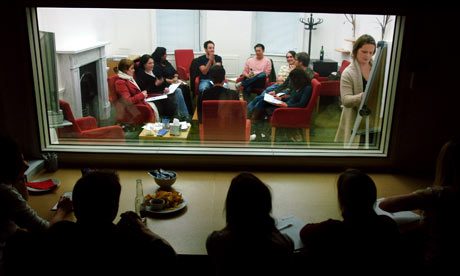
    No, I fear focus groups because of the response of those that observe them. The clients, suits (sometimes creatives) and even planning folk lurking behind the one way mirror.

    I fear confirmation bias. We're all guilty of it, it's as locked into our psychological make-up as social copying or the way we helplessly admire beauty.

    Who hasn't watched a group where a client  punches the air when a respondent says they love the product because of so and so?

    Who hasn't seen a suit do an Irish jig when one person proves the cleint wrong and gushes about the creative route the creative director wants sold in on pain of death?

    What planner hasn't felt a rush of pride when one or two people seem to confirm the proposition, or validate that precious insight?

    Hands up all of us. We all notice, remember and cling to the evidence that supports our point of view and ignore or forget the tricky bits that seem to conflict.

    All of us.

    It's axiomatic.

    It's why I tend to read the Guardian and others might read the Telegraph. I'm a bleeding heart left of centre type and don't like hearing anything that might support a more right wing view.

    That's why we notice advertising for stuff we've already bought. We want to justify our decision.

    That's why, when we've buggered something up, the brain quickly re-arranges the version of events our memory gives us to make it less our fault.


    When it comes to brain, memory writes our history to make us all winners.


    This is really dangerous in agency life of course.

    Where everything is subjective, where there is always the conflict between departments, between clients and agency, between 'creativity and selling' (despite one leading to the other).

    It's seductively easy to give into The Dark Side of The Force and find the evidence that lets you win the latest battle in the endless inter-agency, inter company conflict.

    Even more challenging, we want to reduce things down to clear stories, simple propositions.

    We have segmentations that paint a clear story, as if people that think and feel in only one way.

    When, of course, life is messy and contradictory.

    Because people are complex, contrary beast that say one thing then do another. They do one thing, then do something utterly different the next.

    It's quite possible, to quite Orwell and Doublethink to hold two utterly opposite points of view at the same time and not feel it's a problem. Scratch that, it's human nature.

    People are hypocrites. Naturally.


    Confirmation bias not only justifies bad decisions, it makes us strive to ignore the contradictions and tensions that make for brilliance of real life.

    To not make communications full of meat and drama, the stuff people notice and react to.

    To make instead, the stuff that's 'right'. To add to the 95% of crap.

    The stuff that breeds indifference.


    So what to do?


    As a human, it means reading more than one newspaper.

    It means meeting as many different people as you can, forcing yourself to listen to them and theiur points of view.


    As a planner, it means reading less marketing and planning books and more stuff about real life.

    Avoiding the same processes for every job, especially the 'proprietary ones' that look to lock out messiness and create fake clarity and 'single mindedness' as soon as possible.

    Less looking for the 'insight' and more gathering as many observations as you can.

    Looking for tensions and contradictions and embracing them.

    It means making friends with people who work in the opposite way to you, people assertive enough to push their own views onto you.

    So you can exist in the eye of the contadiction.

    And it means carefully horse whispering in research groups, or when data is revealed, so people are encouraged to see the whole picture. Not the bit that confirms their point of view or suits their agenda.

    It also means working differently.

    Looking to empower EVERYBODY to own the strategy and proposition.

    Because the less you feel you thought of something yourself, the less you 'own it'

    The brain won't be as inclined to trick you into defending it to the hilt without even realising it.

    You won't do something dumb simply because you thought of it.