I often try and take a trip to our local shopping mall. I hate shopping malls, but they're bloody useful for getting a feel for real people, rather than the fake ones in segmentations.
As it happens, today, I had to go to the Apple store, in said shopping centre, to get a new phone.
The shop was jam-packed, which might put some perspective on the twitter twatter about Apple having had it's day.
Real people decide the fortune of brands, no one else.
And they certainly were not there to buy 'tools for creative minds' and didn't seem to think they were in some hallowed temple.
In fact, eavesdropping on some genius bar conversations and general sales pitter patter, it struck me how much people just wanted stuff they were used to.
That was the safe choice.
Apple is the practical choice for many because it's what so many know, in terms of pure experience.
In numerous opportunties to have a Nexus, Samsung or whatever, I've stuck with Iphones just because I can't be bothered to learn a new operating system.I don't think I'm alone.
Don't underestimate habit, it's far more powerful, and common, than love.
Oh, and one of the genius bar staff was an ex-digital freelancer. Now that's a dose of reality.
Either Genius Bar staff get paid more than I thought or his work dried up.
Since he was one of those digital gurus who seemed to incapable of explaining anything without incomprehensible jargon, I suspect it was the latter.
Nevertheless, plan for the worst and hope for the best agency folk, it only takes a couple of phonecalls to drastically change everything.
Especially if you're the type who relies on knowing more than your clients do.
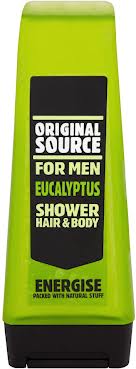
I've liked Original Source shower gel for a long time. I even worked on it once.
I liked the zing the experience gave, I liked the distinctive, natural, outdoorsy feeling the brand gave off (maybe because I was partly responsible for it).
But I don't buy it very often.
Because my local supermarket doesn't stock the men's range. And that's the one I'm used to.
To be more precise, I'm used to the eucalyptus one.
Like most people, I don't 'love' the brand or the product, I like it a fair bit but it won't change my life.
I don't think about it that much and I've better things to worry about.
So I only buy if I'm at Boots, or another supermarket. Which isn't that often.
I won't bother with online either, I'm not going to waste my time spending five minutes buying from a website when it takes five seconds to just throw an alternative in my supermarket trolley.
Meanwhile, Dove for Men is becoming more of a habit. Because it's there.
You see, brand preference is all well and good. You can can remove reasons not to buy as you go along too – in my case, a mens range and one that would wash my sparse hair as well as body.
But without distribution, making it easy to buy, most people don't care enough to seek you out and will be building up another weak habit all the while.
Or put another way, consumers are a bit like single men after midnight in a bar. They'll happily go with what's available.
The problem with research is that most people, intentionally or not, don't tell the truth.
Sometimes they can't articulate how they feel.
Sometimes they tell you what they think you want to hear. Or what is socially acceptable.
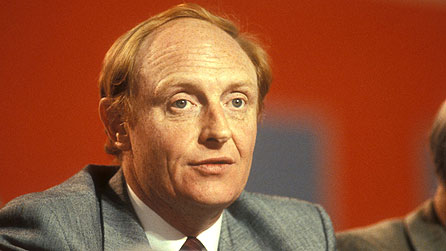
For example, most pollsters think that in the 1992 UK General Election, when the Tories got a majority when all the research predicted a hung parliament, it was because lots of folks thought voting Tory was a social no-no and even worse, some couldn't say they wouldn't vote for a bald, ginger welshman.
In group situations, we tend to conform to the group dynamic, or the person with the loudest voice.
Of course, this mostly means not bothering asking questions and observing. As I've said before, go to the jungle, not the zoo.
But still, we all have to get involved in primary research in living rooms and hotels. Like it or not.
Clients tend to lie as well. Not in a bad way though. It's just that it's hard to disagree with self confident, pushy agency types. Even worse, if you have a close relationship, they sometimes don't want to make you feel bad.
Suits can be that way with planners and creatives too. In the spirit of keeping everyone happy, it's tempting to say what people want to hear then do something else.
So how do you get to the truth?
Well………
Jeff Hancock and his mates at Cornell University, ran an experiment where they got people to record all their conversations about the times they lied.
They found that people are twice as likely to have lied in face to
face situation as they are in an email. Apparently because emails are
recorded and your words can come back to haunt you.
In fact, he argues that it's possible the impersonal web might actually
breed more honesty from the permanence of writing stuff down.
Take this with a large pinch of salt, since, in the case of social media, in the UK at least, there's lots of evidence that our social persona is a lot more about who we want to be than we are. The Future Foundation found that a significant number of people agree, "I wish I was more like the image I maintain in social media" (but since this is research I guess you need to by cynical about that too!!)
But at least you're getting to the truth of how folks want to be seen, which is still massively valuable.
Meanwhile, in a face face to face situation, language becomes more impersonal more 'he', 'they' and 'it' rather than 'me' 'mine' or 'ours'. Also, they try to give shorter, less detailed answers to avoid getting caught out. This is far more common than 'body' language where good liars can employ a decent poker face, or even 'poker body'.
In short, if you want to be told the truth, as someone to send you an email. If you want to catch out a liar, close your eyes and open your ears.
So in research, get people to write down responses to stimulus, don't just get verbal responses. In fact, do as many written tasks as you can. In my view, pre-tasks that people know will be shared are particularly useful.
And try and listen to how people are talking, rather than watching. Record the dialogue and listen after, within the distortion of seeing the person.
In the job, get both internal and external people to confirm stuff by email. Look for those impersonal pronouns.
And learn to appreciate suits that religiously do contact reports, especially if they get clients to sign then off. It just might keep suits and clients a little more honest.
Maybe that's an advantage of being a planner. There isn't that much you have to write down apart from a brief.
And another reason to get out of your bubble and go and talk to people. Not only do ideas happen quicker that way, you can get away with murder.
When it comes to connecting with people, persuading them to do stuff for you, similarity works.
It doesn't matter if it's how you dress, speak, background, age, religion or what, we like people who are more like us and find them more persuasive.
Now let's be honest about the main challenge of planning. Planners have no power.
Maybe, they get to sign off creative briefs, possibly in some places, they need to sign of work before it goes to the client.
Honestly though, suits get to decide things all the time, it's their job. That includes strategy.
So do creatives.
It's they who really decide if the brief is right, by working from it or not.
It doesn't matter if God himself has signed it off, if they don't think the strategy is right, they won't use it.
Even worse, they might think it's right, but can't see any good work coming from it. So do something else.
And of course, client's decide everything.
So you, when planners have to persuade everyone, never tell, it makes sense to think about how you be more persuasive.
Because you certainly can't tell anyone, "Because I say so".
One use is that 'peas in the pod' syndrome.
That probably doesn't mean wearing suits because the client does.
I'm sure it means not putting on a Canadian accent to mirror a copywriter.
But look at every person you need to influence and work out what you have in common, or what you could have in common.
What they care about. What they like. What they're afraid of, what get's them frustrated. Their humour.
A quick trick is mirroring body language. In any meeting, don't copy people, they'll think you're strange, but try and subtly echo how they're sitting, what they're doing with their hands.
Lean forward when they do. Body language is an extensions of how we feel. Mirror somone else's and they'll trust you without knowing why, not realising you've made them believe you feel like them saying a single word.
But the reality is taking time to know people's motivations, their hopes, dreams and daily gripes. So you can share them and hopefully help.
That goes for the people we're all paid to influence- target customers.
It's really tempting for planning folk to try and look different. People need to want you because you'll add something different. But, perversely, you might get further if you make them feel you're not that different after all.
One of the problems with planners is their love of powerpoint. Scratch that, it's a problem with agency folk.
Endless stressing over the precise words that go into chart after chart, when, actually, a great presentation swings on people listening to what you're saying, not reading over-written charts.
For what it's worth, here's how I go about making presentation (when allowed to)….
Work on the three to five key points you want to make, rich hooks to hang your thinking on, stuff that's memorable. Make slides for them, mostly as great headlines and great visuals.
Then fill in the gaps.
But try and fill them with your personal script rather than more slides.
Or use props.
Create a new slide only when necessary, and never to help you remember your lines…rehearse, learn your script, so you're able to leave room for conversations and letting your audience in.
Anyway.
What's even worse in agency land is the way even simple meetings have to accompanied by powerpoint too.
When a conversation should do.When a conversation is much more useful than talking at each other. Presentations tend to sell, you don't sell in a relationship, you talk a bit and listen more.
A useful alternative to the powerpoint madness is the humble flipchart.
For a planner, there's nothing quite like jumping up, marker pen in hand, and drawing something to illustrate your point – looking as spontaneous as possible.
So people will continue to want you in the room for those sudden flashes of insight and interesting, graspable flashes of wisdom.
And flipcharts are interactive, or should be.
Interactive stuff was not invented when digital was. Making images jump up in keynote is not interactive, it's just polish.
Of course, spontaneity is hard.
So plan it.
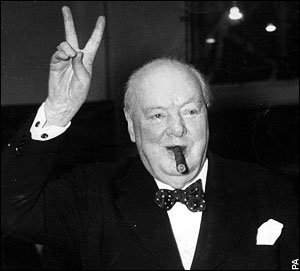
Once when someone asked Churchill one of the great orators of all times, what he was doing, he replied, "Preparing my impromptu remarks".
Work out what you want out of a meeting, what you feel you want to say, what you want people to take out of it, and plan your killer points beforehand.
And prepare some killer flipchart points too.
In fact, prepare an arsenal just in case.
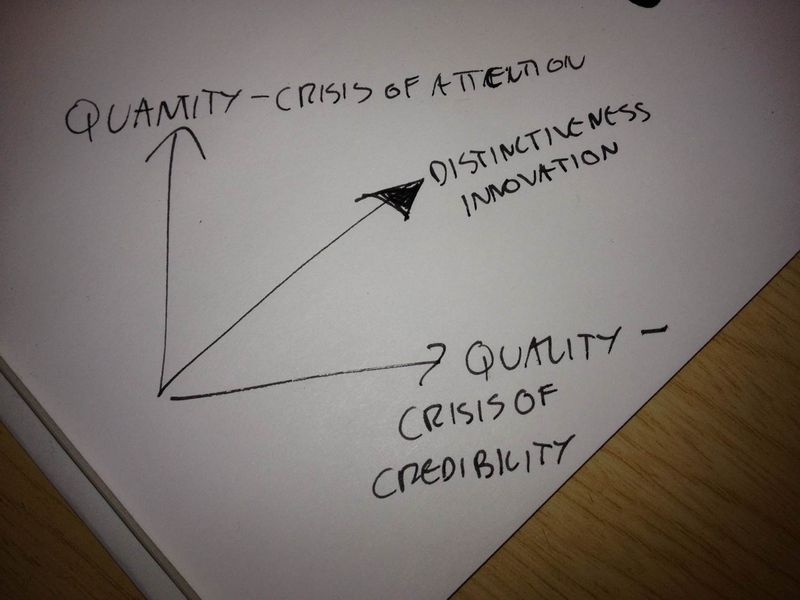
For example………here's how you might talk about the fact that markets get more competitive the more they grow.
Iit doesn't matter if you're in a growing market or a mature one, a discussion about long term strategy eventually comes down to communications innovation or product innovation.
If you're talking to the average complacent marketing exec, you'll need to wake them up to the need for ads and stuff to be interesting and make folks feel stuff, rather than simply generating the right take-out.
Or remind them how un-special their product/service is in the face of the competition.
Or the fact that one day, it won't be.
So get up and draw them this….
If you're lucky enough to be in a new market, you have the luxury of creating communications that should stand out because you're delivering 'new news'. But over time, other players always come in and it gets harder to stand out, especially when everyone in a category says the same stuff.
So the best advice you can give to a new brand is to appeal to the heart instead of the head and try and build 'fame' with stand-out ideas that make people talk. The more you 'own' that category, but even more, you're seen as a brand people care about in general, the harder it is for another brand to come in and steal share.
Coming back to all that Ehrenberg Bass work, you need to make as many people familiar with you as possible to build and sustain growth. The more people have heard of you and know what you're about, the more likely the brand is likely to survive over time.
Innocent did this at launch. It's no accident that there are few smoothie brands you're heard of also. And making people care defended them against own label copies. Yes, they've reduced price recently, in the face of a more thrifty culture, yes they do promotions more, but the price cut is less deep than it might have been.
(yes this ad is product attribute but wrapped in oodles of quirky, memorable tone of voice)
And when you're in a mature market, you're in the 'crisis of attention'. Lots of brand banging on about themselves, connecting emotionally rationally, the whole lot. Stand out communications become a must.
Because of the need for salience and distinctive memory structures.
Honda is a good example of this. In one of the most crowded (and samey) markets of all, they did car ads that no one had seen before. Which went a long way to building massive business value.
Now this is all well and good, but as much as many would love communications to the only solution to sustained growth, it just isn't.
Because when more and more brands enter the market, you end up with a crisis of quality. Your product just isn't special anymore. Yes, you can continue to build brand value, but that will only get you so far.
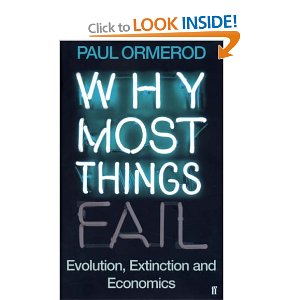
He rigorously shows that KNOWING the future and predicting what will happen in any complex system involving people – an economy, a market or even the dynamics of a local supermarket price war – is doomed to failure. There are just too many variables.
The only route to continued success, survival even, is continuous innovation.
Ahead of the curve.
Writing the future, not waiting for it.
In other words, doing nothing guarantees nothing but failure.
Look at the way Apple's star is on the wane. They have a long way to fall of course, but they haven't lost share because of lack of distinctiveness of brand value.
They're run out of innovation. While Samsung have launched a credible alternative with the the Galaxy. While others have successfully launched mid-priced mini-tablets.
While they've started to rely on incremental improvements rather than great leaps.
Look at Yahoo, or Microsoft. Both got caught out by doing nothing about social before it was too late.
First Direct were a barnstorming success when they were first to market with telephone banking, but didn't innovate with online banking and now with phones and social, franky, they're behind the curve.
Yep, eventually, you have to innovate in the actual business of what you do, not just what you tell people about it.
That's where planning really gets interesting, when you're able to help innovate the business, even advise that RATHER than comms.
Helping clients n new markets see that today's game changer is tomorrow's has-been, and helping them build the innovation pipeline and make the business case for it.
Or helping clients in mature markets see that perhaps the problem isn't 'brand' or 'advertising' it's that the product just isn't special enough to justify the price position – or they're in a market that's doomed to fail.
Imagine if someone had told HMV they needed to build an MP3 offering before Apple launched Itunes?
Now, look at all all that waffle from one, badly drawn little diagram. Imagine talking a client through this stuff as you draw it up.
I once sat on the other side of a pitch, with the client.
It was an eye opener. Partly because, when you're on the recipient's side, it's really easy to dislike the agencies.
The way many of them think they're swooping in to save the day, the sheer arrogance to think that in a few weeks they know your business better than you (in some cases they do, but making someone feel stupid will not win you business).
(The picture is meant to be ironic)
But the good ones, the really good ones are hard too.
They look like they've worked hard, they look like they care and they're hurling their best stuff at, hopefully stuff that makes you think a little bit.It was overewhelming.
Think of how it feels in a creative review. The way a sensible planner never gives feedback first.
So, not only will other's can tell creative's stuff they might not want to hear,rather than you it gives you time to think and not say something stupid, or plain wrong.
Internally, when people hit you with their best stuff, you want to find a way to positive about what they've done, but in any situation, great work that makes you think means you often have fuzzy feelings and gut impressions, but you can't articulate them.You need time.
So give yourself time to think, work out how you feel about the work and, if you've worked out it's great, or could be, watching the discussion gives the best chance of saving it if others are killing it because they haven't thought enough, or if it's off brief and great, helping everyone see how the idea could get through and work.
Now, in a pitch, it's x1000.
Imagine an avalanche of thinking pouring over you over at least an hour. Then imagine the expectant faces waiting for some sort of feedback or Q and A. When You really don't know what you think yet. You need time. This kind of goes for any presentation by the way. Every creative presentation is pitch really.
So when you present, don't force feedback, give folks time to think.
Because if you force someone to say something, they will.
But because they've said it in front of everyone, despite the fact they may well change their minds, or it will come out wrong because they need time to articulate what they'll feel, they will stick to it. Because no one wants to look indecisive.
Everyone goes on about Carousel, but few mention that they didn't ask for feedback. They let the client just leave.
Every pitch, by definition is about newnes, surprise and novelty. Humans are programmed to seek out newness, but we're also hardwired to feel threatened by it and hold on to the familiar for dear life.
So, rule number one, give people time to think.I've often thought that's actually why having budgets at the end of a pitch is effective. It provides a gap to help people work out their response.
It even means you can be positive about having procurement their. If you can engage them in a chat about costs and rates, it gives everyone breathing space.
Now, the more cunning bit.
The Pratfall Effect.
The occasional slip up tends to improve your likeability. But only if you're in danger of being seen as too perfect.
This is not a problem I have experienced that often.
But then again, planners tend to be introduced as the brain of the operation. People can intimidated by the idea of you before you've even spoken. A little self deprecation and the occasional mistake made on purpose can go a very long way.
Many planners are not likeable, because they visibly think others are not as clever as them. Which means, clients and internal folks will be expecting not to like you.
So, at the level of the brief, the briefing and any presentation you make, don't make it utterly faultless. Bury a mistake, an imperfection in there.
Something that really does'nt matter, but something others can correct. Not only will they feel they now own a bit of your work, and support it more, they won't be imtimidated and they'll like you a whole lot more.
At the level of the pitch, insert an inconsequential error in it, something the client will love to correct. Even some flaws or unfinished aspects in the actual work.
Again, the client will feel they're part of it when they correct you, it gives them more time to think, they won't be intimidated and they'll probably like you a whole lot more.
By the way, this also should make anyone not confident making presentations feel pretty good.
If your work is sound and you look like you care, a little bit of stammering, a few visible nerves and stuff are good, it makes you look human, It makes people like you because you don't intimidate them.
Think about that next time you want to flash bastard a presentation, pitch of briefing.
There's a great Howard Gossage quote about advertising, how work should leave space for people to work something out and get involved.
It also applies to how you sell work, or strategy.
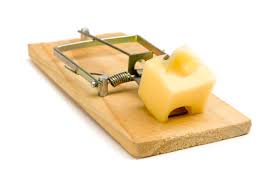
"When baiting a mousetrap with cheese always leave room for the mouse".
One of the challenges of being a planner is having impact in any meeting where most will see you as a necessary evil – or unnecessary evil.
Creatives think (rightly in many cases) they can do strategy.
So do suits, who like maintaining control of client meetings – many see you as a threat to their relationship.
Clients think they can do strategy too, many are either lazy, follow recieved wisdom or love overcompliacting things with needless data and research. Your skills of boiingl things down quickly AND uncovering the real truth can be viewed as a threat.
Now, over time, there's the hard work being interesting, helping people thinking they cracked it themselves, liberating others skills, being a positive force for good rather than a know-it-all sophist.And general reputation building.
But why work harder than you need to?
If you want to make a good impression quickly, just sit towards the middle of the table.
Priya Raghubir and Ana Valenzuela analysed the Weakest Link gameshow- where contestants sit in a semi-circle. Those in the middle reached the final round 42% of the time and won 45% of the time. Those at extreme positions got to the last round just 17% of the time and won just 10% of the time.
In another experiment, people were shown photos of five candidates for business internship, in a group. They were asked which should get the gig and chose those in the middle much more frequently.
They reckon there' a basic rule of thumb, important people sit at the middle that we all follow without knowing it.
I think it's simpler, at the extremes of a table, it's hard to get into the converation and make eye contact, but if you're in the middle, everyone tends to be looking in your general direction and it's easier to be heard. People at the edges have to try harder, and can look like they're struggling, or even worse, plain trying too hard (which they are).
Funny when tradition has it that the 'head' sits at the 'head of the table'.
Oh, and try and sit opposite the people you want to influence.
So yes, don't be the shy planner who hovers around until everyone has taken their seats. Don't be late and end up in the corner. Sit down first, sit in the middle and you'll be amazed how much easier meetings go for you.





 NORTHERN PLANNER