• What you wear matters. You may well be one of those people who thinks it's silly to be bothered with what your clothes and shoes say about you, but it's simply a fact of the human condition.

    Most of human communication is non-verbal. We respond to how people appear, how they make us feel. Not what they say.

    Our instincts have been honed for millions of years to make instant judgements about what we see, without really thinking about it.

    It saved us from wondering if we should run from a saber toothed tiger and help choose the women with child bearing hips and the men with broad, strong shoulders.

    And anyone who works in the communications industry, who probably argues with clients over design detail like making the logo bigger and such, who then believes they are exempt from the rules of visual branding are kidding themselves.

    Like it or not, how you dress has a massive effect on how others view you. You're a planner, you're supposed to have your finger on the pulse, an approachable nerd, someone with intelligence and imagination.

    In short, you want to look like a planner- clever but with imagination.

    Of course, many reject the idea of some sort of uniform, which is fair enough. Many try and push directly against the idealised image of what people expect them to be. But be aware of what that communicates to other people though.

    So how might a planner want to come accross?

    There's the hipster, so achingly in touch with what's happening in culture before it's even happening.

    There's the bourgeois bohemian. Usually seen in obscure extreme sports wear. Despite being part of capitalism in a big way, they see right through it. They're beyond consumerism, which is why they're so good at manipulating it for clients.

    There's the scruff. Usually found in faded jeans, t-shirts on their last legs and wearing jumpers with holes in. They haven't got time to worry about stuff like image, they're too distracted and intelligently useless to dress themselves properly.

    There is the creative. Overtly trying to show they want to liberate great work, and could probably do it themselves. A variation on the Bourgeois Bohemian but with more Ironic t-shirts.

    And finally,the character.Someone who carefully crafts a persona to make them more memorable. The novel choice of footwear, the motorhead t-shirts etc.

    Which one are you? Or more importantly, which one do you want to be? Recieved wisdom tells us you shouldn't dress for the job you have, but the one you want.


     

  • Let's be honest, agency folk come in two types.

    The ones who think planners are a pain but necessary.

    The ones who think planners are a pain and complete waste of time.

    But if you're moderately nice to a planner, and even treat them from time to time as someone who is occasionally helpful, they'll be so embarrassingly thankful, they'll end up doing all sorts of stuff for you. 

    If you're a creative, chat to them, especially if there's a live brief. Rather than telling then to go away until the first creative review, ask them what they really think, what were the things they considered that didn't end up in the brief.

    Ask them about the audience, what to they like, what do they care about, what excites them? Because a brief in most places is about reductionism and 'messaging'. Unfortunately, it's not about tone of voice, culture and the real lives of the people you're aiming at.It's not a springboard for ideas.

    If they're any good, they'll have all sorts of stuff in their heads about this. The stuff may well help you crack the brief. Most of it will be crap, but most likely, something will tumble out you find useful.

    Same if you're a suit. It's natural for you to want to control everything, especially the relationship with the client. It's easy to think planners are a threat to that relationship.

    But trust me, the last thing a planner wants is to have to make small talk, get shouted at for going over budget or anything that involved invoicing. But if you have a good one, they'll add all sorts of stuff to a meeting, not by talking too muchm but by occasionally saying something interesting. And clients fire agencies for all sorts of reasons. Being useless is one, but so it the fact they're bored.

    Also, when you're struggling over powerpoint, or wondering how to sell the work, they tend to be very good at understanding how an idea works and even post rationalising it when it's off brief. And they can write powerpoint for you very quickly.In fact, like above, if you're uncommonly nice, they can do all sorts of stuff for you.

    If you're anyone in an agency in fact,in any department, talking to anyone, don't be a tosser. Agency life is odd,the departmental stuff, the constant jockeying for position naturally leads to confrontational behaviour. Little of this is of much help to anyone. It's amazing what can you get done by being nice. Try it.


  • Daniel Miller's The Comfort of Things is one of those books every planner, in the UK at least, should read. The analysis of the contents of 30 households in London exposes so much about what we really care about. It paints a true picture of the drama of everyday life, where nothing happens yet everything happens.

    It perhaps offers a counter argument to the convention that happiness is about 'doing stuff' rather than 'owning stuff'. But that's for another day.

    But when you get to the end, there is the need to justify writing in rich, accessible prose, rather than 'academic language'.

    That's right, there's a very specific 'academic' style of writing. As if it's not 'really clever' unless it's written in over-complex langauge.

    Just as Newton and his mates used to write in Latin to stop the plebs reading their stuff.

    Just, to be honest, as so many folks speak 'marketing', or even worse, speak 'planner'.

    When psychology tells us that the more complicated your style of communication, the less seriously folks tend to take you.

  •  

    Joker

     Batman: Then why do you want to kill me?
    Joker: I don’t want to kill you! What would I do without you? Go back to ripping off mob dealers? No, no, you … complete me.

    Nothing provokes greatness like a great nemesis.

    They force you to challenge yourself.

    They provide focus.

    They unite a team, or a community like a common antogonist enemy.

    They're brilliant for people working on brands too, if they want to get to good quickly.

    At level of getting an idea…

    Finding a juicy enemy to work against seems to unlock great thinking so much quicker.

    Mostly because creativity seems to come out of friction.

    Which is why you shouldn't try and get on with creatives or suits TOO much too. Throwing in a little constructive friction can be useful.

    Great ideas often come out of conflict.

    Anyway…..


    What unlocked all that great Honda stuff was settling on negativity as the enemy.


    This actually makes hating something enough, the subject of the communication.


    Probably the most iconic ad of all time was set against 'the man'.


    While Dove continues to make an enemy out of the impossible dreams the beauty industry promotes.

    But it's not just about creative rocket fuel. It's about work that works.

    Our job in other words.

    The role of advertising is about making brands memorable and distinctive.

    Much of that is finding something folks really care about and linking it to what the brand cares about.

    It's about looking for real tension in culture and providing an answer.

    Creating a provocative call to arms. Enabling people to feel they're part of something.

    Not because it will make them loyal (although it should turn the minority of loyalists into advocates, reaching the masses of people who DO matter).

    Because it will cut through.

    It will make stuff distinctive. It will connect with deep stuff most can't even articulate.


    Ask most folks why The Old Spice guy works and they'll say it's funny. The fact that Old Spice get's you experienced manliness, is against guys going 'soft' is never said, especially because it's clothed in irony.


    Whereas this is more explicit, but it links small cars with something folks are starting to care about.


    As always, this is nothing new, Marlboro made an enemy of the 'other directed man'.

    And so on.

    It's not the only way of getting great quickly, but it does seem to work.

    It's, of course, planning 101 for challenger brands.

    But in a world where brands have to fight more to get noticed, where to find a waty to add to people's lives, rather than interrupt them, finding a common enemy gets you noticed. 

    So, when choosing your enemies, choose well. They can unlock extraordinary business building ideas.

    Avoiding all that brand essence, brand promise, LINK tested rubbish – which is probably the enemy of this post.

    In other words, pick great fights.


  • Street

    "Opening his eyes, he would know the place by the rythm of movements in the street long before he caught any characteristic detail"

    Robert Musil, The Man Without Qualities.

    Every place people come together has it's own, unspoken body language. If you're prepared to listen, it can tell you all sorts of things.

    If you're in the midst of building your thinking, or reviewing work and you haven't met your audience there, get a move on.

    Because, our mirror neurons present an invaluable gift of seeing the world through others' eyes.

    Just you got excited by that song and played it to someone, only to hear it through their ears.

    Just as that presentation suddenly got better once you rehearsed in front of your colleagues and experienced it from their point of view.

    When go out to where your audience congregates, you very quickly see your thinking, or the work from their side of things.

    You realise that what you thought was cultural dynamite was pretentious twaddle.

    That the fights over that endline are not the point, this lot won't even care.

    That your strategy that was fine in theory won't work in real life.

    That finding a way to matter to the people will only come from starting with their lives, not their buying habits.

    Suddenly you get them.

    And when you get them, you can find a way to matter to them.


  • Let me start by saying I have a deep and abiding admiration for great designers and great design. 

    Great design, how something looks and how we experience it greatly matter to how we feel about it and how it matters in our lives.

    The Iphone is an obvious example of experience and aesthetics married beatifully.

    But a design idea is not a creative idea. It's not a brand idea. It's not an advertising idea.

    Because designers tend to be concerned with pleasing the eye.

    Yes, of course, that sometimes means standing out, but more often than not, design follows hallowed rules.Which makes it predictable.

    Which, when it comes to brands is isn't commercially sensible.

    Because, as has been said often enough, the goal of marketing is to puncture the indifference of people who don't care.

    The light buyers who actually decide the fate of brands, rather than the loyalists who don't. If you have a few minutes to spare, you should watch this..


    Absolutely, building big, consistent symbols of recognition matter. Signposts that get buried in the subconscious. That's most of design's role.

    But after you consider the need for distribution,  and constantly removing reasons not to buy (the latter is the role for NPD and comms planning when you strip away the bollocks)…

    You always come back to being distinctive. Getting noticed. Capturing the imagination. 

    Winning the battle of who could care less.

    The craft behind capturing the attention, getting in the head and staying there.

    The element of surprise.

    The art of making magic.

    Not looking for a perfect whole.

    Looking for tension, energy and provocation.

    Stuff that makes you form on opinion.

    Stuff that connects with the heart, not just the head.

    That's what seperates ideas people from designers.

    It's usually easy to tell the difference.

    Do they show you their first ideas as scamps, or loosely written scripts? Or do they always have to retreat to the comfort of the mac?

    To they tell you how it looks? Or can they tell you how it works?

  • I read with great interest this article about planning all over the world.

    Rob.Campbell.final

    Partly because the mug shot of Rob Campbell makes him appear to be forcing to smile while somebody squeeezes  his testicles.

    But mostly because the challenges Gareth Kay faces in the US remind me of what it's like being a planner in the northern outposts of the UK.

    Namely you have to fight for your right to be in the rooms and conversations that matter.

    In fact, that's something all planners come accross at some point.

    With clients, with suits, with creatives, with entire teams.

    Many clients are not used to working with planners.

    Many agency folk are in the same position.

    Even worse, many disregard the discipline after suffering the kind of self important, over-complicating, intellectual snobbery that is more common that many of us would care t0 admit.

    Planning isn't something that should get in the way, that you should suffer. It's about unlocking the best in others.

    So getting credibility and building a relationship doesn't happen by divine right. It happens by demonstrating usefulness.

    So what do you do when you're in the position where no one wants to work with you?

    Wait for a crisis.

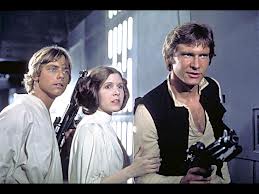
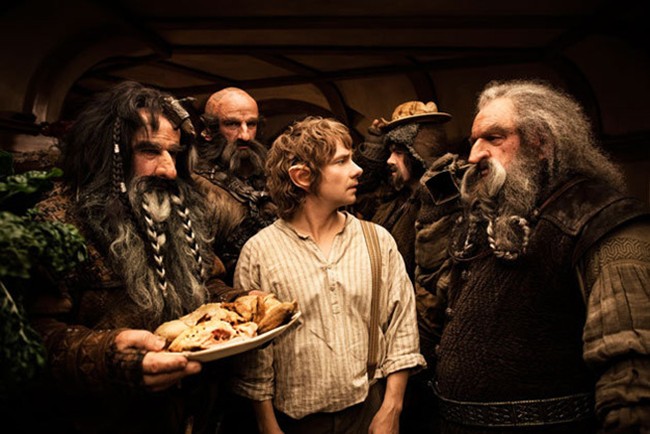
    One of the most common stories in cinema is the couple or group who are either totally different, hate each other or have deep,unresolved issues that seem in-surmountable.

    Until the crisis of the story is set in motion and, by overcoming it together, they form, or rediscover a tight bond.

    Hand luke leia

    A princess, a smuggler and a farmboy.

    Shia

    A hot, working class girl and geeky, middle class outsider (terrible film).

    TheHobbitBilboDwarves

    A bunch of rough Dwarves and a complacent Hobbit.

    War of

    An estranged father and his children.

    It's the same for planners and creatives/suits/clients/teams.

    Be patient, look for a situation where everyone needs to pull together.

    Internally, nothing brings a team together like a pitch or a scary make or break presentation.

    Nothing makes a client love you like getting them out of deep hole.

    In my own experience, I had a fashionista marketing director who prefered the company of other women. It was impossible to credibly break into conversations around Sex and the City and issues around kitten heels or wedges.

    I had to wait she was dragged over hot coals by the board for spending thousands on a segmentation study when she didn't even know market share (their distribution model meant if wouldn't show up in the usual sources. Their product didn't even go through EPOS).

    Then proceeded do omnibus work and a bit of maths to get a figure.

    Got her out of the shit, got the board of her back, helped develop a proper growth plan based on real market dynamics.

    Loved me forever.

    There's the suit who can't resolve the isssue with the creatives.

    There's the creatives who's campaign is on the verge of being killed by research.

    Finally, and maybe not strictly moral. There is the 'give them enough rope to hang themselves' route.

    Look for the situations you KNOW will develop into a crisis.

    The rough with a tiny chink you know will become gaping chasm when it get's developed.

    The route that's nothing more than beautiful mac work, devoid of any idea. Wait for the moment it has to developed into a real campaign.

    The complex client brief the suits haven't understood, where the first stage presentation will be car crash.

    And let it happen. Don't interfere, let them get on.

    Then help them sort out the ugly mess they've created.

    Not with smug superiority.

    Not by saying, "Told you so".

    But with quiet, considerate, helpful usefulness.

    So……..

    If I ran an agency and wanted to get a team working well together, I'd put them together on a pitch.

    If I was a planning director and saw one of my team struggling to get to grips with an account or creative team, I'd do everything I could to get them together on a pitch team.

    If I was a planner looking to earn the right to be listened to, or even invited into rooms – and I work in Yorkshire,that's my day to day – I would constantly be looking for moments of truth, where your colleagues or client is struggling with a crisis.

    Less moral, but more effective, let them get on with making the rope for their noose, let them feel it beginning to bite into their necks and then step in.

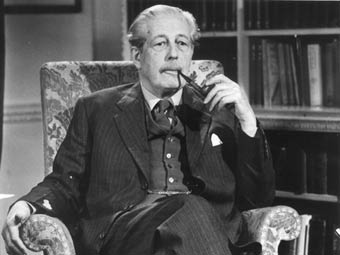
    Harold_macmillan

    As a Harold Macmillan once said about steers goverment; "Events dear boy, events'.

    They also create the opportunity for you to prove your usefulness.


  • Rachel

    “It’s not who we are underneath, but what we do that defines us.” -Rachel Dawes in Batman Begins

    You can be the cleverest, most talented planner in the universe.

    You can constantly look at great work and game changing thinking thinking I can do that.

    You can make yourself feel better about the percieved gap between the output of where you work and the places you'd maybe like to work.

    You can blame the kind of clients you have, the culture and skills of where you work or anything else that removes responsibility from yourself.

    But it really doesn't matter how you feel and how great things could be, if only fo this or that.

    All that matters is what you do about it.

    Stop talking about how great you could make things. Look hard at what's in the way, find the fundamental problems and figure out how to solve them.

    In other words, be a planner.


  • If you're daft enough to read this blog occasionally, you might have concluded that my ideal job would be Chief Tea Taster at Yorkshire Tea.

    Equation

    You would be wrong though. I'd be a particle physicist.

    Not a famous one, just someone who could do it for a living would be fine.

    Because I find the truth about how nature works endlessly fascinating, inspiring and downright beautiful. There's so much mystery and grandeur in nature I don't need religion for that sense of wonder and comfort, It's all there.

    Sadly general intelligence and very specific failings at maths mean I'm stuck doing planning.  I get the principles of relativity, I understand why E=MC2 and why it matters, but that's as far as it goes.

    One thing physics folks can teach agency folk though is how to go about and interpret research. Because they know that the same experiments will only produce the same results.

    And they understand the more interfere with your subject, the less it can tell you.

    Just as flashes of insight rarely come from focus groups.

    Rutherford

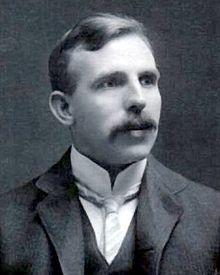
     Ernest Rutherford was perhaps the greatest experimenter ever. He wasn't a great theorist, but he was brilliant at devising experiements, and even better, looking for suprise results and working out what they meant.

    His most famous was the gold foil experiment, where he fired alpha particles through the wafer thin metal, fully expecting them to shoot straight through, like bullets through paper.

    But every now and again, they bounced back, as if they'd hit some immovable force. This was as unexpected a firing a cannon though paper and it rebounding.

    The flash of insight to explain this was, roughly, that atoms are mostly empty space – all matter is concentrated in a tiny nucleus.Which was the beginning of our modern understanding of particles and leads to the conclusion that you and I are mostly empty space too.

    If you could distill down the human race and push out all that space, we'd fit on a sugar cube.  

    There's Youngs double- slit experiment too. Where they fired electrons towards a barrier with two slits and, brain poppingly, they appeared to go through both.

    Which led to modern quantum mechanics. Something most people accept as plain daft, but has been proven to be fundamental to modern nature – that you can't assume tiny particles don't take one route to a destination, you have to assume they take EVERY possible route. That particles can pop out and back in to existence.

    Even more bizzare, the more you try and pin-point where a particle is, the less you know about where it's going.

    Even worse, the more you try and box it it, the more likely it will disappear out of the box and re-appear somewhere else.

    In other words, if you ask sub-atomic particles direct questions, the more they'll give you duff answers

    Just like traditional marketing research.

    Where interfering with human beings, just like particles reveals untruths and even bare-faced lies.

    Because, just like particles can tell you where they are, but not where they're going.

    People can tell you what they think (or at least think they think), but not how they feel or what they'll do.

    Focus groups mean we conform to group think.

    Our own decisions are clouded to us, our so called rational decision making process is a smokescreed to make us feel better about that fact we choose based on shorthand heuristics, emotion and instinct.

    Even worse, our minds distort the past and predict our future based on our imperfect view of that past.

    In fact, the only reliable way to research human beings is not interfere with them.

    To observe how they they behave in their natural environment.

    And get creative.

    Look for unexpected.

    If you know what you're looking for, the more likely you'll find it. And it will be obvious.

    Leading to obvious advertising.

    BBH didn't focus group Polaroid. They gave Polaroid cameras out at wedding and watched what happened – discovering they added to the occasion. You USED them to enhance the moment.

    Leading to this…


    AMV borrowed from cutting edge phychology and filmed how people shopping failed to notice a  man in a gorilla suit in th aisles. Proving how much they were stuck in a routine. Leading to this:


    That Gorilla insight was even used in a piece of advertising too…


    And so on.    

    Game-changing insights in modern physics happened through creative experimentation and, well, by accident.

    Not from repeating the same methodology. 

    Not from asking nature directly either. 

    So it is with discovering the truth about human beings. 

    And, probably, stealing as much methodology from Brainjuicer as you possibly can.