• Smiths

    The Smiths are famous for, shall we say, not having produced the sunniest cannon of music. For fans like me, the songs are witty, thoughtful and sometimes very funny, but, it has to be said mostly, they invoke an intense feeling of melancholy.This is good, in my view, human experience is not made of happy feelings, we're designed to feel all sorts of things and sadness can be good.
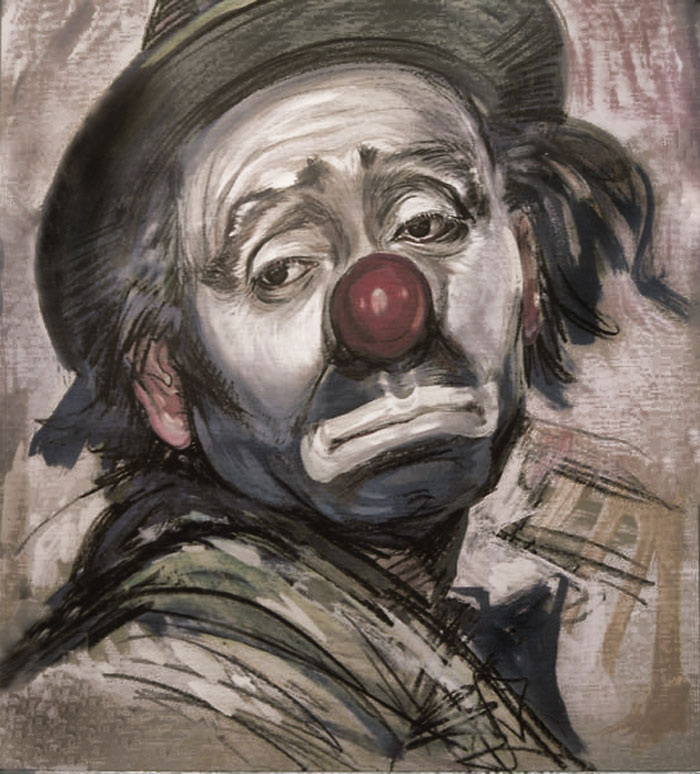
    The_Sad_Clown

    Anyway, this feeling of sadness is well established as a link to creativity as we'll see.

    The professor of psychiatry Kay Redfield Jamison has studied the
    biographies of famous English writers and poets, and concluded that
    “famous writers were eight times as likely as people in the general
    population to suffer from major depressive illness”.

    The neuroscientist Nancy Andreasen performed a study on the dozens of
    writers of a particular writer’s club (the Iowa Writer’s Workshop) and
    came up with similar results – 80 percent of the
    writers met the formal diagnostic criteria for some type of depression. 

    These findings have even been corroborated in the lab. For example,
    the social psychologist Joe Forgas has repeatedly shown that sadness
    tends to increase creativity. In one experiment, he
    manipulated the moods of his subjects by showing them either a film clip
    about cancer and death, or a neutral film clip. He then had his
    subjects compose writing samples. What Forgas found is that his saddened
    subjects composed considerably better writing samples.  “Downcast…
    subjects compose sentences that are clearer and more compelling… they
    produced more refined prose, the words polished by their misery”

    Yep, feeling sad would seem to make you more creative. Why?

    The thread that unites the conclusions of all these experimenters and researchers is that sadness, melancholy etc makes us more attentive, focused and persistent in our work.

    Just like amphetamines have helped famous poets and writers in the past, from Graham Greene to Auden, the quietness and heightened attention from sadness helps you focus on thoughts tumbling through your short term memory and connect them into new shapes,  screening out the distractions and cacophany of extraneous stuff (and in Auden and Greene's case, producing a beatiful, sparing, taught writing style).

    The distracting murmers of the mind disappear, and we are able to focus and persist with the hard work of focus, edit, precis, evaluate and edit precis and distil again. Continually looking at what is wrong with something to create something really, really right.

    Two things on this.

    First, depression is horrible, horrible and not worth any amount of creative firepower. Let's be clear on that.

    Second, persistance and continual distilation is not the only form of creativity. It's the only guaranteed form, but the startling flashed of insight, those game changing epiphanies, tend to come from positive  moods.

    Sadness rarely brings a Eureka moment.

    That's why there's such an incredible correlation between bipolar disorder and creativity. An illness that constantly lurches between intense sadness and over the top euphoria, while incredibly painful for the individual involved, can liberate both kinds of creativity.

    The psychiatrist Hagop Akiskal found that “nearly two-thirds
    of a sample of influential European artists were bipolar”.
    In support of this, Nancy Andreasen—the same scientist who led the study
    on the Iowa Writers Workshop—discovered that nearly 40 percent of the
    creative people she investigated had the disorder – about twenty times higher than it is in the general population.

    Naturally, only a fool would wish mental illness on anyone. But on the other hand, if you need craft a  brief, write a proposal that sings or get a presentation taught, coherent and thought provoking. Listening to this just might help…..


    But if you want to give yourself a chance to get a damascene flash of insight, make sure you change the mood, listen to this in the shower for example (the relaxing, comforting nature of the shower coaxes connections from the right side of he brain)………


    And yes Rob Campbell, that really is a Queen track I'm posting, but I have to say that, personally, it makes me feel far sadder than the Smiths track.

    Sources:

    Imagine by Jonathan Lehrer

    The back catalogue of the Smiths
  • I loathe Blackberries. Not only do I loathe the 'serious busines, work ethic' shtick that is the true culture around these things (at least for spoilt middle class people like me) I hate the fact they're crap at anything apart from email. Apps and other bolt ons are just, well, crap (unless you want to organise a riot and don't want the police to find out).

    I, in spite of myself, love Iphones. I love the design, I love the functionality and I love the symbolism of creativity.

    Which tells you more about me than it does about the brands of course. But while Samsung and others can steal some share from Apple with a similar experience and sharper pricing, Blackberry can't. It's just too crap and just too mired in its 'tools for business' heritage.

    That's why crap like this won't work.


    They have a big brand problem, but you don't fix it by trying to be something you're not.

    And solve the product problem first.

    By using a generic point of view that could be adopted by anyone involved in mobile telephony. Is there anything more generic that positoning yourself as the brand for 'glass half full people'?

    I could forgive it if it was a bit more about phones for doers as opposed to flaneurs that are all talk and more action, but I don't take that from this. 

    When a brand is in trouble, a useful rule of thumb is go back to what people liked about it when it was doing really well. Which brings us back to me.

    I was forced to have a Blackberry for work for a year. It was a cock up with ordering accounts wouldn't change it for me. So I did everything I could to break the cursed thing, short of driving my car over it. But the plucky little bastard wouldn't break.

    I had to wait for a change in company phone policy to get an Iphone that, let's face it, is as fragile you could give a hard stare and it would crack. Iphones are not hardy, they're just fun.

    If I was in the scary position of being in charge of Blackberry (scarier for them) with no innovation coming through, to stop the haemorrhage of sales, I'd start with finding the connection between what's good about my product, the real culture around my brand and something in the lives of a decent amount real people.

    Perhaps the Western assault on pleasure, and newfound respect for hard work over creativity might be a place to start. A phone that will not break no matter what is thrown at it, for workers that are too busy for phones that distract, that enable you to do your job well and don't want to do anything else.

    Just saying.

    By the way, in no way am I blaming the agency responsible, I don't know the brief, how directive the client was. Also, I'm not blaming the client, perhaps they got duff advice from their agency……..

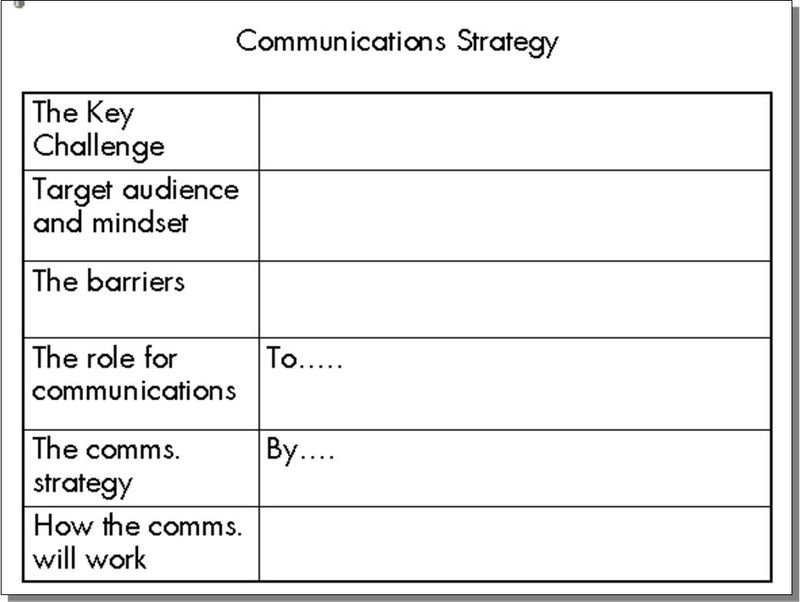
  • This isn't mine. Helen gave me it when I was at TBWA (but it's not TBWA of course, otherwise it would have Disruption and Media Arts milarky in).

    Bloody useful.

    Comms


  • Let us be clear, this has nothing to do with proper tea.

    Nothing at all.

  • Bbc
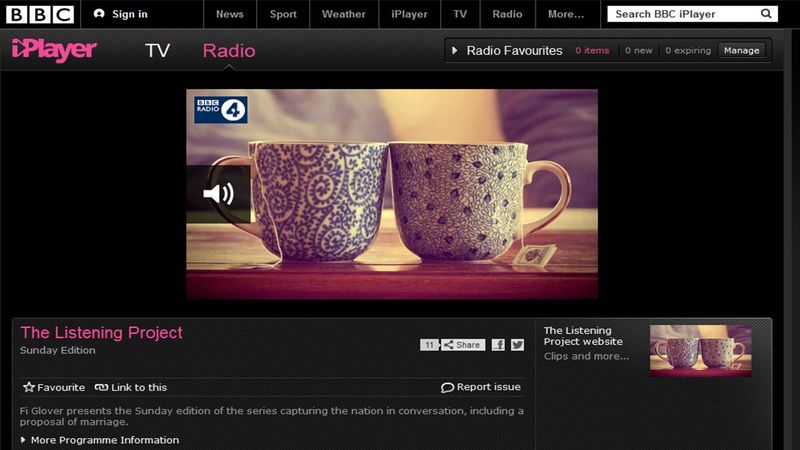
    You could do a lot worse than spend a little while with The Listening Project. Britain in conversation, ethnography etc.Lovely


  • Will seaside

    Thankfully the swimsuit still fits.

    Off for a week or so after the annual pilgrimage to Mum and Dad's in Cornwall.

    Will's been desperate to go for the last four weeks. Every morning he's been asking if it's time to go to the seaside yet. Now it is.

  • I really like Hi Fidelity. As  neurotic, former record fair regular, who was useless with women, I guess it was inevitable.

    Despite the fact that it seemed relevant to me personally, it did that trick of, lets be honest fellas, skewering the confused flailing and general crapness that is the experience of being a male in the 21st century.

    One of the best bits was when the protagonist admits that he thought living with a women was going to be a voyage into a world of constant lingerie heaven, where his partner was constantly gagging for it and never wore anything apart from gorgeous silks, satins and diaphanous, nearly see through, frilly almost nothings.

    Unbranded-knickers--sexy-pants

    Only to find, be dreadfully disappointed and come to terms with the fact that women, just like men, have pulling pants, but they also have the day to day drab and sometimes very, very comfy versions of underwear that about as sexy as George Osborne.

    We all, eventually, realise that the fire on that first attraction cools and what's left, hopefully, is a reality where the other person is far from perfect, knows your own faults too well, has habits that drive you mad and tolerates some of yours. You have to work bloody hard to keep that kind of relationships alive.

    Just as you have to work at friendships, parenthood even client services.

    Why is why the fashionable metaphor of brands and ordinary human beings having an equal 'two-way' relationship is just hogwash. We work hard at relationships that matter to us, only wierdos tend to think of brands that way, because few people want to have a relationship with a metaphor or an idea. 

    Yet so many social media gurus and brand consultants seem to think that two way relationships the future, in spite of all the data that would suggest otherwise.

    As it happens, this might be where a constant flow of new sexy knickers might work as a better metaphor, since the real task of brands is to constantly get noticed by people who couldn't really care less.

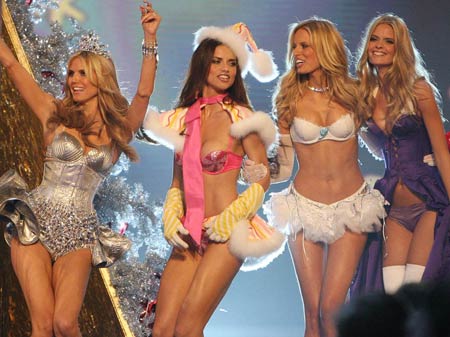
    Maybe, therefore, the pretentious twaddle about brand archetypes isn't that useful either, and we should possibly stick to trying to make brands a little more like a Victoria's Secret Model.

    Victorias-secret-show

    And little less like a that deluded bore at parties full of himself, sure everyone is hanging on his every word, but actually, really, really dull.

    Alan-partridge