• I have a love hate relationship with 'trends'. Part of my job is knowing what's going on in culture of course, but it's also the job of every other planner out there. Of course, it's a shame that more than a few planners don't know this, but let's not go there.

    Which means if you just 'replay' an insight or 'trend' back to your customers, you often find it's what others are doing too.

    And to be honest, you can identify the kind of stuff most trend companies get by reading a few papers, watching lots of telly and generally consuming the same popular culture as whoever your customers are. Then just give that trend a silly name. Or even better, leave your desk and go out and meet them. 

    What tends to cut through isn't playing back how people feel, or highlighting a problem – what gets noticed is providing some sort of answer.

    Another thing is that ebbs and flows in culture don't happen in isolation, they interweave and add up to something much bigger and meatier. It's looking for the intersections and overlaps that usually create something flesh, especially when you add another layer of entertainment culture.

    Let's take this Coke Zero stuff (and it's my opinion, I obviously had nothing to with this)

    The commercial problem – blokes reject Coke Zero because they thing the taste is inferior when it's actually pretty much the same

    Unlike Diet Coke which is not only a different taste, it's for girls

    Now here's the recipe

    Throw in the fact that young men are getting increasingly body conscious

    Add that they reject health an dieting as girly and too self obsessed for blokes that are not supposed to care how they look

    Throw in a bit of men are looking for overtly macho themes to buy into to relieve their anxieties about the role of men in the world

    Now sprinkle liberally with the fact that popular culture is dripping with knowing irony and comedy that's uncomfortable and cringeworthy, mostly because it's set in real life

    Drizzle with the knowledge that young men struggle to come to terms with 'selling out to the men' and don't like to fit it with corporate culture

    And you get……


    Add

  • Goalpost-15

    Blogging isn't what it used to be. These days it's easy to wonder if anyone is listening and if these written blatherings are any use.

    It's liberating when you think no one is there of course, because you can say what the hell you like, but only wierdos like talking to themselves.

    But then you get emails like the one I got this weekend. from someone who asked for a little help a few months back, showing not only the great work that help contributed to (completely turning the market rules upside down by looking at the real culture around the category), but the fantastic commercial results it generated. 

    One cannot deny that blogging is slightly arrogant – to believe you have anything interesting to say is not exactly modest – but it reminded me the whole point for me is to help. I 'became' a planner by myself with little help in a region where the species is rather rare, extremely grateful to planning bloggers back then for sharing their thoughts.

    This one story of actually helping someone is worth a thousand comments or a million quotes in Campaign magazine to me.


  • One of the most boring conversations to endure with creatives is the debate over the size of the logo or the merits of the product shot. Put simply, most creatives seem to think that the smaller the logo, the greater the excellence of the work.Likewise, the more the product features, the more their idea is tarnished.

    Size-does-matter

    It's as if agencies cannot bring themselves to admit they're employed to sell things. Nothing more. nothing less.

    It's true of course, all of Peter Field and Les Binet's great work on effectiveness shows a direct link with between highy creative work and ROI. Also, work that that makes people feel something and makes them talk.

    This makes utter sense when you read Byron Sharp's work on the need for brand salience (get noticed, be distintive) to get on the radar of the buyers that matter for growth – the majority of light buyers.

    But the most creative AND effective work is not that which makes the advertising famous alone, but ads and stuff that makes the BRAND and PRODUCT famous. Because, coming back to sharp, brands grow by building and refreshing distinctive memory structures. Creating distinct, long lasting symbolism and associations and building relevant and consistent meaning into them.

    Put far less pretentiously, when people don't think about this stuff much (and they really don't) , you need to work with what they already know and think. Which means:

    1. Building on and adding to the feelings and 'brand stories' already in their heads.In other words, don't change what the brand means to people, find ways to make that relevant, distinctive and likeable. In other words, try and change how they feel about what it means – because in the long term, that's all that really matters.

    2. Making sure they can find you without much effort in the retailer, in Google search or whatever. In other words, don't hide the damned logo or the product, be proud and make them part of the story.

    Good agency professionals are increasingly wary if bludgeoning customers into submissions with banal LINK tested 'messages' and seek to surprise, delight, seduce and even include them. Somehow, showing the product and brand has been lumped with the former.

    Wrong.

    Think about some of the most groundbreaking, talked about and succesful work of recent years.

    Old Spice doesn't pretend it's not from the 1970's and overtly masculine, it's just makes that 'experience' and expertise in 'man skills' relevant, entertaining and culturally significant. And is built around the simple fact that the product smells 'manly' not 'girly'. And he's holding the product right up to you.


    VW 'The Force'. It shows plenty of metal and is build around a product fact – you can't start the engine with a key.


    The Eminem Chrysler commercial has him driving the car, shows it in the streets and is all about the fact the cars are built in Detroit – firmly breaking new ground for the brand's place as an icon of American identity.


    Or, for that matter, compare the Market that continuously builds fame for the word 'market' for Google search. It still heroes the logo (though I wonder if people are beginning to talk about the advertising rather than the brand…and wonder how much this matters).


    Compare that with the Gorilla. I'd wager it was massively effective short term, but failed to build long term memory structures, because people talked about the advertising, not the brand. However, note they still used purple, which is utterly owned by Cadbury in the catetegory.


    That's why these John Cleesea ads bombed back in the 1990's. They arer completely apposite to the 'good food heroes' link people have in their heads about Sainsburys.


    But this is less as much about design as it is about ads. Like I said, people need to be able to find you quickly on a shelf, because, as proven by Sharpe, most people can't be arsed to make the effort and will choose an alternative if they have to work too hard. That's why building up recognisable symbolism and imagery is so important.

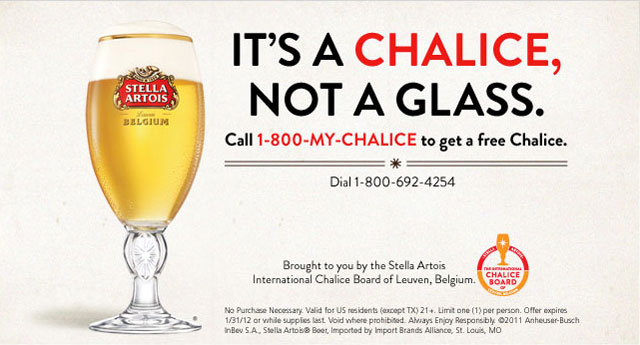
    Think about Stella Artois building on. not breaking, it's Franco-Belgian story with a distinctive chalice, that's a relevant,  distinctive symbol within the actual drinking occasion.

    Chalice

    This is also why you change your packaging design at your peril.If people don't recognise it quickly, they'll buy something else

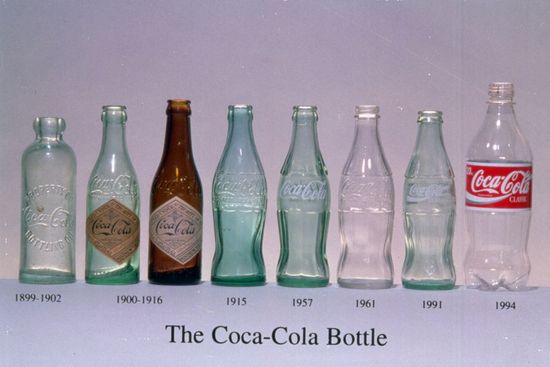
    That's why, looking at the Coke bottle, you see slow evolution where decades later, you can still link the latest version with the very first (and why the bottle is used in ads rather than the more commonly bought can I imagine).

    Coke bottle
     And Coke is red. It won't change this because the powerful memory cue is too valuable.

    Just like Orange is, well Orange.

    Orange-logo-299x300

    In conclusion, rampant creativity alone is not enough. You should always insist in making the logo bigger, heroing the product and building and refreshing a distinctive brand meaning.

    People can't be arsed to think about brands, they can't be bothered to look for them and they're only too easilly persuaded to choose something else.

    If you don't build distinctiveness and recognition, you're just trying to make art or entertainment. Resign now and get a job with the BBC or HBO.

    And one more thing, here's some work that doesn't just have a big logo, the logo is all it is (great use of low budget too).


  • So I went to TEDx Bradford the other week, which was loosely about the future of the internet. TED is a wonderful thing, I can’t remember anything else that offered so many of ideas and fodder for all sorts of stuff for free. The videos from the main events are fantastic, not just for the quality of the idea, but the delivery. The presentations tend to be showstoppers.

    TEDx is a little different, these second tier events are orgnanised locally under the TED name. Same principle, but less guarantee of high quality inspiration.

    This was my first take-out from the day. There’s an old saying that good ideas should be able to sell themselves. Up to a point that’s true, of course, but I saw a wide variety of aptitude for presenting ideas, not mention styles and it reminded me how important delivery of an idea really is.

    There was a, quite brilliant, presentation that was funny, witty and entertaining – the person doing it was a natural performer. But then there was another where she was softly spoken and rather shy, but she was so open and enthusiastic she took us all with her. More importantly, she didn’t do a presentation, she told a story. Humans are hardwired to love storytelling and this really worked for her.

    But then there was also an intelligent, focused and energetic talk from a guy who presented through a series of infographics. He was direct and simple, but his ‘props’ transformed the whole experience.

    As a rather shy, un-flamboyant person myself, the best advice I was ever given on presentations was to just be myself  and find what worked for me. Whenever I’ve tried to do funny, I just look stupid. Whenever I’ve tried to do ‘slick’ I look even dafter.

    But I put a lot of work into preparation, people can tell I’ve made a lot of effort, they can see I care and this helps a lot. I tend to look for great video and pictures, not to mention forgoing typed words and using my own handwriting. In other words, I work hard on props. Hopefully never letting them overshadow what I say, but adding weight depth and context. And I try to tell stories.

    Anyway.

    There were some talks where the speakers actually read out from a script and, despite what they were saying being interesting, you could see the audience fidgeting, twiddling with their phone and generally waiting for it to be over.

    Some were too clever by half and instead of getting out the way of their story, they ruined it with gimmicks.

    In other words, ideas should sell themselves, but there’s nothing like the (very varied) delivery people.

    Second take-out was that people that live in the loose community of digital technologists, marketers and academics need to be careful they don’t disappear up their own behinds. You couldn’t help but notice a particular uniform for the day, which was largely based around skinny jeans, check shirts with national health specs, artfully dishevelled bourgeouis bohemians and the genuinely threadbare, thrown together outfit of the genuine, careless academic. There was an air of self important smugness to much of the day and the sense of a niche community talking to itself, incredibly pleased with it’s own cleverness without any genuine understanding, or care for the context of real people in the real world.

    Much of this is fine or course, you need ridiculously clever people to care about the kind of things others don’t in the hope that others can apply their stuff to the everyday eventually. The World Wide Web came directly out of CERN for example and the cathode ray tubes that created TV images came from quantum physics that are still incomprehensible to most of us. Even the orginal algorythm that enabled Google to search so much more effectively came from an apparently useless, publicly funded, project.

    But there’s always the danger of believing your own hype. The internet is littered with incredibly clever apps, platforms and other wheezes that no one ever bothers with, because their inventors forgot to put people at the heart of what they do rather than technology.

    One thread of the day was the importance of net neutrality and freedom to post what you want and get what you want for free. No one seemed to want to say why, or discuss a point of view where a form of control or rules might be useful. It’s up to you what you think of course, but you can’t make an informed decision unless you see both points of view and the group think of the digital elite doesn’t seem to question itself that much.

    Anyway, I’m not going to bother going through every talk. They’ll be published soon for you to see for yourself. I’ll just share the bits I found interesting or useful.

    Jane Macdonald talked about Tales of Things. An ongoing project where objects are given their own QR codes and people can attach their stories about them to it. I love this, because so much of how we relate to ‘things’ is based on what we believe about them and what we know of our story. This very month, someone has paid thousands for a piece of old box that has some of Ghandi’s blood on it. The box is worthless, even blood is worthless, it’s because we know this is Ghandi’s blood that it’s so valuable. Just like my Grandmother’s china tea set has untold value to me. She taught how to make tea properly with that set, which was a wedding present to her nearly 100 years ago. Take away the memory of her and it’s just an old fashioned tea set. Daniel Miller in this book compellingly captures how important our relationship with ‘things’ really are and how much that’s about memories and shared history. 

    This is why A History of the World in a 100 Objects was so popular. We relate to things and their stories in such a powerful way.

    She also talked about the possibilty to preserve social history. Imagine a museum where you don’t just get the object, say an antiquated Nokia from the 1990′s, you also also get the stories from people about what it meant to them and how incredible it was to them to have a phone they could carry around, let alone the internet in your pocket.

    Imagine going into the V&A and not just being able to admire Dior’s New Look from the 1950′s but actually hear stories from the women that wore them, how it liberated them and enabled them  to feel a little more spontaneous and free in very austere times. Imagine what the women in the 1960′s could tell you about their mini skirts, or what people could tell about what their original Sgt. Pepper meant to them, or in my case, what it felt like to get my prized Millenium Falcon replica in 1981 at a time when  Star Wars meant more to me than life.

    She talked of Oxfam Shelflife, where clothes donors could attach the story of what they were donating to a QR code and the clothes sold out, as people responded to the added value they created for the object.

    She forcibly reminded me that the point of digital stuff is finally coming to life, it’s not really about another virtual world, it’s about enriching the one we live in now and much of that is about what it will add to objects. To quote Heidegger, “Objects are points of conversations” what’s amazing about the future that is nearly with us, is that those conversations will live IN those objects.

    Mark Graham discussed how knowledge is concentrated geographically and gave evidence that the history of the internet is actually one where this is exacerbated.  The pattern of history is one where knowledge production has been concentrated in the richest parts of the world, books, newspapers, periodicals etc have all been more accessable to those in well off areas and the greater education and knowledge reinforces the economic superiority.

    These days, digital maps shape our knowledge of places and the people that live in them, from Googlemaps to Wikipedia, from Twitter feeds to the weight of personal blogs and reviews, not to mention visual history – Flickr, Facebook Instragram and so on. But, like print beforehand, because digital technology is distributed so unnevenly, history is still being written by the winners. Most people in the world can’t access the internet and even where they can, broadband, fast laptops and smartphones are a distant dream.

    So there is more user generated content about Tolkien’s Middle Earth than most places in the developing world. There are more edits of Wikipedia from Hong Kong that all of Africa put together and more from Israel than the rest of the Middle East put together.

    Makmende was an East African viral hit that couldn’t get an official listing on Wikipedia because the editors were all so removed from the region, geographically, socially and econimically that they didn’t believe it was genuine, and certainly didn’t understand it.

    Why does this matter to me? Because as someone who grew up studying social sciences, and learned to question EVERY peice of source material, something I think is massively important for research for what I do now, it reminds me to never believe what I read on the internet until I get some proper proof. I see many strategy and research types presenting ‘researched’ ideas when what they really have is some desk research from social media or articles and such. If you want to understand what’s going on in any culture, any social group or anyone;’s head, you have to actually go out and meet them.

    This is even more important if you do global stuff, which is what is taking up most of my days at the moment. You won’t get much insight from the web about most of the world because it’s written from the point of view of people like you, not them.

    Even looking at what people do and say on your large Facebook fanbase, if you’re lucky to have one, isn’t of massive use because social media is digital showing off, it’s not what we’re really like, it’s what we want people to think we’re like. Not to mention, these ‘visible consumers’ are only the weird ones that can be bothered to spend time with a brand instead of  their peers, this is not representative of both the brands buyers or normal human beings at large. Going back to my sad Star Wars obsession, if the importance of friends and family in the lives of most people is the size of the Death Star, the size of real entertainment and fun stuff is roughly the size of Darth Vader’s Star Destroyer, so the size of brands probably equates to the size of the Millenium Falcon.

    Finally, Dr Kieran Hulse did a talk on the history of mixtapes and editing your own music – from the classic cassette mixtape through to new streaming services like LastFM and Spotify. He showed how the original mixtapes were, more often or not, acts of romance and ways of forming and cementing relationships. Personally, I spent far too many hours as a teenager making tapes for girlfriends and friends alike. They always had the person and the relationship in mind, but they were also me telling others something about myself in a very subtle (and sometimes not so subtle) way. They were about basic human needs to share and communicate (and non-verbal communications tend to be more powerful that what we actually say), not to mention the objects with specific stories to them.

    I know for a fact that an old girlfriend (we’re still good friends) has a few I made for her over twenty years ago, least importantly because she likes some of the songs, overwhelmingly because they’re a sweet reminder of our shared story and, dare I say, the person I was back then, naive, earnest and slightly odd (not much changes).

    CD’s began to kill all that, then along came Itunes and suddenly it all became personal. Your playlists became your own mixtape, but they were rarely shared.

    But along came streaming sites and we’re gone back to the sharing, personal side of things. But amplified a million times. Now we can make mixtapes of anything, through playlists, and share them with anyone. Not just our friends, but anyone. We can find new music thanks to sharing with people who like what we like – some say the web is killing serendipity, perhaps this is example of why it doesn’t have to be like that.

    That’s the main point I got from this, but there is another. Technology is changing faster than we can keep up,which in turn is changing culture in many ways. Some good, some bad.  But human nature took millions of years to evolve, billions in fact, since much of what it is in us originated in tiny mammals evading dinosaurs and the first fish that crawled on land way before that.

    The fundamentals of who we are, what motivates us and what we need does not change, it just responds to what is around it in different ways. The need for sharing, for community, to have our senses stirred by stuff like music, for love and companionship  and for a story (in mixtapes and other objects) are universal. And because the fundamentals of human behaviour does not change, that’s what we as marketing and/or technology folk need to address first, rather than be blinded by the latest innovation, trend or fad.

    Coming back to slight self-congratulatory tone of the day, I hope that’s something everyone took on board.

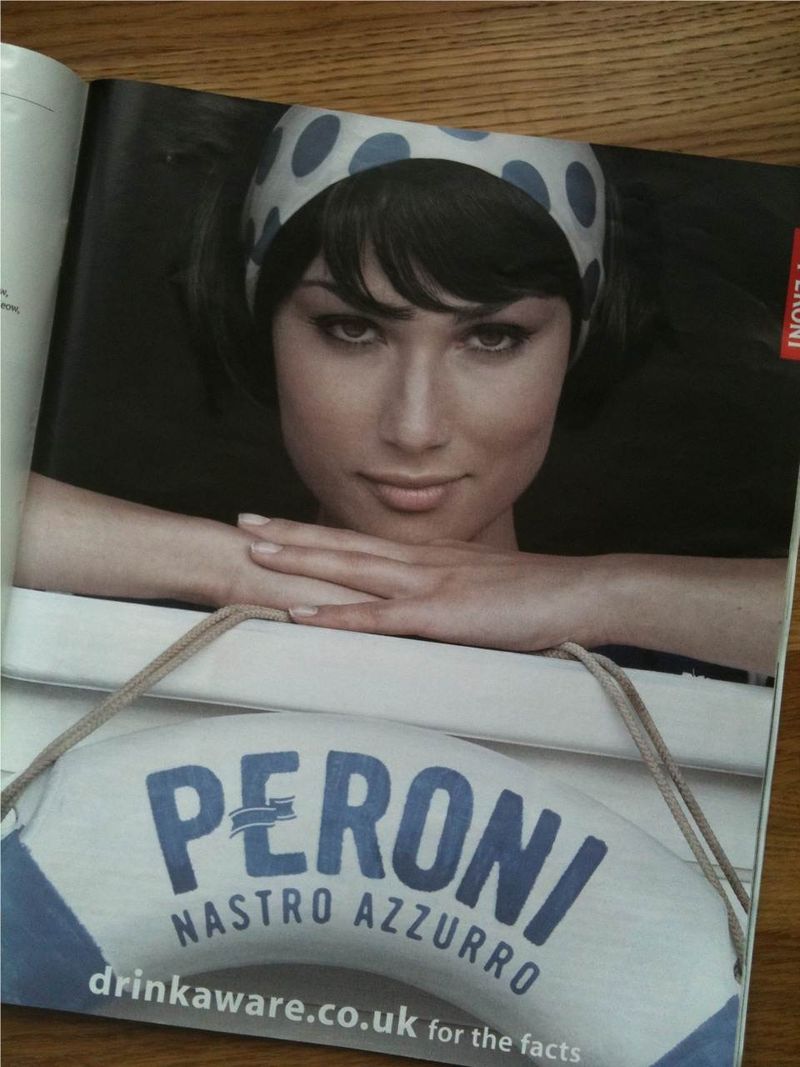
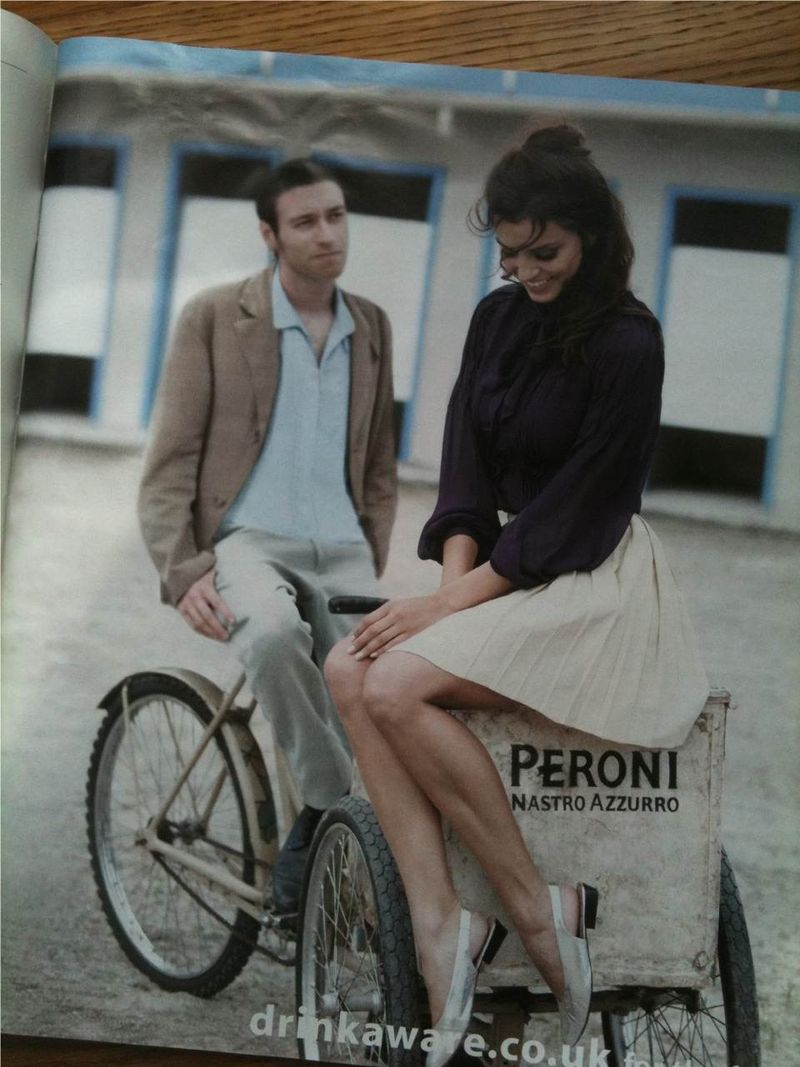
  • I was noodling through the papers this weekend and came accross these print ads for Peroni.

    Peroni 1

    Peroni 2

    As an agency hack, they're not clever, there's no big 'idea' but the frustrated creative in me admires the sensational photography.

    But as a person, they make me feel something about Peroni and create an aura I'll feel next time I drink it.

    Virtually all beers are some kind of badge for men -  expressions of identity. That doesn't have to be more complex that the right setting and sense of place, as long as it carries some level of authenticity.

    Peroni is Italian through and through, it's the only beer with the authority that can conjure that timeless, sophisticated, sensuous, sexy effortless 'Dolce' cool from the 50's and 60's Italy. A specific sense of time and place, that delivers for a more wannabe sophisticate than the average Stella or Heineken drinker.

    You can just imagine the one sentence brief – "Make Peroni the epitome of timeless Italian sophistication'.

    The carefree, live for today, sense is a powerful antidote to these grim, 'assault on pleasure' times.

    It's bloody obvious for an Italian beer to 'do quintessantial Italy' but this work feels so right. Sometimes you need the right idea, you just need the right 'setting'.


  • It was our little boy's first day at Jolly Tots (day nursery thing) by himself today. We had discussed if he would be OK by himself, if he would scream for Mummy or anything like that.

    When it came to it, he just hurtled in, without saying goodbye and started playing with the other kids.

    First time we've experienced that the hardest part of being a parent is letting go.

    I read something about a Dad and his teenage daughter. How the Dad fell the shock of loss when his daughter ran to her new boyfriend when she arrived off a train, rather than her Dad.

    We got a little of what that's going to feel like today

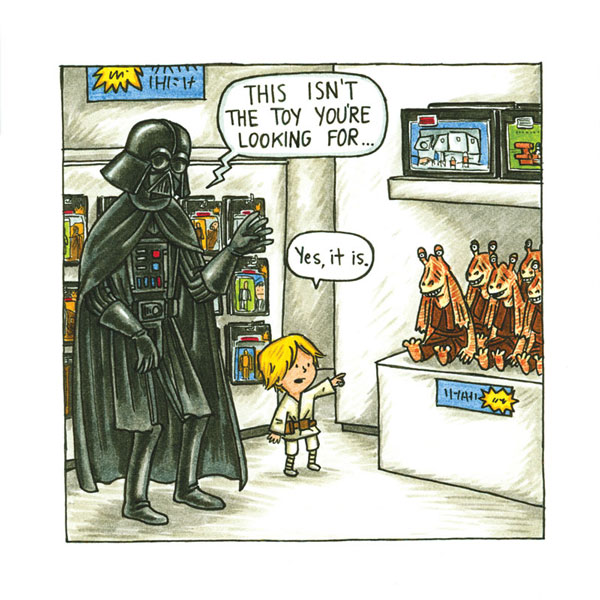
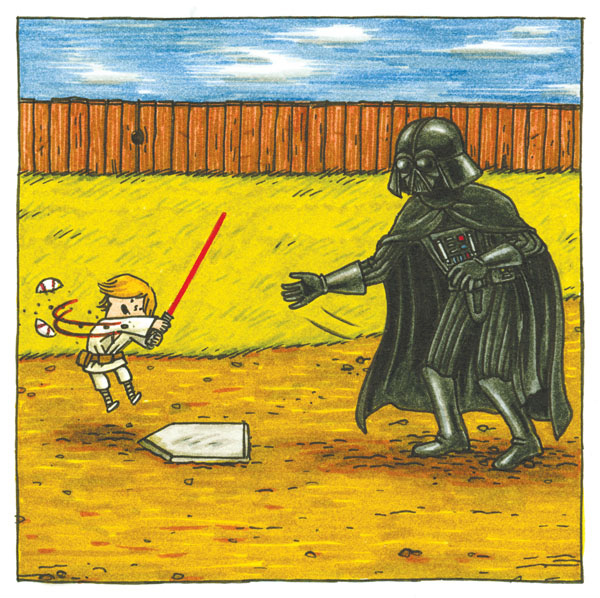
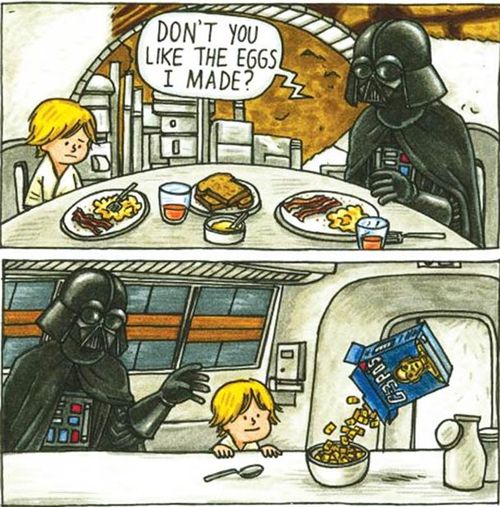
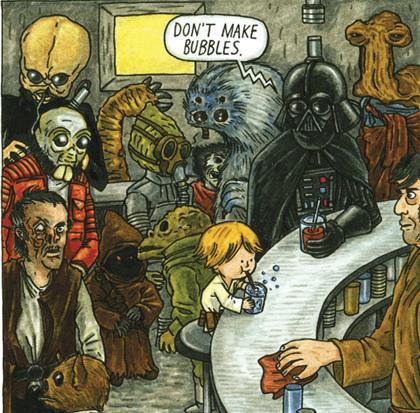
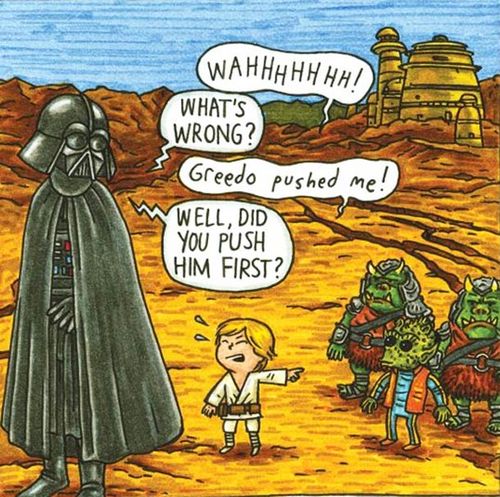
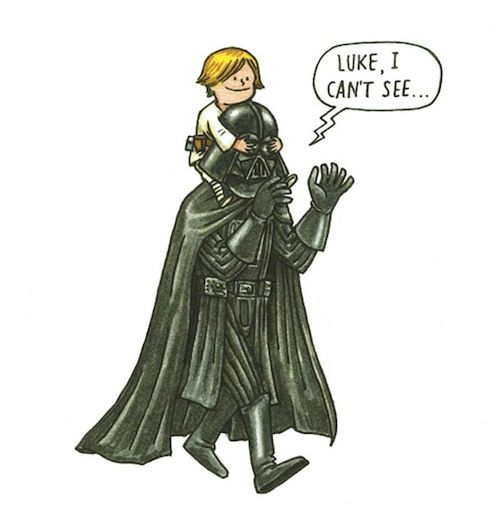
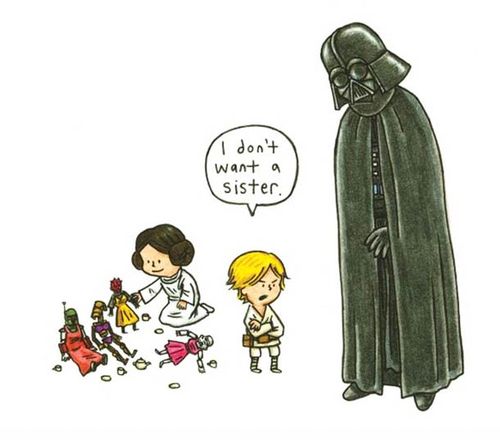
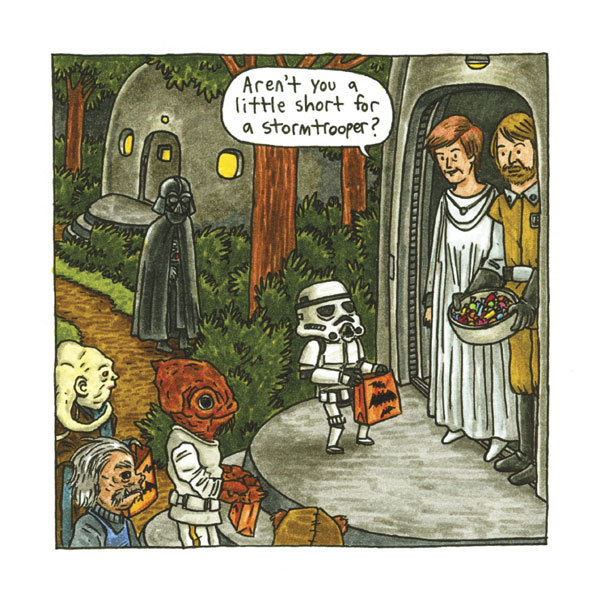
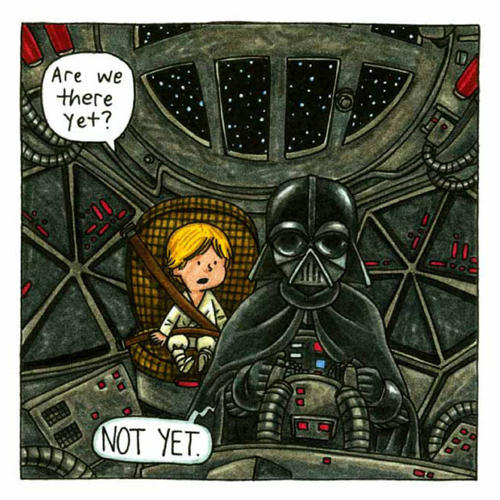
  • As a little boy who grew up with Star Wars, not to mention a Dad myself these days,  I love this.


    Dad Vader captures the joys and frustrations of fatherhood told through answering the question, 'What if Darth Vader had tried to bring up Luke like a normal Dad?'

    Vader and toy
    Vader ball
    Vader breakfast
    Vader bubbles
    Vader greedo
    Vader see
    Vader sister
    Vader stormtrooper
    Vader tie figher
    Worth thinking for ads and stuff. sometimes the best way to convey the truths, merits or dynamics of something is to place it in an unexpected situation. 

    Make the familiar unfamiliar.

    There's plenty of reasons why this works as far as humans go. We're hardwired to notice new and surprising stuff and filter out the familiar. Putting the anything in an unexpected situation, even the most familiar and banal makes us pay attention, which is, of course, gold in this over-supplied world.

    One the most loved films from my childhood is Mary Poppins, which, of course, it really just a story about a family that has forgotten have fun together.


    The underrated City Slickers conveys loads of stuff about male anxiety about being the 'other directed man' , mid-life crisis and male anxiety by subverting the cowboy ideal.


    While Mad Men actually makes similar points about the hollowness of modern consumer society, the middle class ideal and  and the conflicts beneath the surface of corporate men who go to ever greater lengths to feel something in jaded world.

    Everyone loves Carousel, but while I admire the pitch as much as the next agency hack, it's the juxtaposition of the the corporate guy and the loving father unable to reconcile both or even give them the love and support he so desperately wants to that makes it so powerful for me. The struggle between doing what you want and what you should is timeless.

    While the inability to externalise what a man feels inside, either because you are not allowed or you simply cannot is not limited to older generations. Go to any pub and watch young men bonding through shared mockery and bickering and you'll see what I mean.


    While we're at it, his toe curling embarrassment at Bizou Bizou, skewers the stilted reserve that presents so many limits on what men (and women) feel able to say and do. Who hasn't felt uncomfortable, rather than electrified around spontaneous people who are able to have fun?


    And of course, there's the tried and tested time-travel story. In the case of Back to the Future, familiar teenage themes given a new lease of life in the 1950's.


    The Jetsons, the Flinstones and the Simpsons – all stories about family relationships.

    The Sopranos (I think) is all about confused roles modern men find themselves trying to fulfill – the conflict between traditional macho identity and more modern, metrosexual roles.

    On the other hand, this, our Italian American, ganster panda conveys product quality for Fox's without having to spell it out in the conventional ways that no one really notices.


    Stella Artois 4 conveys it's Franco Belgian heritage, and the 'smooth' badge value of the brand by setting it in the 1960's French Riviera


    And of course, the Smash Martians conveyed the ease of using Smash rather than peeling, chopping and boiling your own potatoes.


     A lot of this is brand mascots of course, but much of it is finding the right situation and setting.

    I've long wanted to steal the premise of the Incredibles- the struggles of a family with superpowers trying to get by in the modern world, with a bit more of an 'Outnumbered' tone -  for an outdoorsy family orientated brand, aimed squarely at the anxieties modern Mums feel about their kids getting out and playing, growing strong and independent in a world where they simulate fun on a Wii or Xbox connect rather than actually having it.


    Or, come to think of it, take the idea of exaggerated masculinity to the extreme for a shaving or beer brand, with a funny,modern take on the idea of a male comic book hero at once poking fun at the category and male cuture at large (where most brands seems to only the answer of new-laddism) while conveying the true modern masculinity as embracing the contradiction in modern male identity – the strong, capable superhero AND the sensitive, vulnerable, more feminised alter ego (or is it the other way around?).

    I always thought this bit of dialogue has a killer insight on this:


    Anyway

  • There's an old saying, "Ask 6 economists a question and you'll get 7 answers back", which sort of applies to creative, brand, advertising types too.

    Look at this article about Tesco and the advice shared from industry luminaries. Look at how everyone has a different answer to the problem, in fact, one doesn't even think there is one.

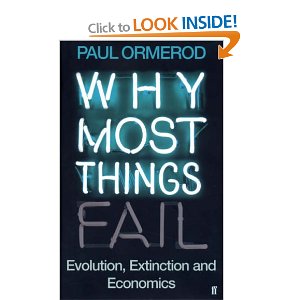
    Why most things fail

    If you haven't read Why Most Things Fail  by Paul Ormerod then you should. He shows with proper data (yet wonderfully readable prose) that organisations cannot hope to predict what will happen to their business, markets and the economies they operate in are exposed to far too many complex variables, at the heart of which you find capricious human beings who are wholly irational and refuse to behave like the textbooks say they do.

    The only way to really future proof youself is to move forward or die, continuously innovating and creating that future, because no one, no matter what bollocks they spout really knows what will happen.

    This what I think has happen to think has occured here. I agree that they forgot to make people care about them, but I also think they just stood still. Rather than innovating in a recession, or before it, not leading, they followed and cut prices.

    Compare this to what someone once told me about Sainsburys. Back in early 2000's is was on it's knees. The 'experts' in this business said they needed to go back to advertising that made them 'good food heroes'. What this person told me was that the infrastructure was in pieces.Food quality wasn't quite as good, but even worse, basis distribution wasn't working.

    Shoppers, first and foremost need to know the things on their lost will be on the shelves day in day out. They were not. Sainsburys new they needed to get their ducks in a row before even thinking about changing the communications. Even more telling, a considerable segment of Sainsburys shoppers WANTED Sainsburys to do well, they were frustrated and tried to shop there anyway, or would come back as soon as they believed the cock ups would end.They didn't need to feel good about the brand, they actually wanted it to be a succces.

    How many people want Tesco to do well?

    So it's probably fair to say that ads and stuff might help to recapture the public's imagination, but that's not Tesco's only problem because I doubt the problem is just a 'brand problem' . It's fundamental strategy on pricing, range and services – these are things that ads won't solve and need to be looked at too. But good agency partners can, and should, want to help with the strategy that informs this.

    While Tesco sat on it's hands, Sainsburys and Waitrose changed their business model.  When the economic shitstorm hit, they didn't just cut prices, they re-developed their entire offering with more value ranges and choice. Then they made people feel good about it. Morrisons on the other hand suffered orginaly by being too downmarket and re-developed their fresh 'market street' concept. 

    Which also says something about the danger of brand models that force a business to doggedly stick to a rigid positioning come hell or high water.

    One final thing, look at the advice from Interbrand. Talk about giving someone a hammer and all he sees is a nail (Mark Twain), tone of voice? TONE OF VOICE!!!!?? Only a brand consultant could come up with that sort of advice. And I fundamentally disagree with Tesco cannot be a 'cuddly colossus'. Her insinuation is that very big companies can't make people feel strong emotions, can't make them feel something.

    I know that these are very different markets, but here are some behemoths that make their customers feel something.


  • I went to TEDx Bradford on Friday, which was mostly pretty good but it’s not what I’m going to talk about today.

    Because I went to a breakfast thingy with some artists before; that was the REALLY good bit. It was at the National Media Museum, where they’re launching Life Online, an exhibition about the internet. That’s right, the internet is actually old enough to start appearing in Museums.

    Makes me feel old. My nephews are 18 and 20, for them the internet is like air, it's fundamental to their lives and has always been their. Anyway.

    They’ve commisioned an exhibition on open source culture and the threat to net neutrality. Your views on this are your own (they think curbing freedom and ‘free stuff’ online is mostly bad) but what I took from the work wasn’t much to do with the subject, it was more to do with the brilliance of ‘post digital’ stuff and interactive design to  free up new forms of creativity and inspire people to do all sorts of things together- in the real world.

    Not using all their spare time as Clay Shirky would claim, which is frankly bollocks, and always will be until people stop having to work for a living, but around the edges, little spikes of entertainment and interest within the fabric of the everyday.

    Ross Philips has created Read Aloud, an installation that that invites the public to perform lines from a chosen book in a collective effort to read the entire work.


    While it enables us to experience literature, poems ore whatever in a different way, I think it captures the idea that any piece of content is always unfinished until people actually experience it, none more so than books where we asign mental images of the places and people portrayed, we hear their voices in our own heads and respond to them in different ways (like the way some see Shylock in Merchant of Venice as a sympathetic character pushed to the limit by discrimination, while others see him as a villian). That’s always worth remembering when you create content – leave room for people in there.

    This idea of the way the internet lets people collaborate together to make real things, in the real world is also expressed in his ‘videogrid’ concept that has been used at the Liberty Store in London, The V&A  and by Nokia, where people touch a screen in a window to have a 1o second video made of themselves, automatically uploaded to a gallery existing as a real life and virtual video wall.

    This is the V&A version:


    People really will do stuff for you if it’s fun, not too  much effort and if there’s an end result they’ve influenced in some way. Instant feedback and instant results help too. Worth thinking about when you’re considering ideas people will play a part in – think about why it’s fun and interesting for them, rather than just pushing your agenda. Think about instant, or quick, real time results. Digital is about now, if you’re going to make it about ‘later’ make the result worth waiting for.

    Content that lots of people have had a hand in tends to work really well for brands, because it tends to cut through more. The above stuff isn’t that different to Nike’s Chalkbot


    This got lots of headlines and social media traction because of the people element – we’re social animals and like doing stuff together. It gets picked up by the press and people just like sharing it more. The value of the people that interact is negligable, it’s not nearly enough to alter sales figures or brand scores, but the noise and headlines they make IS.

    Rather than presenting a finished ‘thing’ present a simple system for people to work in.

    I also liked Thomson and Craighead’s  Portrait of Tim Berners Lee, an Early warning system.


    I love this idea of a portrait made of webcams, it just shows how much amazing source material is there for us to re-purpose if we use our imagination. Naturally, a lot of good digital creativity is about newness, but equally, it can be about what you can ‘hack’.

    Then there is their ‘Flat Earth’ a desktop documentary which takes the viewer on a seven minute trip around the world to encounter fragments of real people’s blogs, knitted together to form a single narrative, over a visual effect created from satellite imagery, that looks for all the world like Google Earth. You can view it on their website.

    All this stuff demonstrates that thinking about the people experiencing the internet just on screens, be that a laptop, phone or TV isn’t the half of it. The internet will increasingly be about linking objects and imbuing them with all sorts of stuff. It will be about the real life context of where people are and what they are doing.

    It will be about the real life we are living, not the virtual one.

    By the way, while I was there I also loved Forms, in their Blink of an Eye exhibition.Sport isn't often thought of as beautiful, but there is a grace and artistry to the way athletes move and this work really captures that. Just shows what happens when you apply a bit of (digital) creativity to something to make people appreciate the familiar in a completely new way.


    In the so called 'traditional' creative departments, TV, print etc was also inspired by art, it seems to me that digital creativity (is this really a credible distinction these days), if anything should be about this even more, some sort of magical fusion of code and story.

    Anyway