- I can go into Marks and Spencers and consider buying stuff that isn't food
- Some of the 'retro' fashions are stuff I still wear from last time around
- I approach a night in, all by myself, with glee
- I spend more on food than I do on alcohol
- I prefer to read a physical newspaper
- I refuse to see the point of Lady GaGa
- I don't have the time for a hangover on a weekend
- I haven't slept in past 8am for 2 years
- My nephews talk about 'the 80's' like I once talked about the '60's'
- I realise that many of the things my parents said were actually right
-
-
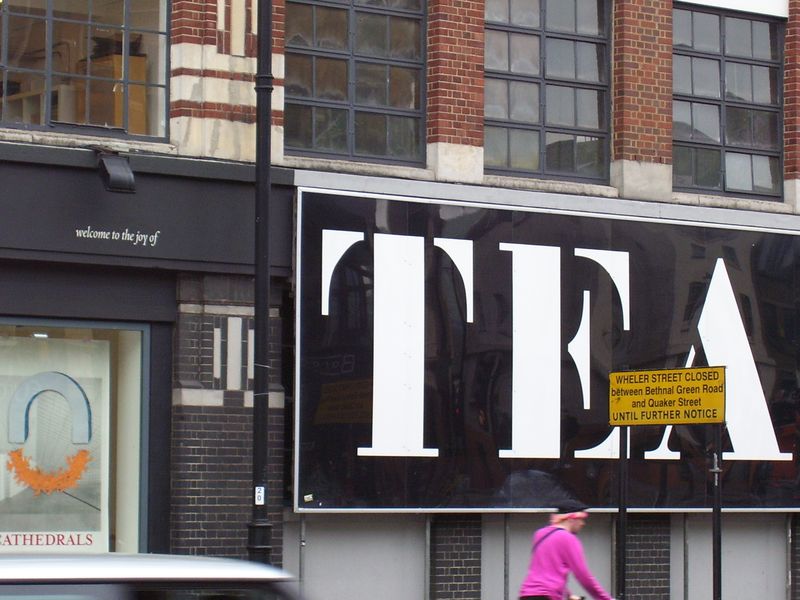
"It has not the arrogance of wine, the self consciousness of coffee, nor the simpering innocence of cocoa.”
The Book Of Tea – Kakuzo Okakura
-
Back in the day, in the UK at least, you found the main protagonist in drama, comedy or whatever seemed to be someone who did real work for a living. Morecambe and Wise were unashamedly populist (and funny)
The stuff that did feature the middle classes ably poked fun at them, mostly without irony. The middle classes could laugh at themselves, but so could everyone else.
Nowadays, it seems that any stuff starring 'working classes' at all, does it's best to mock them for the benefit of their so called betters.
I know I'm making sweeping statement here, you'll be able to find examples that are exceptions, but I suggest this is the general direction of travel.
So it's not too difficult to work out the enduring appeal of soaps like Eastenders and Coronation street , finding romance and drama in the kind of lives most people actually live. It's not real if course, but the context is very much in real life.
US drama and comedy seems to find it really hard to base much of it's work in the less than glamorous life of the majority. Or maybe my view is coloured by what the British media shows here. In any case, the view from here is that stuff like Roseanne was an exception rather than a rule.
It's easy to work out why people like Jordan or Coleen Rooney are so popular. Yep, they are pretty much talentless, they are famous for doing absolutely nothing of value, but most of us are talentless too and live rather mundane lives.
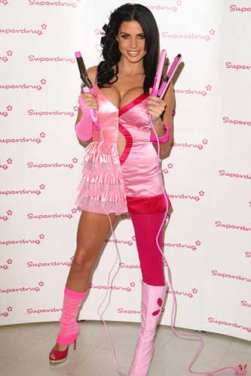
No wonder young men want to be footballers, there's not much else the media gives them to aspire to is there?
No wonder Cheryl Cole is so loved. She can sing, she can dance, she's unquestionably pretty, but when she goes in the X Factor, she's one of us.
This matters. We live in times when the many are being asked to shoulder the burdens of the elite who have fucked things up somewhat. Where ordinary people are seeing there disposable income slashed and live in fear of what might be around the corner. In short, where people are going to have to define themselves by what they 'do' a little more, a little less by what they 'want'. But popular culture still sells the lie of accessible fame, success, riches for anyone who is beautiful, is able to kick a ball well, or manages to marry one.
The responsibilty for new roles models and values to aspire to lies with anyone involved in creating culture. That includes people who create advertising and stuff, which at it best, not only mirrors culture, it influences it. But most people in agencies despise the people they create their ideas for and only really care about influencing a small community of peers who tend to work in West London.
A wise man once told me the best way to find a way to connect to customers is not to merely put yourself in their shoes. It is to admire them. How many people who work in agencies can honestly say that?
-
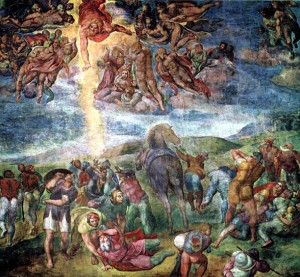
You can't move for transformations these days. It doesn't matter if you're trying to shift brand preference, doing some sort of direct response, nine times out of ten the objective tends to be transform people thinking this to thinking that, from considerers to buyers. You'd think customers were all living in biblical times, awaiting Damascene epiphanies that would divinely transform them from 'Saul' into 'Paul'.
Of course, it's useful to have a clear starting point and a clear goal. The classic 'where are we now and where do want to be/could we be?' is still basic (and often forgotten) discipline of good strategy.
But it's not so good when applied to people as some sort of golden rule…'get people from here to here'. It assumes they have a very clear opinions and easily defined patterns of behaviour. You know, you either like Nike or you like Adidas, you're either a high value customer or a low value customer, you're either loyal or a repertoire shopper.
But the opinions people have on brands and stuff is far less even and consistent than the brand consultancy gurus would like us to believe. People might like one brand a little more than another, but it rarely goes much further than that.And our preference opinions fluctuate. Think about it, if customer preference was so fixed why bother advertising at all? We do of course, usually to either defend a big share of customers by stopping them liking someone else instead, or get new ones by changing who like from someone else to us.
People are also really annoying when it comes to their behaviour. The received wisdom likes to put people into convenient segments, but it doesn't really work like that. Luxury buyers also buy economy, people buy healthy food and downright artery furring, life shortening food too. Nike buyers also buy Adidas and probably Converse and Puma too. of course they do, in depends on mood and the situation. When it comes to food, you might be 'good' all week and eat really healthy food, then pig out on Fridays. If you work in an agency, it's highly likely you might wear Nike for running and Converse for work. If you like wine, you might drink plonk during the week and but good stuff to go with your 'pig out meal' on Saturday night.
So if people don't really have rock solid beliefs about brands, and they don't behave in simple, one dimensional patterns what are we to do? It comes back to boring data.
The IPA Databank shows that campaigns that build 'Fame' have the greatest effect, because create a talking point and cut through the brand clutter. They also provoke a strong emotional response, and neuroscience shows us this is far more critical to how customers make decisions than 'information'. When you need to attract mostly uninterested people, the primary objective needs to be gaining attention in a favourable way. In turn, that's why adding some sort of value to the issues and tensions in their lives is so effective. They don't care about your category, but they care about themselves.
It also shows that campaigns with proper commercial and /or behavioural objectives, rather than soft 'preference' or 'awareness' (God forbid!!) objectives have a higher success rate. Obviously if you set out to understand what's really happening around your product service etc, you have a much better chance to affect it. Put another way, the first stage of any strategy development should be converting a commercial objective into behavioural objective.
Here's two examples where brand preference and behavioura objectives are brought into sharp focus.
The first is a very small bed retailer I used to work on. On a limited budget, we couldn't affect brand perceptions in a useful way, and in such a low interest market, we argues at the time that the word 'brand' was getting in the way. I much more relevant problem was the terrible levels of purchase v footfall. Why were people not buying when no one bothers researching new beds unless they really need to, and, let's be honest, want to get the job out of the way as quickly as possible?
We found that people just didn't have a clue how to choose bed and didn't trust sales people. So they drifted around retailers until the settles on something. Then bitterly regretted their purchase when they found it to be uncomfortable afterwards.
The problem was simple, help people choose the right bed with minimum fuss and without the need of a salesperson. The solution was even simpler – an idiot proof bed guide. The solution wasn't a huge ad campaign, it wasn't very clever or sexy. It was a simple printed leaflet and some point of sake. Sales went up exponentially.
(By the way, I still don't think that 'brand preference' is the most commercially effective approach. There's a much more potent blockage to clear. The main reason people put off buying a new bed is that they can't be bothered getting rid of the new one. It's too much hassle, so they put up with bad backs and bad sleep. I'd rather bring procrastinators into the market quicker and and straight to a client. Maybe it would involve creating a national talking point around how Britain seemed to be willing to do without decent sleep (a cultural fact, we all manage on less sleep and even brag about how knackered we are).
Another example if the, often discussed old Spice Guy. Brilliant creative, of course, but what makes it stands out is two key points:
1. The 'Fame' element comes from tapping into lots of issues young men have with masculinity and what it means to be a man these days.
2. It's built from two key pieces of behavioural information. Most men's shower gel is bought by women, so they needed to create conversation between men and women. Most of the shower gel men use smell's perfumy and girly, they needed make the manly smell of Old Spice attractive, or, if you like, make guys want to smell more like 'jet fighters and punching'.
-
I'm reading this book.
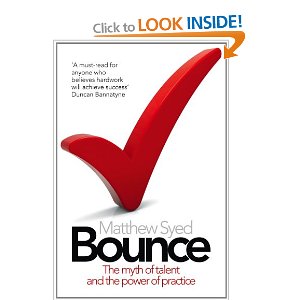
It's a must for anyone who wants to understand how superhuman sports performers REALLY got that good. I think it also provides a great lesson for planners.
The main thrust of the book is that incredible performance in any field isn't determined by talent, what matters is the work you put it. In essence, practice DOES make perfect, as long as there is lots of it and the kind of training you do is always pushing you towards slightly unattainable goals.
Champions are made, not born.They just put more hours in and fill those hours trying to do things they can't quite do just yet.
Planners have loads to learn from this. First and foremost, don't believe that rubbish your brain being wired the right way or not, you can train your mind to operate differently. If you're an Account Exec that hates schmoozing and thinks contact reports are really, really boring, start learning to think like a planner now….
Start talking to them about their work and how they go about it, they'll only be too happy to share, no one tends to make any effort to talk to planners unless they really have to.
Think about the creative work you like, try write what you think the brief might have been, get feedback from planners and creatives, do it a lot.
Cultivate a curious mind, read lots of stuff that has nothing to do with advertising, watch lots of popular culture stuff and every month, and every month, from what you are constantly absorbing, share three things you believe are really relevant and useful to your client and the category at large.
Start getting hold of the lots of data to do with your category. Get planners, the client's research agency or your analyst (if you have one) to take you through what they look for and how they find patterns in numbers. Start doing this yourself.
There's lot more of course, but as a start, if you begin to work hard at doing and thinking planner type stuff, if you want to be one, you can. Oh, and since the biggest criticism of suits within and outside agencies is that they don't think, they just sell, you'll make yourself the best suit in your agency anyway.
So don't believe the hype about rock star planners and so called 'genius' planning directors. They were not born that way, it's the benefit of experience and hard work. That's right, great planners are not cleverer than anyone else, they just work harder.
-
I guess few middle class skinny latte drinking planner folk will lament the demise of News of the World and I guess, from an ethics point of view they might have a point, but that's not really for me to say.
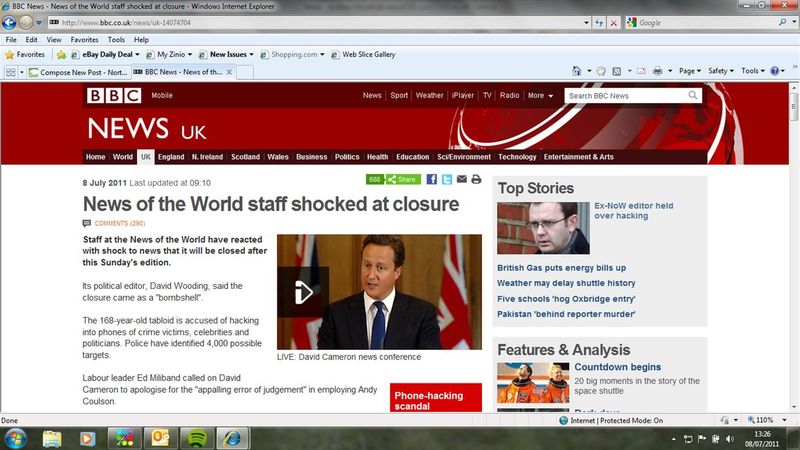
I will regret its loss for slightly more mundane reasons.
The News of the World knew its audience and what they were interested in. There was no pretense in being something it wasn't, it had an incredible instinct to know what its buyers were interested in and deliver it.I will miss a direct line into the real beating heart of UK plc, which was invaluable for my job.
Evidence of mistaking what people care about for what you care about is the way broadsheets went Tonto over phone hacking into the lives of the rich and famous, but the public didn't really care that much. When the hacking became about normal people like them, well, you know what happened. That's a problem many politicians, media folk and ad folk have, they just can't relate to real people and what they are really bothered about. There's a lesson in there too somewhere.
I wonder if certain planners could learn something from an organisation that really took the time to deliver content people really wanted, rather than what would impress their peers. 'twas always thus, but now you can't afford to start with what people care about and work back. What interests THEM, not a small community based around West London,Maddison Avenue or whatever agency hub you might work in. That doesn't mean yo shouldn't seek to change their minds of course, but it needs to be about something they're bothered about in the first place.
-
One of the intrepid entrants on the APSOTW project asked a great question in response to this post and the thought starters on a KOS cultural strategy. Basically, when you have a number of potentially good ideas, how do you decide what to move forward with?
The most honest answer is instinct, just like a tennis player just knows what shot to choose after years and years of practise and competition, you find that your instincts are not far wrong.
But here are a few pointers I shared, just in case they're useful (I've changed an example for client confidentiality and the entrants own developing work):
In a real life situation, much depends in the client and the brief you received. Some clients will give you a very specific (usually too much so) brief with a target audience already selected from a segmentation study – usually with lots of information about what they care about within the category and some characteristics, along with a specific communications objective. In this case, the task is to get to know this audience, what they REALLY care about that could be exploited by the brand…and developing a proper role for communications. For example, I once saw a great, ironically shaving example, where the client brief was 'increase penetration amongst hard to reach, style conscious 18-24 years olds who think the shaving category is boring" and the strategy was 'make beards uncool' (at the time these young proto men were experimenting with goatees which they thought were really hip, while the women they wanted to pull thought it made them look like idiots)
Focused briefs don't come along too often, and you find many strategy presentations therefore have a couple of options, just like creative tends to have two or three 'routes'. Personally, I think this is lazy, but some clients actually expect this. But in any case, some kind of selection needs to made internally and a good planner will be presenting in a manner that helps client 'choose' an, already selected, preferred direction. There is a school of thought built around behavioural economics where you need to give people a choice if yo want them to buy something, just make sure you have two similar things where the one you want them to buy us a little bit better….
So………first off what can happen when you look at your different ideas more closely, usually when you put them up on the wall together, is that there's something more fundamental that is driving them. You sometimes see that actually, your strategic routes are, or could be, different campaign ideas for a much deeper brand idea. So I tend to not look at what the best idea is out of the bunch, I look at what connects them.
Of course, this isn't always the case sometimes they are genuinely different ideas with disparate roots, and the ultimate criteria to apply to selection usually boils down to might be:
Is the problem we're solving something enough people could care about? Or could be made to care about? That doesn't mean for example, with my half formed 'assault on pleasure' thoughts that I'd be thinking just about that smallish, cool urban professional type (though I reckon the numbers would be pretty good) I'd be thinking about how many other men would want to be like him, which is quite a lot judging from the stable sales of GQ.
Is it provocative? Is it something you can imagine your audience not only agreeing with, but talking about and even debating?
Do you honestly think it's something your brand could do credibly? That wonderful Old Spice work is rooted in the truth that it's on old brand that's your Dad probably used buy for example. It doesn't have to be something no other brand could do (it helps though!) because once you own it, you OWN it, but it does need to be credible for YOUR brand to do it – Chrysler isn't the only brand built in Detroit but boy they make the most of the fact it is, it and the way its grit, those 'men of action' are something Americans need as a culture right now .
How many battles in the war you want to wage can you see coming from this? For example, that 'assault on pleasure' stuff I was on about could take a stand against the creep of work into our leisure time, it could have a pop at traditional competitive male culture that's all fitting in and pretending to like sport even if yo don't- it could parody men who think it's fun watching football in a freezing stadium while more interesting men are having sex with the kind of women they only dream of, it could make an enemy of Ben Sherman lager louts and the endless routine of the Saturday night out in the same bars and nightclubs, it could stand up for sexual freedom, it could tell 'the man' to get lost "I'll drink as much as I like" etc. I'm not saying this direction is good, but I am saying there are plenty if flashpoints to light.
And finally, which is simplest? Which can you explain in a sentence, but when you do, it feels like a compression of lots and lots of interesting stuff. A useful way of approaching this is to write 'movie log lines for it' – which are one sentence compressions of, hopefully, very interesting 90 minute films used in the initial pitch. For example, Rocky might have been pitched as ' A washed up boxer gets the chance to fight for the world title, but he must overcome his own demons before he can even think about his opponent". Levis Go Forth stuff could be pitched as "The story of America's youth rebuilding our country with the pioneering spirit that once made it great'
Hope this helps
-
By the way, remember this slightly confused post on cultural strategy for energy drinks? It needed a lot of pruning, which goes to show why you need to think hard about this stuff rather than going off half cocked.
Anyway, here's something a lot simpler.
The energy drinks market is very macho. With the exception of the current Lucozade stuff it's about joy in pain etc, while Lucozade isn't really seen that much in gyms and stuff because it's mostly a lifestyle drink, a fact they've embraced.
There's nothing in the category for women. Who tend to avoid to avoid energy drinks because they think they're full if calories. This is part of something quite rich to delve into.
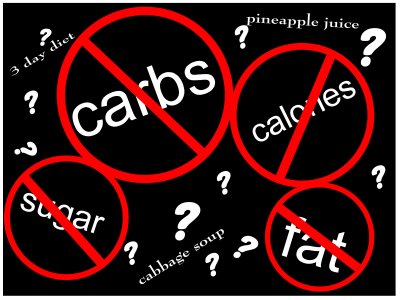
On the practical level, food has become fetishised for body concious young women. Fad diet after fad diet leaves them either half starved from eating next to nothing, or disappointed when they realise the 'cheat diet' that lets them eat what they want doesn't work.
On another level, the macho, no pain sports turns women off. They're not ultra competitive like men, they just want to look good – get into those jeans, work that killer black dress. One of the big trends in health is the increasing desire for physcial perfection. It ain't going away.
That takes us to an interesting place for a watery looking , natural 'good' sports drink. It can puncture all the bullshit around fad diets AND quash the qualms about calories…..basically with the truth that you should burn more than you chew. Instead the the hollow emptiness you get from dieting, if you burn calories instead, you get a wonderful positive buzz.
On a higher level, instead of all that pain, suffering and winning stuff, you could embrace the truth that women train to look great and that is nothing to be ashamed of.
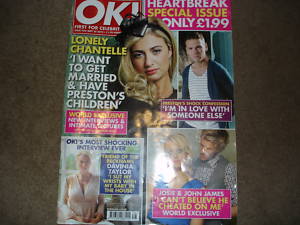
Suddenly you're in a world of independent, sexy, empowered, women who are a million miles away from the crash dieting, famous for doing nothing airheads you see in OK Magazine.
You're tapping into Generation Y women who don't see a conflict between beauty and brains, see the irony in the glamour industry and enjoy the fact that 'men just don't get it'. They also dislike the 'assault on pleasure' discussed in the last post. They also at once dislike and mock the lunkeads in gyms who can't help but ogle them and don't get why they would never be interested in a million years……….
With some time and effort, that could get quite provocative and interesting………………
-
So it's over (unless anyone is up for the extra round). I hope everyone found it useful.
Once again, I really want to praise the people that took part. We got a series of great, mostly beautifully written entries with some really good observations. I really got a sense that people were getting a feel for their audience, what they really care about and what that could mean for KOS. Again, I want to impress upon everyone, the entrants showed a level of thinking, empathy and emotional intelligence way beyond what most planners demonstrate.
The fact that nobody really nailed a truly succinct, watertight presentation isn't and shouldn't be disappointment, only SOME of the best agencies in the world do this stuff really well, and they don't always nail it. This was always intended as a learning experience to get people thinking about this kind of stuff and get a feel for how to go about it. I hope it succeeded to that end.
Anyway, here's one or two things I would have considered if I was looking at this…
Firstly, nearly everybody looked at shaving as a symbol of masculinity and naturally delved into what it could mean to be a man in the 21st century. Great approach of course, when the category is so far behind others in this respect, from Old Spice to Johnnie Walker, from most beer brands to quite a few automotive ones. But then again, when so many brands are providing a variety of outlets for all sorts of tensions in masculine culture, it's really hard to find something new. Doing something similar to another brand outside of shaving, and as well would still have profound effects in such a stilted category, but finding completely new cultural codes instead of a new take on masculine ones would have really interesting.
When shaving is so crassly tied up with being a real man, what else could it be about? For example, the rest of the category is all about space age white hot, NASA, technology (thanks SC) which feels part of the general cultural demand to always keep up with the latest thing, or even worse, take away the need for skill and concentration in favour of convenience . But King of Shaves is proud it was invented in a man's kitchen sink and began with a traditional shaving oil – that could have real meaning for brand that makes shaving an act of authentic concentration and skill, rather than a thoughtless act where man in subservient to technology. You could be quite provocative, delving into the growing cult of the amateur, where people are developing an untapped need to have absorbing hobbies again – things they can do with passion, that require concentration and perseverance, but where learning along the way is as much fun as actually getting there…and it's mostly an intention in life, more than a reality because who has the time? That could be about craft skills, but it could also be about things that actually make you feel something.
Many people picked up on the new quest for physical perfection amongst men. My view is that this part something much deeper. The kind of guys that are embracing the male beauty ideal tend to be young urban professionals – they work hard and play hard, totally embracing experience culture, completely dedicated to having as much damned fun as they can, drinking to excess, partying in cool bars and clubs, lots of sex with hot women and not afraid to embrace the fashion codes that go with it, depillating, smooth skin, immaculate hair, even considering plastic surgery. All the while, where seeing a massive 'assault on pleasure' – promiscuity, drink, eating the wrong foods…our institutions are trying to end the fun and make people behave. How interesting would it be for a set a sub-culture of hedonistic beatiful people against the dull, authoritative mass market – and predictable, one dimensional Gillette guy could be made part of the enemy possibly. Even better, this target gets irony, they love sophisticated, multi-layer comedy and culture that others just don't get – how great would it to be to mount protest your enemy doesn't even understand?
Back on manliness, I wonder if there's more in transformation culture? Many picked up on the confusing variety of roles men are asked to play these days. Rather than fight this, why not embrace it? Much of the feminine codes you see out there are about women playing with their identity. Maybe it's time to be the brand that does this for men? Shaving, as many points out, seems to fight against new masculine ideals and preserve the classic male- why not smash it by embracing the new masculinity, where different mindsets and seemingly contradictory behaviours are not hyocrisy or schizophrenia, they're embracing the modern man who has as many sides to his identity as a woman and wants to explore this and the possibilities it represents. You see it in the way fashion has become less about the diktats from the fashion police and more a huge selection of styles and identities to mix, match and try on. That might lead to the The staid corporate stooge who goes base jumping at the weekend. The loving, dependable single Dad who's also the ladykiller. The reason superheroes tend to have a human alter ego is because it touches a deep need in most people to be someone else from time to time, or even just vent that part of yourself that never comes out very often. I find it funny that much of modern feminist culture is about independence and self actualisation when that luxury isn't, at least in the popular culture we see, afforded to men. Don Draper's identity crises don't strike a chord because they're abnormal, but because they're all too common.
I'd argue that much of why people connect with the Bourne Identity or the new James Bobd movies is the way the complex, conflicted, ambiguous and, in the case of Bourne, multi identity characters reflect tension in their own lives.
What about women? KOS is launching Queen of Shaves. In culture, women are loving invading previously male only citadels (apparently the biggest growth area for motorcyle sales is women) – instead of the seriously crap Gilette Venus stuff:
Why not champion Generation Y women invading the mans world? Most brands treat young women as idiots, why not embrace their dizzying march?
Oh, and one final thing. Young men feel rather helpless right now. The category not only shows them a world of success that's out if reach, it's one dimensional men with nothing about them. Right now, they feel helpless, listless and without any control in their own lives. This especially acute with 2o somethings who have been sold a pup by culture- the fake rich beatiful MTV lifestyle and the promise that of they worked hard and buckles down, they could have great jobs and great lives with the houses, cars and fantastic leisure pursuits that go with it. But most of them are finding the jobs are not there, and end if working in boring, repetitive jobs, call centres admin, or some even have to take a McJob. Even the successful ones feel they've sold out to the man and wish for something for meaningful. That's the deep need expressed in Fight Club
and even Wanted-
young men looking for outlets, for a way to feel control in their own lives. As James whatsisface says at the end of Wanted (dreadful film, but still).."What the fuck did you do today?". Yes it's youth rebellion, but I wonder what outlets – naturally safer and less silly than bare knuckly fighting or teaming up with Ms Jolie to kill people – KOS could provide. You only have look at culture jamming or the student protests in the UK to see there's something to tap into here. Maybe it's even showing that a life of significance doesn't revolve around how much money you earn and being the corporate guy, it comes from being a 'man of action' rather than words?
Anyway, just some rough, half formed channels of interest. Please rip them apart at will.
-
So, with the exception of Gareth, who's feedback will appear as a kind of epilogue in due course, I have the task of going last. Bugger.
That means it's a struggle to say anything that hasn't been said before and you've all probably lost interest by now. Oh well.
I need to apologise though. This post is late – after entries being on time and the kind effort of (most of) the judges to be on time – and I'm sorry. The last week has been crazy, not an excuse, a reason I hope.
Right.
First, there are the thankyous. Thanks to the judges for giving their time on this. But more importantly, thanks to the people who submitted their entries. Hopefully, you'll benefit from the direct feedback, but it's incredibly generous to give your time and expose yourself in this manner so that the others, who didn't, might benefit from the comments and pointers too. Seriously, I salute you.
Right, onwards. Here's my general feedback. At the heart of this project is a conflict. I've banged on before about the weakness of slavishly following proprietary planning processes, yet lo! I set out a distinct process for this one. Why on earth would I do that? Because this was never going to be an easy project. It flies in the face of most of the accepted wisdom in some of the, ahem, most respected organisations in this business..product or emotional benefit focus I mean. So I thought it useful to provide a guide to help and, hopefully, case studies that brought it to life.
Another reason was that, like it or not, we always have to tailor how we deliver our ideas to clients: the way they think about how brands work and their sign off process. Practising organising your thinking to help someone buy it is something you need to start doing.
So I was a little surprised that not everyone followed the brief. I don't mean following the process in a linear order, but making sure that you covered the main questions, so that my imaginary tick list was complete (you'd be amazed in pitches how many clients have a real tick list). First and foremost in any presentation, you need to be thinking about what your audience is looking for and tailor it to that.
With regards to presentation style, it really varied from the too succinct to virtual verbal diarrhoea. I wanted to see a clear story told in an inspiring way. There were wonderful examples of design, brilliant pieces of writing and, in places, crystal clarity. No one entry did it all in one go. What works for me, whether it's writing a document, preparing for a presentation or whatever is writing down the story first. Literally, the elevator pitch.Usually that means a one pager. Ever since I read Perfect Pitch I've followed the advice and organise it as Robert McKee suggests: The Inciting Incident that sets it all in motion, Progressive Complications, Crisis, Climax and Resolution. It works for me and is well worth a go. Once you have this, fleshing it out is easy, but you have that critical structure.
Now for the content. Specifically the approaches to cultural strategy. Every single entry has at least one gem of an observation, but it tended to feel that most of your efforts had gone into finding a category convention ( and done this brilliantly) which is critical of course, and less so the genuine tension tension in culture you could resolve…in many ways it felt like people were tapping into a mainstream trend to break a category convention rather than resolve real tension in people's lives. That said, nearly everybody showed a direction of thinking that was fresher and more thought provoking than 90% of what most planners would do and 100% fresher than existing category stuff. It just felt a little like piggybacking a trend at times, rather than repurposing something beginning to get momentum in culture that no one else has yet.
LIke I said, there were some fantastic observations about category conventions, some great directions about what was going on in mens REAL lives we could address, plus some great thoughts about what was going on in culture we could repurpose. But I never felt that that all that happened in one entry. I was also a little bit disappointed that so many approaches addressed a question about what masculinity should be about, when a more interesting question might be, WHY is shaving so tied up with masculinity and manliness, starting there might have got to somewhere very different.
The biggest category convention seems to be that shaving is tied up with masculinity – what else could it be about?
So well done all, but no one was perfect. Which is a relief since I bet the judges don't want to be ousted by the Young Turks just yet.
So to the entries:
Zelico
Short and to the point. Interesting to focus on the category convention of the clean shaven guy…but I was looking for more than this, what it is it in life/culture this means/could mean? What's wrong with the clean shaven guy and the way brands focus on him?
The 'creative guy' is interesting but what's BEHIND this, what's the tension in men's lives championing the loose creative types could resolve? How and why could this be any different to Apple's 'tools for creatives'? I wonder if digging into further might have exposed something like the 'weekend hippy' – the young guy who hasn't come to terms with the constraints of adulthood yet. That night have got to a place that talks about shaving at weekends – or providing 'outlets' during the week.
Still, didn't entirely agree with other judges that encouraging blokes to shave less is a bad thing – most strategy doesn't change behaviour, it tends to change brand preference, and I wonder if providing 'cultural capital' to your audience might generate that 'switch' without actually making them shave more or less. Also, there night be all sorts of tactics for helping guys shave off a thicker beard, I bet shaving oil helps with that (just out of interest, I was amazed nobody dug into KOS heritage a little bit more, which the oil is the bedrock).
Independent art IS interesting and I can see how you might supply 'cultural trickledown' to guys with the interest but not the palate or the time and effort to seek it out, but you don't really show how you make it relevant to KOS.
So there's lots going on here but I wonder if you audacious attempt at striking brevity left out the story that would pull it together. Beautifully written manifesto, but the brief said it should inspire anyone in the KOS business and, to be honest, it's a little oblique.
On final point – I loved the idea of craven mediocrity- guys who want to be great but don't really have the chops (most of us then) would loved to have seen this developed more.
Matt
Points for actually following the process. I like what you do with the category- it's great to see challenger strategy applied. It's great for you to look for inspiration from other categories, but it worries me at this stage, as this category is already very functional to me, it just dresses it in emotional benefit bollocks.
I really liked where you were going, but you frustrated me by stopping short of looking at cultural conventions in the category. It felt like you were judging their ads not what what their content might really represent. The smug self satisfied guy is interesting but what is it about him you can bring meaning to and subvert? I do love that you go for inspiration from popular culture, bit ads.
For me though, your cultural tension misses a crucial point, you state the category doesn't connect with real guys, but you go no further. What is it about these fake men that might be made to piss guys off? This what I'm thinking at this point as your story unfolds and wanted you to push it further.
But I LOVE your manifesto I see how grown up mischief helps you play judo with Gillete. But you haven't shown why robomen are such a problem. You just say that's not what real guys are like- but what's wrong with out of touch images to aspire to? If they don't aspire to this image WHY NOT? You haven't said or I'm missing something.
So I'm frustrated becasue I thought what you were driving at with your Hangover/Mad Men references was great..something about the boiling tensions in men forces to conform, just waiting to explode. I would have loved to see how you would light the touchpaper.
On your executions,I wanted to see where you might show up to have maximum impact, where your 'tension' would be the most intense. The fashion store thought is interesting, but where and how could you be the most provocative?
Justin
Great start, you're wetting my appetite – the best presentations make the audience sit up and take notice from the first second. I like you getting quickly to the functional relationship with the category – shaving's a pain in the arse and part of a much wider ritual of pretending to be someone else when you go to work. This was really going somewhere. You really link the category to a wider issue in life.
Then you lose me.
Your solution seems to add to the problem in my view – getting a proper shave. That feels like an answer to a different problem, possibly the way men might yearn for the days when men where men, but you didn't lead to this and then, to be honest, you seem to descend into lots of functional stuff, which makes it feel like an FMCG planning deck of yore rather than a cultural strategy. A real shame because you started brilliantly.
Carolin
I like your quote at the start, but be careful, if I had a penny for every planning presentation I'd seen that starts with a quote..and then the proverbs approach gets stale quickly and gets in the way of me understanding what you're trying to say!
The archetypes approach was great, it's a fresh way to look at what the category does/doesn't do. But I've got to be honest, I got confused. I THINK you're saying the world confusing for a certain kind of guy who thinks culture has left him behind – it wants him to be many, conflicting things when he just wants be himself, uncomlicated, dependable, nice. I really wanted this developed, but you don't really link it to why the category exacerbates this. I think you've found something really great to pursue, but you don't pull this through to relevance to shaving.
I'm thinking you're saying nice guys shave because it shows you care about the woman you love, and helps build the uncool, family driven life these guys want. This gets me back on track but then you bamboozle me with your process chart, which seems very different to the process laid out in the brief.
I work at it and tease out what I think you means, the category is about the alpha male, our men like the backyard life. I'm loving this – love, not lust, home to boardroom. I wish you'd made this clearer because it's great.
Also, really smart to start a conversation between men and women, since I bet a massive chunk of razors are bought by women for their partner.
I really wanted you to develop this more rather than muddy it with the 'shave because your partner prefers it', Gillete have done this and yes, you suggest a different wrapping, but it's rather old hat to tell men women prefer men to be stubble free. I really wanted you to push the 'backyard guy' who doesn't have to try too hard, or make the loving family man cool.
But you really needed to develop this a lot more. Because while the category doesn't champion nice guys (but I do wonder if the old Gillette the Best a Man Can Get did) culture does. From 'My Family' in the UK to the dependable Dad who seems to be the bedrock of US popular culture – sitcom, dramas even movies. I'll wager the VW Star Wars commercial is all about making family guys feel good about themselves.
Love your video manifesto though. So really great thoughts, but be clear and hone and really push your story.
SC
LOVE your title, just love it. You get going quickly and a big tick for nailing category conventions swiftly. I think the 'macho ritual is an interesting springboard as it 'NASA 7 blade crap'…but what is the deeper cultural orthodoxy beneath this? I doubly wanted this because your analysis of the cultural mess that is men's vanity was great – the shift from looking good being once pansy, now pre-requisite. Within those archetypes, part of me wanted you to settle on one and challenge it – bondi beach guy? hpister? Which one?
But I liked you nailed it into simple cultural tension (not everybody did this!) – real world body image pressures v Hollywood's achievement over image.
I'm in a quandry though. You've said some really stimulating stuff, but I don't think you've linked the category behaviour to you cultural need–I agree the category shows an outdated version of what it means to be a man, but you haven't really showed how this links to the body image observations. I'd argue in many ways it doesn't since much of the category behaviour arguably says, forget all that nonsense, just shave well and it's job done.
Perhaps I'm being picky. I can see that it's probably enough to say the category doesn't accept that the world has moved and needs a new ideology in world where men's roles and self image are confusing. But you don't state this clearly enough.
I still struggle with your tension point. I'm not sure Hollywood says achieving is good. Your examples, geeks and slackers are very niche subcultures and I'm not sure either is about achievement. In my view, the geek thing seems to be about nice guys finishing first while Apatows slackers seem to be NON-achievers finally growing up.
All of this is really thought provoking though, wish you'd taken it to the next level and tied together more.
You don't take me with you the rest of the way though. The thought of guys who feel life makes it hard to get to where their old man got is great, but it's not really linked to what you've said before.
Then you manifesto is beautiful. I THINK you are really on about resolving the tension between men who want to live up to what's expected of them…looks, achievements, but it's hard in the face of realism about their looks and talents and the way women are winning in the schoolroom, workplace and culture at large.
You get to shifting the centre of gravity from success as perfection to character, wit and, well, being interesting. Comedy and Apatow's films make great source material, wonderful finish but I wish you'd taken me there rather than making me work so hard!
Geert
Top marks for art direction but you really need to take more time to write a lot less! Seriously, edit, precis, distil. Please!!!!!!!!
Nice distilation of shaving as the world of the classical man, nice how you show this is aout of step with blurred gender roles and how it leads to slacking and underachievement. This is great.Really good observation that blokes are squandering more freedom and opportunity than they've ever had before.
But your Ivy League solution does't feel like the solution! I t felt like you were saying at first men need to start making life happen rather than waiting for it to happen to them. I like this, but I'm looking for a provocative call to arms to mobilise blokes in the first place.
I'm not denying Ivy league Man is a good idea, but it feels like in icon for men who have already decided to act, you need to convince them to get off their arses in the first place
Thomas
I love that you've gone right into shave culture, not just brand culture. Your pace and style begin really well. Great tension I thought – the submissive man who does what he's told, leaving most men just getting angry and a great opportunity to embrace a much wider identity and all the possibilities that brings. Really good.
But your strategy suffers from lace of the pace and brevity in your first bit! I was really with you, but then I get less sure about 'good men' as a name for a target, it's not great when you're talking about men who embrace the best of where they've been and where they could go. 'Good doesn't encapsulate that for me!
But i LOVE the idea of the evolution of new generation, "One day we will all be like this' if feels like a grand vision, a shared goal.
I wish you had captured the essence of what that might be, but if feels like your solution is more about embracing the old than the new. I wanted to see more possibility.
Your manifesto was beautifully written but I don't think you've captured what your thinking could have been, it begins to feel like inspiring progress' which is a great, relevant idea for a male audience, except for the fact Johnnie Walker have already done it!!
The Strategy
Your post starts really well. That quote is a killer. I like how you boil the category down to 'success' and targeting 'men before they become men' is wonderful, in the face of the men in the category all too sure of who they are.
But then you go 'all planner' on me. It looks very clever but I want you to be clear and inspiring, I've sat through too many planning presentations that try and be too clever, be simply great. Please.
I'd be careful of using rebellious codes- from Levis to Pepsi it's the most pilfered approach to youth there is.
I don't you're actually saying this really, you're saying do as many things as you can, try stuff, decide what you like and who YOU want to be. I wish you'd pursued this further and linked it back to a credible role for KOS. You don't do this really.
I also wanted you to show me what kind of tactis KOS might use, and tbought showing up at universities wasn't really enough. Plus, what about the mllions of young me who DON'T go?
So, that's all the entries. I hope you can see that EVERY entry has moments of brilliance, but ultimately there wasn't one where there was a totally coherent, watertight cultural strategy. Don't be disheartened, you all did great…and better than most so called 'seasoned' planners. The level of analysis, instinct and overall thinking was great. But again, I urge you to think about your story and always try and dig underneath why what you've observed is important.
So who wins? I'm going to be controversial and say no one. Like I saidm everyone was brilliant in one place or other, some found some great cultural tensions but didn't really provide a credible solutions, others provided great cultural ideas but didn't really show what deep cultural need they were helping with.
So.
There's a tie breaker round if you're up for it. 14 days from today I want you distill your thinking into a creative brief. Imagine your strategy has been signed off by the client. Imagine they've signed it off with some concerns along the lines of the above comments, but like where you're going and want to sign off a brief to put into creative. I want you to write a shit hot brief that will make any creative desperate to pick up their layout pad and start work on a big creative idea. The format is up to you – I'll supply reference of agency briefs if you need it.
Judging this time will just be done by me. It will be 30% based in how you develop your strategy and 70% based on a clear, succinct, inspiring brief.
Up for that?
Any questions, let me know. Any challenges to the feedback, likewise.
Off you go.
 NORTHERN PLANNER