If anything sums up the English, it's social awkwardness. We're useless at relation or communicating with others. It's normal here to never talk to strangers in queue or on a bus – it's a social no no, mostly because we just don't know how to do it.
Here we don't complain loudly, there is just the subtle 'tutting' when someone jumps the queue. We rarely complain in restaurants that don't serve us well and we often still tip, promising ourselves we will simply never go back.
Neighbours tend to be people who just live next door, we don't know them very well but say hello to them everday. Redundancies, illness and other significant stuff will be a complete secret. We are open, welcoming and tactile with our pets, but rarely other human beings.
So we're incredibly private and guarded. So much of how we communicate is built on irony, chronic false modesty and should rarely be taken at face value. We hate earnestness and pomposity and love to cut people down to size, because if there's one thing we hate more than earnestness, it's boasting and showing off.
No wonder ironic, subtle, self deprecating advertising is so succesful and so loved by English people. Little mystery then why we tend to hate boastful, earnest and, dare I say it, American advertising.
Every country will have their own social and cultural patterns that will dictate how they respond to popular culture of which advertising is a facet., and something that rarely comes up in the kind of focus groups global (or local!) companies use to help develop strategy and creative development. But if you're developing any kind of multi-national campaign, you need to take this into account.
Nike wasn't popular enough with women, they thought it too macho, part of the convention that true sport is the preserve of male athletes in the big stadiums, winning the trophies with thousands chanting their name
Social Disruption
Women loved sport, but for them it wasn't about the typical male traits of winning, domination and being competitive, for them it was enjoying the actual act of doing the sport, the participation. It wasn't for adulation or winning in the pecking order.
Source Material
Women around the world enjoyed dance. It was an uncelebrated sport, probably treated with derision by most men, but the demands of strength, co-ordination and endurance were the equal to any celebrated 'male sport'
Ideology and tactics
Make the 'Just Do It' ethos of 'If you have a body, you're an athlete' philosophy relevant to women by championing unsung dancers around the world as athletes worthy of respect
They created provacative of dancers pulling off improbable moves while demanding to know why they weren't an 'athlete'.
They activated the campaign worldwide with dance classes both online and offline
Righto. So, if your thinking of doing this project, you're probably wanting more flesh around the process I want you to go through. So in the next week, we'll be looking at some case studies.
First up is ghd, a electrical hair styling brand that's passionately loved in the UK and growing worldwide. It went from $0 to $100 million in turnover in just seven years.
So, how did they do it? They had a far superior product of course. Back in 2000, women were pretty much stuck with what they has when it came to hair, apart from the bi-monthly cut, or getting it styled by a pro. Then ghd launched a hair straightener that instantly made ANY woman's hair look amazing. But that's not the whole story, no sir. Ever since, competitors like Braun and Babyliss launched cheaper, copycoat versions that, to be honest, were just as good. But ghd maintained ridiculous levels of market share and price premium- about 1/3 more expensive than a comparable product. Millions of women still spend far more on ghd than something because they just love it and believe it's better – irrationally so.
Looking at the process, this is what they did.
Map the category's cultural orthodoxy – identikit identity
When the immediate category was investigated, i was all 'technology' Endless rational benefits claiming why one product was better than the other. Straight away, the opportunity for something deeper and more ideological was there. The category was replete with massive, predictable multi nationals all doing the same stuff. Glassy eyed mannequin models with no personality and unattainable looks all saying 'be like me' – in all corners of hair beauty and, to be honest, beauty full stop (this was before Dove).
Unwittingly, the wider category was part of a wider cultural symptom where society tries pigeonhole women as much as possible. Women are judges by their looks and are assigned traits and abilities accordingly. A serious businesswoman needs a more severe haircut and trouser suit, big hair denotes the sexually voracious 'slut', blonds are ditzy but have more fun, redheads are trouble – hot tempered and unpredictable. Society still tells women how to look and who to be, limiting their opportunities, encouraging their inhibitions and stopping explorations of their own identity.
The social Disruption – chameleon Generation Y Women
Investigating challenges to this in culture unearthed rich territory. Generation Y women, the primary audience totally rejected any expectations of how they should look, or who they should be. They were out there enjoying countless opportunities to experiment with their identities – through how they chose to look and what they chose to do. Hair was the quickest and most potent way to try on new looks and therefore try on a new identity for a bit, but it was part of a much wider game that included fashion, leisure pursuits and even their career. Generation Y women think the world is there for the taking, they're not happy settling for second best, they're out there experimenting, trying what they like, discarding what they don't. That goes for hairstyles, clothes, men, hobbies and everything in between, adjusting their looks, behaviour and experience at will as they go along.
This was ghd's breakthrough. Rather than follow the category culture that said to women, "be like how others expect' ghd said, "be who the hell you like, do what the hell you like". And it was rooted in how women related to the product – because it transformed their expectations of how they could look, it fundamentally altered who they thought they could be. The tools were really magic wands, where every day was an opportunity to create yourself anew.
Undearth the ideological opportunity – 'independent women'
The opportunity was clear- ghd would embrace the growing independence of modern Generation Y Women. It would champion women pushing their own internal limits and inhibitions, exploring all the possibilities of who they could be.
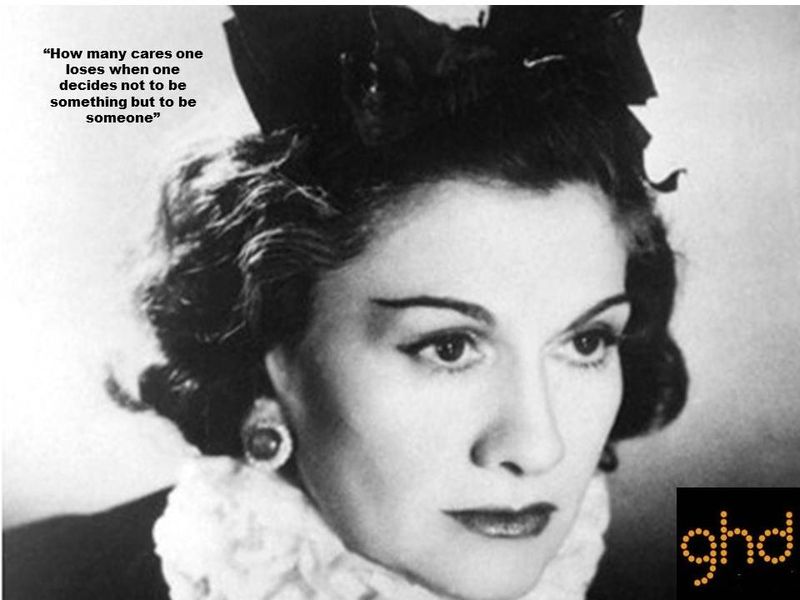
Right at the heart were women who dreamed of doing all the things they saw modern, independent women doing, but the realities of their own self confidence, not to mention their own circumstances made this seem nothing more than pipe dream. Their are limits to the freedoms afforded to a mother of two covered in baby sick every morning. But ghd made them feel a little more like them – for the minute they put that wand over their hair, they were no longer the 'mother' 'wife' employee' 'daughter' are anything like that, they were simply 'me' with all sorts of dreams, hopes and desires. ghd let them explore their alter ego. And just because the reality was the woman in the business suit with the red hot plunge bra underneath, or the Mum who got to glam up and go out with the girls on a raucus night out once a month, it was no less powerful or meaningful that this:
This:
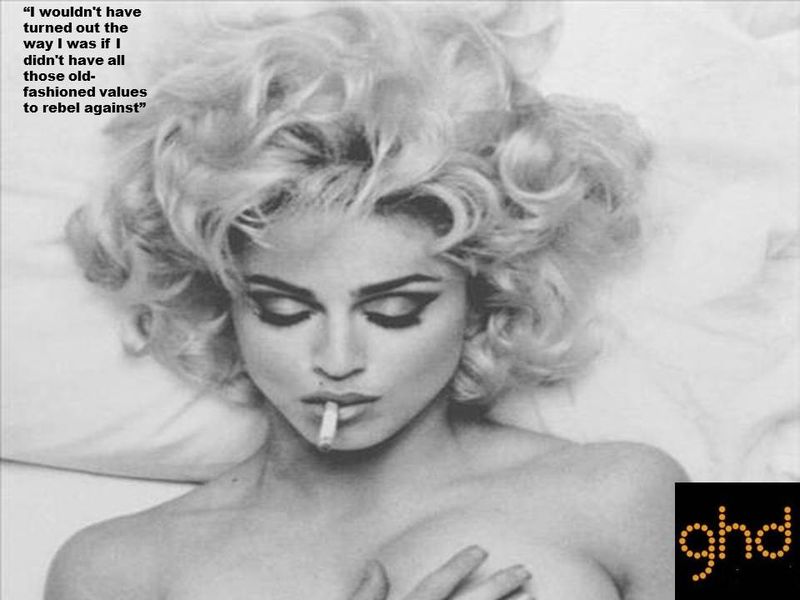
Or this:
Or this:
In fact, it was MORE powerful.
Get the appropriate source material -reverance of the craft
The bi-monthly visit to the hairdresser is moment of joy, hope and even fear for every woman. She culd emerge as the person she's always dreamed of, or have her self confidence smashed. Hairdressers are purveyors of dreams. They hold the essence of how a woman feels about herself in their hands. They are not merely vain, arrogant fashionistas, they are artists who have more of an impact on a woman's life than a Dali or Hurst ever will.
The same can be said for fashion designers. Yes, they're up their own arses, but they are able to sprinkle magic dust in the lived of ordinary women around the world. Fashion is release from the humdrum banality of the world, it's a way to become someone else.
So ghd fully embraced fully embraced these transformation artists.
Apply Cultural tactics
So when ghd launched, they limited distribution to quality hair salons and built a realtionship with the professionals that worked there, developing exclusive training courses for juniors and pro's alike, along with their own awards. They did an annual 'tour' that was a bonkers celebration of the intersection between hair and fashion. And the love their built from the pro's passed to the woman who went to the salons.
At the same time, ghd started doing styling for fashion shows, while stealing the tone and style cues from the industry, the same mystique.
And the brand went 'viral'. Women talked about the performance, but the real voodoo came from the utter credibility as a part of salon and fashion culture. And like all scarce resources, women started coming into salon demanding ghd. The myth became reality.
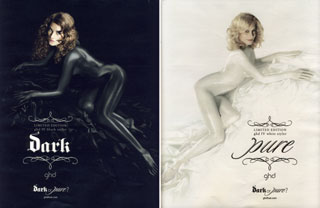
Advertising only poured petrol on flames that we're already there. The style was borrowed from the fashion industry while ads never talked about product superiority, they focused on showing women there was no limit to who she could be. Every time she used ghdm it was statement of independence and self determination for every women, no matter who she was.
She could play with her looks and her identity
She could be ambigous, what was happing outside wasn't exactly what was happening inside:
She need not be afraid to pursue the darker side of her desires:
And no one wrote her story but her..
I always thought they could have done a print campaign like this:
Craft the cultural strategy
ghd never wrote a manifesto, everyone lived and breathed it. But if they had, it might have gone something like this:
In a world that all too often holds women back and expects them to passively accept whatever life brings, ghd celebrates independent women, free to embrace the infinite variety and possibility the modern world offers
We champion the transformational power and artistry of fashion and hairdressing, their incredible power to transform women inside and out, resetting their internal limits and inhibitions, enabling them to resist the narrow roles in which others would place them and choose their own fate
Like the women we champion, we're sexy, confident, knowing and utterly independent. You can't second guess us and you can't tell us what to do. We won't necessarily tell you what we want, but you can be sure we're going to get it. We have secret desires you haven't even dreamed of and we're not afraid to pursue them
Since one or two people interested in School of the Web project might be coming here for the first time, I thought it might be worth pointing to some older 'planning basics' posts.
It struck me that they were posted when the aspiring and junior planners who might have found them useful are now probably senior planners. Time flies etc. Hopefully they're useful to 'new' generation'.
Or maybe they're outdated and of no interest at all.
Right, it seems to be my turn to do the Account Planning School of the Web. If you haven't a clue what that is, start by reading this.
If you can't be bothered following the links, basically Saint Russell was kind enough to set some homework projects for aspiring planners and gave free feedback. He passed it on to me, Rob and Gareth and Paul Colman has done one too (what am I doing on this list? You had better ask them).
This time around, we're going to do a task based on what I think should be at the heart of planning, but it rarely happens that way in most cases. Let me explain.
The usual approach to strategy is finding a way to communicate rational and/or emotional benefits of a product or service to a chosen audience in the most relevant way possible. If your lucky, in the most entertaining way possible.
It usually follows that once you've nailed what you want to say to people, then, and only then, you sprinkle this with some trends, influential celebs or try and link it all with something popular or cool in your target's lives.
In other words, sell a product benefit and try to 'buy' attention by piggybacking on their interests. It rarely works well because of two major faultlines in this conventional approach:
1. It's not authentic and today's web enabled, marketing savvy human will see the brand isn't 'walking the walk' and reject it out of hand. Take all those brands using soccer as a shortcut to brand involvement- how many add to the experience, enriching fans enjoyment of their sport? How many just get in the way? Exactly.
2. Worse, this approach is still based on people making rational decisions, making choices because they know that something is better. It simply doesn't work that way. We mostly make quick decisions based on emotion and instinct – how we feel about something. The rational stuff is mostly a smokescreen our own brain blinds us with. And these days, few products don't stay superior for long, before someone copies it or outdoes it.
That's why campaigns that build fame for a brand, that make you feel a specific way about it and want to talk about, are proven to be the most effective. That's really how we buy stuff in most cases. Most things we buy builds our identity, a way to tell others, and ourselves, who we are and what our values are. This isn't vacuous image marketing, it is constructing the person you want to be. And, amazingly, campaigns like this are MORE effective at creating belief in product superiority and price premium than 'telling people' why it's better.
AND they save money, because you don't have to enage in an escalating NPD arms race. Naturally, you have to be credible and relevant to what you're selling, but that's the real art – discover what people are interested in or what really matters to them, and work back from there.
With me so far? Good.
A major trait of these fame campaigns is that they don't follow culture, they seek to influence it. They don't just follow popular opinion, they don't just mirror what people are thinking, they seek to change their minds. Rather than communicating a better product, or better 'image', they communicate a better ideology. It's a cultural innovation, not a product or emotional one'.
So that's what this task is about, it's about cultural strategy. I urge you to read this book,at some point, but with apologies to Holt and Cameron, we're going to do a task based on their approach. To be honest, is something many great planners are doing already and have been for a while. So I'm going to set out a process in a bit, here, and I want you to go through it for this project. First, here's why it works.
Some, and maybe most, of the most powerful brands in the world got there by offering an innovative cultural idea, or expression if you like. Throughout history, cultural expressions have played a pivotal role in helping people organise their lives within societies, what is moral, meaningful, what we should strive for and what we should despise. They're the linchpins of how we construct our identity – how we view ourselves and how we want others to view us, the foundation of what we want to belong to, how we want to be recognised and what we want people to think we care about. Truly successful brands are much more than a 'badge' or some sort of product innovation, they're one of these linchpins.
Amazingly successful brands provide an anwer to some sort of tension, contradiction or struggle that contempory culture enforces on the lives of real people.
Nike's 'Just Do It' gives people the feeling they have the willpower to succeed on their own, no matter what the odds -when in reality, most people can't live up to ideals of success and individual attainment capitalist societies enforce on us.
Ben and Jerry's provides easy access to 'counter culture' for middle class people who need to pay the bills but don't want to feel like a 'sell out'
Sainsburys 'Try Something New Today' resolves the tensions between the current pressure to be a great cook and the realities of budgets, time and talent
Jack Daniels is an outlet for men looking for an expression and independence and masculinity in an ever increasingly 'soft' and feminised world.
While Starbucks brought accessable artisanal sophistication to people felt they should be a bit more cosmopolitan but didn't have the courage palate or to leave their comfort zone.
Patagonia do the same for armchair eco warriors or outdoors types.
ghd resolves the tension between women who hanker for the indepedence and exitement of The Sex and The City, Generation Y Women, but also feel the pull of suty and a woman's natural need sacrifice, care and nurture those around her.
It's not easy to pull off, you need to find the right tension, create the right ideology and then communicate it with the right cultural expressions (well come to that in a bit). But when you do, it does functional benefits stuff far more effectively than traditional 'benefit led' brands.
When a brand has proper cultural resonance, when people love you for your better ideology, they naturally assume your products will be better. In other words, if you get people loving, and talking about the brand r'aison detre, you do the price premium, product superiority job too.
So………………….
I want you to show us what you would do with King of Shaves. They might be successful in the UK, but they want to go global and even in Britain, their success is piddling next to the lumbering behemoths that are Gillete and Wilkinson Sword. This is mature market that's brimming with masculine cliches, NPD arms races and sciency marketing. What's your cultural strategy to turn this on its head?
And don't worry about keeping anything they are doing right now doing, it's all dire in my book. Just take into account every market will have limited budget. You won't be able to afford much TV or outdoors beyond very well target stuff that will create much more noise than it normally would.
This is the six stage process I want you to follow (read the case studies here):
1 Map the shaving category's Cultural Orthodoxy
Every market tends to use the same cultural expressions, with only variation around the edges. What are the conventions in this market, what cultural/social status quoe is this reinforcing?
2. Identify the social/cultural shift that can blow it to bits
There's nearly always something happening in culture, some sort tension, contradiction or you can help resolve and latch onto. Something that's far more potent and relevant than the cliches the category sticks to. Naturally, it has to be relevant to how people feel about the category. What is happening in male culture, that can turn the conventions on their head? What specific audience is this important to and why?
3. Create the ideology
Now you've nailed your cultural shift, you need to detail how this is impacting on how consumers feel about the category and what resultingh brand idea, what ideology it can share with the people.
4. Gather source material
There's no need to 'brainstorm' what people will be interested in ten years from now. Rather, cultural brands repurpose stuff already out there. Stuff already lurking in subcultures, in media (past or present). What's your best source material?
5. Define core tactics
This about defining what tactics will best create the most conversation and noise – a blueprint to how you'll get people talking and flocking to your 'movement'. This is the blueprint to your communications strategy
6. Define your cultural strategy
Write a manifesto, no more than 300 words, something anyone involved can read, so they can get excited about what you're setting out to do.
This is not an easy project, and since this is a 'school' like with all good projects, over the next week there will be examples to hopefully inspire and help you go about your task.
In terms of output, I don't care. There are no rules. Can be powerpoint, a written document, blog post, Youtube video. That's up to you. But make it impactful inspiring and succinct. Email me wither the document or the link. Be prepared for others to see and admire your work.
There will be judges. Rob Campbell, Gareth Kay for starters, but there will be others.
You have until 1st May to submit your work. Feedback and winners etc will be announced 1st June. I want judges to have time to give your ideas the attention they deserve.
But please don't submit until at least a week on Monday. I want to take a week absorbing what you can find out about KIng of Shaves, the category and the whole cuture around and attached to (and what you might add!!!) to shaving.
At the same time, come back to this blog and spend time with the case studies. I know the process might not make complete sense right now, the examples I'll share will bring it to life. Think of them as 'tutorials'.
While your waiting, read some of the case studies on here. I think Clear Blue is very relevabt but it's your project, not mine.
Alledgedly planners are the 'voice of the consumer', 'the voice of objectivity' and many other well-worn monickers. You know, the saintly, pure, unflinching voice of logic and reason. Only planners can tame the rampant, red in tooth and claw nature of the creatives, or the 'how high Sir' tendency of suits – all by our admirable devotion to truth, justice and the strategic way.
But dark planners know different. They know that truth and justice is too much like hard work. Few planners are allowed into the secret society of Dark Planners and learn the naughty tricks that have been secretly passed down through generations. But, risking the wrath of this secretive, but powerful society, here are the easiest 5.
1. Know some core pithy, de rigeur phrases and deploy carefully. Rather than having to 'know stuff' just bamboozle clients and colleagues alike with bollocks planning speak that sounds really clever but means very little. For example, blah blah blah, 'WE NEED AN IDEA WE CAN ADVERTISE, RATHER THAN AN ADVERTISING IDEA', blah blah blah, 'THIS IS A GENUINE TRANS MEDIA IDEA', blah blah blah, 'WE SHOULD SET UP AN SCRM CO-CREATION PANEL THROUGH SOCIAL MEDIA' blah blah blah blah, 'WE PROPOSE INSPECTING THE CULTURE BEFORE CORE COMPETENCIES'
2. Make friends with research Most researchers spend their lonely evenings in viewing facilities in Slough or Derby. Extend the hand of friendship and they'll welcome it with tearful joy. Buy them a coffee, compliment their choice of attire they'll be only too willing to 'collaborate' on the finding and recommendations.
3. Monkey with the animatic Pre-testing is dull and promotes dullness. Collaborate with the producer to get cunningly boost the sound levels for brand name mentions and core messaging.
4. Always start with your conclusion, then make the evidence mind shatteringly dull. You want everyone to think you take small, careful baby steps towards a rigourous, well rounded strategic gem of a conclusion. But life can be too short. Sometimes you just know it's right, and have better things to do than reassure the bean counters. So start with you shiny conscusion and make it jaw droppingly gripping, pretty and inspiring. Then take them through the flimsy, hastilly gathered evidence that you've put into the dullest. most impemetrable chart you could find
5. Insert a glaring mistake into everything All creatives ignore the brief if it's perfect. Why? They want to have thought of everything themselves. So insert one or two fatal flaws, let them correct you and they'll work from the brief with the gusto of Charlie Sheen in a buy one get one free brothel. Client's are no different, they want to think they've made the big strategic breakthrough. So make sure you present something crushingly, obviously wrong and let them correct you. They'll naturally assume they've saved the day and rewritten the marketing paradigm and sign off the strategy with said Charlie Sheen enthusiasm. In other words, don't waste valueable time and energy crafting perfection, take the easy route with craft imperfection.
There's this cliche that the role of planning is to be the voice of objectivity in the development of campaigns. But that's nonsense really, there isn't really any proper objectivity, just better informed points of view.
Mostly in the business we're in, it's not even that. It's dominant ideas and received wisdom. But that's good. Dominant ideas are there to be exploded. Take Galileo's exploding the idea of the earth at the centre of the universe, there are plenty of dominant ideas to crush in the world of brands. It's built on false assumptions and prejuduce.
I'm coming round to the view that this is what my job is about. Exposing the prejuduce and failings, starting with my own, to get better points of view. Looking for dominant ideas to crush.
From how we actually go about developing ideas to changing people's minds about whatever culture exists around a brand, product or category.
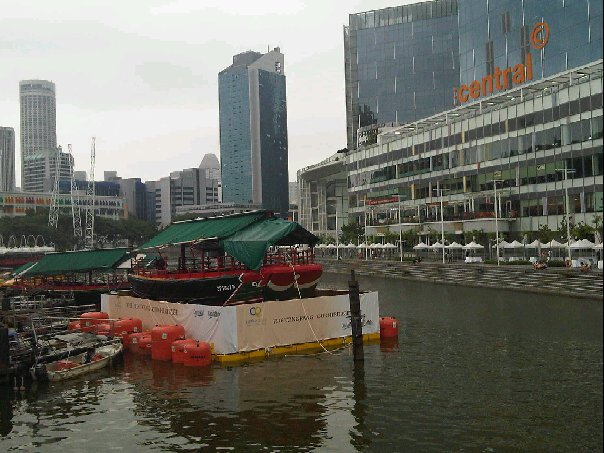
So I was working in Singapore last week. Quite a change from the week in Whitby that preceeded it.
This car thought it was a swan.
Anyway, very impressed with the tea in Heathrow.
I got lots done, but still managed to get a couple of beers with Freddie.
Two beers wasn't nearly enough time, Fred was great company. Amidst discussing fatherhood (including one of my first public pronouncements that we're expecting another child – me and Mrs Northern I mean, not Freddie and I), what it's like to work for Nigel Bogle and the joys of TBWA, Fred was really nice about me getting totally and having to come get me.
A pleasure.
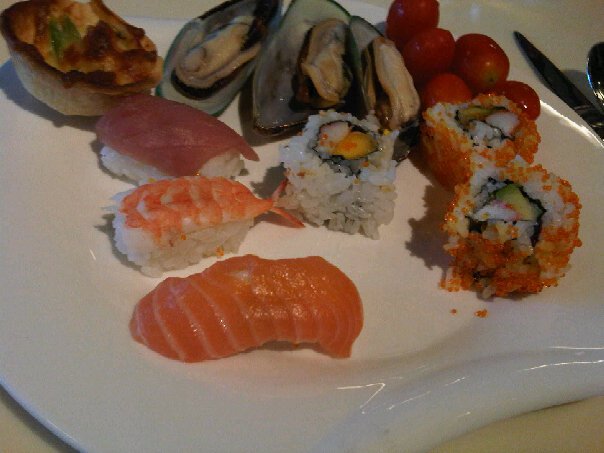
Being a foodie, I took full advantage of the cuisine.
But after all that, I couldn't wait to get home to a proper cup of tea, my long suffering wife and my slightly deranged little boy.
I was going to publish the next Account Planning School of the Web project today (if you don't know what the hell that is read this), but I've run of time. A miserable failure, I know.
And it won't happen next week, since I'm off to go lo-fi doing family, non-work things away from phones wireless and such.











 NORTHERN PLANNER