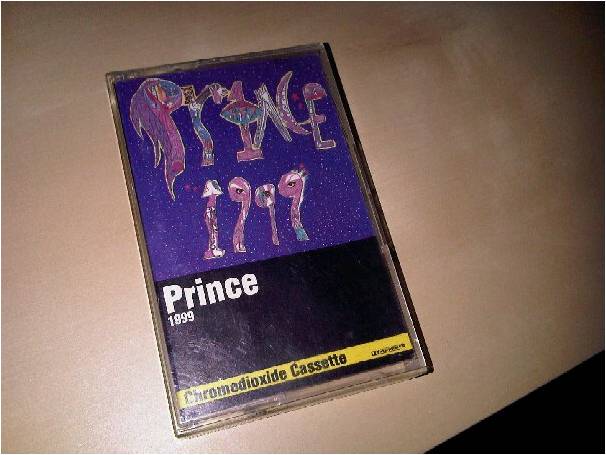
First decent album I ever bought and the start of an enduring love affair with the diminutive little musical imp. You can call him a wierdo, you can call him a self absorbed fool and you would probably be right. You can even claim he hasn't done anything really good since around 1988 – you would be wrong.
As far as I'm concerned, you cannot claim he isn't a genius. In an amazing run starting with this album in 1983 and ending with, in view, anyway, the Batman soundtrack in 1989, produced a series of groundbreaking albums of which we haven't heard the like before or after. As a solo artist, perhaps only David Bowie had a collection of consistent work to compare.
There was a time when I couldn't wait for the next Prince album to come out and would vigorously defend his music in all sorts of argument, usually with people who couldn't see past HIM.
So while tape shows I grew up in an analogue world, it also represents how you should never confuse a person with their work. Prince as a person falls far short, as a musician, he's incredible.
It's de rigeur to reject the very contemplation of putting creative work into research. However, it's worth pointing out that Cadbury's rejected the Smash campaign until John Webster insisted they put it into research – to get it through. Once the client saw the positive response, they couldn't reject the work anymore.
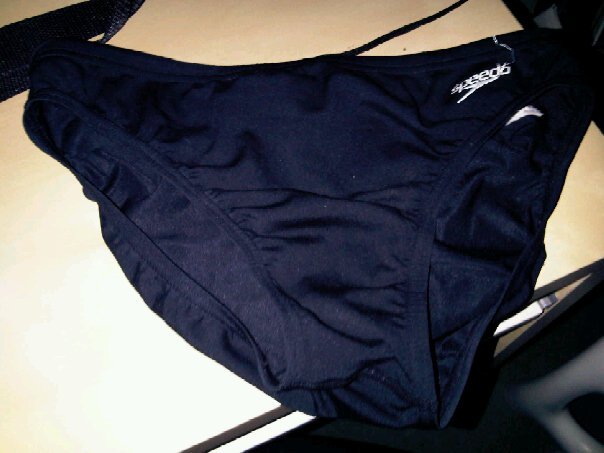
Obvious one really if you follow this blog with any resemblance of regularity. These particular Speedos are the ones I'm using now. Most people couldn't give a monkey's about what they wear to swim in but not me, it matters (most blokes I mean, if you've ever been with a woman shopping for a bikini you'll know this is far from a 'low interest' purchase').
Of course it really mattered when I was a kid swimming competitively. The difference between winning or losing is a few hundredths of a second, missed timing on a turn, not reacting quick enough to the starting gun; it all matters and you don't want anything creating more friction in the water. So men wear condom like swim caps on their head to cover hair, or shave it off, they also remove hair on their bodies (growback is a killer!) and swim trunks are as light and skimpy as possible. These days it's gone a bit too far, with body suits that cut through the water better than skin, with some actually banned, but is those days there was no such thing.
I needed lots of pairs of trunks too. On an a weekend swim meet you usually did lots of events, not just you best one. And in each case, that meant a heat and (hopefully) a final, requiring on average six pairs per day, plus one for the warm up. I used to pick specific trunks for warm ups, usually old ones, some decent, not too tight ones for heats and then a selection of 'lucky' trunks for finals. The ones in the finals were usually a size too small for maximum effect, which was damned uncomfortable, but rituals are rituals. Along with never putting goggle lenses on all at once, left always before right and splashing myself with water before the race.
Back then, people wore skimpy speedos to the beach and for leisure swimming but these days you're either German or an idiot if you do that and don't care about social death. Swim trunks are really baggy shorts.
That was the same for me for years too. After packing in competitive swimming at 15 and any form or racing and hardcore training after university, I only 'kept my hand in' for years. After starting training when I was 7, that was swimming every day for 8 years, with a few holiday breaks. I had lost my appreciation for it all to be honest and got into rowing, running, tennis and gym stuff. I never lost the addiction to joy and pain you get with sport, it just took other forms. So less swimming called for less serious swimwear.
Then I decided in around 2006 to find out what I could do. It was sparked by my nephews who were getting really good and swimming for Cornwall and wanting to do something useful for ChildLine, so I pledged to train like a madman until I was able to swim 100 metres in under a minute, something I hadn't done since I was 15.
I expected it to be a short term fad, but I ended up loving it again. There's nothing like the joy in doing something really well, not to mention the natural high that comes from pushing through the pain barrier, it's zen like, it's 'flow'. So I got addicted again. And serious swimming, means serious swimwear. So I some skimpy Speedos, I'm on my third pair sincd then. I only need one pair at a time now, of course.
At the pool in my gym, one can feel a little self conscious between the changing rooms and the water, but not once I get swimming. I'm clumsy person, I've no idea how I play okay tennis or Rugby, but when I'm in the water everything feels right.
There's no embarrassment at the John Charles Centre every Saturday at 7am where I go to train with other oldies for two hours of pain and suffering. Swimming taught me a lot, about all sorts of things and probably most importantly, no matter how hard things get, no matter how hard it becomes, keep going. Nothing really worth it if you don't have to try.
Also, uniforms matter. Psychologically, what you wear affects how you feel and how you perform. So wearing trunks matters in exactly the same way a great suit can transform a man's confidence or the way the rituals of getting ready are as important to going out for a woman as actually going out. A 37 year old man looks laughable in Speedos, but no one laughs once he starts cutting through the water.
In recent history, the average British male needed only two things when he left the house; wallet and keys. Latter days have seen the phone added to the list, but still, the wallet is important.
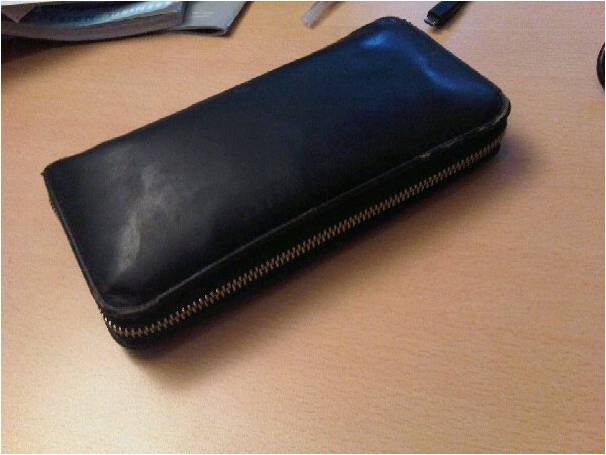
For the average bloke, a simple, thin leather wallet suffices to store his cash, cards and other bits and bobs. But not me. I have an impractical and, according some, overly effeminate manpurse because it is too big to lose.
That's right, what this object represents most is my chronic absent mindedness. The only reason I'm in any way organised for work is, in part, thanks to suits who don't let me get lost or forget things, but mostly down to herculean effort and making lists;to do lists, what not to forget lists, boards packed with post-it notes and meticulous attention paid to paper and online diaries. All the energy that goes into paying attention in paid employment leaves little left for personal life.
Highlights include losing my car keys and finding them in the washing up bowl (after paying hundreds for a new lock and set or keys), forgetting to pick up an ex girlfriend from the airport, a TBWA record for losing mobile phones, coming to work in odd shoes and leaving hundreds of pounds worth of sports equipment, clothing and accessories in gyms, swimming pools and other athletic establishments accross the globe. On average, I buy two pairs of swim goggles per month.
Before I owned the man-purse, I went through about three wallets a year, with the chronic inconvenience that comes with that; reporting lost cards, actually having to queue in physical bank to withdraw real, paper money from a human being, a new gym membership card, lost expenses receipts. Eventually I had to choose the nuclear option and bought the biggest wallet I could find, this brick sized monstrosity, along with the added birch-like punishment of resembling a female clutch bag, according to certain uncharitable friends and colleagues.
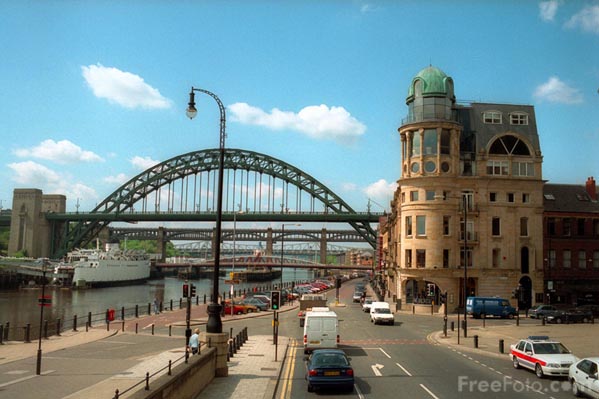
I bought it in 1999, when I was living in Newcastle and working at my first agency, as a (not very good) account executive, just about surviving the creative bullies, the studio animals and the overiding traditional, boorish male culture. Reminds me that you need to move around before you find a culture that fits, this wasn't it. I became very unhappy, but you have to start somewhere. It showed me the kind of place I didn't want to work at and started the slow realisation that I was a thinker rather than a doer, despite not even knowing there was such a thing as planner.
The manpurse reminds me of those times every now and then. Single, broke, naive, in a flat share in Jesmond, conveniently opposite the pub, living for those weekend nights out on the Quayside, rowing on Wednesday mornings in Durham, Millennium New Years Eve in Hamburg and a long distance relationship with a girl from Burton on Trent who broke my heart.
So this object is a recognition of chronic weakness, but also a portal back into a time that was character forming but tremendous fun.Looking back at the person who bought the manpurse, I can only cringe with embarrassment, but there you go.
As is explained in Daniel Miller's the Comfort of Things 'things' are much more than 'objects', they serve as a repository for our memories and experiences, helping is construct our identity and organise our lives, imbued with our hopes, fears and passions, each one tells a richly evocative story about the time it lived in and the person who owned it.
So I'm going to experiment and start blogging about 'A History of Me in 100 objects'. Don't know how it will turn out, I can't imagine anyone will find it interesting but it makes a change from tea and swimming I suppose.
It's not news to you (hopefully) that there's something going on with men and masculinity. The unfairer sense is still adjusting to welcome rise of economically, and (with still a long way to go) culturally independent women. This stuff (which resolves so much tension between being and independent woman and enjoying your looks, you'd be amazed at how many blokes think women dress for them):
It's in this too:
You can see it being addressed here:
Here (less well shall we say):
There's lots of thread in popular culture too, with a general direction towards being proud of your masculinity, rather than ashamed. There's something going on about enjoying and embracing (quite bloody right too) equality and jettisoning ugly misogyny, but not losing sight of what makes a man, well a man.
I think the renaissance of Take That into a man band captures lots of that:
Just because you respect women, you don't have to and shouldn't become one. You can see a lot of that in here:
But even when done with tongue firmly in cheek, it's all going to get a little conventional. That's why I think Old Spice stands out so much, the broader narrative about the need to be experienced (while gently laughing at old school masculinity to boot). Men who know what to do.
In search for a new narrative, where do we look? I think that article has some clues worth considering. He talks of the (wrongly) accepted view of Epicurus' guide to happiness – seeking pleasure, compared with Aristotle's view that happiness comes from cultivating virtue. He points out that we live in an age where Epicurus rules.
Everything's about instant gratification, we drink more, eat more, have unlimited access to porn, and despite recent austerity, by and large, living for today.
This doesn't make anyone happier above a certain level, economist are now telling us that wealth doesn't make any difference to wellbeing over a certain level. Psychologists know that we get a much happier glow from doing stuff others than for ourselves.
I like the point of how this matters to men. For most of history, men have been used to devoting themselves to the needs of others. Not really fighting wars and stuff, more taking responsibility for their struggling family's welfare. Marries men are statistically happier that bachelors because their's more happiness in acting on someones behalf more than your own.
My Dad, and probably yours took pride in mending stuf that was broken, for us, rather than just buying a new one. I only became a Dad at 36, I wish it was sooner because,while I enjoyed my single years, and carefree married life, despite it being hard, there's nothing like caring for someone who depends upon you.
In other words, we're mostly happier taking the difficult option. But we've got out of practise – and lost the institutions that helped us, the Church, Army, early marriage, trade union, a life working with your hands and doing the same kind of thing at home.
Now this is the bit I really like – losing these institutions has another effect. A generation ago, men worked and played mostly with men. Too much, no doubt about that. My generation is lucky it's okay to spend time with women, and with your children. In the case of kids, and to the point above, I'm happier (and data shows most men are) when I'm doing proper things for my child, not just the playing. I love cooking for him, giving him a bath, changing his nappy etc. It's not 'fun' but it's fulfilling. But now we don't spend enough time with other men.
Women socialising is common – it's the narrative of Sex and the City. But many men have become a little more isolated. Now, on the other hand, too much interaction is purgatory, most men I know need time alone, but we need time together.
Not in the way women do – always on. We need something, to quote, "Narrow and deeper'. I love that. We don't do face to face, we do side by side. We something to do together that fuels conversation, common interest. That's why we love sport, both playing and watching.
We had all that, now it's largely gone. We lack the opportunties for comradeship, a cause that knits us together. I don't mean fighting The Hun or the like, I mean the local 5 a side team, building a shed together, or going to watch your team, or, as far as I'm concerned, taking all our kids to the park or cooking for our families. We need projects.
So what's do be done? Comradeship? Self sacrifice? We can't all suddenly join the Army or turn the clock back. You can't create a new moral cause out of thin air.
You don't need to be a soldier or pro footballer to enjoy sport and keeping fit, and maybe try and do it with mates. You don't need to be an intellectual to read a decent book. You can make the world a better place in all sorts of ways, many small, all important. You don't need to be a pro builder to try putting up a shelf (I can't wait for Will and I to have projects together).
What does this all mean? I'm not sure, it just feels persuasive and maybe questions stuff like VB Beer, or The Hangover. Real men don't revel in idiocy and a perpetual state of juvenility. They don't reject complications and thinking about things. They take responsibility and find that it makes them a lot happier than the diminishing returns of always pleasing yourself.
That's why this campaign is so spot on in my view:
I've always rejected the data that claims that people with faith are happier with those that are not, as a pretty devout atheist. However, in conclusion (the article finished like this too), the moderating influence of worrying you'll go to hell probably curbs too much self gratification and more selflessness – which perversely benefits the individual the most. You don't need God, we all have a conscience. When we live in rough accordance with it, we're mostly happy. When we don't we're not.
Like I said, not sure what all this means, but hopefully useful fodder if you need to engage culturally with a male audience.
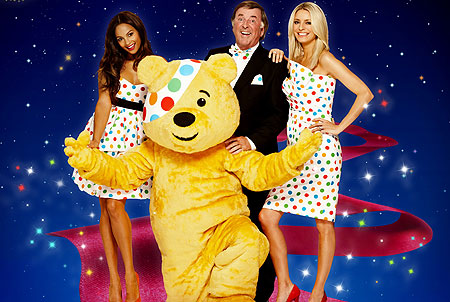
If you're not from the UK, you won't be familiar with Children In Need, the annual TV telethon that raises money for kids that desperately need it.
What's striking about it, apart from the generosity of people, is the way millions of normally reserved and emotionally retarded British people join together to have fun, do daft things and share their feelings. There isn't a soupcon of irony in sight. This isn't supposed to happen.
As Kate Fox points out in the brilliant watching the English, we're a culture built on our chronic social inhibitions and handicaps. It makes us appalingly modest and suspicious and champions of moderation, it leads to particular self deprecating humour and the cynical, ironic brand of comedy that dominates much of our popular culture. We're Eeyoreish and don't take well to earnestness, public displays of emotion and excess.
This explains the curious British love affair of home ownership – we crave a private haven away from other people, it de-mystifies our fear of public transport – we prefer to not be around people we don't know and we're terribly bad at small talk. So how come we all go bonkers over children in need?
It's an outlet. All that pent up need for a bit of joy without agenda, for an ice breaker that gets past our social inhibitions…when it comes we let off steam. Just like the quadrennial Football World Cup, or the death of Diana..it allows us to let off some steam. It even explains the British behaviour with booze, namely getting as drunk and disorderly as possible, it's a social crutch that the more garrulous cultures don't need. We can't have fun unless something quells our inhibitions for us.
That's why we miss event television like Morecambe and Wise and why we love X Factor and Strictly Come Dancing – pure, unadulterated, unsophisticated fun that lets us laugh, shout and even weep together.
Finally, it even explains our love of the chip (or fry or fritte if you like). It's the only national food we have that is perfect for sharing. We tend to share the dish, picking the little fatty/carb bombs up with our fingers, smothered in salt, vinegar and ketchup. It's a social food, a communal one and boy do we need those.
1/ Best single thing [personal &/or professional] you did/achieved in 2010
Getting my life back so my son will know who I am- from 12 hour days and 4 hours commuting to getting home for 7pm most evenings.
Followed by leading and winning a pitch for my little Sheffield agency to do the digital bit for the most important global product launch a certain engine oil brand is planning in years.
2/ Most shameful thing [personal &/or professional] you did/achieved in 2010
Or having to do account planning for telemarketing…never, ever again
Or getting smashed at the IPA Awards, having a rant at my then chief exec about Media Arts and Yorkshire Tea, bumping into an ex client and delighting in telling him what his nickname was in his marketing department, getting into a taxi with another drunken planner and getting him to drive around London at 3 am looking for an open bar, abusing him for failing and claiming the fair on expenses.
3/ Ad industry scandal or scoundrel of the year.
Most people would say Sam Ismael, I won't disagreee
4/ Your overall rating for 2010 out of 10.
[1 = shit / 10 = showoff]
Personally, 7 out of 10. I have a life now but I'm a little bored.
For the industry, I would say 5, a year of averageness. There have been some notable highlights, Old Spice and Write the Future of Course, but lots of just, well, ads. Sony lost it's way, Cadbury became dull, there wasn't much to get excited about really.
5/ What do you think will be the most overhyped advertising related subject of 2011?
The same as every recent year. It's been called 'brand as conversation' 'brand as verb' 'the death of TV advertising' 'the digital age' 'trans-media planning' 'gamification' and even 'post digital' – in essence some idiot guru somewhere will proclaim the 'rise of', 'the age of' or 'the death of' when actually most things don't or won't change that much. Rather, the way clients and their agencies colluded to pretend that brands and advertising works is shown to be mostly bollocks and you can't bludgeon people with repetition or 'share of mind' anymore.
Some of the tools have changed, the balance of power between company and person has shifted a little, but basically, people like being interrupted with something that's either useful, entertaining or delightful and hate being interrupted with patronising, lazy crap.
They'll talk about you postively if you deserve it and slag you off if you piss them off.
In the middle is bulk of irrelevant, unspecial brands no one loves or hates, they're just there, still trying to justify themselves with irrelevant Millward Brown 'brand health' tracking and a couple of half point market share gains, and finding it a little harder every year.
Probably, there will be lots of brands trying to create games, but really just firing more messages ate people.


 NORTHERN PLANNER