There hasn't been much luck in the Northern household. While we're all struggling with various stages of chest infections, our boiler has decided to die during the coldest temperatures we ever get in the UK. Our house is FREEZING.
While our dead boiler gets replaced, my ill little boy is staying with his Grandparents, along with the wife, while at night I huddle in front of the fire with enough layers of clothes to clothe a football stadium.
So here's to the things we don't notice and appreciate enough – family, boilers and simple heat. We're very lucky to live in the times we do, or some of us are at least.
Also, here's to people who work with their hands. Without our engineer who, thankfully is a friend of the family, we would be stuffed. I wish this kind of thing would happen to cooler, more rock star type people working in adland, might remind them how perfectly useless what we do really is, next to the stuff that really matters.
Tubing is a popular little activity for American frat boys that consists of sitting in an inflatable doughnut and watching the world go by as you recline with a beer down a 3 or mile waterway.
It's a decent way to see the world outside, come accross lots of stuff you wouldn't otherwise without too much effort.
I like that, the thought if drift, not fighting to stay still, not madly trying to stay ahead of the pack either. It's the opposite of being a luddite, but also the opposite of being a hipster, just doing something because it's new and cool.
It's the relaxed, but alert state when you roll along with the tide, soaking up the new stuff as you come accross them, letting things connect. Alert passiveness I guess – not wanting to stand still, but not jumping on the next big thing like some skinny jean wearing idiot who thinks Shoreditch is so over.
It's also doing seemingly pointless things, reading pointless stuff, having pointless conversations – and actually where some of the best ideas happen, where things connect as if by magic.
It's a valuable skill for planners to have, to soak up everything, create those opportunities for things to suddenly fit together.
Of course, it's a fact that the most successful creative people simply work harder than everyone else, but I think that also means working hard at drift and having a third eye that's always looking for stuff no matter what you're doing.
If you're remotely interested in fodder and stuff to help do proper planning, you want to check out Martin Weigel's blog. He's head of planning at W+K Amsterdam and has loads of insanely useful advice.
Talking of enthusiasm, this review of Arcade Fire live captures what I wanted to say about the 'the desire to punch through layers of cynicism and reserve' about professional amateurism and standing out by just being 100% honest and earnest.
Here's Frankie Roberto's talk on Lego from Interesting North. You should take a look, even if you have no interest in Lego.
He reminded me that ethusiasm and earnestness is something that doesn't get appreciated enough these days, which is a shame since it can get you a long way.
If you don't think you're great at presenting, apart from doing the work and knowing your subject inside out, what people really respond to is the person. Despite what most adland type people think, slickness, artifice and intimidating cleverness and coolness rarely win the day. What people connect with is people. Someone who is a little unpolished, but really looks like they care and have worked hard usually does really well because the audience warms to them. It's infectious, the mirror neurons fire and we feel enthused too.
That means finding a way to get enthused about your subject and making it interesting – this presentation is a great example of that. That's a wake up call to all planners, don't disparage th customer or the product, find something to admire about them, get enthusiastic and care about them, it will lead to better thinking and when you share your ideas, it will be infectious.
That goes for brands too – coolness, cleverness are all well and good, but they could learn a thing or two from popular culture, that's POPULAR culture, not Wired or Wallpaper. The X Factor, Strictly etc are all about normal people trying hard, with little side or irony, it's just enthusiasm. How many brands look like they really carea about something?
That's a reflection of a weakness in culture I reckon. The masses (which are far from homogenous I know) love Harry Potter, they love soaps and The One Show. But the cognoscenti look down on stuff like this because it's doesn't have the prerequisite irony, double meaning or quirkiness – and so do ad people. Most people don't watch Peep Show or Have I Got News For You, they don't listen to The News Quiz either.
Miranda hasn't been well received by the critics because it's old fashioned and unsophisticated. For many, I guess that's the point.
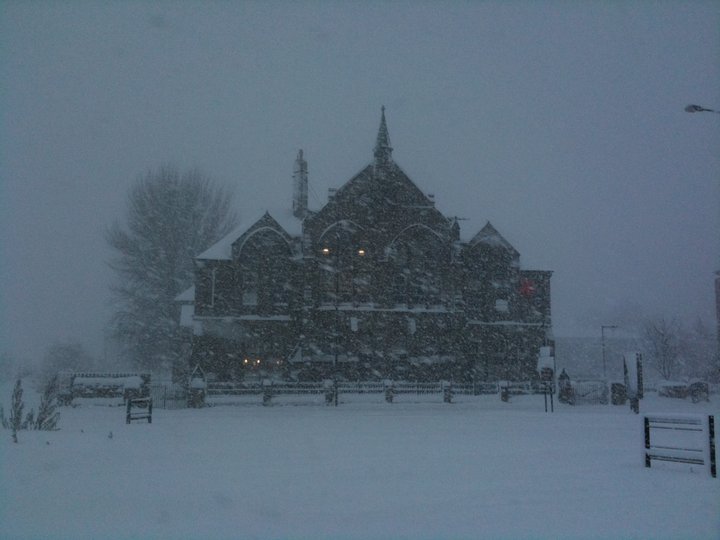
I'm working at home, enjoying the comforts of hot soup and very thick, very comfy clothes. The news is all about winter 'misery' and the UK in the grip of winter.
Well, that's true up to a point, but as this article suggests Winter is also pretty special. There's nothing that's quite so hauntingly beautiful freshly fallen snow. Ask the kids off school, currently enjoying the uncomplicated joy of hurtling down hills in sledges or pelting each other with snowballs, i doubt they would say winter is a misery.
For myself, I quite like the long, dark nights too. A chance to slow things down, huddle in together and do the strangest things like not bother with Facebook or Twitter, or even the telly and do more quiet stuff. Just sitting and chatting in front of the fire with a glass of wine when Will's gone to bed, getting lost in a good book or spending ages cooking something slow and rich.
You can do all this anytime of the year of course (maybe not the fire) but somehow the dark nights make you want to do them more.
Right, as discussed, back to some proper, rigorous basics. Let's start with targeting, how to do it and how to make it useful.
First off, here's a little wander into recent history. When JWT and BMP invented planning, they were creating a bridge between the creative process and consumer research.
Research in all its guises; qual, quant, ethnography etc, was, and is, totally useless without someone someone to translate the information into inspiration. That's what planning was for, to bring customers into the creative development process. Depending on your client, your agency and your budget, that might be to help decide what you need communications to achieve, how comms can achieve it and even input into developing and refining the creative ideas themselves.
That hasn't changed despite what some might claim. True, you need to understand the market dynamics, how the brand is supposed to work and a million other things, but you can't get away from doing the work and understanding the people you're trying influence,hopefully surprising and delighting them too, it all comes from that.
These days, planners look much more into the culture around the product and category, but that's only doing a better job, not a different one.
The most fundamental part of this is targeting. No brand, not even massive ones like Tesco, Walmart or Nike can be all things to all people, you need to find an audience that is both big enough for the business targets you are set – market share, unit sales etc, and also appropriate for the product brand you are working on and crucially, your budget.
So, how do you go about finding the right audience?
First, look at penetration levels – I hate that word, bloody marketing speak, why can't we just call it the amount of people who buy the product? -anyway, look at the levels for the category as a whole and your own brand.
Within that, who are the heavy, medium or light users within both the category and your brand. How does your brand compare with the category? This should help you begin to think about setting objectives as well as who with. Is the opportunity to increase frequency of purchase or usage with people already buying your brand? Is it to bring more users into the category, or is it to get peopl to switch to you from another brand?
Which of course means you need to look at other brands. Which other brand has users that might consider yours and why? Are they heavy/light users?
Which all fits into the critical bit; segmentation. How can you divide the category up in way that is genuinely meaningful and likely to remain consistent over time? You could do this by how people use the product/service, their lifestyle, their attitude to the category – or a combination of them all. Mostly, you'll be looking for a primary audience and a secondary audience, or you might work for a company or brand with different products and sub-brands that need different buyers.
What I'd say at this point is to be at pains to insert real people's lives in here. Do not assume that people care about the category, they don't, it's an artificial construct. Work out how the brand/category/product fits into their lives and make sure this gets referenced. This should also help dividing people up in a genuine way – for example, if you're going to look at segmenting the engine oil category, you really need to look at attitudes to car maintenance, which really means youre relationship with the car and driving.
It's not good enough to look at who might top up their own oil, who just lets the service station do it and those who might even change it for themselves..it's all wrapped up with how much your car is a status symbol, a dependable member of the family, a source of fun and experience, a little thought of expense or even a source of independence.
So you need to look at purchase drivers, not just the rational, product benefit ones, but the emotional ones too…and go beyond that and look for how it all fits into culture. Yes of course, what rational needs does the product meet, but at least as important, what emotional needs? Are there different kinds of usage? For example, Ryvita can be in between snack or it can be a bread substitute at lunch. It can be spread with obvious plain stuff, or can be more exotic. It can be a diet tool or can be for long term weight management. Incidentally, that's where Special K's strategy comes from, they've moved from targeting dieting alone and provided a range of long term solutions to weight management. Next thing you know, you've gone from morning cereal to snack bars and God know what else.
And then start overlaying brand preference on this. What are the key drivers of brand choice? What are the core things that frame that choice? For example, Nike found for women, they needed a brand that could drop the machismo and celebrate their sports and their mindset – product was kind of secondary. Mass market lager in the UK tends to be a badge – men, quite literally drink the advertising which is why Stella had to move away from this, which was losing relevance to young men.
And move to this.
In something like paint, there are those who just hate decorating and want it easy, those that hate it but appreciate the effort because they want an end result to show off, there are those that hate fancy stuff and want a good, old fashioned job well done, those that buy on quality, those that buy on style cues, etc, etc.
So you're getting to a point where you are aligning brand preference with the motivations, needs and lifestyles of the segments you are pulling apart.
You can start aligning a segment with your brand and see if there are more you can go after, getting switch from another…or if you need to go after a new segment, which means finding a way to unite the wants and needs of existing customers with your new ones.
But the opportunity might not be from new customers, with what you know of usage, it might be to get existing customers to buy or use more.
So…from all of this you should now be in a position to define a target audience that will have the biggest commercial benefit for the brand. Might be a target within existing customers, with an objective to increase frequency, might be new customers you want to get from another brand, might be people in the category that don't buy on brand preference since no one caters for them or it might be bringing new people into the category, or at least, increasing their loyalty or purchase in the category, who, at present, aren't emotionally engaged in it or can't see the use.
So who are they?
You need to define them demographically – age range, social grade, media usage etc. Without this, it's hard to build a communications plan that will 'touch them' enough times. But this isn't enough. Find out what's going in their day, how they feel at certain times, what's important. This will help strike up a connversation at the right time, in the right context. For example, lots of Mums read Hello magazine, but you understand that it's daft to put a print ad in it for frozen pizza for the kids. They'e busy and desperate for 'me time' – Hello is a time to not be a Mum, so talking about kids' stuff will just piss them off. Finding decent points in family time will not though.
Primary research is, of course, but you want to add as much richness and depth as you can. As a start, if you're lucky enough to have access to rolling omnibus research like TGI, make sure you use it. It's not so good at real cutural nuance, but it can quickly paint you a picture of what your audience is interested in and what attitudes they have. So make sure that the statements used in segmentation study can be replicated in whatever omnibus thingy you have access to – you not only want to ramp up your numbers to population size, you want to know as much about your audience as you can.
But that isn't enough, you can't beat going out and meeting them, in their own environment. Data and stuff is only the start.
Defining them attitudinally etc is critical for the creative process. The creatives need to know what these people are like as, well people. What issues and needs in their life are we hoping to help, solve with. As has been said before, finding a tension in their lives is a good thing to look for.
For example, whisky is a symbol of success but young men are beginning to reject conspicuous wealth and success as 'being rich'.
Women have more economic freedom and are increasingly more successful than men, but culture enourages the conform to stereotypes and judge them on their looks rather than talent (exacerbated by celeb culture where looks and bling count for more than actually doing something worthwhile).
The basic proposition is built on essentialism and the idea that what gives us pleasure is much what we know and feel about something as actual physical characteristics or traits.
Which makes a lot of sense and explains why people will pay thousand for a genuine dress worn by Marilyn Monroe, but not if it's been washed – it's the fact she's worn it and imbued it with essential Marilyn Monroeness that makes it special. Or why we'll choose to pay thousands for a mechanical watch imbued with story and heritage when in won't tell the time the time as well as a $25 dollar Casio.
It's what we believe about stuff that lends it value and pleasure as much as what it is, which explains why modern is an intellectual and elitist pursuit – you only get pleasure from a Damian Hirst if you understand the idea behind it, whereas the beauty of a Rembrant is universal, you can see the craft and talent in the execution (also explains why I love Dali, there's idea but you can see the sheer brilliance of the man's talent too).
Of course the link to imbuing a brand with story doesn't really need fleshing out any further does it? But nice to know the evidence sits in proper psychology.
On another note, there's a great analysis on safety and pain, and why people are driven to the extremes of horror movies, tragedies that make you cry or even sado masochism. One thing that struck me was the need to feel something in a world that's a little bit jaded. I really get this.
It's why Marcus' talk at Interesting North struck a chord amidst the (brilliant and entertaining) cleverness, it's why I swim until I feel faint and ride like I'm trying to escape the jaws of hell. In a world engorged with experience, complexity, irony and short cuts, no wonder we crave things that make us feel something.
 NORTHERN PLANNER