• It's A level results today. A day when my swotty nephew got three A's and a B. Well played Michael, very well played.

    It's also a day for gratuitous images of 18 year old girls bouncing around far more than is really necessary for the media. As observed here.

    Sexy a leve

    A level

  • Survey

    Heather's posted the Annual Planner Survey. You should have a read.

    Incidentally, someone with my name seems to have made the list of unsung heroes . I can only assume there are two planners with the name Andrew Hovells.

  • If you're a client going through ten chemistry meetings, you're bound to receive eleven different versions of 'we seek to understand what makes people tick'. If you meet any planner, they'll hopefully remember that amidst the billion things the job seems to require these days, their primary role isn't to be shrill for the work, it's to build strategy to influence what real people do in real lives…in short, suits make the work happen, creatives make the work good, planners make the work, ahem, work.

    14

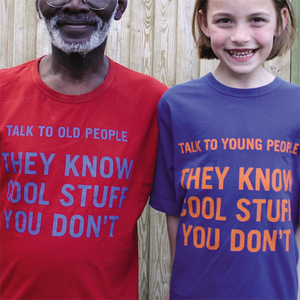
    (picture from We Are What We Do)
     

    Yet how many agencies and their planners REALLY understand people. I don't mean unreliable findings from the biggest mouth in a focus group, or a bit of profiling on TGI (TGI's good by the way, it's actually a qual tool, not quant, enabling you to get a feel for the people you need to engage with and know there's enough of them – but it only gets to generalisations, you need to dig a lot deeper than that), I mean knowing what really influences and motivates them.

    I think half of that is going out and meeting them – part anthropologist – in their own environment. People are useless at describing what they did and why, or even how they felt. The only reliable way is to be there as it happens. That's why even co-creation in an artificial environment is bollocks, people won't act on genuine instinct, they'll be developing stuff based on their own generalisations of other people, and what they THINK the brand wants, not what they REALLY want…they don't really know what they want.

    The other half of that is amateur psychology. Bill Bernbach said 'there's nothing so powerful as an insight into human nature' and that still holds true. There are universal truths about how people behave and what motivates them. They more you understand about this, the better. I don't mean playing back these truths to people, that's useless. I do means understanding what role you can play, what problem you can solve in people's lives. 

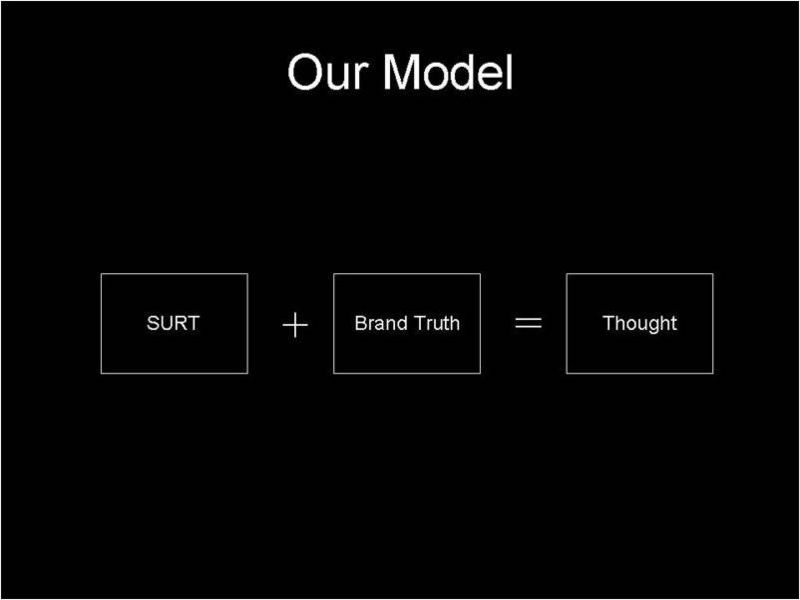
    There's a lot to be said for this tool, I think MC Saatchi still use a variation on this.

    Truth

    I can't abide all that 'brutal simplicity of thought' stuff, but finding a connection between a truth about people (not 'consumers') and what the brand is about, or what it can deliver can be really powerful. This work is all based on the connection between the truth that we all respect people who can do what we cannot and the fact that most people are not cut out to be a police officer:


    As other people have said, it's really powerful to relieve a genuine tension in culture, in what goes on people's lives.  

    Johnie Walker relieves the contradiction between the masculine need for success and a growing distaste for conspicuous consumptions by re framing male success as personal progress, rather than having arrived ( and that in Asia that requires referencing brotherhood and belonging, rather than 'me'.


    Pepsi knows that every generation feels like they want to change the world, but that they have a chance to change things, they just get to protest a lot and then grow up.


    Anyway, here's ten great insights from psychology worth putting in your scapbook.

  • I can't remember if i've talked about Tom Vanderbilt's Traffic or not, but I've been dipping back in for something or other at work. If you haven't read it and you work on something to do with cars, you should, there are lots of fresh perspectives on stuff. If you don't work on cars, you should too, it tells you new things about people. Anyway…

    I'm still amazed by the bits that remind you what an amazing feat driving is.

    It's made up of 1,500 sub-skills, we make about 20 decisions per mile, process 1,300 pieces of information per minute. It's incredible. But we do it so easilly, we don't really dwell on it, but in world where they can build robots to calculate in a second what it would take a human all their life, the best any robot can do is last a couple of seconds driving in an average high street.

    I think that's interesting from a road safety persective. Instead of the usual 'shock and awe' stuff you usually see on from government funded stuff, how interesting would it be to start with a complement tell people how amazing they are every day? The fact we take it for granted leads to over confidence and most accidents. We're all vain, why not seduce with flattery rather than bludgeon with fear? 

  • So I'm finally doing the Great North Swim two weeks on Saturday.  I forgot to mention that I'm trying to raise money for Cancer Research as well as grasp at youth. If you're any way inclined, you can sponsor me here.

    I chose them because I lost two Grandparents to cancer and seeing the way the one I have left (90) lights up when she sees my baby boy makes we wish they had been around to see him too (in case you're wondering the fourth died before I was born).

  • Sassy-satan-sexy-devil-costume

    I remember the legendary George Parker talking about his experience at a 'Big Dumb Agency' (his words). Where the Chief Exec asked him what he thought they did. He said, "We make ads'. To which she replied, "No, we manage the process". In other words, sell a professional process, that of course takes ages and uses a lot of people and charge for their time. Not sell ideas.

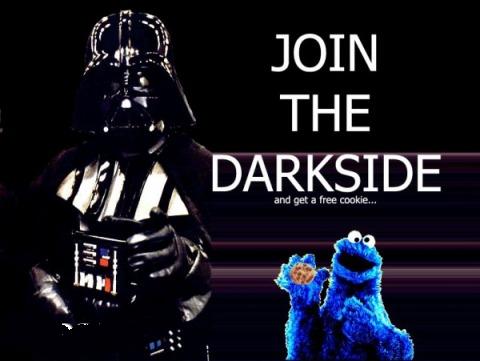
    That's still the model in lots of places and it's wrong. It's dangerously seductive, like the dark side, it's quicker, easier.

    Darkside

    But it's wrong.

    Wrong commercially, as clients undervalue your ideas and start getting you to trim budgets and therefore people – ultimately harming the work and it's effectiveness…so you end up getting fired.

    It's wrong internally as it demotivates people who (hopefully are there to do great work. 

    It's wrong because it lets laziness and mediocrity off the hook. There's nothing that lets lazy, untalented people thrive like a good process. Who cares about the quality of a brief if all the boxes are filled and it fits on a page? Who cares if the work is pedestrian is it's 'Disruptive' or 'Brutally Simple'. It doesn't matter if the brand's position in unworkable, it came out of a workshop.

    And let's not kid ourselves. We don't ever have ideas in a linear fashion. Sometimes they pop up near the start and you spend some time proving they're good. Sometimes you're terrified that it's near the deadline and nothing good is coming, then it appears in the nick of time. Usually, in fact, most if the time, ideas emerge when you're doing anything but 'work'.

     That's right, the more you work at a process, the harder you make it for yourself.

  • I was looking at some old video from a 2007 conference from the always brilliant PSFK (incidentally, Piers and co, if you want to give away a free ticket to the 2010 London conference, to a blogger who will  post about it etc, you my email address is on the side bar….).

    A big thread of that day the tension between old advertising and new digital. It was relevant then. Blogs were still hot news, Facebook was still in college, while digital agencies and ad agencies looked at each other with mutual suspicion, or even derision.
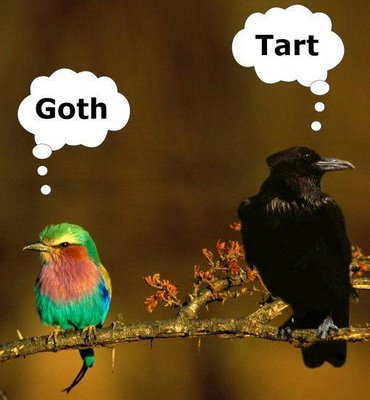
    Goth_tart_birds

    There was lots of chat about how ad agencies were adapting to the new digital world, while digital agencies moved up the food chain to own brand ideas rather than execute them. But while things have moved on the real world – the web blurring into the physical world, Telly on digital digital on TV..blah di blah, it's mostly the same damned conversation that just doesn't matter anymore.
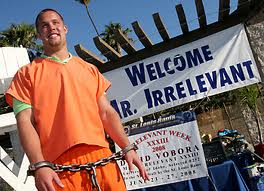
    Irrelavent
     

    Only last week, I opened Campaign Magazine for the first time in ages to find a double paged spread on 'integration' as the future. For the love of God.

    Let's dispel the myth that there was a golden age when most agencies were brilliant. They were not. Most of the ads you saw on TV in th 1980's were crap, most of the agencies were not really any good, clients hadn't figured out their act.  And guess what? Most of th ads you in 2010 are still crap. Most ad agencies are still not any good. But it's immatures for digital natives (don't you just hate that term) to berate all ad people, or non-digital specialists as stupid, crap or behind the times. It's plain wrong to say that people ignore telly or telly ads. They don't, they just ignore the bad stuff. And that's not entirely true. Most ad people hate Proctor and Gamble's work (Old Spice excluded) but they just keep chugging along nicely.
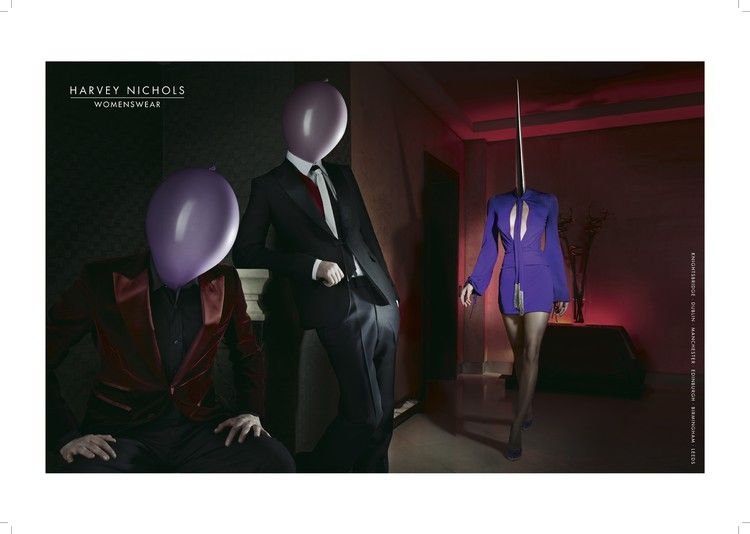
    Harvey-nichols

    Let's also burst that digital bubble too. The internet hasn't banished stupid. Most digital agencies are crap too. Some are great, most are not, most love the technology and have conveniently forgotten to influence people, or trot our the same cliche about creating conversations without creating something worth talking about.

    And media people, yes you, some of you show clients how when and how to engage, but most sell plans. Most think comms strategy ends at when and where, forgetting that context, how and relevance matter too. And let's not get into forcing digital stuff to work like broadcast…..

    The truth is, the market for something people believe in is infinite. The possibilities for getting away with not being good are fading. Good places can't be arsed with false distinctions between online and offline…because real people don't  make that distinction. They're getting on with having ideas that build brands and profit. They don't worry too much about brands as verbs, conversations, etc…they just create stuff people want to be involved with and let them.

    If you're smart, talented, open minded and want to work hard, you'll be fine. If you're not and you want to continue this bogus conversation around a dividing lin that only exists in agency world's (and a few bad clients') collective imaginations, you may have some problems.

    Stop talking about this and just get on with it.

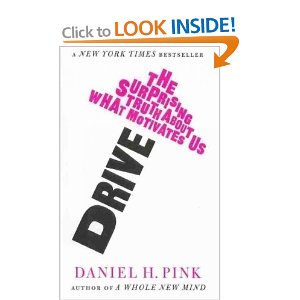
  • I'm currently grappling with Drive by Daniel H Pink. It's yes another book about what motivates people, but what sets it apart is that it avoids wild theory and draws upon four decades of scientific research. In other words, proper rigour.

    Drive

    I raced through it at first, but it's in my bag and I keep on getting it out to check something else and think about it a bit more.

    The basic premise is that organisations need to stop trying to motivate people through carrots and sticks and focus on the true elements of what drives people:

    Autonomy – the desire to direct our own lives

    Mastery – the urge to get better and better at something that matters (to you)

    Purpose – the yearning to do something in the service of something larger than ourselves

    I think this is brilliant. There's lots for ad people, especially planners to ponder when it comes to persuading people, being useful or the pillars they should build brands on. For example, looking for ideas that people can play a part in, brand having a genuine purpose that brings together both internal and external and genuine usefulness for people to fully explore their passions and interests. That's just scratching surface.

    It says so much more about how organisations should manage people in the 21st century - and agencies in particular. Does your agency feel like it cares about those things? 

  • So it was the regular Saturday morning pain and suffering swim session this weekend. In the pool for 7.30am to cover swim four miles or so.

    I've been improving quickly since I altered my stroke and these sessions have reminded me how to really push it. My body has actually changed shape, the shoulders are broader, the arm muscles longer,tougher, but smaller; little things like that.

    This one was special. There's a pecking order of lanes, with the top two for people who can really motor. I tried one these lanes a couple of weeks ago and my body caved in, but I was made to try it again.

    Last time, there was point when it began to hurt and I dug in to find nothing. Quite the opposite, I seized up. This time that point took longer to arrive and when it did I found another gear. I wasn't just living with the other swimmers, I was challenging them.

    Oh, and my body remembered to pull with it's forewarms, not it's hands. Another bad habit I'd picked up.

    It's an amazing feeling to reach into yourself and find something extra there. When you can't do anymore and you just want to give in, going that little bit further pulls something out of you'd forgotten was there.

    It felt good. I still won't do as well at The Great North Swim as I wanted, but I need to feel that gear again. So I'll be carrying on training at this pace when it's all over. Addicted I'm afraid.

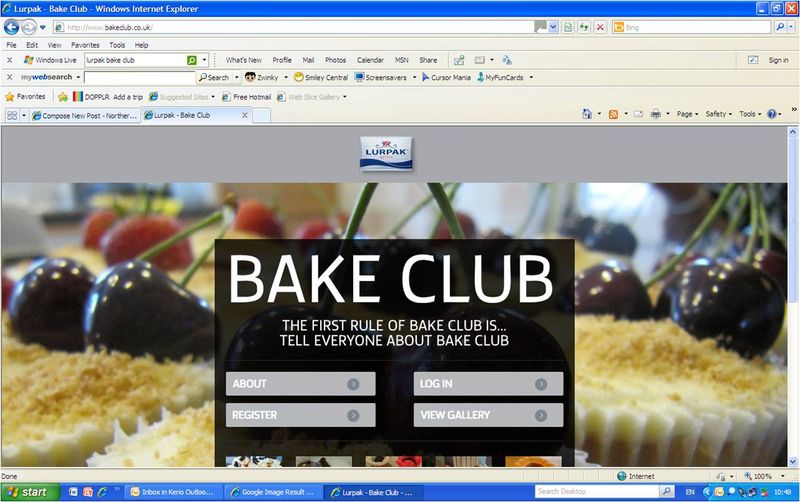
  • I really like Lurpak's Bake Club. It's not devastatingly cool or clever, there's no killer app or amazing use of technology, it's just really useful and makes me feel nice. People are getting used to technology that we would have thought impossible ten years ago. You can't flash bastard people into engagement anymore, guess what? It's back to ideas for people.

    Bake club

    I like the way it's designed for humans rather than ad people. I can't speak for other people, I don't know the strategy, but as a person, I like the way it brings people together, it doesn't want to turn them into Delia Smith, just do something you're proud of to share on a regular basis.

    That's what I like about baking, it's something you do for other people far more than cooking. I don't really bake much, but I want to get good so Will and I can do it together. We'll get in trouble with Mum for making a mess in the kitchen of course, but that's half the fun.