• First, read this post by Rob on Old Spice – take in the point about relieving tension and contradiction.

    How-brands-become-icons

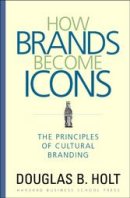
    Then buy and read How Brands Become Icons by Douglas Holt. It's a disgrace this book doesn't get talked about more.

    Don't be put off by the, pretty much accepted premise, that brands become icons through carving a values position in culture and becoming and outward demonstration of ones values and identity. Do be excited by the idea that they resolve clashed between cultural values and expectations and personal realities (or that's how I read it).

    So Johnnie Walker makes you feel like a modern man with depth, experience and inner strength even if you're a one dimensional, avaricious  image conscious idiot (or an account handler).

    Levis makes you feel confident, rebellious and cool, even if you're a nerd.

    Innocent makes you feel good, naturist and environmentally aware, even if you leave your telly on standby.

    One interesting outcome though – it really does point to a problem with contemporary society. We may have moved from 'image and owning' in some cases, but 'Values and experience' still seems to encourage us to have impossible ideas of who we can be, and make us feel bad for not living up to them.

  • One of the best things about sport and the surrounding cloud of keeping fit good tiredness. Your body knows it's pushed itself, the muscles have stopped quivering, you've probably showered, you're still hot, it still hurts but now it's a pleasant ache.

    Your mind is wonderfully clear, you feel at once relaxed and outrageously alive; proud of what you've just managed to do. It's lovely to put on some comfy clothes, brew some good tea and eat something really nice. After swimming on Saturday morning, there's nothing finer than a massive bacon sandwich – apart from knowing you can eat this and not have to worry for a second about getting fat.

    But this feeling isn't just limited to sport. If you're pitching, there are plenty of late nights and early mornings, hopefully culminating in some sort of presentation where you and your team are at your best, nervous energy coursing through your body. Then it's all over and you're exhausted in a good way. Time for the pub and some good food, or relaxing on your own sofa with something good to eat and drink, watching some good telly.

    There's the creative brief and briefing you wouldn't leave until it sang, or the workshop that took weeks to prepare because you knew the right stimulus would make it go like a dream – and that curious feeling when you're moderating when you're aware of EVERYTHING, you have the pace in your own hands and you know you're running this show.Then it ends and you slump in happy fatigue.

    Feels good doesn't it? Yes, there's that sense of loss when it's over, like finishing a good book, but there's that mixed feeling of relief, pride and calm. It only comes when you've given everything.

  • I don't usually crit work. I don't think it's fair when I don't know the business goals and how much the work has been crucified by bad creative development research or the general recruitment process.

    100_4919

    This work for Cloud Nine is the exception. Sorry you can't view it here, Youtube won't let me embed it. Since the agency are so proud, they're fair game.

    It's for The O, a pretty nifty new hair roller. Very quick, very hot, very easy to use (if you're not a girl, this is both new and important).

    I presume this film is supposed to be so good it will be shared, I presume they're having a go at an evolving narrative that can go anywhere.

    That's fine. But exactly where can anyone participate in the idea? Where can I get the back story? Not Facebook.

    They claim the execution is "Stylish, sexy and unlikee anything the hair industry has seen before". It certainly is unlike anything the market's seen before – anything this bad. Fair enough, do something Sci Fi to reflect the futuristic technology, HOLD ON, not fair enough!! Use Sci Fi to market hair stuff to women? How many Fashionista do you know that collect Star Wars figures? That's right. None.

    And as for the manga execution thing, it's just lame. There's no real plot, no real story, nothing (apart from an uncanny resemblance to the Sisters of Murphy if you're old enough to remember).

    Sorry, wrong product truth – 'It's futuristic' takes you down a path the audience won't engage with, unless you genuinely engage or create the next generation of women. That's interesting.

    Marketing to women basics – "Tell me what it does for me". This product gives you curly hair whenever you need it. It addresses a big tension on hair and fashion – cultural pressure to look amazing, but massive investment in time and effort. Emotionally, busy Generation Y women can't look how they want all the time, or sacrifice spontaneity and probably other stuff you want to do. Please tell me I'm wrong. Show me the error of my ways or my lack of judgment. Please.

  • Sometimes there's nothing more comforting than really slow cooked meat, that's so tender you could eat it with a spoon. The added bonus is that meat that's best for slow cooking tends to be the cheaper cuts that no one wants: pork or lamb shoulder, pork belly, lamb neck etc.

    One exception is lamb shank, but it's so tasty and meltingly gorgeous, it's worth it.

    Here's what I do with them, to serve four people.

    Put for lamb shanks in a bowl, pour in a bottle of red wine, a handful of fresh rosemary and a whole head of garlic, chopped in half. Cover and marinade in the fridge for 24 hours.

    Then:

    Use big roasting tin, wide enough for all the shanks, deep enough for all the wine. Cover the bottom in olive oil and put in the hob until the oil is spitting.

    Lift out the shanks, pat loosely with flour and put into the oil until the outide is brown (turning once).

    Throw in 3 large chopped onions, stir in and leave to caramelise for about 15 minutes, Turn every now and again, don't let the onions burn, you want them golden.

    Then put the shanks back in, pour over the marinade, including the garlic,cover with foil and put in the oven at 160degrees for two hours.

    When they come out, they'll be outrageously tenders and you'll have a lovely sweet, sticky sauce.

    Serve with whatever vegatebles you like, I love it with mashed potatoes.

  • Behavioural Economics is something of a buzzword in some parts right now – it shouldn't be for people who work in agencies, understanding how and why people really behave and how to influence that should be baked into every working day, but there you go.

    Forgive me for being cynical, but I doubt they'll follow it through since it really means small things done at the right time, in the right place, not massively expensive short films. But I may be wrong…

    If you haven't seen Rory Sutherland's (IPA Chairman) TED talk on the value of tactics and little things over big stuff and strategy, you should. In fact, you can watch it right here.

  • They reckon that soon we'll have clothes that can wash themselves, we'll be able to grow out own replacement limbs, global warming and peak oil will be solved with new solar technology and artificial organic fuels. We're amazing.

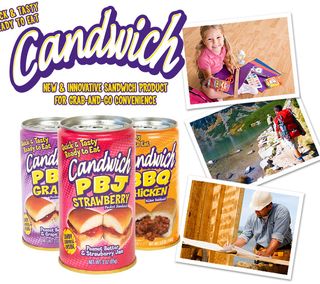
    Surely nothing proves the limitless potential of the pioneering human spirit like the greatest innovation of all, the Candwich.

    Candwich-sandwich-in-a-can

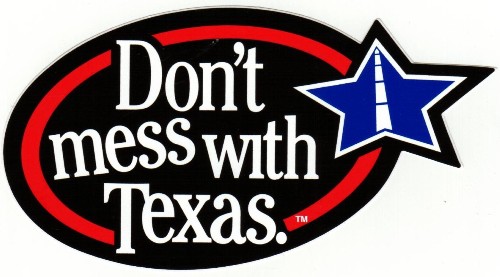
  • When I was 12 I went on a swimming trip to Dallas, saw Southfork Ranch, had steak for breakfast, ate ribs bigger than my arm, bought a Stetson, all the things you would expect. I also saw this a fair bit:

    Dont_mess_with_texas1
    It's one of the most successful public information campaigns of all time. Texas has a big problem with litter on it's highways. and was frustrated with the failure of some very expensive and very useless advertising campaigns to persuade citizens to change their behaviour.

    The problem? The audience were youngish people not exactly impressed with bureaucrats telling them what to do. Which is the problem with most government communications to young people and people in general.

    The solution? A behavioural economics idea. Harness the power of the herd, generate group think, make it a positive thing to do, rather than 'stop doing something bad'….make it feel like the social norm.

    The strategy? Harness the deep and universal civic pride Texans have for their state. They got Willie Nelson and the Dallas Cowboys to growl 'Don't mess with Texas' and made if feel like littering was an affront to Texan pride.

    It took on a life of it's own – you could get car stickers, mugs, posters, the lot. I was actually given a mug in my welcome pack when I arrived.

    In six years, roadside littering was reduced by 72%. Which speaks for itself.

    The lesson? I think this stands for all kinds of brands communications. Don't tell people what to do, give them something to join in with. And if you want them to stop doing something, don't have a go at them, make is seem like a positive act that everyone else does or wants to do. That's what so good about Web 2.0 stuff, you're not limited to 'telling' a community, you can create one.