Interesting report here that alledges advertising as the source of all ills in society, driving all sorts of social evils, mostly overconsumption.
So…..is advertising the cause of all ills society or a simply a mirror to it?
Interesting report here that alledges advertising as the source of all ills in society, driving all sorts of social evils, mostly overconsumption.
So…..is advertising the cause of all ills society or a simply a mirror to it?
One Friday afternoon I was a client Xmas party, and left just after the ice skating in the centre of Manchester (after wrenching my arm falling over while holding on to the railing).
I had a quick 20 minutes to wander around the amazing German Christmas markets and it was, well, magical.

Also, it was nice to be alone and just watch other people, the shoppers, the boozers, the families. Reminded me how much I like Christmas, the way it brings people together. It also made me realise why I hate online shopping – you miss the bit that makes you feel part of something special.
Anyway, just wandering around watching the world for a bit. That's good. Letting your feet and mind wander, not doing anything much, no special purpose, just a little time out.
Everyone should get a little bit of time like that every now and then.
There's a moment in every young man's life when Dad just being 'Dad' and becomes a person. You get some sense of how he feels about things, what he's going through, who he is. Luckily for me, that resulted in respect.
That happened to me soon after I graduated. I was having a lovely time working in a slightly posh gymn, training bored housewives and stuff. A guy my Dad used to work with joined after being forced to take early retirement. He'd been a high flyer, really sharp, my Dad was a little envious of him (I realised years later).
He asked me how my Dad was and I said something like fine, and added a typical disparaging sarcastic comment, the kind of thing idiot, immature kids say. The smile disappeared from his face, he stared at me hard and said, "Don't ever make fun of your Dad, he's one of only four people in the country that can do his job. I was got rid of, there are hundreds of people that can do what I did, not your Dad, he deserves your respect".
Just like that I saw him a new light. I new he'd been talking about work laying people off and saw less of him as he seemed to work later and later and later. Seeing someone treat him with that much respect (awe even)threw up an image of my Dad – the man, rather than just 'Dad' I'd never seen before. Someone people looked up to. Someone with his own problems, issues and fears, someone I would do well to be half as good as.
I think that's the moment our relationship changed and we began to become friends. I soon started working properly, I could ask his advice, he could give it, we could both moan about the office and stuff. Two people, not just father and son.
I think that's why I hate those Gillette commercial with father's sagely passing on knowledge to their equally square jawed sons. It's just not that simple, it's much more complex than that. There's are pivotal moments, a weird sense of competition and hopefully love and respect. I guess that's the problem with testing stuff to death, you end up with a generic view of life and situations which isn't really true to life, it's had the nuance, drama and 'realness' taken out it, leaving a pale, lifeless imitation.

Since this is blog from a Northerner, living in the North, I thought it might be worth looking at things from perspective for a change. If it's relevant to where you work, then great (I suspect it might).
Let's roll back to the so called golden age of advertising first – the late 70's and 1980's. Agencies got to make lots of big expensive advertising campaigns, lots of TV lots of glossy print lovely. This was true outside of London…some big names, big campaigns lots of telly out here too. It must have been brilliant. Agencies got away with murder, clients were still getting used to emotional brand communication, you could talk to loads of people at once on ITV and make people buy stuff just by entertaining them.
But then got a bit sticky, clients got wise to the flashy sell and lovely lunches and began demanding proof of return on investment. They wanted accountability and ad agencies got found out. They saw their place at the top table at become less secure. London agencies held on, but regional agencies saw only the very best, the very rigorous hold on to significant ad spend.
So they diversified. They became very good at DM, design and other stuff – they got good at being integrated because they had no choice.
Then along came digital. It turned the industry up side down. Up sprang the digital specialists. They spouted jargon in a manner much worse than any ad exec, they were technically brilliant, but no one really knew what they did, perhaps not even them. They made things look very pretty, they even managed to appear accountable with instant, real time measurement….and yet……..
…we come to the present day. Old fashioned agencies are getting okay at digital too, they have no choice. But they two advantages over digital specialists, based on my experience anyway.
Firstly, they know where different media and tactics fit in to the overall picture. They're good at integrating things together in a way that all but the best London shops are not. Digital agencies are good at digital. Digital is the the answer no matter what the question.
Secondly, they don't have planners, or people that can think strategically. Some of the most technically brilliant digital practitioners I've met (technically) don't know WHY they're making stuff, they don't care too much about matching experience to consumer needs, they don't go through the rigour of role for communications. In short, they don't do planning, if you're lucky, they do tactics. They don't own the brand conversation.
In the recent past, this didn't matter, the jargon and technical advancement glossed over this. But like ad agencies in the 90's and beyond, everyone's getting wise. Soon, they're going to have to be accountable, and then they're in trouble.
Many creative agencies don't do artwork, most outside of London don't have a TV department. Clients have become good at taking some thinking, concepts or whatever and getting made direct, or even in house. The making isn't that hard once we all get the basic principles. It's the thinking and creativity that's hard.
I wonder if, like creative agencies, their will be a bit of cull, a lot of consolidation and a big bubble bursting as digital agencies learn to be accountable. I think that means they need planners (amongst other things) people that don't have to know how stuff gets made in minute detail, but they know how to find out what it's for and what it needs to do.
When I was suit, I used to have know lots about print, I needed to know what grading in TV was, now I don't, just as I don't need to know what Ruby on Rails actually is. Making stuff well matters, but I suggest knowing why you're making and measuring it's success matters even more.
So it's five weeks since young Will was born. It was rollercoaster at the beginning, but things are sort of settling down. So it's probably the right time for a self indulgent post about what it feels like to be a new Dad. Some people seemed interested anyway.
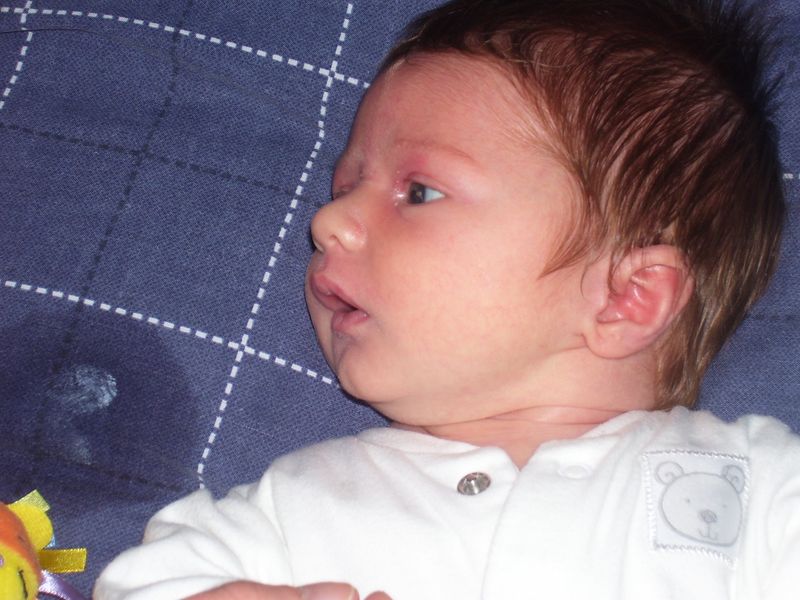
I'm not going to start talking about him, I'm going to start talking about me, it will make sense in a bit I hope. ….
I'm not the kind of person who gets affected by things, massive changes, shocks, all that…I don't know why but I just seem to take in my stride. There's never much hoo-hah, I just seem to get used to things really quickly. This is a useful way to be when things go wrong, but can be pretty annoying when things go really right, I just don't get massively giddy.
That said, I think I'm a man of passions, when I love something, I really love something. Tea means more than life itself, cooking, swimming, Saturdays on the bike, Mrs Northern. I reckon if I love you you're pretty lucky because I love you completely and utterly. A passionate man who doesn't get very up or down…how odd. Like most human beings, I guess you could say I'm an amorphous mass of contradictions.
The first point I'd like to make in relation to this is that I have no real connection with the belief that you're never ready to have your first child. I feel like I've taken it in my stride. And you need to – there's a lot of change, lots to get used to.
There's the change to the fabric of every single day. Sleep is no longer taken for granted, you learn to do itt in chunks rather than one long stretch. Luxuries like the gymn, exercise, watching a DVD, reading a book or spending hours cooking become rarer, more precious and, consequently, more appreciated.
Your relationship with the mother changes in ways you didn't expect. Quality time together becomes rarer, but that means the simplest conversations, about how your day went and stuff become that more precious and I think that brings you closer together in all sorts of ways. It also means you have to work hard to stay as a unit that can operate alongside the bigger 'three of you family unit' but that just heightens how it feels to be with someone.
Then there's the change to how you feel about yourself. Just like that, your sense of who you are just changes. When I look into his little face and see my own own eyes looking back I feel a sense of unconditional love I've never had before.
At once you understand how your father feels/felt about you, you understand him more, and you regret not feeling as grateful or hurting him at the points you inevitably have. Makes you want to pick up the phone and just say, "Hi Dad, how's it going?".
It's a humbling feeling when that wrench of emotion comes for the first time. You know that in a way you never felt before, it will never be just you anymore, even more so than when you got married. And it's painful to not see the little boy when you have to go to work in a way that even the most ardent beginning of a love affair doesn't match. But unlike amorous love, I get the sense that this intensity won't fade into something deeper and more meaningful, it will stay white hot but get enriched with memories.
I know that he'll hurt me, I know he'll drive me mad as a teenager, and probably before that. But none of that will matter. I'll still feel the same way. That makes me feel very vulnerable, knowing he has the capacity to break my heart in the way no one else could.
Yes, that's a lot of change to how you feel about yourself, suddenly you feel at once grown up and younger than ever before. Grown up for obvious reasons, young because you haven't a clue what you are doing.
So that's a lot to get your head around. For me, this has been natural. It's all very intense, changing you and your life in way nothing else has, but I already find myself taking in my stride and getting on with it (despite being the cliche proud Dad bringing the pictures into work).
But holding him, only a portion of thoughts are about the present. Much more is about the future. About all the fun we're going to have….the diving off rocks, swimming in the sea, playing tennis, washing cars together, cooking together.
Then there's all the things I want to teach him and talk to him about. He's lovely right now, I look forward to seeing him grown up and discover what kind of a man he will be.
Then I realise, I want so many things for him, but I really want all those things for me. And that's not good. I want him to be himself, to do the things he wants, find out what he like, do what he's good at and be happy with that. I want him to be do things for him, not for me. I'll have to be careful their.
Finally, there's a saying (think it's Oscar Wilde), at first children love their parents, then judge them – sometime they forgive them. I know at some point he'll think I'm an old duffer without a clue. It's axiomatic. But it makes me realise – I've grown up wanting my parents to be proud of me, now my wife. But I want HIM to be proud too. Not to 'look up to me' or any of that rubbish. Just to look at me one day and think, I'm glad I'm your son Dad, I love you'. Above all, I'll always talk to him, listen to him and share – I never want us not to talk and not to be able to say what I really mean.
These are the things I'm thinking about five weeks into being a new Dad.
(and I can't be bothered to spell check etc all that, take it as you've found it)
For all those who think the internet it a bad thing I give you penciltalk.org. A whole corner of the web for pencil lovers. You would never have thought there was so much to do with the humble pencil, but there you go.

Thanks to the internet, it doesn't matter what your passion, is, or how obscure, you can find like minded to share it with. There's a place for everyone.
I've always believed people should have somewhere in life to express what they love and what they're good at, to defy the conventions that seem to celebrate the twist of fate that you get payed millions to be good at football, or gain immediate social currency by loving it, while a tiddlywinks world champion doesn't even get, well buttons (and try confessing at a party your hobby is tiddlywinks).
I wrote this a while back for something or other. Thought it was worth sharing. I don't pretend to understand the mysteries of the better sex, but I thought these were OK thoughts for people (men) in my predicament….
"David Ogilvy would have been a great ad man on any era. Sure, the pipe and braces might not have gone down as well today, his views on avoiding humour at all costs seem out of place these days, but let's not forget what he thought about women.
"The consumer isn't a moron; she is your wife. You insult her intelligence if you assume that a mere slogan and a few vapid adjectives will persuade her to buy anything." Even back in the heyday of the ‘Mad Men’, he knew that brands underestimated women at their peril, today that's never been more important. Paying due attention to women does not signify a return to a seventies feminist doctrine or a mere sense of 'fairness' - it just makes business sense.
In the UK, a woman's disposable income has shot up by 50% in the last 20 years; today they’ll make 80% of all buying decisions while in twenty years time, they’ll be the main earner in a quarter of households and account for over half of UK millionaires, according to the Future Foundation. But it’s just not about share of the purse strings, it’s about influence too.
The performance consultancy Catalyst found that companies with more women in senior management earn their companies a higher return on their equity. They’re increasingly climbing the corporate ladder as the economy continues to shift towards knowledge based services and creativity. The future currency will be one of collaboration, communication, teamwork and democratisation. These are all female traits that are associated with the 'right brain', as opposed to the male 'left brain', which is more skilled at logic, systems and hard data.
The future is definitely female, but a shift in targeting will not be enough, there’s a need to examine and possibly change long held assumptions about how marketing is supposed to work. If we’re going to capitalise on the emergence of the financially empowered, influential women of today and tomorrow, we’re going to have to find a new ‘act’, that’s based on how women think, and behave.
The last 50 to 100 years of marketing and brand building was mostly built by blokes. Methodologies have been codified; conventional wisdom has been institutionalized, leading to a bunch of well ingrained habits. This is OK. This has gotten us somewhere, it’s created some interesting and useful things, not to mention some great brands, but peel back the layers of brand awareness, brand onions and such and you tend to find that most brands are built on, and for, the way men think, not women. Mostly, it’s about USP’s, objects and ‘benefits’ – all that ‘left brained’ stuff men do so well.
Engaging with women properly will require brands using the ‘left side’ of their brain too. That means more ‘feelings, people, relationships and what things do’; not just ‘action, objects, self-interest and how things work’. That’s got implications for marketing, branding, the communications job, media and even NPD.
Brands that want a bigger share of the future will have to get really good at their relationship with women, which will mean approaching all sorts of marketing and brand questions in a different way. David Ogilvy wasn’t right about everything but he was more right about women than he realised."
There's a few very good books, the odd telly program (like this) but nothing that grips you in the visceral way it should.
There's nothing more amazing, weird and jaw dropping than science when it's presented right.
For example, everything you see is mostly empty space, if you removed the empty space in every single human being, the entire human race could fit into a sugar cube.
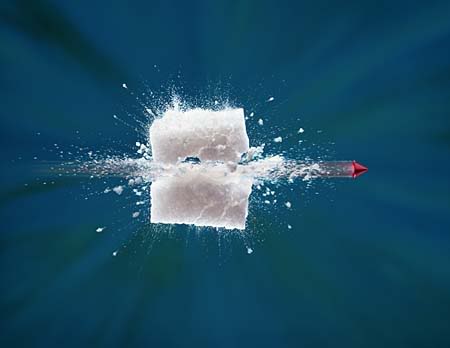
I wish someone would make a popular science program that brought stuff like this to life.
Just a thought. Probably not earth shattering.
I'm a fan of transmedia planning, and both loving some of the case studies coming out at the moment and hating how hard it us to get dinosaurs to think this way.
Anyway……while you're thinking about targeting groups and starting conversations, I believe it's worth thinking about brands as collections of people rather than 'a person'. A community of shared interests perhaps?
 NORTHERN PLANNER