If you've seen the Matrix, and I presume you have, you'll be familiar with the moment Morpheus offers a choice of the red pill or the blue pill to Neo. The blue pill will result in forgetting the whole thing and going back to daily life, but the other offers the truth – no promises of happiness or anything else, just the truth.
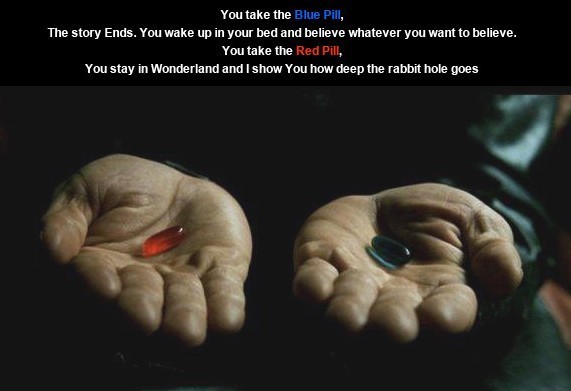
As you know, he wakes up to find himself a human battery and the first words he hears are, "Welcome to the real world". The ultimate dose of reality, and yes it may be science fiction, but it's rooted in a deep truth about us humans that either makes disappointment and frustration inevitable, or keeps us sane and happy depending on your point of view.
We have all experienced moments of reality, that feeling of being jolted, like being slapped around the face with a wet fish, when something we strongly believed in, took for granted, or longed for is shredded before our eyes.

It can be all sorts of things, such as realising that somebody doesn't love you, that you will be made redundant, that the career you have built for all those years is not for you. It may be as profound as loved one dying, or realising that your parents are not perfect, it could be realising that you've run up too much debt on you credit card.
Seems to me that ad agencies will get one soon when they finally realise that they can't work the same way they have done. Clients see through the bollocks now, telly alone isn't good enough and the old brand models we're probably wrong and certainly don't work now.
Probably, ivory tower creatives will get a shock when the molly coddling ends.
God knows, we're getting one at the moment with a worldwide recession. Even for the lucky ones who's income and mental health remain OK, you wonder how much self indulgence and 'have it now' culture has been given a rude awakening.
Every now and then, we are given the red pill, irrespective of whether we want it or not.
How does this happen? Why are these things such a shock? They happen all the time, to lots of people and even if they've happened to us before, and why are we are still bemused when they happen again?
I think it's because we con ourselves. This happens in so many ways.
Firstly, we're incedibly good at post rationalization. After the event, we convine ourselves that things didn't happen as they actually did, usually making ourselves come out a lot better than we should. You were not happy with the partner that dumped you anyway and you never were, someone else was to blame for that disaster at work, I wasn't sacked for being useless it was politics, my point at that meeting was clear but no one wanted to listen. So we don't learn from our mistakes and are doomed to repeat them.
Deep down, we know a relationship isn't working, we know when our job isn't going well, we know we'll never be a film star, we know we'll never go home with the prom queen, we know how much money we need to spend. But we're constantly post rationalizing every situation, or skewing our knowledge of the future to fit what we want to believe.
So when we're dumped, demoted, sacked, find we can't pay the bills or amazed we're going home alone, what we should have prepared for as inevitable, we see as bad luck, unfair or punishment from the fates.
You could argue this is a good thing, it protects us from feeling too bad it stops our confidence being shot forever, or you could argue it stops you understanding your reality a little better and living a happier life in the future.
This curious optimism appears in other ways. In western society a, largely wrong, belief that humans exist as individuals enables us to believe that terrible things that happen won't happen to us. We won't ever get divorced, we won't work in a recession, we'll succeed where others have not. All because, despite the experiences of others showing otherwise, we believe we're different, so it won't happen to us. Despite the fact we're 99.9% the same as every other human being in the world.
This optimism means we're not so good at recognising luck. When good things happen, it was down to us, rather than the truth that fortune affects everything. In Outliers, Gladwell shows that even world famous geniuses got lucky. We only seem to believe in bad luck, when something bad happens we take it much harder because it isn't balanced by us recognising good fortune.
We're always going to get a dose of the red pill, but the more we can prepare for it by understanding that things just happen – it's the way of the world, the better.
I don't mean just accepting your fate, I mean be realistic about it. There's plenty of room for optimism, but it needs to be based on a true picture of what we're like and what we can do, forcing ourselves to learn from what happens to us, rather than post rationalizing events. We're all great in our own way, we all have chronic faults. I don't think we would be happier by being less optimistic,I do think we would be better off understanding and appreciating our true selves, making the very best we can of what we have.

 NORTHERN PLANNER
Leave a comment