Every block of stone has a statue inside it and it is the task of the sculptor to discover it.
Michelangelo
If you haven't read Jonathan Lehrer's fantastic book about how creativity works, you should.
Firstly because it goes a long way to prove that creativity is much less a 'skill' than the way you go about things. Anyone can be creative if they want to.
Secondly, because it clearly shows (with proper science) that being creative is not just about getting big ideas that arrive by 'not thinking'. You know, seemed epiphanies that arrive from nowhere when you're in the shower (although the shower is a good place to have them since they come when you're relaxed and slightly fuzzy- not when you're wired on coffee, which is, funnily enough the beverage of the creative type….perhaps wrongly so).
This is often used as justification for the languorous flaneur in agencies, slouching around, just shooting the breeze.
When, in essence, this approach only works if you've gone through the pain and misery of abject failure, read, scribbled, struggled with a cacophony of sources and crap ideas and literally thought, "That's it, I can't take anymore".
Ideas don't float up from the sub-conscious unless it's been properly fed.
But, let's be honest, serendipity often fails us. Which brings us to a, more reliable and less feted, form of creative approach and idea generation. Again, sheer hard work, but hard work to refine and refine again.
Now, you don't often see 'hard work' anywhere near 'artist' but the truth is, in my own experience, the people with the best ideas just work harder than anyone else.
They don't sit around and waiting for ideas to appear my magic, they immediately start writing, drawing or scribbling, creating very bad starters and then refining, editing and improving until they get to something great.
Lehrer calls this practise 'unconcealing'. Getting those jumbled thoughts down from the front of your mind as quickly as possible, to create something half formed, mostly wrong and, essentially crap, then working out what's wrong with it bit by fit, fixing it one step at a time.
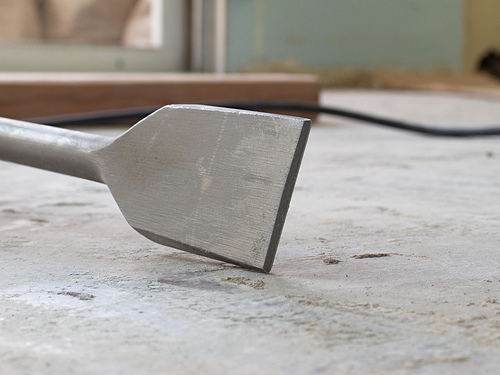
Chipping away at the wrongness to reveal the shining brilliance hidden in there somewhere.
Don't get me wrong, it's bloody hard work, but it's also foolproof, as long as you continually pick up what you have, shake it around, throw it against the wall until it's not just okay, it sings.
For a planner, it's the only way to consistently write consistently great creative briefs, presentations, proposals or anything else.
It's also, in reality, the way you should approach strategy and ideas themselves. By all means look for epiphanies (and do the work to give yourself the chance of having one) but don't wait for them, start making crap stuff and push yourself to make that crap into gold.
That means switch off Facebook, don't flit around online, don't stop for little chats. Sit down, stay there and keep going.
You're looking for that heightened level of concentration when you don't even know you're thinking, where you're just lost in the task – flow.
That also means you need a framework to channel the crap into. I used to be a fan of open creative brief formats but now realise you need constriction to free up creativity, the tyranny of answering specific questions within a limited space forces editing and precis and, the discipline of HAVING to develop your thinking so it all links and fits.
God forbid, perhaps there's a role for brand onions and proprietary planning processes. Perhaps.
Take the Haiku. It's bloody hard to write anything that makes sense in 17 sylabels, let alone something beautiful, but the constriction seems to amplify creativity and produce profound and moving little pieces of wonder.
I hated the 'Disruption' process at TBWA with a passion, but I have to admit, the rigour of having to fit brand ideas into 'Convention' 'Disruption' and 'Growth Vision' didn't half make things develop quicker, as long as you treated the framework as an idea shaping filter, not an idea generating tool of itself.
Perversely, I'd suggest that telly ads end up MORE creative because they have to fit into 30 seconds, just as press needs to fit into a quarter page. It creates focus, it creates tension and problems, it forces extra development- it forces better ideas.
Which is why it's so important to have some constriction as to how you might express ideas themselves.
I'm a fan of using 'log-lines' for campaign ideas for example, like they use in film pitches. It forces you to get to the essence of an idea really quickly, rather than mistaking art direction or a line, or even casting for a genuine thought.
So, yes, the most consistent route to great ideas is ferocious hard work and continuous refinement. It's less flashes of insight and more seeing what's wrong with things. It's not very cool I'm afraid, but, to quote Lehrer, "If you want to be at the cutting edge, be prepared to bleed".


 NORTHERN PLANNER
Leave a comment