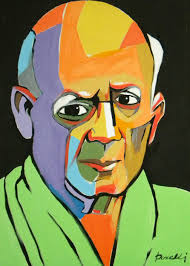
Picasso once said that art is a lie that tells the truth.
He has a lot to tell agency folks.
Because great advertising doesn't just sell the product, it becomes the product.
It makes Coke taste better, as makes the fit of your jeans feel better.
It makes a car that isn't really that different to the legion of others more reliable, sexy, faster..or even make you feel like the rebel/success or whatever you probably are not.
I liked much of what Paul Feldwick said about the value of 'Showmanship', but I don't really think this is as different to the dark arts of psychology and subtlety as he claims.
I totally buy the Byron Sharpe 'fame' and 'distinctiveness' argument. You need to reach as many people as possible and make the advertising gets noticed…because when it comes to buying stuff, folks buy the ones they remember.
But the quant research that dismisses 'differentiation' and noticeable brand preference forgets a truth most of us conveniently forget.
Research is rubbish at getting people to describe how they feel about stuff. Verbal communication in general is rubbish at describing the intangible.
I really would struggle to tell you why I love my wife, I just do. I could tell you some core facts if pushed of course, but there is a warm fuzzy 'Julietteness' I can't really put into words.
Just as I can't really tell you why I tend to prefer Nike. Apart from the fact it just feels better. I can't tell you why it's different, there is just a feeling of 'Nikeness' built up from years of advertising.
To be honest, I didn't understand 'Just Do It' when it first launched, but I remember how the ads made me feel. I suspect most folks didn't get it, or cared. They probably remembered it because it was different.
I don't feel intangible stuff based just on emotional content or tone of voice.
The 'Nikeness' is also built out of the intangible value of the showmanship advertising, the great, powerful advertising that magically inserts itself into the product.
Yes, great ads and stuff are essential to get noticed, as Byron Sharp says, but they do much more than that.
It's no accident that 'Fame' campaigns, the one that folks talk about are the most effective, according to the IPA Databank. We just naturally feel that the products are better if the ads are good and create natural PR. It's not just about being seen to lead in my view, it's as simple as really liking the ads means really liking the product.
These ads are as generic as could be in terms of messaging.
"We'll find you the right glasses, so you'll see properly".
There might be a subtle emotional wrapping about 'the need not to look daft' (which I can imagine some brand consultant saying is the main fear of folks buying glasses).
But to be honest, the ads are very funny, very consistent and entertaining.
I'm not sure they would work without the single minded message – relevance still matters in my view (even if there isn't any real 'differentiation') but what really works is the fact you like the advertising and therefore like Specsavers.
No 'consumer' could really tell you why Specsavers is different. They won't tell you 'I just like the ads' in any quant research either.
So when the brand comes to the front mind in buying situations, which Sharp tells us is the main role of advertising, it's not just that it's remembered, there is an emotional smudge we can't describe, that makes it feel good…not must from a tone of voice, but from great ads.
The 'lie' has become the reality.
That's why you can buy success by outspending your market share, but aware winning advertising increases the effectiveness 11 times (Source IPA).
11 times.
The ad has become as much part of the product experience as the sugar content, the engineering story or whatever.
How you build a 'showmanship' ad campaign is up to you.
A great source can be a cultural flashpoint…
The battle of the sexes and young men's search for identity in a contradictory world for example.
It can be taking a simple category generic, for example, the main buying need and ramping it up to hell.
It can be, and perhaps should be more often, a brand or product truth delivered in a devastating way.
It can even address a negative about the brand in a way people will just love.
Or make a spurious, but confident claim about quality. This campaign has been resurrected.
And let's face it, most of the above fit into one category, in fact, if they do, you know you're onto a winner.
So yes, there is a treasure box of source material to create ads like these.
The magic ingredient thought, is, well, magic.


 NORTHERN PLANNER
Leave a reply to northern Cancel reply