• 100_2824

    You may have noticed that posting has been going down around here for awhile. There simply isn’t enough time to force everything into. So it’s probably a bit daft commiting to more planning craft posts, but that’s what I’m going to do.

    It seems that one or two people found them fairly useful, and to be honest, I reckon there’s isn’t enough proper, basic craft around the planning corner of the internet, or day I say, the industry in general.

    So…..

    I’m not going to commit to a timetable or anything, but a start could be:

    Handling Clients

    Segmentation – how to find your audience

    Any other suggestions?

  • Since I’m freeing my reading up for more fiction, it feels like the right time to pick up on something I’ve noticed from the trade press and leave be for awhile. That’s models, theories of how brands work or ‘how we should develop work now’.

    100_1025

    Now if you’ve read one or two books on planning and brands, you’ll know what I’ll mean. Most gleefully pelt shiny, fresh new Damascus discoveries at us like the shiniest, freshest thing since bread came sliced. Mostly, they’re thinly disguised new business tools, or re-packaged observations on basic craft, or trends that have become mainstream. They, and you, know who they are. But one or two rise above this and are genuinely useful. Truth Lies and Advertising and Eating the Big Fish are the best ones for me, but Herd and The Brand Innovation Manifesto work for me too. What they tend to have in common is a toolkit to frame your thinking, rather than how to think in the first place.

    Overall, there seems to be an agreed evolution of how brands have worked in recent history:

    100_1620

    1. The unique selling proposition for a time when products were genuinely different to each other.
    2. Consumer insights – magnifying an observatio about a target audience’s relationship with the category/brand/service/product.
    3. Disruption – as attention got harder to earn, brands began to wilfully break the rules to stand out.
    4. The age of brand insights. Ignore consumer insight, don’t disrupt for the sake of it, as consumers demand authenticity, make a truth about the brand/company/product service as interesting as possible. Target conversations rather than groups.
    5. And I would argue that we’re moving into the age of the stunt (Sony, Drench, Bud, Gorilla), where being interesting matters more than being salient (and maybe salience doesn’t matter at all!!

    Most books and papers seems to argue for one of these ways of thinking about brands and, therefore, ways of developing strategy. But the problem is, life is just too messy. Sometimes it’s right to dial up the brand culture, sometimes you’ve got a genuine USP and shoulf just get out of the way, sometimes the brand is so big, it just needs to steer to keep it salient or interesting.

    But to be honest, good ideas tend to be a pivotal observation that observes all of the above (with a possible exception of USP). You can’t decide the best thing to do without understanding something about your audience, the brand and the competitive context…and I’d add something about the consumer culture around the competitive context.

    When you know what the right thing to do right now is, you can decide what element of your brand toolkit to dial up. That’s how it works for me.

    I’m not saying that you won’t have found your voice after 7 years or so. You’ll have an act, a way of doing things…..but in the end, be very nervous of models and proprietry process. Ideas tend to emerge, mostly over time, mostly out of meeting rooms.

  • I read some really good fiction books last week, which were the first in ages. And it was such a relief.

    Don’t get me wrong, for the last six months I’ve read some really interesting, sometimes inspiring non-fiction books, but sometimes you need to just enjoy a really good story, or something that makes you FEEL.

    Not to mention being able to switch off and enter another world.

    The Steep Approach to Gabardale by Iain Banks is one those good stories, while Miranda July’s No One Belongs Here More Than You is a collection of short stories about moments that change everything – sometimes moving, sometimes profound, it’s definately something that wakes up the emotions. The website’s pretty good too.

    Note to self – more fiction in future. I think I’ll put together a reading list, there’s tons I’ve missed.

  • Just a quick note to wish all those lucky to go to Interesting 2008 a wonderful day tomorrow. I would have got in for free after speaking last year too, and as Northener, it pains me to pass up anything free…but Mum’s staying, so I’ll just have to watch the videos.

    Gemma’s speaking this year, would have liked to have seen that.

  • Someone very dear to me has one of those rare opportunities to make a completely fresh start career wise. Quite literally, what do I want to do? The choice is mine.
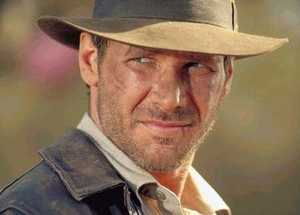
    Indiana_jones_temple_of_doom

    In this case, the choice is archaology (said individual is sick of every thinking they’re the first to make the Indiana Jones connection).

    How perfectly wonderful and terrifying all at once. What what you choose to do? What will make you truly happy? Are you curious about how good you would be at something totally diferent? Are you lucky enough to be one of the best at what you do, but given the chance, do you think you would be average at something else but love it more?

    I have my own coffee shop dream – a little restaurant in St Ives with my best loved recipes. I know a few planning blog type people would come, but even if it was a heroic failure, it might be nice to find out. I’m not the best cook in the world, but my food tastes of love.

    I was great at swimming, but merely good at tennis. I would have given anything for that to be other way around. Forget being Federer, just to play tennis all day and get paid would be great.

    And then there’s the nagging, suspected idea that there’s a university politics department, or a think tank somewhere missing an international relations specialist (I loved this bit as a a student but I was a coward – knowing a little bit about how the world really works scared me to death).

    Come to think of it, I’ve sort of done it in my own little way. It was only the move from suit to planner, but it was still a leap of faith back then, a pretty safe one I grant you. That’s sort of worked out.

    One of the very best planners I know told me that the first few years of his career was a waste of time until he made the leap. Wrong agencies, wrong job (suit), wrong industry before that. Now I don’t entirely agree with that. The journey is sort of the point, makes you appreciate it when you get there.

    I’m not sure where I’m going with this. I think I mean that life is full of possibility, sometimes it’s better to remain curious, sometimes chances need to be grasped. And sometimes you just don’t know how lucky you are. But the fantasy of starting again is a sweet, bitter secret we all carry.

  • PSFK pointed this out, but I can’t find their post. You may have noticed that I have a passing interest in swimming.

    Swimming is as primal, simple sport. It’s just your body in different medium. As such, technology has never really been able to help – apart from shaving hair off to reduce friction.

    But recently, world records are falling all over the place. Recieved wisdom is that it’s hard to beat nature – but they have made all over body suits that are better than skin – you glide though the water with minumum resistance.

    In a way I think it’s sad, just like purists who mourn the passing of the old wooden tennis rackets, or soul surfers with their old wooden boards. There’s something noble about just you, your body and what you can push it to do. I know it’s a level playing field, but it just takes some of the romance out of it for me.

    That said,I used to shave all my hair off, so maybe that’s a smidgin of hypocrisy. Not to mention, grow back on your chest itched like a bastard.

  • So I finally got around to reading Stephen Pinker’s the stuff of thought. Which is every bit as interesting as I’d hoped. Far too much to recount here, you’ll just have to read it, but there was one bit that struck me about wordplay and proposition writing.

    Pinker

    There’s a little bit that talks about polysemy and its role in humour. Polysemy is where a word had more than one meaning, which you can deduce from its context within other words and sentence construction. Like red has a variety of meanings – red-hot, red-hair, red-alert for example. Red hair is ginger, red-hot is a particular expression of heat that is very hot, but not as searing as white hot (thought red hot coals are orange).

    These words are brilliant for wordplay and dry humour -like Mae West’s, " Marriage is an institution, but I’m not ready for an institution yet". Flipping the meaning of ‘institution’ get the effect.

    Or WC Field’s answer to, " It must be hard to lose a relative". The answer was, "Nearly impossible". Changing the meaning of ‘lose’.

    So what’s my point? Well, I get nervous of propositions in briefs that try to be headlines. But you do need to make them interesting. They need a hook, some tension. I think that this kind of polysemous wordplay is a great trick to make them sing out without falling into the trap of writing a headline.

    I’ve often got out of being stuck by using liberating not for example. This usually works by looking at what great about something, and dramatising what it ISN’T rather than what it is. So Lynx is NOT dirty. This works through the more than one meaning of ‘dirty’.

    Then there’s the trick of forcing a word into sentence it shouldn’t really live in, using metaphor. It forces the reader to give it more attention than it should normally warrant, paints a picture in the mind. Make information emotional, not just fact. Like Tom Lebvers’ " Soon we’ll be sliding down the razorblade of life". Which makes ‘life is hard’ more graphic, you can almost feel it…which brings me to maybe my favourite proposition – polaroid is not a camera, it’s social lubrication (by the way they get to this by giving wedding guests free cameras and seeing what they did them…doubt it would have come from groups!). It allows you some traction, friction or whatever metaphor you like, in a sentence.

    I’ll be looking for polysemy and metaphor in my propositions. I think it’s a good way of finding hooks, unless you’re one of those natural proposition writers. If so, count your blessings.

  • 100_2650_2

    Here’s some happy Tzatziki. Only holiday snap. Promise.

  • Closed

    Going to Greece for a little holiday. See you in a week.

  • I loved history as child, and as grown up I still do since knowing where you came from can tell you a lot about who you are. So Andrew Marr’s a History of Modern Britain is a delight.

    Modern

    He writes beautifully, which is a timely reminder that good information is made so much better if it’s delivered in an inspirational way, but it’s so much more than that.

    Most history, and in fact, most news and current affairs tends to focus on politics and big, macro stories. But that’s the tip of the iceberg. There’s the rhythm of everyday life, the conversations, the hopes, the fears, the language. You only get a good sense of that from poetry, books and (last century anyway, films, radio and TV). What this book does really well is get down to that level and think about what real life was life for real people.

    This is something planning folk should think about more. Big grand strategy is all well and good but what’s the grammar and rhythm of everyday life? I can assure you that the texture of the everyday for the Fashionista girl I’m beginning to know as well as myself is at once very similar and incredibly different to my own. The trick is to know how and why.

    On another note, the people from the 40’s 50’s and 60’s seemed totally alien to me, until I realise they are still with me now. They’re called Grandma and Mum and Dad. Not sure what this means, but it seems very important. I suppose it puts credit crunches and oil prices into perspective. I should ask about stuff like this more, what it was like they won’t be around forever. That’sa big part of growing up for me, seeing your parents as people rather than just ‘parents’.