If you don’t visit Gareth Kay’s blog often you should. The last couple of months have been bursting with briliant advice. His better ways of working posts are essential reading in my book (that’s a turn of phrase of course, I haven’t actually written one).
-
It’s Autumn, it’s getting cold. Time for comfort food. And in my book, there’s nothing better than a the a pot of Cassoulet, the lovely breadcrumb crust, the smell of garlicky beans, the intense flavour from slow roasted pork, duck and sausages.
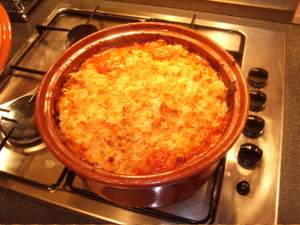
Since the French can’t agree where it originated, or even on a definitive recipe (they come to blows over the legitimacy of using breadcrumbs) there is no right way of doing it. What follows is the gleanings of trial after trial, and them made just a little bit easier.
This comes as close to my signature dish as they come, except maybe for salmon with tagliatelli.
This isn’t a half hour recipe by a long chalk. There’s a quicker version here if your in a rush. Even this isn’t the absolute pedant’s way of doing it, but it’s good enough. It’s still a weekend job though.
You can taste the care, the slowness and the rustic Gaulic charm in every mouthful. And you won’t need many mouthfuls either – it’s very filling. I wouldn’t have anything other than a green salad with this.
You’ll need:
6 Toulouse sausages
8 rashers of good quality smoked bacon, chopped into inch squares
1 duck
6 big strips of belly pork cubed
1 tin of organic chopped tomatoes (or 3 fresh beef tomatoes finely chopped)
2 cans of baked beans. 1 thoroughly rinsed of sauce in a colander
5 cloves of garlic
1 large onion
1 day old baguette
- The day before you want to eat it, roast your duck according to the instructions. Pour the fat into a jug (not a plastic one), let it cool and then put in the fridge. Once the duck has rested for half an hour, strip the skin and cut off all the meat – make it pretty big chunks. Put that in the fridge overnight. (If you fancy duck soup, put the carcass in a big pot, put a whole onion (peeled), three scrubbed carrots and a sprig of time and put over a low heat on the hob for four hours. Do not let it boil. Sieve the liquid into another pot, boil until it’s reduced by a third, with whatever vegetables you fancy in it. I like leeks and carrots, plus a little shredded duck)
- Next day, melt a spoonful of duck fat in the frying pan. Brown the sausages and put on a place. Then brown the belly pork and add to the plate.
- Finely chop the onion and 1 garlic clove. Melt another spoonful of duck fat in a big pan and slowly fry them until they go translucent. Add the bacon and fry for 2 minutes.
- Add the can/chopped tomato and bring to a simmer. Then add the two cans of beans. Throw in the other garlic cloves and slowly bring to the boil, then let it simmer for 30 minutes.
- Two minutes before it’s done, throw in the sausages and belly pork.
- Put the mixture into a large, heavy pot and tuck in the duck you cooked yesterday. Stir it all so everything is evenly mixed.
- Put the oven on at 160%c.
- Blitz the baguette into fine breadcrumbs. Spread half on top of the mixture in the pot. Put the lid on and put it in the oven for 1 hour.
- 5 minutes before you take it out, melt two tablespoons of duck fat in a pan.
- Take the pot out. Mix the breadcrumbs on top into the the mixture below. Make sure it’s all even. Spread the rest of the breadcrumbs on top, then evenly pour the melted fat over it.
- Put back in the oven with the lid off for another half hour…or a bit longer. When the crust goes golden and the liquid bubbles though the sides it’s done.
- Leave for 5 minutes and then serve. Don’t have much at first, it will fill you up quickly.
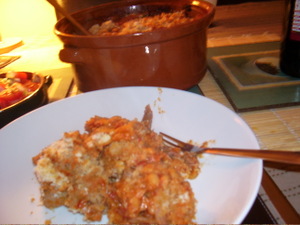
- It’s best eaten with an intense french red wine. Chateau Neuf du Pape really works, or another full bodies Rhone. Medoc or Saint Emmilion are great too. On the other hand, a Leffe works great too.
-
I think Miller’s ‘A theory of shopping’ is required reading for anyone interested in what motivates people as they buy stuff. The simplest purchase is laden with meaning and ritual.
I hadn’t thought about this for awhile, but a few projects have reached some sort of critical mass and it’s bubbled back up, espescially in the context of how couples slowly circle each other at the start of a relationship. You see, in most cases, shopping is an act of love
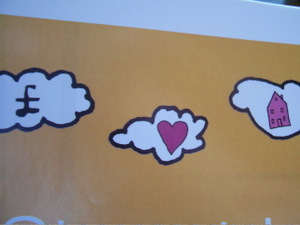
Shopping says for more about our relationships than we realise. We rarely have just ourselves in mind when we buy stuff – it’s about love. From the mother who perseveres in finding the best food for her family, to the man who starts looking beyond his comfy clothes repertoire and looks for clothes that will make his partner proud to be with him.
And that can be tough love, like the main supermarket shoppers thanklessly trying to improve their clans. From the howls of protest from the grumpy children who cannot understand why they’re being forced to eat fruit in place of a chocolate bar, to the husband who resists attempts to make him try more than his prized meat and two veg and eventually falls in love with all things spicy. Love can be tough, and much of it can be seen in the way we shop for each other.
It’s similar to the way the wife of a man I know insists on ironing his t-shirts, despite his moans that he wants to wear them now. She loves him too much to let him be as scruff in public, she realises his workmates will think his attitude to ironing applies to his views on work.
But that kind of comfy love is preceded by courtship. The long, intricate dance of moving beyond the initial attraction to finding out how compatible you are – occasional sorties into working out what you both like, the achingly slow diplomacy that goes into deciding if, and how you’ll live as a long term item.
Shopping is one of the main battlegrounds. It enables a couple to see if they will function as an item. There are obvious battlegrounds of course, choosing furniture for the first time, getting a car, or the agonising thrill of shopping for each other at Christmas for the first time. But most of the unwritten rules that govern how you’ll go about this have been established in those early, innocent fumbles around the shops.
Apart from enabling couples to establish how they might behave together on things that will matter later on, it allows couples to flaunt their relationships to the world (and themselves for that matter). They can find common tastes, areas of compatibility, opportunities for ‘improving their partner’ and the no go areas.
It also allows them to conspicuously compromise on things, Make a big show of an effort to make the other person happy. Naturally, gender politics comes into play too. She’s getting a feel for his his desires, he’s trying to establish where he can have the final word. And most of this goes on without you even realising it.
What are strange species we are.
-
I usually try and avoid telling people I did my degree in politics. Not only do they think I must be a bit wierd (and they’re right of course) it gets a bit difficult when they start to vent spleen on whatever issue is bothering them that day.
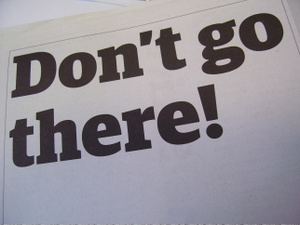
The other thing is that people find if hard to understand how someone with a politics degree ended up in advertising (amazingly no one calls it brand communications, brand architecture or integrated communications..funny that). I usually want to ask what’s wrong with learning for learning’s sake? But that’s a bit political and let’s not go there.
The obvious answer is that the natural skills that helped me muddle through a politics degree help me stumble through planning too. And I learned one or two new ones along the way.
Anyway, I happen to think the worst thing someone who wants be a planner can do is study nothing but marketing stuff – the people that have inspired me the most, in anything come to think of it, have done something else before they do what they do now.
Here’s why doing a politics degree has helped me do my job, and manage a few bits and bobs in everyday life too:
1. You get really good at looking for stuff. Most of the course work, and the finals themselves, tended to be essay writing. The first part of that is showing you’ve done some reading – not just one book, or periodical – as much as you can. Only then did you consider what conclusion you might come to. It was thinking hard about why the writer was making that point, what their agenda was, what motivated them….and looking for holes in the evidence. You learned to trust no one…..the true story was somewhere in between what everyone said. You learned to look, sift and digest and hold lots of arguements in your head at the same time. That probably sounds familiar doesn’t it?
2. Speed And since there was beer to drink, bed to lay in, girls to fail with, Going for Gold to watch and pools to train in, you learned to do it bloody quick.
3. You get good at making an argument. The stuff that really got good marks was the quality of how you put the pieces together into a strong, watertight conclusion. There was no right answer, all that mattered was making making your point as convincingly as you could. Come to think of it, essays were like long form creative briefs. Like getting a brief into one page can be tough, so could getting your essay down to a few thousand words.
4. You can’t cut corners. When we were doing US governemnt, my tutor group had to take it in turns to present an argument on a certain issue. When it was my turn I thought I could get away with reading one book and padding it out with argument. But I forgot that people could ask questions at the end. And they did. And I was ruthlessly ripped to pieces by a pack of rabid wolves with the scent of fresh blood flaring their nostrils. After being made to look the slack arsed fool I was, I left the room, went to an empty corridoor and threw my books againts the wall. I never made that mistake again.
5. Which showed the value of being surrounded by people who force you into doing your best. I was just as ruthless with others to be honest. Fair’s fair.
6. And to surrender my ego. I found my presentation ‘style’ pretty quick. Which is to not have one. I’m not the most confident of people, but people seemed to warm to the vulnerability, as long as looked like I’d worked hard.
7. Be better than you need to be. So I always over-prepared for sessions like that. That way no one could catch me out, and I even cut THEM to bits once or twice. By the way, the best way to disarm someone in full, agressive flow is agree with them. Trust me, knocks them sideways.
8. Know what audience you’re writing for. Unlike school exams, your teachers marked your exams. It’s not fair, but every lecturer had his own view on stuff – and they don’t like it when you argue. They often say that pitches are not about being right, they’re about winning, finals were like that too. You’d make an arguement in your work, but you’d make sure it wouldn’t offend the marker too much, unless you knew you could dazzle them. I suppose it was either blow them away with talent, or win easy. Talent’s one thing, doing all that extra work just to be right didn’t seem worth it.
9. You’re not that special. It’s easy to think that if you’re half decent and school, every class is a mixed bag, skills are varied. But doing university is great leveller – people far cleverer than you are make you feel out of your depth real quick. This seemed espescially true of politics which was full of opinionated people arguing passionaetely for their point of view.
10. Make your words count. In a room full of students wanting to make their point, some very articulately ( some just plain loud) you get used to not having much chance to say a lot. You learn that when you finally do, the shorter and zingier it is the better. When people are watching your lips for when you’ll pause, that really helps. You also realise that people will listen to you far more if you let them speak first. Plus…..if you’ve given them some rope to hang themselves with, it’s far easy to counter, improve, or even (God forbid) agree. If you’re first they’ll do it to you.
11. Everything you know is wrong. Apart from philosophy, I probably loved international relations the most. Nearly everything I learned flew in the face of what I thought I knew about how the world works. Some of it scared me to be honest – how little control not only individuals have, but governments too. It showed the importatance of seeing the bigger picture and figuring out where you’re bit of the story fits in. Most low politics, and indeed diplomacy, is merely tactics amidst the unfolding of a much bigger story, sometimes that story has been developing for centuries. The more you look, the more complex is gets. It took a long time to get interested in domestic politics again after that, but that was a mistake too. In the end, it’s useful to understand the bigger context for what you’re doing……and there alway is one. It’s a great skill to then feel for how far to ladder up and down…and being ready to taught something new.
12. Get a grip. I learned as much from working in a nightclub as I did from my course. Handling grumpy creatives is nothing next to creatin swilling bouncers and bitchy dancers (and as for the drunken revellers). All kinds worked there, it was as if someone had made life into a stick of rock and sliced down the middle for you to see properly. All that poncy academic stuff was put in it’s proper place. Something that should happen in middle class agency offices a little bit more. Just like most UK people don’t care about a written constitution, but they do care about taxes going up, no one cares about how the internet may well save advertising, they just like being able to show their friends funny stuff on you tube.
-
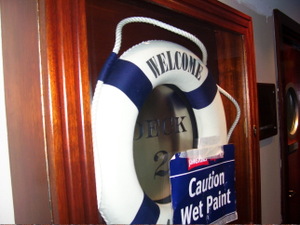
Loping all over the country doing groups can get monotonous sometimes, and most hotels don’t help. Same sterile decor, staff with smiles painted on. Every now and then, you come across something out of the ordinary.
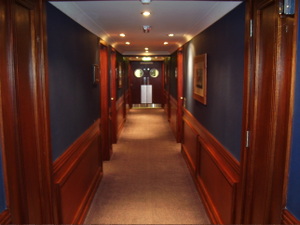
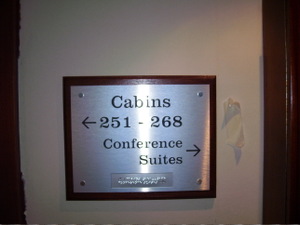
Nothing prepared me for The Liner though. "Liverpool’s first themed hotel"…..maybe there’s a good reason no else did it first.
-
Two very different experiences this week.
The first was interviewing people looking to buy their first house. Next time I moan about this and that on this blog, please tell me off in the comments. I’m doing a job I love, living where I want and I don’t really want for anything. I’m very, very lucky. Most people are not.
The second was meeting was this livewire who could inspire blood from a stone. Every now and then you meet someone who leaves you all at once hot and cold, makes you feel flowing with ability, yet quite meek at how much you have to learn. I met someone like that. It was Good.
By the way, things are getting a bit busy up North, this is the last post ’till Tuesday ish. Seeya.
-
Confidence is very overated in my view. I saw a good example of this in the space of two days – in two very different presentations.
The first was from an obviously nervous young lady. She stammered a lot, went bright pink whenever she spoke and even broke into a sweat.

But she was brilliant. She’d obviously worked really hard, to make sure her delivery wouldn’t matter. Her thinking was watertight, she’d handrawn every slide – the content spoke for itself. And she looked like she cared. She was bursting with enthusiasm, joy even, she really wanted us to love her subject as much as she did and she was so lovably human she had us from the first minute.
In complete contrast, I also saw someone who obviously had much more experience. It was all slick, he didn’t refer to notes. Everything shone teutonically, like a BMW showroom.
And no one cared. The actual content was OK, nothing great, but even if it was,the delivery was just TOO good. It didn’t look like any effort, so it didn’t look like he’d spent that much time on it.
We all WANTED the girl to do well. We didn’t care about him. Her content shone with blood sweat and tears – and it was good enough on its own. He was Posh Spice -all style, no content.
You see, confidence is overated. Some people can walk into a room and talk no problem, others find it hard but make sure that what they say is memorable, even if how they say it isn’t. They’re usually a lot nicer too.
Some people can run meetings through force of personality, others have to find another way.
And you know what? Lack of confidence is ace in younger years – you try twice as hard to make what yo say and do really good – it needs to be to make up for other weaknesses. That is unless you try and cover it. False bravado just makes you look like a wanker. Be yourself, I cannot impress how important this is. YOU WILL LOOK STUPID AND YOU WILL GET FOUND OUT.
And when you get older, confidence will come anyway. It will arise from having done things over and over again, endless rigour and having things go well enough times. It does get easier. But while you’re waiting, be thankful that the stammering and stumbling just makes people like you more, and makes your work better.
-

We’re seeing some amazing Autumn sunrises down my way.

This one came out a bit wrong. Funny to make Yorkshire look like Planet Mongo though.
-
The culmination of man-flu, workload and laziness kept me out of the swimming pool for a couple of weeks. When I got back in the pool, the swimming was a nearly dire as my singing.
The timing was off, I had no zip in my legs and my shoulders felt like they had hot lead running through them. You lose it that quick. After years of not swimming much, you can imagine how much it hurt when I started again last year.
And last week, I was in the curious position of doing a bit of suit work. Not, thankfully, any ‘handling of the client’. A mixture of flu doing the rounds, a new client and the fact I used to be a suit for someone else in their category meant I was seconded to lubricate a mass of press ads through the system, copy check and a whole host of stuff I haven’t done in years. And it was bloody hard.
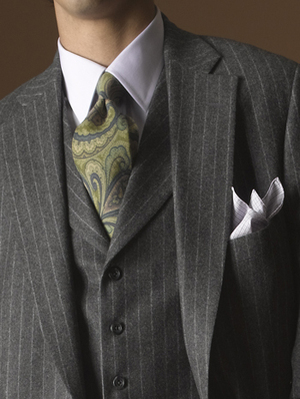
It reminded me why anyone who’s not a suit (or in traffic for that matter) should thank the lord for these people who do the things we don’t want to.
Both instances also showed the value of never thinking you’re too good to practice. It’s not just about getting better – the less you do, the worse you get.
-
The penalty for losing the Band Battle is now available here on You Tube (plus bonus track).
It’s dreadful.


 NORTHERN PLANNER