• You can’t move for people helping you control time these days. From phones that have the internet to ready drinkable fruit, from TV you can pause to grab and go coffee shops. But no one talks about speed very much.

    100_2831

    And no wonder since improvements in that area seem to be long gone – and maybe going in reverse.

    If you go back about 200 years, a galloping horse was the limit of how fact a human could travel, but then we had an explosion of speed –  steam trains to motor engines, from jet engines to space craft. But that rate of increase has pretty much stayed static since 1980. And since the end of Concorde means the traveling public cannot go supersonic anymore, you could argue we’ve gone backwards.

    Planes these days are about twenty times the velocity of those people first traveled in. At that level we can go further than ever before. But that stopped around 1980. Even the fastest spaceships are only twice as fast as the moon rockets of the 1960’s. It’s taken 40ish to double our very fastest speed, go back 100 years or so and that happened every decade.

    But in may ways this may go into reverse.

    In the UK at least, most journeys (about 80% I think) are made by car. But you can have all the turbo engines you like, it doesn’t help in a two mile tailback. Most people live in the city now, where traffic lights are set to keep you averaging 15 miles an hour ( incidentally, they are against you since they spend, on average two thirds of their time at red) – they are programmed to slow you down. Car consumption is set to rise further in the UK. Looks like we’ll all be slowing down  a bit.

  • 100_2825

    Sergiu asked me to do a question and answer section for his blog. A Yorkshireman through and through I couldn’t resist the chance to throw my useless opinions around. I presume he’ll be posting soon, here’s what I wrote:

    1. What is the latest piece of thinking that you consider pure genius and why? And I’m not talking about advertising campaigns exclusively.

    I’m going to be cheeky and pick two.

    The first is ‘Heroes’. The comic book genre has been done to death –at least in comic book land. I think the premise of what would happen in the REAL WORLD if people got comic book powers is fresh, meaty and pure genius.

    The second is the thinking behind Lurpak in the UK. Food culture in the UK is confusing. We’re supposed to be excellent cooks, buy ethically, be healthy and somehow fit this into busy lives. Lurpak helps us simplify the confusion by showing us that the secret is simple – quality of ingredients. This common sense voice allows them to talk about all sorts of things, like faddy diets. The secret to losing weight is just to eat a little bit less! Love it.

    2. With all this blogging and all this information that keeps us "a step ahead" aren’t we losing sight of what’s important and relevant. How much is it just procrastination or intellectual masturbation as John Steel called it?

    There’s never been a better time to be a planner. Thanks to blogging you can rub shoulders with all sorts of great thinkers, and work out some ideas of your own in public, and allow the feedback to refine it, or tell you your wasting your time for that matter. That has to be a good thing – so long as we all remember that planning isn’t about coffee mornings and clever blog posts. It’s about hard work, rigour and making hard choices. It’s about meeting the people you intend the work to be aimed at, it’s about evidence. It’s about rigour The explosion if information and choice has left many people in agencies confused, it’s up to planners to help them make sense of it all. I find that exciting.

    3. We’re always talking about maintaining our creative edge, but what should we do to keep our feet on the ground?

    Make sure you’re always in touch with the real people beyond the walls of your agency. That means reading what they do, watching what they do and meeting them as often as possible. Some of that is making sure you watch – and ideally do – as much of the qual research as you can, but some of that is wandering around the kind of places they hang out and watching what they do, how they talk what they’re all wearing.

    It’s easy to be seduced by a wonderful creative idea, and forget it will be totally uninteresting, or irrelevant to the people it’s aimed at.

    Also, a friend of mine uses the phrase, “Stay close to the money”. He means spend as much time with the people who’s livelihoods depend on your strategy. When you have to present a TV campaign to a bunch of surly sales managers, who’s bonus depends of the success of your ideas, you’d be amazed how unimportant the size of the logo becomes.

    The best thing that ever happened to me was having six months between agency jobs. I was bored, the money began to run out, so I spent some time in a call centre. 8 hours a day on the phone talking about plumbing and drainage insurance, in an office with many people who didn’t have a future beyond doing this kind of thing forever. Doses of reality like that are invaluable.

    4. Many times it’s not only clients who think a planner is just another useless expense, some agency leaders think they can always manage without the help of a planner. What’s the best argument for having a planner in an agency?

    That’s a good question. It’s fashionable to talk about making sense of the fragmenting  media, making the work better etc – and all those things are true, and invaluable. But in my view, the biggest value a planner has is making life easier. No one wants endless rebriefs and redrafts. The more times the client has to rebrief you, the more frustrated they get – and eventually you get fired.  They want the right work, first time. By bringing the consumer into the equation, planners allow everyone to work to the same agreed goal – what will work –  and get there so much quicker. That helps the age old suits v creatives conflict too. From a client point of view, planners also help clients feel like campaigns are less risk thanks to this ‘proof’– and that’s invaluable since they’re putting their neck on the line. They have a board to answer to. In other words, planners help great work get through quicker. That benefits everyone.


    5. What do you think makes a great planner?

    A healthy interest in everything and no ego. I think planning as all about connections, between brands, markets and, most importantly, real culture. The more stuff you’ve read, the more chance you have of finding a connection that’s interesting.

    And creatives have to fight for their ideas, suits have to fight creatives and clients. There’s no room for more egos in there – but a non-threatening sounding board goes down well.

    6. What’s the movie that any planner should watch? What should he learn from it?

    Glengarry Glen Ross. A sobering film about the hard life of a sales man. It reminds you how lucky you are to be in an interesting rewarding job. It also reminds you how tiny brands are people’s lives. All those people out there face all sorts of issues everyday that agency people sometimes forget. No one gives a stuff about ‘brands’ they’re getting on with the everyday grind of real  life.

  • The darkness will be lifting soon, but before it does, I just wanted to moan about the folly of this industry’s self absorption.

    100_2882

    I read an article in Friday’s Campaign about long term relationships. That’s right Friday. While the cool kids in London get to look at the moody black and white photos and hand wringing about integration on a Thursday, they think (or know) that everyone is happy to wait a day since they never print anything about them anyway.

    Anyway, long term relationships. Here’s a couple if gems of sage advice…….

    "Do everything to ensure that you and your incoming client are culturally compatible and share the same values"

    "Try to create an atmosphere of mutual tolerance and patience"

    "If you’ve made a mistake, admit it"

    "Never take the relationship for granted"

    In other words, act like grown ups. Behave how people in other industries do as a matter of course. Show some respect for people that don’t have the privilege of wearing t-shirts and trainers to work.

    Thanks Campaign. I feel like I’ve died and woken up in Damascus.

    Long lasting client relationships are indeed thin on the ground like they say, and it’s no wonder if we need to be told stuff like this.

    Bet they don’t print this in their ‘Best of the Blogs’ section (it isn’t so fair enough come to think about it).

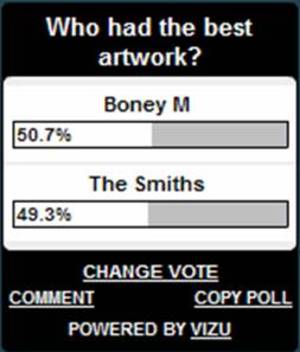
    Righto, that’s enough from The Brother Grim. Sunnier climbs tomorrow. Or maybe not, The Smiths are losing to Boney M two to one. You can rectify this by voting Smiths here.

  • The Smiths are a band worshiped across the globe by legions of black clad angsty teenage misfits. And despised by everyone else. Or at least that’s what the Bony M lot will tell you. Miserableist, hypersensitive, whiny and self- absorbed. Boney M stands for empowerment and fun. That’s what they’ll say.

    But it’s the other way around. Most of the singers in Boney M wern’t even allowed to sing on record. It was all controlled by their evil, manipulative manager – Frank Farian. Their was nothing carefree about the music of Boney M, it was all carefully controlled.

    Smiths_8

    I have to admit, it’s easy to be put off by the public persona of Morrisey, but you really shouldn’t let it. Peer just a little further and you’ll hear some of the most wonderful songwriting in British pop history, nay, the world. And if you listen properly, it’s very witty funny and very funny…….and it liberated pop music.

    A vote for the Smiths is a vote for freedom. A vote for Boney M is a vote for Simon Cowell and X Factor.

    Simoncowell

    Look at this grimming personification of evil. That’s what you’ll be supporting if you vote for manufactured Boney M.

    It’s worth going back to the early 1980’s to see how the Smiths saved proper pop music. Punk was becoming post punk (which means U2) and the charts were dominated by the new romantics. That’s right, most music was without any soul, and it was performed (mimed) by impossibly pretty people with very bad dress sense. And they sang in fake American accents. Real music was dead on it’s feet.

    Spandauballet

    Bands like this lot.

    Steve_strange

    And him. Even David Bowie was falling from grace with a series of really bad populist albums.

    Then came the Smiths. It’s no exaggeration to say they are the most original band in British history. I include the Beatles and the Stones in that – they sang in styles nicked from America, and were heavily influenced by Motown etc. The Smiths were a one off. Morrisey didn’t sing in any fake accents, he sang as himself. And Johnny Marr……easily the best guitarist of a generation. No one sounded like him before, no one did after.

    The Smiths were anti-fashion, anti fake. Unlike Boney M who mimed, who didn’t sing on their records, who couldn’t play to save their lives, the Smiths were the real deal. The music was the epitome of melodic simplicity. On one hand you had the guitar arpeggios of Johnny Marr, on the other you had the the dark crooning of Morrisey, along with the lyrical dexterity to rival even someone like Dylan.

    Bored with the synthesizer pap of the time, The Smiths music was about ordinariness. From the name to the songs themselves. The bravery of ordinary people plodding through their everyday lives is in every record. And as for playing live? No one could touch them.

    But they saved us from the worst kind of cynical, synthsesized rubbish and liberated real music again. And it was all totally orginal. Every generation loves its own music and thinks it sounds like nothing that went before it. But the Arctic Monkeys nicked the best bits from The Undertones, Kaiser Chiefs sound like the Jam and every George Clinton has been sampled by just about every rap artist out there. The Smiths was a one off. And they came at a time when they were most sorely needed.

    I won’t go through every record, there’s no need. It’s enough to know that a vote for Boney M is a vote for safe, manufactured pop. It’s a vote for Stock  Aitken and Waterman producing Kylie, it’s a vote for The Kaiser Chiefs shamelessly ripping off the Jam. It’s a vote every Simon Cowell svengali there has ever been. A vote for the Smiths is a vote for original ideas. You know what to do. Vote here.

    The Kaiser’s argument for Boney M is here.

  • My the measliest of margins Boney M have won the first round. By the force of the Kaisers’ argument, the joy of irony or pure bad taste I just don’t know.

    Kaiser

    But it was close. Since no one can deny the superiority of the music, or it’s influence, I’m still confident Kaiser will be singing ‘Handsome Devil’ soon enough.

  • Back to that list. Now in many cases, the agency will be chosen for you by the client. but not always.

    When it’s your job to hire the agency it’s not easy. There are LOTs, mostly competent, with similar costs. But they do vary. The best work with you as team, they listen to what you need, they know how advertising and agencies work, they keep their promises and they know who’s the researcher and who’d the planner. Those that are not so great try and do the strategy for you, or even worse, don’t do things when they say. You want to be worrying how you can use their findings, not flapping over hidden costs or worrying if the job will be done on time.

    100_2531

    So if someone’s done a good job for you, hold on to them for dear life! Only change if you want a different kind of project doing. But if you’re starting from scratch, ask people who’d opinion you respect who they would recommend.  When yo talk to new researchers, here’s a useful checklist. Do they:

    1. Listen as much as talk
    2. Do they understand your project?
    3. Do they understand advertising?
    4. Will they get on with the client?
    5. Will you enjoy working with them?

    More practically, ask what their fee includes – and what it doesn’t. The first qual project I handled got me in lots of trouble, after I quoted a figure to the client, only to have to invoice a third more more wi-fi connection, viewing facility and travel expenses.

    Find out how much work will be done by the senior person you’re briefing, and how much by the inexperienced trainee they haven’t told you about!

    In the end, I think it comes down to people you will like working with, whom you can trust. Doesn’t everything?

    And since much of this is about division of labour, we’ll be moving on to who tends to what next.

  • I think it’s worthwhile being proven wrong, so it’s with great delight that I learned that my sage advice about applying sliced salt to Aubergine, to draw out the bitter juices, is codswallop. In the Oxford Campanion to Food, Alan Davidson tells us that modern varieties of Aubergine have no bitter juices to draw out.

    Aubergines are now officially an instaneous vegetable. Shame actually, I liked the ritual.

  • Darthshadow

    To make matters worse, David Mortimer’s week proved a bit humbling. He’s one of these annoying people for whom ideas tumble out at will.

    Good job he’s such a pleasure to have around, or I’d be seriously peeved.

    He did a strategy for reducing teenage smoking. Read it here, and if you’re a planner, be prepared to raise your game.

    Smokeme6

  • Round 1 of Smiths V Boney M is neck and neck. After a surge for the Smiths, the optimists have gained ground.

    You know what you must do. And don’t forget, a vote for Boney M is a vote for everything Simon Cowell stands for. Vote Smiths, vote now.

    And even if you want to vote Boney M, abstain, I’m having a terrible time right now, be kind.

  • Here we go then, the first round of deciding if The Smiths are better than Boney M. Let me say here that The Kaiser decided the criteria for each round, and it’s no surprise he left out quality of lyrics, musical craftsmanship and live performances, but what do you expect?

    Now he’s going to try to appeal to that bit in us that loves irony, the corner of your psyche that cannot resist doing the opposite of what common sense tells you is the right course. I urge you to resist. There’s too much lightweight culture around at the moment, from the X factor to Big Brother. From Girls Aloud to The Spice Girls reunion. Time to champion stuff with  a bit more meat. A vote for Boney M is a vote for the superficial.

    But the first round isn’t about music, it’s about record sleeve artwork. And the Smiths were responsible for some of the most consistently compelling and stylistically distinctive covers in history. As we’ll see with the music, every generation tends to kick back against the one that went before. The Smiths were no exception. Set against the fakery of the new romantics and the brash aggression of punk, the Smiths stood for ordinary bedroom rebels. Morrisey sang in his own voice, no fake American accent or punky over enunciation, and they sang songs about ordinary people and real private lives that were sometimes hard, always confusing.

    Nearly every cover bears photography from film stills, the art world or cultural moments. The subjects may be eclectic, but it tied the band to a distinct aesthetic sensibility. It’s no accident that the collected imagery evokes the world of Shelagh Delaney, early Alan Bennett and Arthur Seaton. This was the world they had come from. The musical themes tended to come back to wanting more than the hard, drab life you live right now, the imagery reflects this.

    1

    For the first album, Joe Dallesandro is on the cover, from Flesh. In the film he plays a bisexual hustler saving up for his wife’s abortion. It’s no accident is was a Warhol film – Warhol was arch passionate and with a sullen detachment that was very much like Morrisey.

    2

    Hatful of Hollow features Jean Cocteau model. On the shoulder is a tattoo of an illustration from a Cocteau report on homophobia. There’s a clear message about society condemning anything out of the ordinary and standing up for social misfits.

    3_2

    The cover for Meat is Murder is maybe their only political one. Lots of Smiths music was political, but only is a social context. I like the way this cover portrays animal rights as significant alongside war.

    4

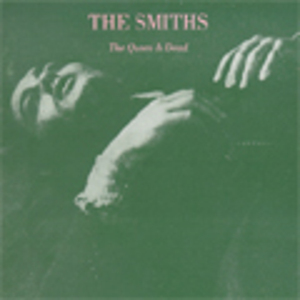
    The Queen is Dead cover features Alain Delon in a brooding mix of passion and disinterestedness that is quintessential Smiths.

    5

    Louder than Bombs features Shelagh Delaney. Her writing was always about the British working class, though critical reception was mixed.

    6

    The World Won’t Listen features a teenager from Jurgen Vollmer’s Rock and Roll Times. A lone teenager staring into traffic. He looks at once graceful and alienated – such and emblem of the way the Smiths embraced rebellion and loneliness and themes.

    7

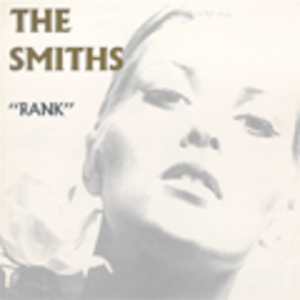
    Rank featured Alexandra Bastedo, in her glory days as an alluring young woman flitting around Britain. It’s striking, confident and at odds with the obscure, conflicted, shadowed figures on the rest. Rank was a live album, and Smiths’ concerts were intense, euphoric affairs. Maybe that explains it.

    There are many more covers of course, but you get the idea. I think they’re beautiful. They have a consistent style of course, and it was such a relief from the garish pop music covers of the time, or the minimal covers from Factory records. Every cover made the album feel alive with the the passions, rebellion and  hope of the music, along with a sweeping wistfulness for days gone by. If any album covers make you FEEL the music before you hear it, it’s these.

    You know what you need to do, do it here.