• There's a lot of talk right now about the trend for marketing folk to focus their efforts on short term 'activation' projects, taking their eye off the ball of longer term 'brand building' stuff. 

    Now, in the first instance, it's probably best to look past the IPA Data, one which many are making the case for creativity and long term thinking.

    It's made of Effectiveness Case Studies, meaning it's mostly made of case studies where clients are happy to share the data, where there is an econometric model and the writer feels they have something new to tell the industry. In other words, outliers.

    It's kind of the same with stuff like WARC reports, made of their own awards, with entries from folks with especially good work (or at least they think so) and something new to say. 

    Of course it's worrying if the trend in these cases is towards less creative payback and more short term thinking, but it's still not the entire world. 

    Even more robust studies from the likes of Ebiquity are less than bullet proof, as they come from brands big enough, or with the kind of culture, that requires an auditor. Take the much quoted study Ebiquity did for Thinkbox

    Its hugely valuable to the difference, by channel, for long and short term, really useful as an argument for long term thinking. But it's an average that doesn't take into account creative impact (according to Neilsen 50% of payback depends on creative, while Omnicom's own bank of case studies shows that innovation can double payback by as much as 100%) – when I saw the study presented, the Ebiquity guy actually said you should prioritise, "Fucking good creative". 

    But the study doesn't take into account social media, as the incidence of case studies wasn't big enough. In other words, a study of TV centric clients tends to say put most if your money into TV and forget the channel so many are beginning to prioritise!!! The IPA work is better, but as we've discussed, the sample is VERY biased. 

    Furthermore, like Brexit in the UK, or most debates in the world we're in right now, I find it strange folks seem to on one side or the other, or believe you need to make some sort of choice.

    Obviously, just focusing on short term payback is dumb. No wonder Adidas are looking to go back to more brand building for example, as Fred says, I'm sure there will be more. Fred is far cleverer that I ever will be, so take his view seriously. 

    The thing is, I get a little impatient with brand babblers too. Maybe I've spend too much time with organisations who give their all to moving a target from awareness to familiarity, or making sure people take out a specific personality trait in a tracking study. 

    My own view is that it's really simple. At all costs, don't follow rules based on averages that don't exist in real life. 

    It's a little like dieting. The science is unlocking new understanding, where the average guidelines on what to eat are a complete waste of time. The same two people can eat the same stuff and the weight on one can ballon while the other can lose it. Soon, we'll all be able to have personalised guides to what we eat that will transform our lives.

    Just as its fair to generalise that women are biologically different to men, but it's also unhelpful as the difference within each groups are greater.

    It's the same for organisations doing marketing. There is little point following rules derived derived from an average of companies who are actually from a pretty low base anyway. 

    What I'm saying is that input and rules of thumb are fine, but you can't beat in my opinion the words of David Abbot.

    'Tell people something about the product that shouldn't be missed". You need great creativity to stand out, you always did. You need great creativity because people can't be bothered to think about brands and most of communication isn't about what is said, it how it is said.

    But without relevance to what you are selling, or at least to specific problems you need to solve, the best creative in the world won't do the job you need. Because the brand won't be remembered when it's time to buy. 

    So what to do?

    Basically, to mis-quote good old Byron Sharpe, reasons not to buy, in a way that reaches as many people as possible, in a way that captures the imagination, in a way only your brand could credibly do. 

    1. Agree what the commercial task is. You know, grow share, reduce price sensitivity.
    2. Understand what the barrier is to that. Sometimes it is brand image, usually it's not. 
    3. Define who this is among, and what they are doing, or not doing that's driving the problem.
    4. Define the right plan to change this, including where and when this should happen. 
    5. But do it in a way people will thank you for, that no one else could credibly do. 

    Don't think of of campaigns, real people don't live in campaigns, they live in moments. Most of which they forget. It's simple and really bloody hard, but the more you find a moment in real life that is driving the issue and deal with that you're on to something. The trick is to deal with the moment in way that isn't forgotten, that deals with the short term but adds to the how people feel about the brand.

    I'm saying think of your brand as a series of moments that will have different roles and jobs. Make each moment add up to one powerful whole.

    7244134-orange-basketball-close-up-shot

    Think of a basketball. From a distance, it's just a ball. But it's made up of little dimples that allow you to grip it. Think every little dimple as a change to deal with a short term issue, but if each dimple doesn't help people grip the whole thing, they (and you will drop the ball). 

    That's how I do it, but because I'm different to you, do it your way. 

    Final point. Load of strategy types like to talk about long term and brand building because it gets them out of solving real problems hampering business performance. In my view, if your thinking isn't going to actually drive a commercial outcome you can define, it's not strategy, it's sophistry. 

  • One of the best things about working in agencies, should be the sheer mix of people you get to work with.

    I say should be, because many agencies think they're full of openness and colour, when the reality is startling sameness.

    We like to say it's clients who are conservative, while agencies are different. However, in many agencies, while the dress code and etiquette are less formal, there is plenty of expectation to behave a certain way and 'fit in'.

    It's no accident then, that agency land tends to have some consistent archetypes that become clear, if you work in them long enough. I wouldn't be surprised if you've met one or two of them. 

    Here are some to watch out for. By no means a comprehensive list, these are perhaps the most dangerous…

    The Meddling CEO: Despite the fact they haven't done anything good themselves in years, nothing gets out the agency without their blessing. They may have been amazing when they were working on the day to day, but those days are long gone. They will try and tinker with the strategy, they will get very close to taking a layout pad in a creative review and when it comes to the deck, they'll try and rewrite every slide. All this would be amazing if they added much value, but their days of glory are long gone, so they don't quite know what they want, but will make you change stuff and change again until they see it. 

    The Creative Turd Polisher: You know when you're working with a great creative because their thinking will work on a layout pad, or an a few sentences that inspire you as to how they've turned the brief into gold. Then there are those who's ideas are less impressive, or at least they are when you strip the layers of Mac work, or amazing writing, they've undertaken to cover this up. There are many variations of this kind of creative.

    One consistent theme is their ideas are usually very average, but they've blown the budget trying to make them look better than they are. 

    There is the Video Star, who blows you away with the wonderful little film they've made – until an hour later when you realise all you have is a film, rather than an idea.

    There is the Headline Act who, no matter what the brief – an event, it might be an installation –  they will write an amazing headline. It might be the next Just Do It or Appliance of Science, but that doesn't help you when the brief was nothing to do with this. Variations on this are the Prose Writer who writes amazing copy that says nothing at all, or the Persistent Punner who can't answer a brief without creating a line that's a pun, or in many cases, endless bastardisation of the client name. 

    The Bookworm: There is a very special kind of person usually in leadership, who can't think for themselves anymore. They slavishly follow the pearls of wisdom from the latest book they've read. Don't get me wrong, some leaders have been inspired by a piece of thinking, it's influenced them deeply and they consistently follow through on what they have learned. These people are great, its the ones who change their minds four times a year with every new book they've ordered. Those are the ones you have to watch out for. You'll find yourself following a philosophy that has no resemblance to how things really work, but just as you manage to work around it (as you must with all proprietary agency processes), they'll be on to something next. The equivalent of the Creative Turd Polisher, they'll say fuck all of use, but it will sound bloody impressive, until you take another look and realise there is nothing there but smoke and mirrors. 

    The Pro-Amateur: A newer species, but no less challenging. They have evolved as the model for agencies has changed. Once things were relatively simple. Ad agencies did ads, brand consultancies did over complicated brand positioning for everyone else to make sense of it, media folks did media, PR folks did PR and designers did design. As the market got tougher, media fragmented and lines blurred, you started to get media folks with creative directors, ad agencies getting back into media, digital folks trying to do lead creative. Even PR agencies trying to be lead agency. The thing is, every bit of the marketing mix is hard, but people who have grown up doing one bit naturally think what everyone else does is billy basic – so they try and do it themselves and like most mediocrity, just can't see how average (at best) their attempts at work outside their own specialism is. If you are from one background and have been asked to join a new organisation who wants to branch our into what you do now, be very careful, or, to be honest, run for your life.

    There are more archetypes of course, this small collection is perhaps the one to be most careful of. What are yours?

  • Air tech

    These trainers have been re-released and I got them in a flash.

    To you they look like a pair of 90s tennis shoes with too much pink.

    To me, they are being 15 and rebelling against the ridiculous rules, complacency and 'does your face fit' mentality if British tennis clubs in the 1990s. 


    This is my favourite ad ever. Not because it's good or bad. It simply spoke to me at a critical point in my life.

    (out of interest, this is what gets missed when we debate the commercial sense in targeting young people. If you can become part of them working out who they are, you have a chance of staying with them for life. Unless you can find moments of transition and change – I venture Porsche should relentlessly target men and women who have the year 9 in their birthday – we re-evaluate EVERYTHING at the start of each new decade. I'd love someone like Porsche to target the partner of a car enthusiast and tell them a sports car is better than an affair!)

    Nike didn't just build amazing ads and stuff back in the day, they built layers and layers of meaning, getting to the real of truth of sport for most people.

    In tennis, globally, the establishment ruled and players like Agassi and McEnroe were anything but that – and teenagers like me bloody loved it.

    Now Nike has moved on to build new meaning by tapping into the new young belief in equality -another cultural flashpoint in the deep truth that sport is the ultimate leveller. 

    Most sport is really pretending to something your not – or letting a part of you out that is usually buried come out.

    When I was a pretty good swimmer, racing all over the world, I may have been a clumsy, shy awkward teenager, but in the pool, I could feel my strength and power and the sheer joy of doing something most people couldn't do. I gave me confidence that began to carry over into my real life. 

    When I played tennis, I competed in local matches, but it was all fantasy, I lived for the few moments I could make a running passing shot and feel like Agassi – and the feeling of being a rebel in a world of constriction. I didn't matter if I lost matches, I lived for few moments when the fantasy became real. 

    When I cycle now, I ride very, very fast and put myself through all sorts if pain, because I want the feeling I used to get from swimming. To escape and feel something in a jaded world – it still brings confidence in the real world for a person who is still shy and doesn't really know what he's doing. 

    Of course there is tension in this, I feel something far more profound when I allow myself to forget the world and spend time with my children – but most parents won't admit that being able to love your kids to the fullest, means being able to express other parts of who you are too. 

    Nike got stuff like this in the 80s and 90s, while Adidas just made ads. 

    In other words, they found their very human voice and found a way to move people.

    This is what gets lost in How Brands Grow. It's fair to say that most people can't describe the brands they buy – but I can't describe why I love Joni Mitchell, and I hate Queen. Not really. It's how they make me feel, and we remember how we feel a lot longer that what we are told.

    Nike's work cut deep. Adidas doesn't feel right. Never will. 

    Because emotion and body language evolved millions of years earlier than speech – and always wins.

    That's why culture always beats marketing. Culture is life. Marketing is commerce. 

    I'm saying that Nike simply managed to be more human and got the HUMAN truth of the role of sport in our lives. 

    It's that easy and that hard. 

  • I watched a BBC documentary on John McEnroe. I quite liked it, since I love tennis and I grew in a time when tennis players were as big as rock stars. Connors, Borg, Becker, Agassi and so on.

    It has quite a lot to say about agencies and people in them to be honest. About the supposed truth that you can't have brilliant people who are easy to work with. 

    Because at the heart of the story was the tension between McEnroe's outrageous talent and his unpredictable temperament.

    When he was great, he was stellar, when he was bad be was awful – and sometimes he destroyed himself in games he was winning.

    Agassi and Becker are other examples of this. Players who, when on song, their tennis was like poetry.

    But their talent was such, they should have won far more than they did.

    Some say without waywardness let loose, they would never have won at all, and certainly not in the magical way they did.

    And let's be honest, we remember these players, while mostly never talking about Lendl or Sampras.

    But I don't accept accept it has to be one or the other.

    Step forward Federer, Nadal, Borg. Legends, who let their racket do the talking. It's just that when their rackets spoke, it was Proust or Hemingway (or in Nadal's case, something more brutal)

    And you may not know that Federer and Borg were badly behaved, temperamental young players who learned to channel, focus, their emotions into playing.

    It was at this moment they started winning. 

    There's a deep truth in psychology that rarely gets discussed. Anger is a good thing, it delivers energy to help you fix what's creating the problem. Not by venting on someone, or throwing yourself into a furious run or whatever, because the problem will only come back. 

    Anger is great to fuel you dealing with a problem, changing things. Using the rage for positive action. 

    You can see where I'm going with this can't you?

    Letting 'characters' in agencies rule the roost.

    Making it OK for outrageous talent to treat others like dirt.

    Excusing agencies who are sporadically amazing for their duds. 

    By all means, celebrate the bonkers brilliance of the agencies that tend to make the headlines.

    Or the kind if work that get's into Campaign.

    But you know you just did really well at Cannes this year? AMV. An agency who manage to be big, solid and totally brilliant. Founded by nice men who believed a company could be great at it's work while being great to work there.

    They will dealt with the same stuff the rest of us do. Bad briefs, budgets getting cut, client's not buying great work. The fact your in service industry and your fate is the whim of others.

    It's no use being brilliant some of the time.

    No amount of talent excuses anyone being a dick.

    Put another way, the problem with supernovas is that they burn out very quickly – and when they explode, destroy all around them.


  • You know that quote from The Usual Suspects? The greatest trick the devil pulled off was convincing the world he didn't exist?

    It's also one of the greatest skills of strategy types. Few creatives will work with your thinking, certainly not your ideas, if you're going to take credit for them. 

    It's the same with clients to a certain degree. They love having planners around, for extra advice, stimulus and stuff. But they then need to pass your thinking off as your own. 

    It takes a genuine removal of ego on your part and years of practise, to the point where people struggle to work out what you do, they just know that when you're around everything works better.

    In other words, great strategy types are like waiters, or kettles. You only notice then when they're not doing their job well.

    I'm convinced it's why we have the conversation over and over again, about the role for planners and strategy types in agencies and client relationships.

    We've done too good a job at getting our thinking through by making people believe it was their idea.

    Of course, this presents a problem that goes to the heart of good FMCG brands too. If you become too good at getting people to use you without thinking too hard about it, that habit is easy for shiny new folks to disrupt.

    For a great shampoo brand, it's easy to lose share to someone else with a new sciency promise, or maybe in this day and age, an aromatherapy wellbeing fragrance thing (I do think that Herbal Essences are missing a trick building on their 'orgasm in a shower' base to more, wholesome, experiences that go deeper than hair). 

    For a strategist, there is the threat of management consultancies, brand consultancies or some big data whiz. Or even the account directors actually thinking they can do the job, rather than looking like they can thanks to your generosity. 

    Which means, like brands, you have to tread a fine line between helping people not to think too hard.

    While constantly, well, refreshing memory structures (to quote good old Byron Sharpe). Getting folks excited about what you do, showing some leg now and again.

    ANNNNNND 'removing reasons not to buy'. Doing data better than the data folks, but with intelligence rather than cleverness for example. Simplifying the guff around Alexa into an actionable pros and cons for clients. 

    I'm saying that while you need resolve the tension between the need to be invisible and not taken for granted. The greatest trick you can pull is being modestly indispensable in the areas worrying your agency and client the most.

    Prepare and present an e-commerce strategy to your FMCG client before Amazon does.

    Help agency build expertise in marketing to people over 40, while the market chases Gen Z who don't have any money.

    You get the idea. 


  • Yes another bloody planner going on about storytelling. But hopefully, with a newer angle.

    41wzXy1QZ7L._SX324_BO1 204 203 200_

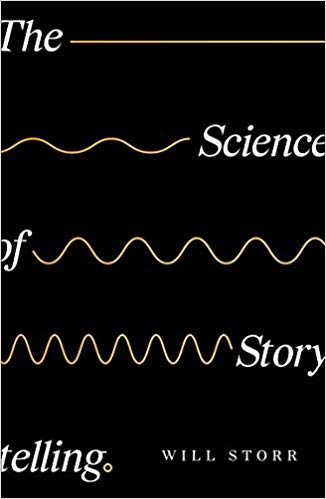
    So before you bugger off, it's because I read this book , The Science of Stortytelling

    It goes way beyond the usual stuff about 7 basic plots etc, good as it is, and looks at the science behind how and why stories resonate with us. Lot's of good stuff about human and tribal psychology -and why real conflict is between the view of the word we construct for ourselves, irrespective of facts, and someone else's. Worth thinking about next time you have a debate over a brief.

    Anyway.

    To cut to the chase, while plots are good, it's the characterisation that really makes things fly. The people.

    Recognisable tensions and flaws in their lives, usually the gap between their current view of the world and the reality they haven't quite grasped. 

    Han Solo as the cocky devil may care pirate who actually had a caring moral core he couldn't come to terms with.

    Citizen Kane who saw himself as the great man of the people, but was really asserting his power over the little people in a different way.

    Father Ted (yes really!!) who saw himself as a better than all his Irish Priest mates and thought he was really made for greater thinks. When really he was as hopeless as one of them.

    Delboy who thought he was a yuppie waiting to happen when really he was a failing market trader.

    Or, if you've read Remains of the Day, the butler who was trained to show no emotion and follow correct etiquette at all times, it's how he built his whole life, therefore struggled to cope with a new master who was less formal and a world of emotion and feeling.

    Even the usual hero's journey is a conflict between a protagonist used to being normal and liking it, and the long and sometimes painful discovery they were meant for other things, like it or not. From Bilbo Baggins to Luke Skywalker it;s there. It's why Thor has become so interesting, because it's this conflict in reverse,  in recent Marvel films. He might have the powers and expectations of being a great leader and hero. But inside he's really a normal confused man who wants a normal existence. 

    (this is why, by the way, DC films don't work, with the possible exception of Aquaman. The plots are fine, the effects etc are stunning, but the characters are just two dimensional. The characters are just dull. We don't relate to them as we should, there is little real conflict. I think this is why Bond films have done so well recently, the Daniel Craig character wants to be  cold blooded killer, but feelings and even love keep on revealing a better human inside fighting to get out). 

    This dead interesting for me thinking about the day job. Instead of focusing on the brand story stuff, which you of course need, maybe we should focus more on the role of the protagonists in them, the real people we're trying to influence. 

    Not the dull pen portraits, getting into their flaws, the gaps between how the they want to see themselves and how they actually are, or could be. 

    In other words, as we should know by now, great brands get into tensions in real culture. I'm suggesting we forget real insight about people at our peril. I don't mean the usual category dynamics stuff, but how what we're selling fits into unresolved flaws and contradictions between how they want to be and how things really are.

    Like middle aged men who are not as successful as they th0ught they would be, and work out their frustrations by doing triathlons.

    Like many parents who want everything to be easy and perfect in the family, but can't admit (the search data proves this) they sometimes regret losing the life they had before.

    Like older people who are living longer and get annoyed when culture focuses on the young folks, But hate brands singling them out as being old.


  • Saw an old friend last night, always good to catch up, he's like the more sensible and wise big brother.

    Miss working with him too, as I'm one the those strategy types who has so many thoughts tumbling around I need to talk it through at length with someone to understand what I really think.

    Then write it down quick. 

    We all have different ways of working, we all have people who can help in different ways. Increasingly, I'm beginning to think that diversity is, of course important in agencies – not just colour and gender stuff, but the fact I'm convinced agency folks are more likely to hire physically attractive people than other industries.

    Even worse, the generalisation is hiring people who 'fit the brand' -be that quirky, cool or in some cases, down right arrogant.

    But I've found that I get far more out of working with people vastly different to me, especially in terms of world view (unless you like Queen, we all have line not to cross), but also how you work. 

    Who accept my deep flaws and many flaws in order to help focus on my very few strengths. 

    Building on that, isn't it dumb how many agencies like to hire 'characters' and then do as much as they can to make them all work the same way?

    Now this will probably put you off ever working with me (I make amazing tea and coffee, even thorn has it's rose so it's not all bad) but thanks to people like my friend, I've learned that the most generous gift you can give to people you work with (and live with) is to actually listen. Really listen. So I give as well as take. 

    Because really good work tends to be spark between very different people kicking things around, not a process and certainly not working alone waiting for a flash of insight that never comes. 

    Anyway.

  • So I finally met Rob the other week. 

    Rob

    (Rob's picture)

    After knowing each other only in digital form since 2006. That was when planning blogs were a thing, no one was really on Facebook and Twitter worked worked through SMS. 

    It was also a time when it felt that planners has a real community, some sort of support network. You might not need one if you work in London or New York, but in can be a bit lonely if you're in planning department of two or three in a more regional outpost and the only frame of reference is your boss.

    Now of course, your boss might be great, but there is always the chance you have the kind of leader who wants you to have their opinions rather than your own. Or even worse, the kind who lets you walk before you can crawl, offer little guidance and then criticise you when you fail.

    I digress. Rob has done the kind of work most of us dream of, in every continent. He's deeply respected around the world and is still moving things forward. 

    And yet if you read his blog, he quickly discover he wears his intelligence lightly, as those with real talent and experience tend to. You'll also find that he's kind and generous.

    He's done stuff for me that would amaze you, without meeting once. On a couple of occasions when a couple of things were difficult for me, he was always there. 

    So I was really happy to find he was moving to London a few months back, because I was sure we would finally get to meet. Eventually it happened and though I was super excited to meet him, I was a little nervous. It was ROB after all and I'm even less interesting in person than I am online.

    Naturally in person he was funny, and wise.  But more than that he was kind and thoughtful. 

    What a legend.

  • I once worked on a big UK sofa retailer. It wasn't always fun to be honest.

    They were well known and kind of the default choice.

    But they were always in sale. Few buy a sofa because they really want to, they're not cheap, they buy it because they have to.

    And they put it off because they don't expect a nice shopping experience.

    I told them they might be doing well now, but there would come a time when they should try and make people actually like them, and put the experience at the heart of the communication, not just the product (it was a lot better than people thought).

    They didn't then, but eventually they did and apparently the commercial success is off the charts.

    Tesco made a mistake when they were seen as the titans of grocery shopping,. There was an under current in culture of people thinking they weren't using their powers for good. If Tesco was down the road, folks would shop there because there were few alternatives, but few really liked them.

    Dictators always end up suffering revolutions. 

    So when they were hit by nimbler discounters on one side and scandals about provenance on the other (horsemeat etc) few shed a tear.

    I  also worked with one of the best creative agencies in London. They were really good, no they were amazing. But even the best make mistakes and have dud campaigns. This is fine if clients and partners like you, but part of their 'brand' seemed to be about being rude to everyone. The client we shared loved their work but hated them. 

    Of course, as soon as they messed up, their was no love to get them through it and they were fired.

    This is why tech companies all end up investing in emotional brand campaigns. They eventually realise that disrupting the market only gets you so far. Eventually you'll mess up, and someone will disrupt you.

    Put another way, it's not enough to get people to buy you, eventually they have to like to buy you.

    This is missing from much of what Byron discusses about the fallacy of differentiation. It's true that most people don't know that much about the brand they buy or why it's different. But we buy stuff not just because we remember it (distinctive) the brand and they have 'removed reasons not to buy.

    It feels right, and that's something that rarely shows up in quant surveys. 

    This is what is missing from those who believe the future is about precision targeting and conversion. There will always be someone else with better data. 

    Everyone thought Microsoft was invincible, like they do about Google now…

  • I have no evidence why but I suspect this will work

    Which shows you should ignore a creative who wants to make the logo really small

    Kfc

    It's based on a truth in real life about local lookalike shops. We like familiarity, this reminds us that KFC is so established in culture others are copying it. It's real life, we all recognise it, it's not made up. Which means it goes into the busy consumer mind so much quicker…and builds cut through. 

    It's based on a truth about KFC – it's about really great chicken

    It's based (I imagine) on a proper commercial objective – we're losing our specialness and therefore share to inferior competitors

    And subtly, it's mental availability – the whole ad is about the brand name and logo

    And I know that's four things, but the problem with the quest for single minded simplicity is that simple is boring. 

    It's a simple ad, with lots of interesting compressed into it

    Anyway