• I rarely post about my children.

    Let's be honest, I rarely post these days at all.

    Anyway, since the last World Cup, my nine year old has developed an obsession with football.

    This is a good thing, despite the fact football has never been one of my favourite sports.

    Suddenly, when I get home from work at a reasonable hour, we're getting the nets out into the street and having a kick about.

    We're watching Match of the Day and discussing teams and players.

    And while this is going on, we're chatting about other things, I'm finding more about what's going at school (they rarely tell anything, let alone everything).

    Our relationship isn't built on football, but football is enriching our relationship, because of what we talk about thanks to football. 

    It's the same with cycling. In the warmer months, we go out on a ride and it's amazing what we start talking about. 

    Men in general seem to be much better having relationships side by side rather than face on. I'm sure you know this.

    But that's also true of parents and kids and they get older. It's so important to keep the communications channels open, despite the fact they begin to clam up and become more independent, very very quickly.

    I don't see much of this communicated through sports brands. Maybe they're missing a trick.

    Anyway.

  • Picture1

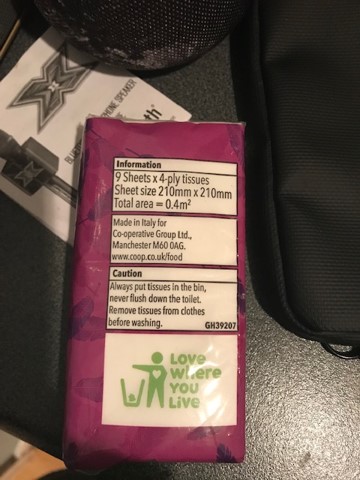
    So I had a bit if a cold recently and saw my work on the back of the tissue packet.

    This is from a few years back. You may remember Keep Britain Tidy, who still exist to stop lazy Brits littering everywhere. 

    They wanted to criticise litterers and make them aware of the scale of the problem.

    I told them that would only reinforce behaviour, and a mere 're-brand' wouldn't work.

    The thinking was a simple re-framing of the problem. UK folks are increasingly proud of their community (especially young folks, who are still growing in this area today would you believe) but don't connect litter to community spirit.

    So the idea was to change the logo from 'Britain' which is too big and impersonal and show that every decision not to litter is little act of community building – my proposition was 'love where you live', which was buried in the client's literature already. 

    And it really worked.

    Nice to see they are still using it.

    Oh, and the moral of the story is, define the real problem in the behaviour of real people driving the issue.

    And, sometimes the client has the answer, they just don't know it yet. 

    And yes, it's behavioural science in action, but really, it's simply thinking of people as people, not a 'target'. 

  • I saw a film where a bunch of brand loyalists were made to do without their favourite packaged brand for a couple of weeks.

    They were given and unbranded replacement and moaned for the whole two weeks about how it wasn't as good.

    Only to find they had actually been using their favourite brand without the packaging.

    That's the power of brands. It's the belief in them as much as the actual quality.

    So if you want to really understand the role of anything in people's lives, do some research where you take it away from them and get them to talk about what it's like.

    Like when a office goes mad because the milk isn't delivered – it's the tea and coffee they go mental about missing.

    When a car breaks down, it's having to suffer other people on public transport they hate (very British disease this one).

    Take Heinz ketchup away and bacon sandwich becomes a waste of calories.

    Etc

    Anyway

  • So I'm working in a new place with a heritage in PR. I know what you're thinking, probably this:


    That's mostly my experience too. But not all PR folk are like that, and they're not here. 

    It's funny really, you can't move for all sorts of integrated agencies banging on about influencing culture, mind you, it is fair to say that some of them are pretty good at it. 

    But the good PR spend their entire career understanding what people are really talking about and what people will give a monkeys about. They instinctively get what's going in the lives of normal people. 

    That's a great starting point for any client who gets that the biggest challenge for any client is that people don't care that much about brands and understands the best way to overcome that is by looking popular and tapping into something actually do care about.

    Not parroting stuff people are talking about, adding to it. 

    So I'm quite liking this. 

    By the way, if you want to do the influencing culture thing thing, there are two ways:

    1. Tap into something that's in popular culture to make the execution better. Which is fine, it build cut through if you've done your core competence and not done anything dumb.

    This for example taps this Australian beer brand taps into a deep memory we all have of movie police chases


    This shamelessly mashes up provenance credentials with the X Factor


    1. Something more potent, but harder. Getting into issues, tensions, passions and challenges in actual life. 

    While this from Axe taps into the very current confusion young men have on what they're supposed to be in modern society. It's not made up, and you could have got this from messing around in Google trends, where men are asking the internet if it's OK to cry. You just need the instincts to look for the right things


  • If there's one good thing about modern culture, it's that it's a lot more open. Age isn't the barrier to stuff like it once was (it's a good thing since I'm 44 and I'm passed being useful in the eyes of 1990 ad agencies), diversity if becoming more a reality and less of an idea. It's not great that job, or even career security is a thing of the past, but it does mean you can try new things more often. 

    In many cases, it's never too late.

    That's not all true. There are some decisions you can never undo, and there are simply things possible for a 20 year old single person that are not to a 44 year, married man with two children and a mortgage. 

    1. Travelled more. I saw lots of the world when I was a competitive swimmer, but that really meant lots of hotels and swimming pools. Travel opens your world in a way few other things do. At least this is something I can always come back to, but never with the freedom or the vigour of a 20 something. More importantly, I should have worked abroad. I would have always come home, but experiencing another culture make you look afresh at your own and understand it more, just as home never feels so great as when you get back from holiday.
    2. Not given up on swimming. I was good, it was hard work and I had a few blips in form, but if I'd had the maturity at 15 to not pack in in favour of, well, all the things 15 year olds want to do, realising how much swimming and the people I did it with meant to me, I would have carried on a little longer. That's the thing about sport that few brands ever bother with, the people you train and suffer with have a deep, unique bond with you. I've had better friends, than swimmers, but that feeling of not being like other people together was still special.
    3. Carried on after my degree. Most planning types are really clever. I'm afraid I'm really thick. I get by with a weird emotional intelligence and sixth sense to cut through the crap of different arguments and points of view to what matters. This meant I floated through my social sciences degree and I would have liked to have gone a little further. 
    4. Not done swimming but cycling. I love swimming, it's that joy at feeling you're doing something well, flow, in the zone and all that. But I don't have time to swim, so I cycle instead (straight out the door v getting to the pool and weaving it into the commute). It gives me the same feeling and bike fitters looking of my flexibility and natural VO2 max etc ask me if I ever thought of racing. An entire alternate universe could have been mine. Of course, I love tennis even more, but I'm not good enough. On the other hand, cycling at this age means I appreciate more, I would have packed it in like I did swimming I guess. And I go out on the bike with my kids. Good that. 
    5. Stuck it out in London ad agencies. I didn't like living in London, so have never worked at a London agency. They're over rated, but the good ones did, and still do great work. Just once, I'd like to work on something where everything goes right, not in the case study, but in the real world. I'm proud of my track record, but I'll never know what it would have been like. A good thing, as I would have found out how useless my skills really are. 
    6. Not being shy. I hated being an introvert. I get exhausted by big groups. I can't quite believe anyone thinks I'm interesting. It gets in the way of lots of things. It makes starting a new job traumatic, it makes all agency meetings truly knackering. But on the other hand, serious lack of confidence makes me listen more, it makes me work harder at presentations, it means I've learned to be pretty good at saying just a few things in meetings people remember. It's also taught me to not pretend to be something I'm not and to find ways to care about what I do and what others are talking about, people respond to enthusiasm and warmth far more than charisma. So it's not all bad and I'm determined to help make this industry a place for quiet thoughtful people, not loudmouths. If there is one thing our current state of world affairs shows, with the Trumps, the Boris Johnsons and the Nigel Farages, it's that the people with the most charm and loudest mouths are usually the last people you should take notice of. 
    7. But the truth is, none of the above. Brilliant wife, great job with great people, wonderful healthy kids, time to ride my bike, the few close friends only someone as shy as me can appreciate. All of this has happened because of the things I can't change. I happen to think there's too much of people not being present enough in their own lives. The problem with everyone pretending their lives are perfect online, they miss how brilliant life really is. 

    Anyway

    1. It's nothing like in the text books or the case studies. Most ideas and projects are dragged kicking and screaming into the world through hard work, trial and error and coming back from rejection with something better. 
    2. No one really cares about the creative brief. At its worse, it's first stage thinking from one person (the planner) that everyone then enjoys ripping to shreds. At its worse, its the client brief written down in order to get to the first review when the real strategy will hopefully emerge. At its best, its summary of first stage conversations everyone has had and direction towards something even better
    3. You'll have to do lots of workshops because the suits are scared of selling ideas to the client, so want them to get involved in having them. Or you'll have to do them because no one in your agency will listen to a word you say, so you need to get them to discover what you already know for themselves. The suits will judge the success of the client workshop by the quality of the stimulation, not the quality of the ideas, so you'll be working late night creating pen portraits and competitor slides that look amazing even though they tell folks nothing new.
    4. You'll spend entire meetings where the account director will answer strategy based questions the client has asked before you can respond, then ask you what you think. 
    5. You'll learn at least half of what you need to know from great creative types who could do your job if they weren't doing something more interesting, rather than your boss who's main job is getting you to follow the process.
    6. If you do the same TGI run for any client audience and interpret it compelling enough, no one will be able to tell the difference.

    You'll come up against strategists in other agencies who can fill whole hours saying nothing of value, you'll be quietly chortling with glee and how daft they're making themselves look, only for the client to say it's brilliant, makes total sense and give then a standing ovation. A little like this: 

    Hopefully, you can spend most if your time being brilliantly simple. Every now and again, you'll need to make the simple look brilliant. Live with it. 
    8. No one knows what they're doing. When I started, it was hard enough when everyone pretended they knew how advertising works. Now, with social, native, programmatic, content, dark social, partnerships and Big Data no one even knows what advertising is. The trick is look like you do, without believing you do.

    9. This industry is tiny. People will always show up again sometime. You can't afford to alienate any one. Even the people who really deserve it. And if you start in the wrong kind of agency, that could be everyone.

    10. Not everything Byron Sharpe is automatically right. As it was for Seth Godin. As it was for Rosser Reeves. As with most brands, people buy what they think everyone else does, not what it best. If you want to make a client think, don't quote How Brands Grow (they have either read it or discarded it because it opposed their cherished world view too much), challenge it. 

    11. No one buys facts, they buy what they want to buy. Don't believe any kind of evidence will persuade a client (or a target audience) your job is to make them want to believe your evidence. Emotional advertising sells harder (although try telling that to certain retail clients) so does emotional presentations. Move them. 

  • So decided to actually take a lunch break and stroll around town for an hour.

    I find it funny that certain London strategy departments believe this is actually 'a thing'. Going out and mixing with people rather than sitting at your desk.

    It's not that you notice anything ground-breakingly new, it's just that when you loiter around people going through their day more, you develop a sixth sense for how they feel about stuff. 

    I totally believe in reading and experiencing as much diverse stimulus as you can, when you connect two unrelated things together, amazing ideas can happen. It's true.

    But I great skill of planner types is to admire their audience, get to grips with what matters in their lives. 

    Today I saw that most of the people coming out of Harvey Nichols has massive logos on their t-shirts, I bet most of their buyers are not half as well to do as they would like them to believe. Just as most luxury brands make most of their money from lots of people that save up (or run up credit) for one or two of their products, rather than the people who can actually afford it whenever they want.

    I saw a bunch of cyclists outside a cafe drinking espresso and wondered why, with cycling generally on the rise, with coffee so ingrained in that sub-culture why coffee brands don't make more of it. 

    I saw children going shopping with parents (it's the summer holidays) and missed my own kids. I also wondered if retailers and food retailers make enough of the magic of going on a trip with your parents getting to touch and choose for yourself, rather than the lack of emotion you get from a few clicks. I remembered going shopping with my Mum in the same streets over 30 years ago and meeting my Dad on his lunch break, how special it was to have both of them to myself. Not to mention the pride and wonder of him letting me go into his office and sitting at his desk. 

    I saw a 20 something daughter out in town with her Mum and wondered what my kids will be like in 15 years or so, will they want to go shopping with us?

    And I bought a pasty from Greggs. 

    People who have studied such things have discovered that cities make us more creative and drive innovation and ideas. 

    Fair enough.

    For agency types, I wonder if really exploring a city, rather than floating around Clerkenwell, The Meat Packing District or The Northern Quarter keeps us human. 

  • So decided to actually take a lunch break and stroll around town for an hour.

    I find it funny that certain London strategy departments believe this is actually 'a thing'. Going out and mixing with people rather than sitting at your desk.

    It's not that you notice anything ground-breakingly new, it's just that when you loiter around people going through their day more, you develop a sixth sense for how they feel about stuff. 

    I totally believe in reading and experiencing as much diverse stimulus as you can, when you connect two unrelated things together, amazing ideas can happen. It's true.

    But I great skill of planner types is to admire their audience, get to grips with what matters in their lives. 

    Today I saw that most of the people coming out of Harvey Nichols has massive logos on their t-shirts, I bet most of their buyers are not half as well to do as they would like them to believe. Just as most luxury brands make most of their money from lots of people that save up (or run up credit) for one or two of their products, rather than the people who can actually afford it whenever they want.

    I saw a bunch of cyclists outside a cafe drinking espresso and wondered why, with cycling generally on the rise, with coffee so ingrained in that sub-culture why coffee brands don't make more of it. 

    I saw children going shopping with parents (it's the summer holidays) and missed my own kids. I also wondered if retailers and food retailers make enough of the magic of going on a trip with your parents getting to touch and choose for yourself, rather than the lack of emotion you get from a few clicks. I remembered going shopping with my Mum in the same streets over 30 years ago and meeting my Dad on his lunch break, how special it was to have both of them to myself. Not to mention the pride and wonder of him letting me go into his office and sitting at his desk. 

    I saw a 20 something daughter out in town with her Mum and wondered what my kids will be like in 15 years or so, will they want to go shopping with us?

    And I bought a pasty from Greggs. 

    People who have studied such things have discovered that cities make us more creative and drive innovation and ideas. 

    Fair enough.

    For agency types, I wonder if really exploring a city, rather than floating around Clerkenwell, The Meat Packing District or The Northern Quarter keeps us human. 

  • So I start a new job today.

    You'd think my first day as a strategy director at a new place would be vastly different to the first time I walked into work as an account exec, but not that much.

    It's fair to say that back then I was excited as it was the first time I had work emails, while everyone was  talking about the new website department.

    Oh and we checked films and chromalins back then.

    But to be honest the first day is always the same, for me at least.

    The fear of the unknown, not to mention lots of people you don't know yet.

    Getting the IT to work (which was fine this time by the way).

    Believing you'll never remember everyone's names.

    Wondering how you'll get you head around client business.

    Seeing a culture emerging, but not the undercurrents that slowly reveal themselves.

    The slow but unwavering mission to get everyone to drink proper tea and coffee. 

    Remembering to say little and listen loads.

  • If you have time, it's worth listening to the Revisionist History podcast. Every episode re-interprets a historic event and finds new evidence or focuses on something previously overlooked. 

    Now, look at that keyboard on your computer or phone, the one with the QWERTY structure. It's like that because it's not the best structure for fast typing, it's pretty much the least effective option. Because when they designed the original mechanical typewriters, if folks typed too fast, they wold break the machine's mechanism. So they designed the keyboard to SLOW them down. It's simply survived because no one questioned it and eventually, we all became so used to it changing it would be simply too difficult.

    History is written by the winners, who always want to put the best spin on why they are there, and create even more success. Or sometimes gloss over the uncomfortable truth about where success came from.

    Which is why you should never believe most of the case studies in advertising and marketing. No one really knows if anything is going to be a wild success, it's fair to say that there's some solid performances that do the job but are not the be and end all….and most of these follow some sort of pattern. But then then there is the 95% of campaigns that achieve nothing (which is why tracking studies are so important, even if they have little commercial impact, one can fall back on claimed brand impact). Created by the same organisations sometimes.

    Losing the opportunity to learn from failure. Pretending we know what will create incredible success. When we don't really. 

    Just as most new brands fail, yet all sorts of organisations have tried and tested rules to 'guarantee success'. 

    Based on the stuff that worked, rather than being honest and learning from what brands failed.

    Which flies in the face of how most great leaps forward in any discipline really happen. One step forward, two steps back, failure after failure showing what works by what doesn't work. Dyson wasn't the only one who thought of the bagless vacume cleaner, he was just the only one who stuck with developing prototype after prototype until he found one that worked.

    Darwin's theory of evolution was only published when he realised Wallace had the same idea. They both had the same 'insight' because they were building on the success and failure of many, many great minds that came before them. 

    So next time you want to hire an agency if you're a CMO, ask them what their worst work was and what they learned from it.

    Which is a good policy for hiring people come to think of it.

    And don't bother with most case studies and certainly don't copy them, as any new formula for success, even if there was such a thing, won't be a formula for long, as everyone will be copying it too. 

    Or if you wan to flip it, Fox were so sure Star Wars would flop, they let George Lucas have the merchandising rights. We all all know what happened next.