• You may have heard the phrase 'marginal gains'.

    It's something folks in cycling use a lot, where you micro manage the detail, so lots of little changes add up to a whole lot of difference.

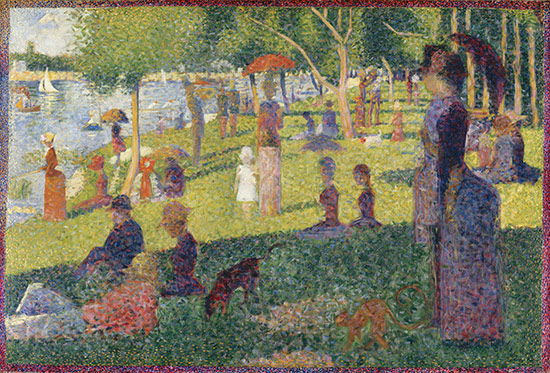
    It's kind of like Pointillism of you like your metaphors – where the school of painting led by Pisarro etc created a style of painting where the imagery is created by painstakingly building up a series of dots (centuries before pixels).

    Pointillism

    I had this kind of thing going on when I was swimming, you would not believe the difference pointing your hand down, keeping it nice and stiff, makes when your hand enters the water on the freestyle stroke.

    But it can work in reverse. I've had all sorts of problems in my knee after cycling thousands of miles with seat set forward about 10 mm too far. No impact over a few miles, but over the time, a little has become lot and the resulting left glute weakness (in relation to the right) has caused all sorts of problems. 10 mm, that's all.

    Now, I'll talk to you about a little discussion I had with a creative over a press ad a few years back. I wouldn't back down over three minor points with the headline and the copy. Because it didn't make watertight sense.

    The response I got was, "But people don't analyse ads the way we do, it doesn't matter". I was a bit shocked, as I have grown up with good creatives who pick up work, tear it to bits and shake it around until nothing loose falls out.

    But anyway, he actually proved my point. People don't spend time with ads, if they don't feel right, they won't bother to work out why, they'll move on.

    But I let it go. It was the first developed execution in a campaign. When they tried to work up the other scamps, they got into all sorts of mess, those little loose threads became gaping holes.

    This is why best in class comms planning is essential. It's not good having amazing big ideas, if you haven't worked out what you need to do to bring them to life – the barriers to making it work, the key things that need to happen. Look at this to see what I mean http://www.slideshare.net/juliancole/what-is-comms-planning

    It's why another way to get good ideas is to have lots of observations about things, then look for the links and try and recombine them. Ideas are really recombinations  of existing stuff. Big flashes of insight are hard, but hard work is actually easier.

    I'm saying that big ideas are fine, but we should celebrate the people who make them actually work and make sure everything is watertight before we go too far.

    Otherwise a little hole can become a gaping chasm.

    I guess I'm saying the big ideas people are essential, but so are the details folk that br

  • My little children are getting into Star Wars. For someone who was brought up in the 70s and 80s this is an intense joy.

    To misquote a couple of lines from Fever Pitch, there isn't anything that many people have loved for over thirty years as consistently as some people my age have loved Star Wars.

    If anyone needs to learn how to earn disproportionate attention and measure of loyalty from people, looking at Star Wars is actually a good place to start. Both in terms of what to do do, and what not. Not to mention the things you shouldn't bother to attempt.

    1. Create something totally jaw-droppingly different – the moment in a New Hope when the Star Destroyer first thunders onto the screen is not something they were ever able to repeat. The sheer shock and awe of it completely captured the imagination. It's the same with advertising these days, your first job is to get noticed.
    2. But don't think you'll ever create a Star Destroyer moment. An Old Spice guy comes around once a blue moon. In fact, so does a Star Destroyer moment. Movies that really succeed seer themselves in the collective psyche. Ads that succeed manage to get noticed and remembered for something.
    3. But stand on the shoulders of giants – George Lucas was smart and borrowed from World War 2 dog fights, Darth Vader's suits was based on Samurai armour.
    4. But if you don't engage the heart, forget it – arguably, there was more action, more effects, more everything in the 'prequels' but they're hated by most original fans because they forgot to put any relatable humanity, let alone a sense of humour.
    5. Never forget what you do best – because it was the characters that people loved. not just the shock and awe. The original characters were funny, has real relationships, you had Han Solo with a twinkle in his eye and feisty Princess Leia. Always build from what buyers already like about you, don't try and make it what YOU want it to be. A certain hair care brand I worked on desperately wanted people to love them as a fashion icon, when actually they loved as a brand that really understood women. By associating themselves with stick thin, sulky models they just put people off! If you are a brand and you lose your way, it's so much harder to come back. People were willing Star Wars to be good, no one REALLY wants a brand to reclaim it's former glory. That wasn't the case for WISPA before you mention it by the way, that was just a meme that took on a life of it's own.
    6. But challenge your audience – The Empire Strikes Back threw the first film back in our faces and let the bad guys in, not to mention the ultimate curve ball and created one of the biggest entertainment surprises ever  -"Luke, I am your father".
    7. Keep your core but move with the times – JJ Abrams maybe went a bit too far with this. On top of very human characters, some great humour and icons like the Falcon, X Wings Tie fighters and whatever, you still got the unknown character on desert planet thrown into a quest by accident. You got the planer sized weapon they had to destroy at the end. But then again, you had the strong female lead to reflect how we live today, the vulnerable conflicted male lead, even the sad older characters reflecting on loss and what might have been.
    8. Don't be afraid to leave space for the audience – let's be clear, people want to work out who Rey's parents are, they don't want to work out what your ad is about, but the best work still let's the audience translate and work out stuff a little bit. We don't like culture spoon-fed anymore. No one really knew if Darth Vader was a robot or what in the first film, certainly in the first hour. It's more so these days – who the hell is Snoke? Where did Rey come from? How did Ren convert? La di dah.
    9. Create different levels for different buyers. I have never read a Star Wars book, but I'm interested enough to have found out the background on Palpatine's origins. Others have read hundreds of books, commented on forums, gone to conventions. Most of the money comes from a long tail of people who just watch the films and buy a few toys for their kids. Other kids will only use Star Wars characters on Disney Infinity. I don't totally buy the Byron Sharpe stuff that growth just comes from light buyers and that it's weak awareness. I also think it's about intense emotion that gets encoded into the memory – triggers that come up from the subconscious at the right time. You can get people to buy more if their frequency is really low, if you build emotional presence. I can't tell you really why Nike is different, but I can tell you it feels different and has come from years of emotional build up. Anyway, in both cases, aim for mass popularity, but enable folks to go further. In the case of the Force Awakens, the geeks (and semi geeks) went to the first showing and that sense of 'the hardcore fans like it, so it must be good enough to bother' meant the rest followed. Most brands simply feel okay to buy, much of that these days comes from seeing other people buying and following suit.
    10. Respect your audience. Let's be honest, lots of children liked the prequels, many liked Jar Jar Binks, but the overall discourse was that they weren't any good. George didn't care,"This is the story I want to tell". Sometimes when they say they want a faster horse, well, you should listen.
    11. Remove reasons not to buy. Star Wars rebels the cartoon is great, my kids loves it (to Evie the new movie is 'Star Wars Rebels the Force Awakens). The latest Clone Wars series is amazing, and amazingly builds on the prequels. In both cases you've got Darth Maul, who fans actually loved. Star Wars doing TV well should have been a no brainer, the increased revenue, the increased presence. Just as McDonalds needed to do salads and chicken to defend against health foods and KFC. Just as soft drinks need to diversify into sugar free and more adult versions to keep market share.

    Anyway.

  • If you haven't read John Steele's Perfect Pitch yet, you should. It's really good and there is something to learn for everyone.

    But it has a fatal flaw, as do most marketing type books, it exists in the land of perfect.Or at least the land where you have three months and unlimited research budget. He's candid that process is a myth, and the killer idea comes out of the ether at some point.

    But still, it's to get real. In a follow on from The Rules, here's the rules of pitching (tongue in cheek and of course).

    An obvious one is get the detail right. You'll find typos in here, as usual, as you'll see from the lack of posting, I'm dead busy (pitching!).

    1. Don't finish 'the deck' until the latest moment possible. It doesn't matter how long you have to do the pitch, you'll still be fiddling with powerpoint at midnight the night before. There are two possible reasons. The first is the most common, no one really does much of value on a pitch until the moment (a couple of days before mostly) when you realise you've done nothing of value and you're screwed unless you pull a couple of all nighters. The other, extremely devious, is that some bright spark knows that the more time, plus the more people, available for tinkering with a deck, the more it will suffer death of a thousand cuts and end up nothing like it should have..until someone changes it all back at 11.48pm. That's right, you're here at the witching hour because you're totally disorganised, or you are more cunning than a fox and understand the destructive nature of constant meddling.
    2. Read the bloody brief. Let's be clear, pitch briefs are not worth the paper they're written on. Usually ten pages long, you'll think the only thing of worth is the box at the end titled 'budget'. Your first instinct will be to ignore the brief, but this is the road to abject failure. Someone has spent hours writing something with some killer information and then tried to be really helpful and giving you acres of more detail – burying the real brief by accident. It's a bit that quote from Sliding Doors,"I'm not going to tell you what I want, but I reserve the right to eviscerate you if don't get it".
    3. Planners get the pizza. When the actual work starts, two days prior to the pitch, there will be one individuals who everyone hates the most. Yep, it's the strategist. After two weeks failing to get an internal brief signed off, thanks to 'input' from the usual pitch committee and the fact no one liked the first three drafts, everyone is blaming you for hell they're currently living. What's making it worse is the fact you don't have much to do now. You've interfered in the creative a bit, or really annoyed the TV planners by asking for a groovy spot partnership they really don't want to do. You've even managed to do your strategy charts in 5 slides without a single graph. So now you're twiddling your thumbs, watching everyone work. So get the pizza in, it's the only thing that can save your relationships. Unless you win the pitch that is.
    4. Make yourself teflon. You might be 'a team' but when you lose someone will get the blame. Make sure it isn't you. This the only use of senior agency folk. At the right time that is. Show them the strategy as late as possible, leave in a glaring error, let them correct you and think they thought of the whole thing themselves. Show them the deck as late as possible, with another error. Same tactic. The response of the whole team can then be "The CEO signed off on the whole thing". Of course, the CEO will say they took a helicopter view and didn't look at the detail. So you'll need a Plan B. Step forward the internal workshop……
    5. Use the internal workshop defensively (time for the dark arts of planning) . This is the planners best chance of avoiding the firing line if things go wrong and being the golden child if you win. We all work in agencies now where planning isn't a job title, we're all planners apparently. So do an internal strategy workshop. Don't bother doing any strategy work first, just go through the brief and some early thoughts. If you do some thinking, everyone will shoot it down, because we're all planners now. So draw out all the bad thinking, write a strategy that's good and make it look like it came from the session…and pick the fall guy who will have 'nailed the big thinking' if you lose the pitch. If you win, take credit for everything. Win, win.
    6. Find out how boring you are. The problem with all those internal reviews and rehearsals is that you're preaching to the converted. The kind of people that are happy to listen to someone talking about brand onions v wheels for twenty minutes, the kind who love to chat about the difference between a bottom up plan or top down. This is not your client.  Present to your Mum, wife, partner whatever, or at least someone who isn't involved, see if they get it, how bored they are and how you sound in your head while you're doing it. Trust me, you'll make it shorter and cut out a mountain of rubbish.
    7. Everyone does the same stuff. Everyone does store visits, every one does some extra research. Everyone is pretty good at what they do. All the agency decks will be variations on the same theme. How on earth will get their attention and win them over? Start by making it shorter. Don't create the deck that makes you really clever, start with the story that will win hearts and minds.
    8. Winning can mean losing. Sometimes you're so desperate to win, you'll promise the earth. sometimes there are clients that get taken in by a glitzy presentation. Just remember, they'll expect you to follow through, and when you let them down, they won't forgive you. There are plenty of agencies who are great at winning pitches but rubbish at keeping clients. Don't be one of them.
    9. Bribery always fails in the end. There's always an agency that will undercut the other. Some will even do it for free for a year or something. Imagine the respect people will have for people who value what they do so little they're afraid of charging for it. It's not even worth the brief glow of PR – not when you lose it and it makes a bigger splash then.
    10. Ignore every other pitch you've done. Look, it's hard enough managing the conflicting enthusiasms of the pitch team, when folks inevitably start firing presentations from the past that went okay, it really isn't helpful. What worked there will not work here. Different client, different organisation, different team. And, let's face it, it won't have been the 'deck' what won it, it will have been some chemistry between the team and the client and massive piece of luck. One pitch I was part of was successful purely because we picked a fantastic piece of music for the TV.
    11. Don't get too full of yourself. That's right, most pitches are a lottery. So don't get all excited when you win and don't throw around your big win on the next pitch, it will count for next to nothing,
    12. Leave stuff out. If you want to create a conversation on the day (and you should) leave out the data or the evidence. Just tell them how it is and when they pull you up on it, thank them for asking you and proceed to discuss the facts you have remembered, or noted down. They'll think you know what you're talking about, and won't be numbed by graph after graph. Win, win. 
    13. Shut the hell up. You're throwing your best stuff at folks. You want to impress them. You're nervous. So you talk fast, project with confidence and leave no time for people to keep up. Leave space for your big points. Leave space for conversation. Try and create it.
    14. Never press for feedback. I lost a pitch because we pressed the kind of organisation for their early thoughts at the end of the meeting. They hadn't any chance to collect their thoughts. Three people were complimentary and gave general pointers about what they liked. Someone else spend 10 minutes going through a ton of small points, stuff he was saying for something to say, he got every else talking, they got more and more negative and you could see them talking themselves out working with us in front of your eyes.
    15. Avoid tissue meetings. They're the devil. What fool invented these? Probably someone who hated agencies. You have to turn up with a half baked set of ideas, plans, concepts, strategic directions. You can't go full gas, or you'll have nothing to reveal on the big day. You can't show nothing, or they'll be underwhelmed. Somehow you need to reveal stuff and also keep it back. While giving yourself the chance of getting a bum steer and getting it wrong from a client who will change their mind, even worse, you're making yourself to the work too early, now, not only have you ages for meddling CEO's and the like to change lots of stuff, you've given the client the chance – because loads of tissue sessions don't have the organ grinder, just the monkey. Same with Q&A sessions. If you're not meeting the authority to buy, don't bother.
    16. Pick a team that like each other. Hopefully you can put together a group of people that get along . Harder than it sounds in some places I know (and accept no one will like the planner). Clients buy teams, if they get a good vibe,it can outweigh everything else. If you can't get a bunch of people together that don't despise each other, rehearse to death so it looks like they do.
    17. Ban the CEO who says 'enjoy it' . As the troops go off into battle, there is always some fool who will say, "Just enjoy it". If you enjoy a pitch presentation, you're either insane or complacent, probably  both. It's stressful, it's pressured, you need to be on top of your game. It is many things, enjoyable is not one of them.
    18. Always go to the pub after. It's just what you do. Remember you're short of sleep and knackered, the drink will go to your head. There's nothing worse than winning pitch and then getting fired for telling your bosses what you really think of them because you drank your beer too quick.
    19. Observe correct casting. Every pitch needs a pitch leader, someone who can make decisions, a benign dictator – not someone who can only dictate. The people who actually implement stuff – the creative folks, the TV buyer for example, make sure they have to go. These people can be quite glacial, especially when they know the pressure is on you. Tell them they're coming and they'll melt like warm Nutella, and also work that little bit harder. Now isn't the time to be nice thought, if someone can't present, don't let them come.
    20. No bullet points. You don't want them to read stuff, you want them to be looking at you and your team. Charts should illustrate what you're saying, not get in the way.
    21. Lots of pictures, less words. Pitches are done by committee.You will argue over words, even A WORD. It's harder to dismiss a picture that can carry a few general points.
    22. No one cares about the agenda. Don't bother with one.
    23. Make sure you can work the laptop. You'd be surprised.


  • Let's face it, communications briefs are very brand biased.

    I like this questioning I saw:

    "The brand will be a very small part of the target customers' lives. What's the rest of it like?"

    "Where does the brand fit in? Where could the brand fit in?"

    At least it's realistic about the role of brands. But it doesn't really reflect how people buy stuff, or that's what I think.

    People still buy products, brands are a much values short-cut to choosing. But people care about them much less than we tend to think.

    I'm not going to beat anyone around the head with Byron Sharpe, but let's just dwell on the fact that most buyers couldn't tell you why the brand they buy is different and buy others anyway.

    I think the focal point of any brief is knowing how or why people buy the category. What goes through their mind when they're buying it?

    For example. if you're selling cars, are you selling sports cars? If so, you need to know how people who are not buyers view the product and brand. A sports car is mostly a badge, you need to know what that badge says to others.

    While an MPV buyer is probably looking for a trade off between space and something that doesn't feel like a bus to drive. They'll divide between those who don't give a monkeys what others think and those that don't want to look like they've 'given up' on life beyond parenting.

    With sportscars, you'll probably be looking for 'positive wastage' and getting the product in front of folks who won't buy but will judge.

    With MPV's you're talking to the practical person a lot more. Maybe.

    If you're selling soft drinks, brands are huge of course, but belief in taste, increasingly sugar levels and what it might go with (food for example) matter also. You can have a well loved soft drinks brand with sales falling because folks believe it will make them fat and think the sugar free option tastes rubbish.

    So maybe briefs and stuff should be a little less brand obsessed.

    "What's the business problem"

    "What does that look like from a buyer perspective"

    "What can we do to change this"

    "When and where is the best for this to happen"

    "Why would people care?"


  •  

    Okay, here is the first chunk of feedback. Sorry it's taken so long, judges have been rushed off their feet. I know you have day jobs also, so massively played to have stuck to the deadline while some of us took longer.

    There will be three posts. This is the first half of individual responses. Then I'll post the rest. Finally, overall thoughts and a winner selected.

    First, let say, this was a hard task. Think about content, think about media, think about a brand and overcome a significant challenge. It reflects the kind of brief's we're all seeing more of, and the blur of who does what in different organisations. Well done everyone for having a go. There great elements in all the responses.

    I hope you find the feedback honest, constructive and useful. If you want to challenge any of it, feel free, you can even have your counter arguments published on here if you like.

    So, first wave of feedback.

    Don't beat me up for spelling and grammar, the objective is to get this out to everyone!!

    You'll find the submissions on my slideshare. Some have asked to keep their work private, so not all will be published.

    Bryan

    This will be a theme that occurs more than once. It’s good you’re precise, that you don’t waffle, but have a think how you might excite your reader, do some storytelling.

    I like you have done some homework, that you are looking for the connection between the brand, Olympics and target…and really good you are looking at what the audience is actually interested in.

    I’m waiting for you to conclude on this analysis, what’s your point. I find a killer point helps around here – ‘this brief is all about’ ‘the opportunity here is’. Is it something to do with quizes?

    Really intriguing fact about the chests of tea – but the link the task in hand and the challenge of relevant Olympic content feels a little tenuous.

    And you seem to be trying to do a lot with the budget. You’re competing for attention in a cluttered Olympics environment, I’m looking for one core idea the content and the media can build off.

    I think this is about a Pub Quiz but you really need to provide that focus, argue for it and put in in the back of the net. You seem to be forcing beer with ‘drunk history’ and that’s the only role I really see for that ‘dropping of chests moment’. I only see a link between pub quizzes and Olympics because both are competitive….if you have talked about the history ‘good spirited competition a bit more, that would have been great.

    I like you owning an occasion, the pub quiz, really efficient, but you needed to be even more single-minded about this.

    I like that your plan has some phasing in, that it sort of aligns with drinking occasions in the home (pub quiz telly) and actually in pubs…but then out-door makes it feel expensive and you haven’t factored in the cost of the free beer, or the work of the small UK Sam Adams team to deliver it!!

    So there are lots of interesting threads here, I just wanted some killer points, a concise summary of your strategy, a leaner plan and some theatre!

    Rob really liked your intriguing ‘chests in the sea’ point, but wanted you to do more with it really make your submission more exciting.

    Gareth echoed many of the points above and wondered if you might have written in longhand, to tell your story, rather than bullets. He wondered if you should have interrogated the audience more and challenge the brief….it told you young professionals, is this right? Gareth doesn’t think you found a hook that showed why they might ADOPT the brand, you only shared what they did, not what they care about!!!

    Liana

    Gareth pointed out that the stuff in your appendix was amazing. I agree – it really builds your argument, but it comes too late!!!

    I enjoyed your catastrophising of the brief – we need to really cut through. Impact if you like (which by the way can be real challenge if you haven’t got a decent TV  budget).

    But then your insight feels like quite a generalisation. I love you recognise it’s tough for this generation and they’re focused on getting to where they need to be, but I question dreams, for the UK audience right now, it might have created more impact to discuss the  fact that they don’t have time for dreams, they’re fighting to make sky high rents, or afford the deposit for an overpriced house.

    I sort of like you go against this and tap into the human need to dream with the current pressure to think of the everyday like never before, but ‘brewing your dreams into reality’ feels like some good writing overcoming the fact you haven’t as yet linked the brand to the Olympics are the audience in meaningful way.

    You get there with the Olympics making dreams a reality, but I don’t get the role for Sam Adams in this.

    That said. The media thinking feels great in terms of reaching the audience. But I wonder, as this is an unfamiliar brand, in a cluttered time, if you could have planned something with more impact, but I can see how this might work, if only your content was a little more distinctive. You’re looking to build brand salience here, I think that means something unique and provocative, dreamers perhaps feels a bit like what lots of other brands might do for the Olympics.

    As we said, much of the appendix stuff is quite compelling and you may have missed a trick by not building on your point about the need for craft and creativity. That quote about loving what you do is ace, and a missed opportunity. You can’t train for the Olympics if you don’t love your sport (as a former international athlete I can tell you it’s too hard otherwise), our young audience demands job satisfaction and stimulation on work…and culturally there is a wide cohort of young people in jobs they don’t like wishing for something more, as know from Nike, sport is an outlet for unfulfilled dreams. If you’d focused on this a bit more, that brand insight is brilliant, your great attempt would have been transformed into excellence!.

    Rob wondered why Sam Adams has the right to talk about dreams, not realising you had a great answer in the founder!!

    Anna

    First off, Gareth wanted to praise you for writing, rather than bullets. Also, clearly articulating the challenges. Audience insight interesting—I really like it too…building a bridge between mainstream explorers and craft drinkers. Gareth wondered if the chain of logic to the idea was missing, but we’ll come back to that.

    Rob loved the idea of ‘Chap Olympiad’ (did you know Frey Bentos once sponsored darts players) He thought American V British behaviour had potential, even though it has been done before, if you could do it in a fresh way, it could be interesting. By the way, he thought Boston was maybe the ‘England of America’ anyway.

    For my money, great you get to the core challenge…folks need to ADOPT the brand., even better, you go further and show us it’s about credibility.

    Now, it was me, I’d have held off with the key slide about unabashed American beer. This is well written, but my immediate response is that there is nothing more ‘American’ the Budweiser. I would want to see that ‘revolutionary bit’ developed a little, the founder stuff is great, but also maybe ‘the boston tea party’.

    Really, really love the solid numbers and very sensible widening of the audience, this great and chimes with the Byron Sharpe stuff about targeting the whole market.

    So I was let down when your analysis of them boiled down to ‘relax and have fun’ It’s just too generic. There is a lot going on in the lives of these people, not least the fact they’re looking for outlets of fun in a more serious world, which might give your insight a little more context, but I wanted to see you relay back to that ‘Unabashly American’ core. You don’t really.

    But I happen to think your point about British patriotism is really interesting in the context of the Olympics….we find celebrating success and being proud of our country hard. I think everyone was surprised how 2012 went.

    So actually like that ‘let go and be a bit crazy;’ thinking, you don’t set it up with your audience, but nearly every piece of research on this audience describes the tension between their work ethic and need for escape.

    So I ended up liking your strategy, even though your logic doesn’t get you there….it might well have.

    My struggle is the role for the brand. It needs to have broad appeal, but unabashed excitement feels a little ‘lowbrow’ when this need to be ‘mainstream sophistication’ – I guess a modern version fo Stella with ‘reassuringly expensive’. There is something great about Sam Adams talking about a world without limits, celebrating creativity and wonder. This is very American, but more specific and might have unlocked something else…we admire Americans sense of ‘wow’ while we’re uptight as you say, I wonder if celebrating independence and doing things another way, or to simply enjoy things might have been a key…and could have been very Olympics, as my own view is that there are always upstarts in every games ,not to mention athletes who obviously love the sport rather than being robots. Maybe this could come down to ‘work hard, but make sure you love it’

    Anyway, I’m going on a bit!!
    Culture clash is nice thought, as Rob said, the trick is make it unique.

    The media planning, role for channels and ideas I think are very good. While ‘OTT’ feels not quite right, your thinking to deliver it feels great. It’s efficient, involving and very, very well thought out.

    I like the chap Olympiad, it’s the kind of lovely irony that makes the brand a little highbrow. I’m not sure it’s ‘OTT’ actually, but that might just be me.

    One final thing, in your phasing, you’re ‘get people to feel like they did in 2012’ feels really rich and could have been the basis for your whole strategy!! As you say, there is a cultural whole in the UK where we rarely find social ice breaker to break our social dysfunction, while Americans live to be patriotice, and our target is searching for outlets of escapism.

    Anyway, lots in here, lots of bit of gold, create analysis of the real opportunity, but it’s not quite watertight and it doesn’t feel quiet relevant to Sam Adams as BRAND, rather than relevant to America.

    Rachel Chew

    Gareth thought it was brave to challenge the audience in the brief, but you case doesn’t have enough evidence. Packaging a good ideas, but struggled on the partnerships. We’ll come back to this, but he wasn’t sure how smart leveraging the UK brewing link was. Rob liked the discovery of ‘Britain’s oldest brewer’ but then struggled with a limited budget having to promote two brand names.

    Now,  I really like your point about the Olympics being social………and very male.

    I REALLY like how you’ve decided to position the audience…not enough advertising these days give people a clear idea of WHO else buys it, when so much ‘beer’ is stupid and male, this is strong.

    I just wish, as Gareth says, you had some evidence, I happen to think you’re right though.

    I also like how you provide a place to show up…….beer is social, so are the Olympics.

    Now, with our low budget, the clutter in the market etc, I would say I wouldn’t try the ‘two brands thing’.

    I would have followed through with your social thing. Great to talk about culture clash and UK v US, but you’re not the only one to do this and how would you make it unique. The fact about UK’s oldest brewer DOES make it different I think, but it doesn’t make Sam Adams authentic, and I’d venture, even a mass market craft beer needs to feel ‘real’.

    That said, partnering with another brand is a nice idea, just not sure it’s ‘this brand’.

    When we get to comms planning, like Buzzfeed and Youtube, packaging a great idea (if they can afford to do it, might cost more than the marketing budget) and a great mechanic. I don’t like promotions usually, they tend to attract current buyers more, but this one will build talk value and story.

    I question America’s Got Talent. The context is right for your idea, but it feels a little ‘lowbrow’ for a craft beer and it’s maybe too niche to reach your audience. Media needs to reflect what the brand is about, even if all the audience watches this programme, I wonder if it will create the wrong impression.

    Your overall plan holds together, but Team GB and Team USA will be well out of reach for the budget.

    So great discovery about the brand in the UK, but it might get in the way of what you want to achieve. Love the ‘social’ train of thought you begin, you should have followed this through!!!

    Tarka Rose

    While I appreciate hard numbers and such are not available to everyone, a response as brave as yours requires some.

    I like your point that this project needs sacrifice – we just can’t reach everyone with the world and his wife – but sacrifice was already in the brief, with young professionals a target a lot, lot smaller than the world and his dog. By all means, challenge the brief, but explain why.

    There IS something really interesting about just ignoring all the US/UK stuff and embracing the international element of the Olympics (the coming together of the 5 continents as expressed in the rings) which could link to (at its best anyway, forget Trump!) the fact that America has always been a place that welcomed the world to its shores.

    You just don’t really provide an argument for doing any of this. It would be just as efficient to target young professionals on the Google display network, or brief Unruly media to smash out an ace video campaign. It’s just not compelling.

    There’s lots in this, but if you’re going to ignore the brief andf there is a better way of approaching stuff, you really need to convince folks that’s true!!!

    Finally, unless I’ve missed something, you need to build a target audience that will drink an American craft beer.
     

  •  

    I ride my bike a lot. A lot.

    Consequently I’ve got quite fast and quite thin – and now tend to spend more than a couple of quid on kit that will make me go faster. Lighter wheels actually make me go quicker, deep rims on said wheels cut through the wind when I go over 20 miles an hour, which is more frequent than a man of my age might expect.

    Controversially, as far as my wife is concerned anyway, I also own a couple of ‘aero jerseys’. Skintight tops that don’t flap in the wind and manage air turbulence. I haven’t the foggiest if these actually make go faster, but here’s the thing…because I feel faster, I go faster.

    They’ve tested skin-suits on cyclists and found that the ones with bad design, that do naff all to slice through air resistance, make them go faster as they BELIEVE they will.

    That’s right, you can con yourself into being better than you are. For a planner and agency folk in general, that’s massive.

    Because the other things about all this overpriced cycling gear is incremental gains. Lots of little changes and adjustments can add up to a lot.

    Your clothes, dressing like you think a brilliant planner should dress, will probably make that presentation easier to write, or put you on top form for that critical meeting. For some that might mean a corduroy jacket and spectacles. Others, I’m afraid think it means Birkenstocks and Queen T-shirts. But whatever works.

    Your environment. I can be very critical of agencies who insist on locating themselves in Shoreditch, Manchester’s Northern Quarter or The Meat Packing District. I believe they need to be closer to where real people live and feed off that. But then again, if you believe you’re in a place full of creative energy, it will drive you forward in a way working in non-descript business park will not. There’s plenty of evidence working in a buzzing city makes you naturally better at creativity and ideas.

    Your office. It’s easy to laugh at impossibly well designed, achingly cool offices, but they do help, as long as they’re places you can relax and flourish in, that foster collaboration and allow space to think alone. They don’t have to cost the earth, but they do have to suit you. I guess, whatever you think a brilliant agency looks like, make it look like that and it will actually make you a little more brilliant.

    Your work-space and tools. Surround yourself with quality and what you think clever, creative people like and enjoy and it will rub off on you. If you think they drink amazing coffee, make sure you get an aero press. Overpriced fancy notebooks? Do it. Walls you can write on? Feel free.

    Real incremental gains. But it’s not just the placebo effect, there lots of little things you can do that actually do work.

    1. Choose your colour wisely. A blue room fosters deep thinking, a green room fosters creativity (the light wavelengths work on your brain in different ways). So put some green into your workshop. Put pot plants around the office.
    2. Make caffeine widely available, it actually does stimulate brain function.
    3. Read lots about everything. Ideas are just new connections between different things, the more you have in your brain, the more likely a new connection will form.
    4. Enforce time outs. The subconscious works on problems for you. Which means you need to not think about stuff for a while as it does its work.
    5. Talk to lots of people about your project. The mirror neurons fire when you talk to someone else, you see your work from another perspective and enables you to edit and precis a lot quicker. I often find a have a maddening ‘smudge’ of an idea or direction and talking someone else through it usually results in them saying, “So what you mean is…” Most of my propositions where written this way when I was in a creative agency.

    Anyway, whatever works for you probably works, no matter what others might think.