• (this is too long to be spell checked and should be taken with tongue fully in cheek)


    1. Follow the damned rules

    2. Never help others break the rules

    3. Help guide those who don't know any better

    4. No matter what your excuse is for breaking the rules, it isn't good enough

    5. It's all about the work. The only point of any strategic set up (and try showing the creative, the plan, or the content idea etc first and then show how you got there) is to help the client understand why you're recommending what you are recommending. Take the time to write less, they like value being added, you should be giving them insight they haven't considered, or reframing the brief in an inspirational way, but mostly, when they have 20 agencies, research partners and God knows what else, whatever agency you're in, it's more about helping them see the wood for the trees and compressing the hurricane of information they're flailing in, down to one clear task, or three clear principles. No one is sitting there thinking 'I can't wait to see the strategy' they want to see the work/the plan/the content etc. That goes for a strategic presentation too, they don't want chart after chart, they want you to get to a proposition/organising thought/task for communications quickly – that's the 'work' too. It's all about the work. Anyone who says otherwise is either and brandbabbler (as Ad Contrarian would say) or someone who charges a lot for process, rather than ideas and results.

    6. Toughen the fuck up.You will sometime have to work late. You will sometimes have to work on a weekend. You will sometimes have to get up early. Your finest work will get rejected. Your finest work will get approved and then killed when budgets get cut. The occasional long hours are the job. The unpredictability and rejection are just business. Your clients answer to a board who don't care about ads and think marketing isn't that difficult. Their business is subject to market fluctuations therefore so are you. A booked media plan will get canned, an ad will get banned unfairly, a client will change their mind. It's called life, no, it's called business.

    7. Toughen up even more if you're a planner. 90% of creative's work gets rejected, this makes them slightly sociopathic, if you want crazy great ideas, working with weird folks is one of the things you have to deal with. Creatives deal with rejection all the time. Suits want stuff off their desk and deal with the sharp edge of client business. You always run the risk of being a barrier to the work a creative wants doing, or a suit getting stuff done on time. Few love a planner, the best you can hope for is being tolerated. Get hard.

    8. Suits must toughen up even more. See above. No one likes you unless you get them extra budget, defend you from the client, get the travel stuff sorted our or make the tea and coffee. To quote Gordon Gecko, if you want a friend, get a dog.

    9. Workshops should never, ever last more than four hours. After that, everyone is silently praying all this will end.

    10. Workshops are a waste of time. Trojan horses of mediocrity to quote Adliterate. These are a way for people with bad ideas and little imagination to get really, really smelly ideas into the mix. Only workshop when you have no choice. And if you must have one, employ dirty tricks to get what you need out of it (see Rule 11)

    11. Use workshops as major tool for dirty planning. If you have the kind of client, or stakeholder group who never approve anything unless it's their idea, it's time for a workshop. Just make sure you know what the answer is and structure the day and your moderation on helping folks think for themselves.

    12. Creatives must reject the brief in all cases, no exceptions. Usually, it's because the brief is crap. Sometimes, it's because it's really great, but no creative will acknowledge this. A creative lives or dies by their ideas, that includes anything sort of strategic. Even if the brief is good, creatives must use the first review to make it look like a good strategy was their idea in the first place.

    13. Ignore everything a social strategist says.

    14. Media Owners and content partners must ignore the brief at all times. Three rounds of research the client has payed through the nose for, then going back and forth over the comms strategy, the usual tussle between agencies, the three rounds of creative. None of this matters because no one gets content like a media owner, no one else knows how to surprise and delight people like they do. So every presentation needs to have a major piece of work done by a strategist, with a killer insight, such as 'people look up to sports stars' or 'men like driving cars to escape'. Then the brand needs to be reinvented. All this needs to be wrapped up in mediawank language and take forever before you get a re-writing of the creative lexicon with stuff like 'lets go behind the scenes of sports stars training'. Or even better 'tell stories about why men have always loved driving'.

    15. Anyone who isn't a media owner should always treat media owners with extreme caution. Never let them present straight to the  client without leaving at least two weeks between you seeing it first and the presentation date.

    16. If you work in media agency, take every opportunity to make a creative agency work with a media owner of other content partner. It will complicate everything, but the comedy you will see unfolding totally makes up for it.

    17. Ignore everything a brand consultant says. Everything. They get paid to come up with a hallowed document that will change everyone's fortunes, only for you to find it's just a few words in boxes that no one can get any decent work or direction from.

    18. If you are short of money, get into brand design. Getting paid thousands to change the pantone reference of the logo, or change one word in a strapline no one cares about is perhaps even easier money than brand consultants.

    19. Just call yourself a planner. A strategist, provocateur (really!!!), The Invention team…..it's a stupid title, but let's not look like brand consultants when it comes to branding ourselves.

    20. A planning type must put deliberate mistakes in every piece of work. No one likes a smart arse, and by definition, a planner is a smart arse. Also, people are always more likely to like something if they think they helped make it. So put a deliberate mistake in the brief – media/creative/media owner/cross agency whatever and the TV buyer/creative/overpaid 'strategist (hahaha)  at Channel 4 even more overpaid 'strategist at the social agency will happily correct you and think they own the damn thing. Same principle in client presentations.

    21. Anyone using the following words in any situation will be henceforth known as a complete dickhead. Ideation. Interface. Visioneering. In fact anyone caught using overlong words will have a drink spilt in their lap. The more complex your language, the more people think you're a complete twonk (and less intelligent).

    22. Never ever comment on another agency's work in cross agency meeting. If you are asked, always be positive, or if you are good at damning with faint praise, do so with caution – for example, 'I love the idea of a partnership, it's great when we all have to roll our sleeves up and work with a new partner, that's the thing about really great campaigns, you can't get around having to do more work, but it's well worth it'. Of course, in private, it's tempting to slag them off but clients really can't be arsed dealing with agencies that can't get along, who are always trying to get more work at the expense of someone else. By all means, stab people in the back, but don't let ANYONE know that's what you are doing.

    21. Whatever time you want to give the client to approve stuff, double it. That's life.

    23. Creatives/media buyers and anyone in production can lose it as often as they like. Planning and account handling folk can never lose their temper and slowly simmer. If you need to vent spleen, take up an active sport, buy a punchbag or, even better, just deal with it. This is just the way it is.

    24. Never ever wait until the day before the presentation before you show the stuff to your boss/CEO or whoever. In fact, don't show them it unless you really must. They'll change something just because they can – and since they are now better at bean counting, dealing with politics and cooking the books, they won't be any good at actual advertising any more. Just use them to charm the client now and again and make sure they don't say anything daft.

    25. Be nice to the head of client services. They have been put there to keep them quiet and pacify them for the fact they'll never make CEO or MD. In fact, the only reason they are still here is because their one skill is making clients like them.

    26. Give up the suits. Of course, creatives should never wear suits, but strategy types shouldn't either – just never look as casual as creatives. Suits should consider giving up the suits too, clients really don't care that much. Of course, one or two do, but with these exceptions to the general rule, only the suits should worry about wearing suits. It's just the way it is.

    27. Never ever cut corners with coffee or tea. Obviously, this goes for client meetings. Tea made in the pot, coffee in a cafetierre is a minimum, but respect each other too and make the effort to do it right. No fucking instant coffee, no substandard tea bags. Never pour any tea or coffee unless it's brewed for at least three minutes. If you want weak tea or coffee, just get some hot water, as weak tea or coffee are just water pretending to be something else. Warm the milk if you're making coffee, never warm the milk if it's tea.

    28. Surround yourself with quality. This relates to the quality of the hot drinks, but also your sound system, your books and so on. Quality stuff will rub off on you.

    29. Get out of the bloody bubble. Marketing folk are not normal. It's not normal to want to make transient stuff that makes people want to buy stuff they don't need. But the folks we're trying to persuade to buy stuff they don't need, they require us to understand them. So get the fuck out of your office, out of SOHO, Brooklyn, Madison Avenue, The Northern Quarter or whatever cool postcode you're in and go be with real people. As a minimum, once a month: Go to a popular shopping mall and a supermarket. Consume some popular media you think is beneath you. Go to where your target customer is and try and talk to some of them.

    30. Do not believe any research that was done anywhere but where people are buying or using what you are selling. People lie, they lie to themselves. The only useful research is done in real time, in the jungle rather than the zoo.

    31. Get better at traditional research than researchers. Know thine enemy.

    32. Make friends with traffic if you're in a creative agency. Make friends with all the PA's. They know everything that is happening. Everything.

    33. Don't count the powerpoint slides. Sometimes 100 slides is okay, sometimes 5 is perfect. It depends on your pace,style and what you need to deliver. Rehearse and time the presentation, rather than count slides.

    34. Never get so pissed on a works do you can't remember what you have said. Trust me on this.

    35. If you must have to drink with the client, stay at least two drinks behind. Never go home before them, unless you're a lightweight. Better to be thought of as no fun than try and sleep with them, tell them how much you hate your spouse, or call them a c***t.

    36. Edit everything you do three times. It will be too long and not watertight first time. It will be better next time around. Only at the third round will it be acceptable. It's just the way it is.

    37. It never gets easier, you just have more to deal with. The more important you get, the more shit you have to deal with. If you're a junior, an account director should make it look easy because they need to instill confidence in you and their clients. They will be crying inside close to a deadline as much as you, they just get better at dealing with it…and deal with more.

    38. If you're under 30 stop moaning about how much money you are not making. No one makes much until they reach 30, and even then, they won't be paid as much as a lawyer or banker. If you want to make serious money, start and agency and plan to sell it (and you're soul).

    39. The size of an agency is inversely proportioned the quality of its I.T. That's just how things are.

    40. Look at your job very hard every two years. if you're bored, if you're stagnating, or if you are underpaid, consider looking elsewhere. Never move for the money alone, I know too many people who left a great job to become highly paid malcontents in places that weren't right. If you're bored or stagnating, see if there is something you can do about it, if not, jump….your bosses will probably be wondering why you are still here anyway.

    41. Respect the past. It wasn't much better, but most of what you think is the latest thing has been done before and better.

    42. Ignore awards papers. In awards land, everything works, the process is simple, there is always a catastrophe and a flash of insight that came from nowhere. Awards papers never reflect what really happened, not even the original strategy. IPA papers are just the ones where the client would pay for econometrics. Creative awards are designed to impress creative directors, not real people. So when you get a case study that says the strategic leap was imagining the brand was a woman, rather than a man, you know what to do don't you?

    43. Don't become mired in the past. Culture changes, markets change, the trick is to move with the times and keep what was great about the past. Every great brand (agency brands too) tends to fail when they stop moving forward, or forget what made them great in the first place. Yes, that is a contradiction, deal with it.

    44. It isn't death of TV.

    45. It's not the age of whatever you think it is.

    46. If an agency with a reputation for being ruthless, formulaic or really dull wants to hire you, if that kind of think suits you, fine. If not, run for your life, they will never, ever change.

    47. If client wants you to shake thinks up and challenge them with more original thinking, and they have a past of being hard to work with, dull or formulaic, unless there is a new CEO or CMO, run for your life if it's a pitch. They will never ever change. If it's an existing client, make sure you have a formulaic plan B, that's what they'll buy in the end.

    48. If you work in a media agency you need to be able to drink. This is just the way it is.

    49. if you work in a social media agency, you need to be able to sell snake oil.

    50. if you work in a creative agency, you need to be OK with drinking yourself to sleep occasionally.

    51. Everyone who doesn't work in marketing thinks they can do your job. That's just the way it is.

    52. All deadlines, no matter how long you have, shall be ignored up until the day before when everyone shall spring into action and do two weeks work in two days.

    53. The senior person buys lunch. Always.

    54. Never, ever, sleep with a client. It always ends in tears. Trust me on this.

    55. Work is to be measured by quality, not quantity. That goes for how long your hours are, the length of any document, the number of slides or any work you are doing.

    56. The purpose of pitching is to win. It's not a time to tell the client their brief is wrong, or stick to your guns on challenging work. You don't know them yet. Read the brief, follow the brief, give them what they will want to buy. It won't be what eventually gets bought or booked anyway.

    57. Marketing Books should be read with caution. Marketing books are usually written by people wanting to sell their services and based on bad evidence, or evidence that supports an argument that sells books rather than client products and services. Always have your own point of view and read stuff about what your clients are selling. That should always include the annual report.

    58. Follow the money. Get to know the clients finance officer, they know more about what the business thinks it needs. And find out who really makes the decisions, in one case for me, it was the CEO's son. Once you know who it is and what they like, shape your sell to this person. The greatest work you ever did was probably something that never got bought.

    59. A great idea is a great idea. Legend has it, the Cadbury Gorilla was in a creative's draw for years, waiting to be post rationalised for the right brief. Always keep great ideas on file, you never know.

    60. Post rationalisation isn't a crime (as Russell Davies would say) it's a valid way to get great ideas made. Never sell great ideas if they are not right for the brief, but if it's great and it's right, no one cares if the strategy came before or after apart from the strategist.

    61. Process is a smokescreen. Any kind of agency flails around, drinks lots of caffeine, panics and eventually something good emerges and it gets developed just in time. A process is to to give clients the illusion of professionalism, it never works like that in real life.

    62. The only way to get a good idea is to work hard. Flashes of inspiration are rare, great work usually comes from getting a bad idea quickly, and then working out what is wrong with it.

    63. Never kill an idea by speaking before thinking about it. Our industry is supposed to be about originality, and our first reaction to new stuff is fear and rejection. You're first response will be wrong, live with it for awhile – and shut the fuck up.

    64. Never encourage anyone to kill your ideas before they have chance to think. You present something, you're desperate for approval like a little puppy , bouncing up and down, desperate for appreciation. But if you ask someone what they think, before they have had chance, they'll say something they don't mean, and to keep face, will stand by it through thick or thin. Well done, you've just killed your own work.

    65. Have the courage to change your mind. We're all wrong sometimes. It's not weak to admit you're wrong, but agencies can be very macho and all about winning the argument. Don't win arguments, win pitches, do great work, go home.

    66. Have the courage to stand your ground. Sometimes you know you are right. Just know when you want to pick your battles. A client I trust once told me what they want is to be listened to, to have their feedback taken on board, but also for agencies to have the courage to say what they think and recommend what is right, but be aware the decision is the clients at the end of the day.

    67. The start time of a day is fluid, just as the end is. That's just the way it is.

    68. No one cares about the 'brief' as much as it's author. The creative director cares a bit, because it's make them feel like they still matter when they insist on changing a word in the proposition. The client likes to sign off the brief sometimes to make them feel creative. The planning director likes to sign off the brief because they can change another word and claim the thinking if it becomes next year's award winner. Creatives like arguing over the brief because it's fun toying with you before they ignore it completely. The TV buyer likes you doing a brief because they can refuse to work until they've got said brief,  and recover from the heavy night out with Channel 4 (which is why the brief will get ignored if they can't put Channel 4 on the plan). The suits like a brief because they like the illusion of holding creatives/media buyers/media owners to account. Of course, everyone ignores the brief and does what the hell they like. Which is why you should write one brief for the briefing and another after the first review, based on the work people like. No one will notice, they hardly read the brief anyway.

    69. Have fun for Christ sake. You're not in an agency for a quiet life. You're not in it to be super rich. You're there because this is what suits your talents and, more importantly, you like being around interesting people. If you're not having fun, the hard work will get too hard. If there is no banter or good conversation, what the hell are you in an agency for?

    70. Develop a thick skin. Agencies get through the day with a very sharp humour and wind each other up mercilessly. It's just the way it is.

    71. if you work in a media agency, you'll find everyone swears more than they should. Get used to it.

    72. Be nice to everyone. It's too hard for politics as it is, but more importantly, the industry is too small and an enemy will probably end up as your boss or your client.

    73. Lighten the fuck up. We are not doctors, none of this really matters.

    74. Forget the babble. Reach as much of the market as you can, as often as you can, say something about what you do or sell in a way that cannot be missed, try and get talked about, continually remove reasons not to buy.

    75. You are there to sell things. You are not there to build brand meaning or change culture, these things MAY be a means to sell things sometimes. If you want to make people laugh, be a comedy writer. If you want to do culturally significant stuff, work for HBO. You do need an appreciation of what makes people laugh, what moves people, what they like, what they hate. But all this is in service of making people want to buy things……which tends to be as simple as being the one they've heard of that sort of feels right. And no one cares about the brand positioning apart from brand babblers.

    76. Celebrate the introverts. The people who rise to the top in fast paced, sink or swim agency life, tend to be the charismatic people who are super confident and own the room. We support their decisions because we want to believe them. But while there is merit in acting quickly and then refining as you go along, their is little room for the quietly spoken, the ones who don't win by speaking first or being the loudest, the ones who think a little more, question things and don't naturally think they are right. Let everyone speak and bloody listen to them. The job is more complex than ever, don't fall in love with your first idea, listen to everyone, the more eyes you have on a project, the better it will be…as long as their is a benign dictator overlooking everything.

    77. All agencies will try and fight over the core comms planning. That's the way it is……and can be healthy if everyone listens to each other.

    78. Creative agencies can't do media. They just can't. If you want to do media, start a media department.

    79. Media agencies can't do creative…but think they can.

    80. Digital agencies will never be unbiased, only let them do digital.

    81. Media owners can't do ads, yet. They think they can, but do not them do comms strategy or creative strategy…….just brief them right based on a good idea.

    82. The term 'native' shall henceforth be banned……….it's a bloody advertorial.

    83. Obey the rules

  • OK, so after the 'how not to train junior planners' here's some thoughts on how to go about it.

    Although, I guess much of it has been covered by pointers in the last post.

    Still, worth a positive outlook and some general pointers.


    Much of it is based on some simple principles:

    First, great planners are interested in much more than planning or advertising or even brands.We're interrupting what people care about, or these days, finding a way to be part of it, so the more we care about THAT the better.

    Second, no two planners are the same, nor should they be.

    Third, happy people produce better results and stay far longer.

    Fourth, planners without evidence based work are just suits with more opinions.

    Fifth, creative planners are losing their role as 'lead planner' with many clients.

    Finally, it's hard enough being a senior planner type when you have to earn your right in the room, for a junior, it's Everest.


    1. Great Planners are interested in much more than planning

    This means you need to give them both the space and the encouragement. Agencies can work long hours, but when you are a junior, it's easy to think you need to stay late every single night, or get in at the crack of dawn. Some places make it known that this is encouraged, but all you get are tired and stupid people who are nowhere near their best.

    What is worse, if they spend all their waking hours talking about advertising, they'll only plan for 'advertising' rather than planning for making real people care. Rather than pulling stimulus from the world at large and being able to inspire the team around what really interests people, to make advertising register, they'll just start doing 'advertising'.

    Even more dire, they'll start thinking it's a desk job and not go out and meet the people they're supposed to making strategy for – real human beings. As has been said a billion times, research is a waste of time unless you observe people in their real environment. If you want to understand a species, go to the jungle. not the zoo.

    So apart from sending folks out of the agency and protecting them from a 'presenteeism' environment, here are two stimulating things you can do:

    First, give every junior planner (in fact every planner) a 100 day task every single year, where they have to go and find out something new and interesting about an important target audience for your clients. To focus the minds, they have to present to a senior team and even the client if you have that relationship. The evidence can only be what you have discovered from 'non-advertising' tools, no TGI, no WARC, no NVision. And they need to have some video of actually talking to people.

    Second, get an 'interesting fund' set up, where everyone in your department gets £200 to invest in learning something new and interesting, or enriching a private passion. It could be learning to play the guitar, doing a video production course. They just have to write why they are choosing what they are choosing -  and share what they're learned and what it's taught then about the job at the end of the year. 

    2. No two planners are the same.

    In the previous post, we discussed the wrongness of the one size fits all planning approach. The problem with a proprietary process is that it makes you approach every brief the same way, and usually come out with the same solution. It's why every campaign out of Chiat Day looks like an Apple campaign and always has a manifesto in it somewhere. Just as doing the same workshop over and over again yields the same kind of idea.

    Boundaries and guidelines are good. Fixed rules are not.

    But it's much more than that. There are core planning skills of course, but even these are debatable. This is a good starting point.

    Nowadays, the skills of a planner are too broad to be contained in one human being. Generally, you need to know how most stuff works and be able to knit it together into something more cohesive, but 'most stuff' is getting a very large requirement. Getting to grips with data, the rapidly changing media environment, digital and social media, the need for content as much as ads.

    You need a team that's good at different stuff and can do things different ways.

    Someone ace at data, I mean the really hard stuff, not just TGI.

    Someone who lives and breathes digital (but get's it's place, double so for social media).

    A good comms planner is a must these days.

    But then someone who has the rare instinct for retail too. If you think retail is easy, try writing a brief that stimulates people into the saying the word 'sale' a different way, or someone who can handle a sales force.

    You might need someone who get's healthcare, B2B, maybe someone who get's international brand planning.

    In short, you need to recruit for filling gaps, not for carbon copies.

    Especially folks who are good at what you are not.

    They need to be assigned accounts that suits their skills and interests – and some that do not.

    So they get to do what they're good at, plus enrich their knowledge and skills base. Give them enough space to learn from mistakes and issues, with enough support and 'open door' sensibilities so they feel they can come for help (and not be made to feel stupid).

    As mentioned before, making them do secondments in other departments really works here.

    All of the above kind of goes towards happy people staying longer and producing results by the way, which was point 3.

     4. Planners without evidence or just suits with more opinions.

    There's a vogue for 'ideas' rather than insight. I don't mean some sort huge revelation, which are hard to come by, but evidence based thinking that unlocks other people's skills.

    My view on this stuff is that our task is to get to a really great task, a jumping off point for everyone based on: brand/product/market/customer/audience/media/shopping or customer journey/culture. Our task is to knit these sources of input into once clear task for communications that everyone can get behind. If you miss one of these, you haven't done your job, and if any of it doesn't have some evidence, you haven't done your job.

    The core observation might have some sort of focus or emphasis.

    For example, this was all based on a shopper insight that women bought lots of shower gel for men:


    This campaign was based on a cultural insight that the Scots are very optimistic supporters who deal with defeat and victory really well, supported by all sorts videos from sporting events and street interviews..


    With a special bookend after the games, based on the pyschology insight that we remember the end of things best, and stories of how movie companies film and research the ending scenes to death.


    Anyway. For junior planners, I think we need to get back to training them to be very good researchers. Planners used to be focus group moderators who then turned the findings into usable hooks for strategy and creative work.

    We rarely have budget to moderate groups for development (and I can safely say most of us know it's a waste of time) but now we have all that data freely available from the internet, trends stuff coming our of our ears, all sorts of market data, Mintel reports and, if you are lucky enough, TGI and Touchpoints. A really great planners will look at all that stuff and connect it in a way someone else won't.

    Or they'll just go out an meet their audience and talk to them enough to understand the business issue in the context of real life…which is always the real competition for the brand. Just get some proof video, quotes and try and quantify it in some way.

    I think our job is to teach junior people these skills (and some bloody senior people) and as a leader of a department, hold everyone to account .

    And train your team to connect things. There are not really new ideas, just new re-combinations of old ones. I think that means teaching them to mind-map, teaching the unfashionable are of distillation and….

    Make sure you have some sort of scrapbook initiative. Some of that is taken care by the 100 day projects and interesting funds from above, but it's worth having a scrapbook initiative. A vault of interesting stuff for everyone to draw on. I suggest a team TUMBLR, perhaps with a different editor every month. But the trick is to get the team to all contribute – as long as your hiring people with different skills and interests (you should be).

    For me,  all of the above will really help that 'lead planner' issue. It's fair game for any agency now and I feel that the planner that:

    Has the most interesting things to say, the one people want in the room, will be that planner by default.

    That doesn't mean they talk the most – in fact, they should be taught to keep their mouths shut, listen to everyone else and speak last (see IRN BRU thankyou ad insight).

    They should be taught to plan for meetings, to have something evidence based to say that will make everyone think, create a discussion point and shed light on the agenda .

    Like Gordon Gecko says here:


    They should be taught to always know more about client business, target customer and relevant culture than any other supplier and, in the case of customer and culture, anyone in the client business.

    These are more important than 'ideas'.

    Catalyst.

    Simplifier.

    Provocateur.

    And, dare I say, the person that brings real life, the lives of real customers and culture into the room.

    Which brings me to a final point.

    The more complex your language, the more people think you are an idiot. The best planners speak human. The task of a leader is not tie their team up in knots with needless jargon and buzz words.

    It is to set an example by speaking plainly and bollocking anyone in your team if they don't do the same.

    Hope this helps.

    (very busy, this will be riddled with dreadful typos, sorry, no time to check overly!!)


  • I got an intriguing email from someone recently asking if I knew of any posts from myself, or other planner types, about training junior planners.

    I have to admit I did not.

    Which, after thinking about it for a bit, was a little shocking.

    There has never been more competition, between the various agencies that make up 'adland',to hire and keep talent than there is now.

    This industry just isn't as attractive next to other career paths as maybe is once was. It's much less cool, pays less relatively, has less career stability and works long hours.

    So, despite the prolific chatter all over the interwebs on 21st Century Branding, the Death of TV, the death of ad agencies, it's a real shame there isn't decent content on the hiring and development of great talent.

    It's a focal point on much wider, real issues around the hours we ask people to do, how we charge for our ideas as opposed to our time and the general rule that if you want people to do well, stay and give you their best, you have to treat them properly and balance their quality of life and career path with the very real need to make money.

    I replied with a few pointers, but I thought I might do a bit more here.

    I'll start today with the easier one, what not to do. This is of course based on personal experience as someone who was a junior once, but also observations gleaned from the experience of others.

    So, how not to train junior planners (and to some applies to junior folks in agencies per se):

    1. Don't try and make them have YOUR idea.

    The problem with many planning directors is that they are great at thinking and having ideas, but rubbish at bringing it out of others. This can be seen in the way they interact with other departments, they are the ones who stick to their strategy or proposition and don't like it being changed- as opposed to the ones who are great at generating and spotting great ideas from others ( have to admit I'm the latter, mostly because I don't have many good ideas and it's easier to get others to do it for you!!).

    So it follows that when they let juniors have a go at a project, they won't be able to see the merits of the solution the junior comes back with, because they will already have something in mind themselves, so they'll belittle the poor bugger about what might be wrong with their thinking and evidence, rather than looking at what's good and what can be developed.

    Even if it's bollocks, you need to find a way to praise their effort, show them why it's wrong and empower them to find another solution – rather than call them stupid and say, 'what you should have done it this'. There is no ONE solution, just like with economists who cannot agree on anything, there is more than one approach. Listen, help, encourage and guide. So……………

    2. Don't expect them to work at the velocity as you.

    So what follows should be simple, allow for the fact they'll be a little slower than you at stuff and when you work on a project together, you need to make time to talk them through things, explain things a little more and stuff.

    I learned the hard way that there is no point telling my kids 20 seconds before we're leaving the house that it's time to go, then getting grumpy when take an age to find their shoes, pick a toy to take or go to the toilet, their agenda is not mine. It's like that working with juniors – you're dead busy, you could do it twice as quick, but if you don't make time to help people learn, they'll never get better and be stuck thinking nothing they do is good enough.

    3. But don't be a light touch.

    Once, planners were allowed to be late for things, to get lost on the way to meetings and generally be a little air headed.

    No one has the time and patience for this any more. Because as they progress, they'll have to deal with more of a blur between 'suit' and 'planner' and do more things that people in real jobs have to think about.

    Only let them get away with  being late, lost or forgetful once. That goes for rigour too. There's a trend for planners to have 'ideas' these days rather than evidence based strategy based on proper examination of the information at hand.

    It is critical to have evidence based thinking, otherwise you are just someone with opinions, even more these days with Lord knows how many people thinking they can own the strategy: the creative agency, digital, media, media owners, brand consultant and whoever else are all trying to own the lead strategy and even lead creative.

    The only defense for a good working planning team and its agency is to be able to back up their ideas better than anyone else, and be able to de-stabilise first page, slap dash stuff from other folks. I'm not saying every idea should be backed up with a flash of amazing consumer insight (but I weep at the trendies who seem to think this doesn't matter anymore) but there is so much to be gained from looking at TGI harder, reading the clients' annual reports, or just bloody going out and talking to people who work for your client or real people on the street.

    This goes for you too by the way, it's easy to fall into the 'because I say it is' camp when you get senior, because you can force your thinking through, which will come unstuck eventually, getting your team to back up their thinking encourages you to do the same.

    4. Don't moan about the good old days.

    This might manifest itself as 'the good old days when I used to work 16 hour days as a junior and spend 5 years not being allowed to go to a client meeting'- in order to rinse your people for every drop of energy they have.

    Those days are, if not gone, they are fast going and there is no point burning your people out, and getting them to change to another career because they've had enough. Likewise, the good old days when you could charge a fortune, you made loads of TV ads, clients took more risks, bought more better work etc.

    No one needs to hear they joined the industry too late, you're just encouraging them to do something else. And it really wasn't that much better was it? Rather, help them embrace the limitless possibility of mixed up media – and the fact that few are able simplify and make it something clients can embrace gladly.

    They know more about digital than you do, they're on Snapchat and you are not (I hope) – embrace the future with them and stop boring them with a past that wasn't as rosy as you now like to believe these days.

    5. Don't try and create cardboard cut-outs of yourself.

    You will be really great, really experience dand able to apply it to all sorts of varies briefs and projects. You will have learned to overcome weaknesses and build on natural strengths.

    But your are a one off, the product of a mixture of genes and experiences. Your are a one-off – and so are the people who work for you. They will have different in-built strengths and weaknesses, so making them work in only one way -  be that developing workshops, the times of day they best work, getting respect from other departments, the style they write briefs in, how they apply research, how they present – in other words, your way, is doomed to fail.

    Figure out what, in your own arsenal are universals anyone should know and practice (always sit in the middle of the table to get gravitas in a meeting, don't get excited about a high index on TGI until you look at the actual percentage of the audience, speak last in any review of any kind of work if you can) and then what should be a library of approaches for your team to try and see what works and what doesn't.

    That also goes for presentation decks. They are the background and 'props' for the speaker, no more no less. Insist on any agency template if you like, but apart from that, it depends on how someone presents – naturally 'tell them what you're going to tell them, tell them and then tell them what you've told them' 'find a theme' are universals.

    But applying some storytelling structure etc, how that works depends on the person.

    Just as some planning folks don't sweat a proposition (thoughtleader or core thought) in a brief or client strategy presentation, and work on a really juicy task, or even a transformational insight instead (but every brief or deck should have one focal jumping point, everything else builds up to or from this point, but then again that might be how I work!!!).

    6. Don't be a parrot for the proprietary process.

    Look, every agency in various disciplines sort of works the same. They flounder around for a bit, they get worried about the deadline, something comes up and then they work like mad to be ready for the deadline.

    They hide this from clients as sell a process that gives the comfort of making things look professional and predictable (and procurement loves to buy a process). This benign conspiracy sort of works, as long as you remember it's a conspiracy and the process is really a load of bollocks.

    So forcing your people to follow a process just doesn't work, especially as, as mentioned before, they need to find the best way to work efficiently in their own way. Make everyone work the same and you get the same stuff. Just as every brief isn't about 'disrupting the market or zigging where others zag'.

    At the basics of communications strategy, there is only really 'impacting with the audience' 'activating people to do stuff' 'reinforcing how they feel, or what they know, about something, or 'Augmenting' – changing how they feel or what they know. But that's four, not one and it changes depending on the brief.

    Your team need the freedom to explore these four ways, then understand how their thinking can be made to fit the 'planning model' or how the client thinks communications works – freedom, guidance. Not suffocation and constriction.

    7. Don't over-protect them

    I learned when I was a competitive swimmer that no amount of training can prepare you for real racing. The pressure, the way your body copes with adrenalin, how you respond when the pain kicks in and only willpower can help you carry for the final metres. You can only get better at racing by racing.

    It's the same with client meetings, dealing with grumpy creatives, scary TV buyers, doing presentations or even the moment when the pitch team has a melt-down when they can't seem to crack the brief.

    Gradual exposure, starting as soon as possible is the only way to get good at this stuff. The first cut is the deepest, but until you are able to get used to things, learn from mistakes and get used to the realities and pressures of the real job, you are not really doing the job.

    Great thinking and insight is only 20% of it. Being able to persuade others of your thinking, internally and externally, empowering others, thinking on your feet and, critically, being able to deliver solid work time after time, being a safe pair or hands rather than a 'either brilliant of dire' planners are where the job is really done.

    So honesty about where ideas come from, the fact they do not appear mostly as if by magic, they emerge and are developed by lots of reading, hard work, edit, precis and distillation and, also, having the dignity and generosity to include as many people as you can in the strategy, as they might strike lucky instead of you, which also means having the courage to admit when someone has some better thoughts and when you are totally wrong.

    But also knowing when to be firm, when to let people down gently, to prove them wrong but leave them smiling, to be able to stand your ground without being obstinate.

    In other words, always being the bigger person,


  • "Not everything that can be counted counts and not everything that counts can be counted"

    Einstein

    Data

    A lot has been promised by Big Data. Mega things. Most of it seems like over excited over claim, but probably, sooner or later, it might deliver.

    There are examples today of how it can be good. The US House of Cards reboot is thanks to the number of people liking Kevin Spacey content also liking political drama.

    But  Big Data is also responsible for online retailers stalking me with re-targeted ads of things I have already bought. It's meant that when I buy stuff for my wife and kids, I can't move for ads selling me more of the same.

    When any idiot human could intuit that I really don't want an avalanche of offers for women'srunning gear, Zara shoes or Star Wars Lego (okay, I'll give you Star Wars Lego).

    Of course there is a great example of a US supermarket that got publicly roasted by a father, furious that his teenage daughter had been sent stuff for maternity, only for the father to apologise when he found she actually WAS pregnant and was too scared to tell him.

    it can right, yet horribly wrong.

    On the subject of supermarkets, big data has been around for a while, Tesco is the pioneer with its Clubcard, the value of knowing intimate shopping habits was priceless for them.

    But Tesco in the last few years, if you excuse the expression, is fucked. It forget to look at what customers were really bothered about, what they cared about. In post recession UK, shoppers want a lot more simplicity, less hassle and it's uncool to waste things. The avalanche of short term offers, multi-buys and the like turned shoppers off looking for a trusted price, looking for great quality in less stuff, rather than pointless choice and fleeting discounts.

    All the while, we started shopping for little and often. Many started looking for intimacy and the feeling of real care and attention, in some things anyway. While in others, they just wanted simple no-frills functionality. You could say that Tesco, with all its data, got squeezed between people wanting more stuff from a good butcher AND the simplicity of a discount grocer like Aldi.

    Yet you can't move in marketing circles, and business in general, for data scientists. Like the web developers before them, or the social media gurus of today- and the brand consultants that still manage to sell snow to eskimos, these folks are the latest thing.

    But let's not be too harsh. The central premise of data is still sound. It makes sellers wiser when selling to potential buyers and, when done right, adds value to buyers buy not wasting their time with things they have no interest in.

    Now I know the arguments from Byron Sharpe about light buyers and targeting the whole market. Even today, ignore the arguments that mass broadcast media doesn't work, even with young folks. It does if it is done well.

    But big organisations are still very dumb when it comes to their customers. They are numbers, not names. Perversely, the web has created the death of the human and the personal.

    There is lots of talk of 'personalisation' but that is not the same as intimacy.

    Old fashioned shopkeepers, who are now in vogue to some degree, were the pioneers of big data. They remembered what their customers liked, they recognised them when they came in. The fishmonger in Leeds market always kept mackeral aside for my Grandmother on a Thursday morning. Today, my local butcher knows when I walk in the door that I buy a mountain of his thick sausages and gets them out without asking. He knows a BBQ in summer and talks to me about new marinade ideas and stuff I haven't tried.

    Some of this emotional intimacy can be delivered by the power of great brand building. Nike feels different to Adidas, it just does.That's why I sometimes don't believe the data about people not being able to say why a brand is different, it's like trying to do a questionnaire about why you love your children, it's a smudgy feeling that you can't always express.You remember how the brand feels when you're in buying mode, yes it comes to mind, but so does the emotional resonance.

    But we can do better than that. Brands should be able to understand its customers better. Much of the personal, CIM marketing is a waste of time of course, working with heavy buyers who would buy anyway, but data should help us work out ripples of behaviour on a much larger scale.

    A sports brand should know that loads of it's football buyers also love not just comedy, but what kind of comedy, what comedians. They could then set up a multi-platform football comedy show where their favoured comedians banter around footie.

    An FMCG salad dressing company should know that people who like the brand but don't buy often also love a grilled chicken and do recipe campaigns with their favourite celebrities for using the dressing with chicken too.

    Because ads in Facebook trying to sell me slippers are really not good enough.

    But data is only a tool. I cannot replace imagination, emotional intelligence and intuition. It cannot produce the consistent ideas that recombine old ones.

    It would tell Steve Jobs not to launch the Iphone.

    It would tell Henry Ford people preferred horse.

    Put another way, numbers can help us make sense of the world but, today at least, they cannot replace wisdom.

  • Where I work was responsible for this..


    It's actually a simple idea.

    Not so simple to pull off.

    It took lots and lots of hard work.

    That's the truth about innovation, new ideas or general stuff that isn't the usual or expected.

    Having ideas isn't easy of course, but it isn't the toughest bit.

    The toughest bit is getting them to ever see the light of day.

    New ideas tend to look like hard work.

    To account handling types who have to get the stuff made, and persuade the client.

    To clients who have to sell in plans and stuff to commercially focused people who don't like surprises.

    Clients for whom advertising and stuff is about 10% of their entire job.

    Clients who want their lives simplified and who live in quarters of years.

    So how do you get stuff like the Lego ad break made?

    Make it something the client HAS to buy.

    Don't make innovation and great work a nice to have.

    Make it central to the strategy.

    Clients and especially their finance directors don't want nice to haves.

    They want stuff that will transform their business.

    If you're a planner, this is down to you.

    You.

    Make it easy to sell into the wider business.

    Make it something anyone can explain in 30 seconds.

    Because that's what your client will have to do.

    Then make it seem easy to actually get off the ground.

    Don't make it look like extra work.

    If they want it enough, they'll put a bit more effort.

    A bit.

    The trick of the Lego thing was that the team did the work with ITV and the other brands.

    They worked their arses off.

    They never expected anything done for them.

    They did the work.

    They took responsibility.

    And then they made sure they could prove the effect.

    By building evaluation into the sell.

    Not just soft media figures.

    You know, views, shares and the like.

    Exit interviews in cinemas, to help link those that claimed to see the break and those that paid to see the film.

    They wrote an IPA paper on it even.

    That's the thing about innovation.

    It's actually really boring.

    Because it's a slog.

    It's not for the glory seekers or 'ideas people'.

    It's for the workers.

    The folks that won't give up.

    Just like any account that people think they would like to work on is usually incredibly hard.

    Every time I've worked on something others might call 'sexy' it''s always been hard work.

    Because good clients demand the best.

    They expect to buy stuff that's not just great, it's commercially watertight.

    And they're busy and expect you to do the work.

    It's the crap clients that hard work.

    Not least because they don't buy innovation.

    But then again, they tend not to buy innovation because they haven't persuaded why they should bother.

    In other words, creativity and innovation isn't about flashes of innovation and glory.

    It's about the long slow grind.

  • "When the opinions of the masses of merely average men are everywhere become the dominant power, the counterpoint and corrective to that tendency would be the more and more pronounced individuality of those who stand on the higher eminences of thought"

    John Stuart Mill

    In other words, if you want to do the kind of work you always talk about wanting to do, you need to work twice as hard as everyone, and not be afraid of being different.

    Now go into any agency department look at what they all wear, not the unspoken uniforms and ask yourself, are their any individual here? Is this really a hub of new thinking?


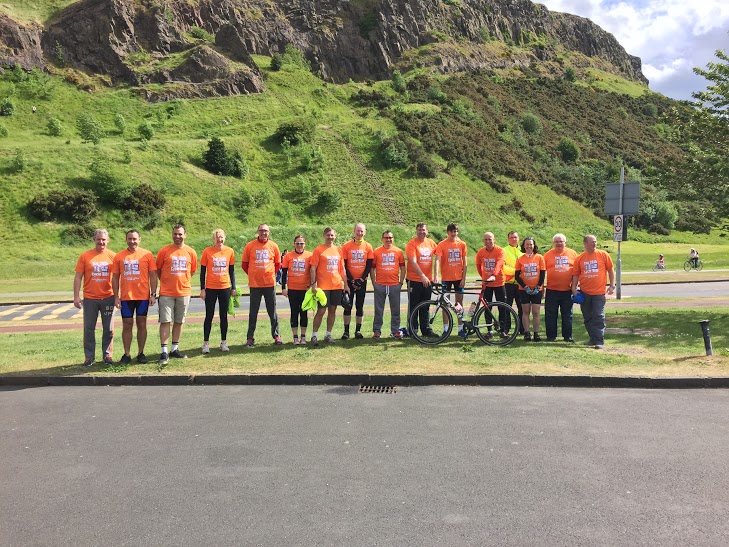
  • The results to Rob's tremendous assignment are here, do have a look, it's ace and people have worked really hard.

  • A useful way of looking a your relationship with clients is asking yourself, "Would they want to spend two hours on a train with you".

    As a client once said to me. "You can have the best planning, the best creative and the best pricing, but you won't get anywhere if we don't like you".

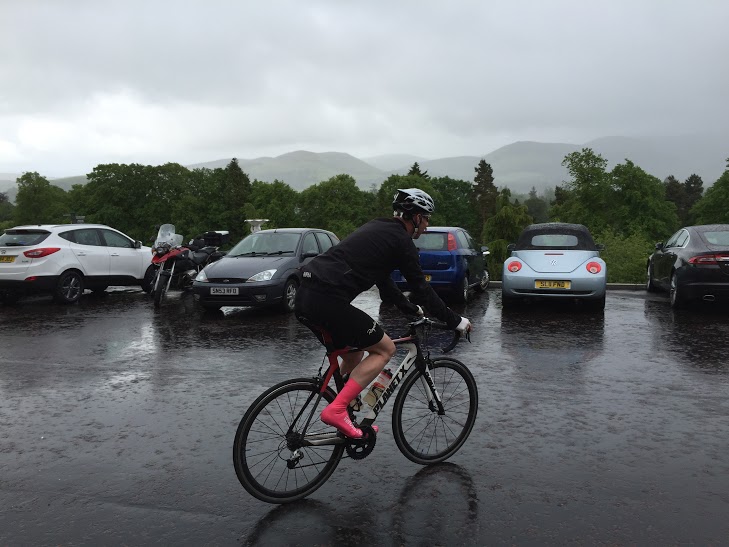
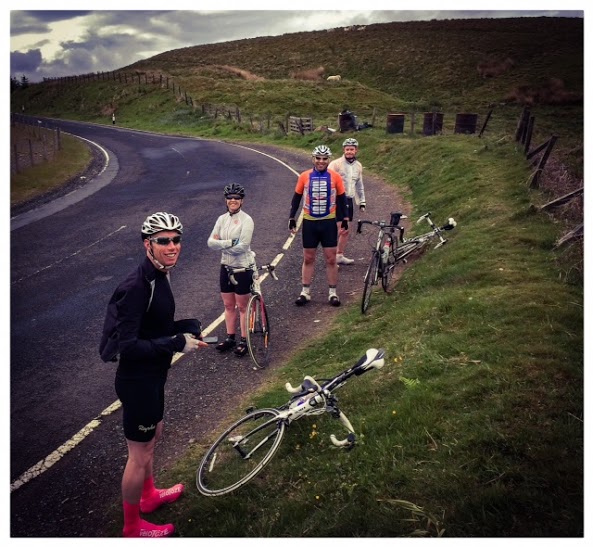
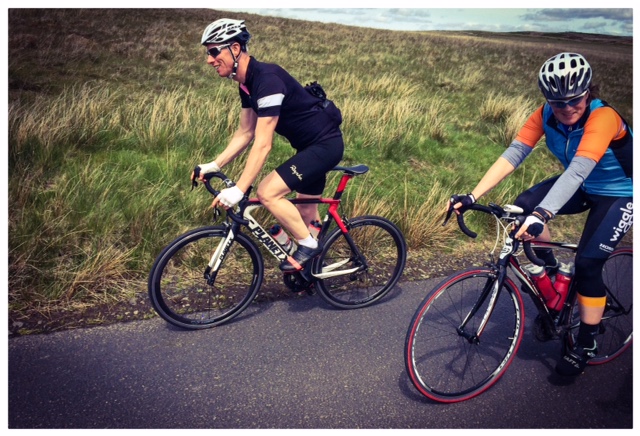
    So I was pleased to be invited to spend a whole weekend with some of them, riding 150 miles.

    You know you must be doing something right when they're happy for you to see them in lycra.

    IMG_0917

    Not to mention share a jacuzzi in the hotel after day one.

    That said, they were a little incredulous at the pink overshoes.

    IMG_0822

    IMG_5784

    To quote the commercial director, "What the fuck are they".

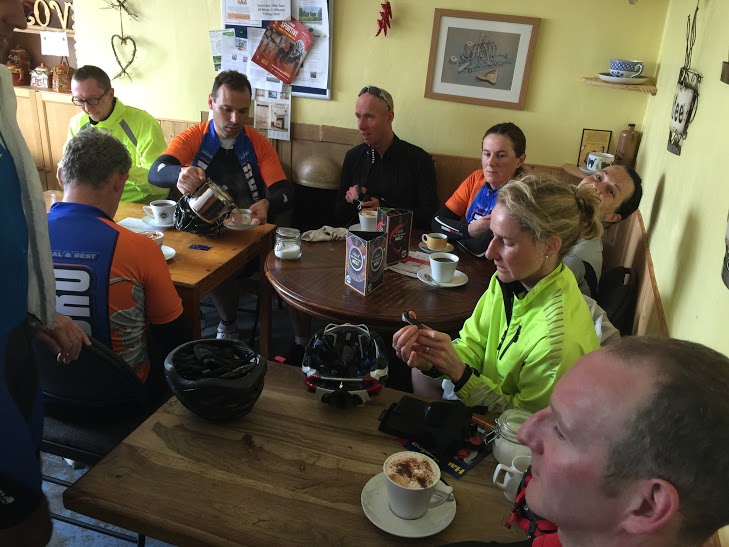
    There was the cafe stops.

    874

    IMG_0848

    The ice cream stops.

    897

    The amazing landscape in the Scottish borders.

    883

    887

    IMG_5792

    The sea on the run up to Edinburgh.

    IMG_0901

    What wonderful people.

    IMG_0930

  • If you're buying outdoor in general, it's one message and that's it.

    You have a few seconds, no more.

    If folks take out one message and know who it's from, you've done your job.

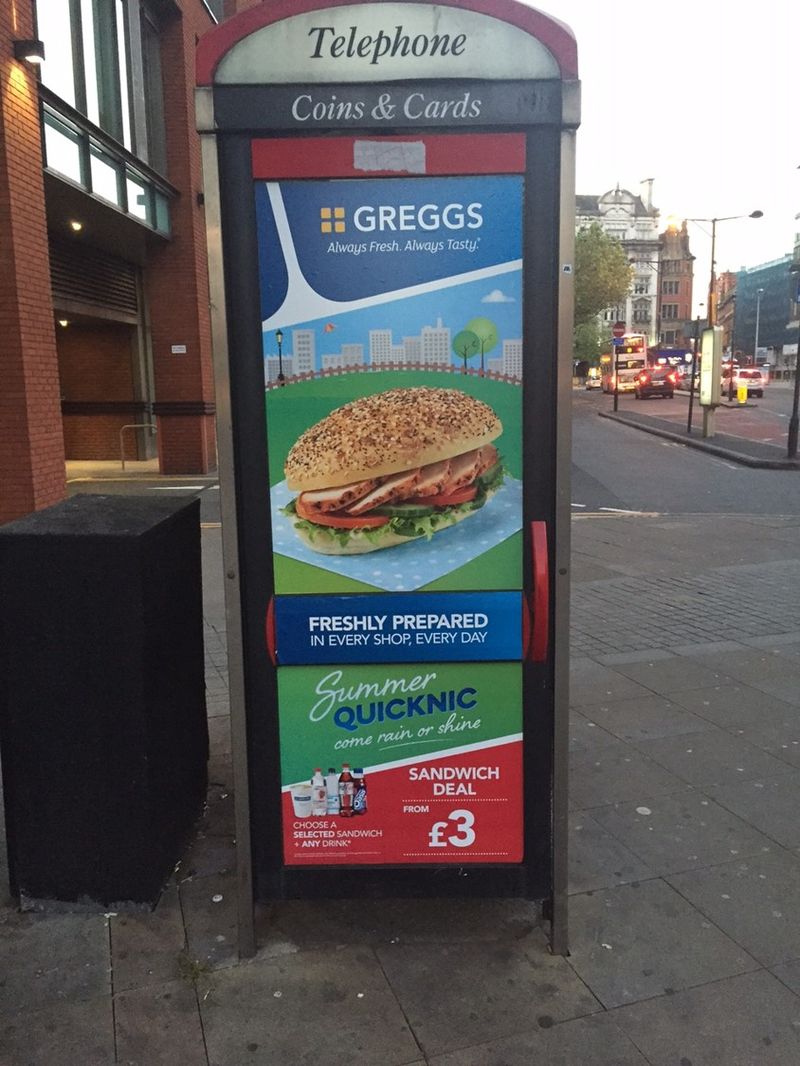
    With 'Street Talk' stuff like phone box's you have less. These are mainly for getting for people on foot in their day to day.

    The ad I saw (below) really doesn't do that. Intentionally or not, it's three messages.

    Six pic

    "Always fresh and tasty"

    "Prepared in shop everyday"

    And then a promotion to activate in that order.

    The first has no place on street talk really, especially if they're trying to activate footfall.

    The second is a very valid 'quality message' that gives me a reason to think "Might try Greggs today or soon".

    The third MIGHT make me go in today to take advantage of the promotion, but I won't have noticed it.

    Either the client has insisted to put in multiple messages.

    The agency can't help trying 'brand stuff' in what is response stuff.

    Or one or both hasn't a clue.

    Now here's Oasis, with a 6 sheet, who are activating 'thirst' at point of need with a personality wrapper -rather than confusing brand with activation.

    Oasis

    Scratch that, they've realised that single-mindedly tapping into a needs and doing it with the right tone and wit can deliver crisply – doing a longer term brand job as well as 'activation'

    Just saying.


  • It's a little before 5am. My Dad is gently shaking me awake.

    In 5 minutes flat, I roll out of bed, put on my clothes, picked up my swimming bag and get into his his Ford Sierra while he scrapes the last of the ice from the windscreen.

    It is minus four, which is really cold for the UK. The radio comes on and, as usual, Dad has put on Radio 2 and it's a slightly mad bloke doing the 'Bog Eyed Jog'.

    I am thirteen.

    Half an hour later, were at the swimming pool in Leeds city centre. Dad makes his way up the balcony with his flask of coffee and the paper.

    I get changed as quickly as possible, the heating hasn't come on yet. Diving into the pool doesn't offer any solace though, it isn't heated either.

    The only thing recourse is to train as hard as possible.

    It's a delicious feeling when ice in your veins begins to melt and you go from a little warmer to wonderfully toasty.

    Two hours later, I will be totally spent and feel like a mini furnace.

    As a do the various reps within the session I look up to Dad.

    His attention constantly darts between the paper and his son slogging his guts out in the pool.

    Only years later will he tell me how proud he is of me.

    Not the winning, which happens a decent amount.

    The trying.

    The determination to train everyday, twice a day.

    Getting up in the freezing dark.

    Bolting down a hurried evening meal after school, crashing through homework and training again.

    He knows there isn't a day when my body doesn't hurt.

    And I will tell him how it felt to know that when I looked up from the pool, he was always there.

    Just like before every race, he was always there.

    Just like when I didn't have any money, he was there for me, not judging, just helping.

    How he never told me what to do at the big moments.

    Jobs that mattered.

    Getting married.

    Having your heart broken.

    The twin joys and terrors of becoming a parent.

    He just talked about what it was like for him and what he did.

    The rest was up to me.

    When I got beaten up by a mental chef working in a hotel one summer, I only found out months later that he had to physically restrained from driving up to that kitchen and trying to knock his lights out.

    We weren't speaking all that much at the time.

    The usual headstrong boy/man and the puzzled Dad wondering where his little boy had gone.

    But he was still there for me, even when I didn't know it.

    I don't think you see the person your parent is until you go through some of the same stuff.

    I only understood what it took for him to take me morning training and then do a demanding job.

    As a child you love your parent of course, it's biological.

    It's another thing to become friends with your Dad and admire him, to want to be him.

    And I want to be like my father.

    There are things happening in mine and Juliette's live to do with her Dad right now.

    I'm very close to him too, but it reminds me to make the most of my, quite old, Dad and make sure he knows how I feel.

    He tells me these days he's just as proud of me doing something with cycling now as he was when I was a swimmer.

    He was the first on the phone my I broke my wrist crashing into a car.

    He was there when our first son was born with an infection that nearly led to meningitis.

    He's always there, he always was.