• “Who will be my primary contact to interface with?”

    “We’re way off the point of actual ideation”

    “I like recessions, the fear means we can squeeze far more out of our people”

    “I agree with you completely. However….” (every single meeting)

    “Put that hardhat on. No really put it on. Now take this celery and hit yourself on the head again and again, because it’s more likely you’ll eventually knock yourself out than me paying this fucking bigger fee”


    To a creative team:

    Day one: “This is the last change the client is going to make”

    Day Two: “Just a couple of final tweaks before it can be signed off”

    Day Three: “Has the print run started yet?”


    “These are not the fucking changes I briefed, what sort of a twat do you take me for? How fucking simple is it to get a fucking wine leaflet right? Oh bollocks! This is the chicken leaflet isn’t it? Fuck me, I’m sorry, mind you why the fuck didn’t you say I was talking about the wrong bastard leaflet?

    “The secret to marketing? I’ll tell you the secret to marketing, it’s selling a loaf of bread to poor simpletons for 10p less than the other bastards”

    “We just don’t go for this emotional stuff”

    “This is a professional organization, put some bloody shoes on”

    “I haven’t got my credit card, can you get the bill?” (said the Head of Client Services to the account exec when the £2,000 bill came in for the client lunch”

    “I can’t make my mind up with these scripts, can we have an animatronic please”

    “Fucking salience? What’s salty water got to do with my fucking brand?”

    “Just letting you know you replied to my email. I’m assuming you wanted to forward it?”

    Ring ring….“I know it’s two in the fucking morning, but I’ve just had a thought”

    “Do they still bother with suits Up North”

    “Bloody planner”

    “Can you give us a worse proposition?”

    “We’re going to make a cartoon panda sponsor a racehorse”

    “Get out of my broom cupboard”

    "No one leaves this bar until dawn. 6 more black russians on the way"

    "Look, the trick of a contact report is not to report what happened and what was said. It's a second chance to get we wanted out of the meeting. No one reads them anyway"

    "When you sign on the teleconference, everyone can hear you mate"

    "You forgot to press mute"

  • (Okay I lied, a couple of extra posts before a long departure)

    There have been many examples in history of famous quotes, pieces of work or leaps forward in technology that have been mis-interpreted on purpose, or through lazy thinking.

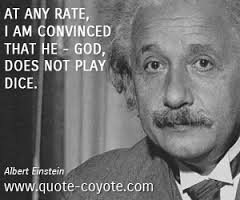
    For example, Einstein once said, “God does not play dice”.
    God

    This was in relation to being uncomfortable with the random nature of quantum mechanics.

     But plenty have taken it as proof that once of physics’ greatest minds was religious.

    He was borderline atheist. He just believed nature would be a little neater.

    In fact, many have taken the weird nature of quantum mechanics too far.

    They think it means you can’t measure what is happening.

    That physics is bollocks.

    When quantum theory has been measured to ridiculous lengths. Because of quantum theory, we know what is happening in stars billions of miles away, we can predict what will happen to them too.

    Perhaps ‘survival of the fittest’ is the most terrible.

    Darwin didn’t actually write that in ‘Origin of the Species’ and it doesn’t mean the strongest.

    It doesn’t even mean individuals or species.

     It means genes that produce traits and qualities that are best suited to their environment.

    Homo sapiens are far weaker than previous species of hominid.

    Homo Erectus would destroy you in a fight.

    Homo

     And it’s more genes that survive an environment as much as accidentally making you better.

    The appendix is fairly useless but doesn’t get in the way for example.

    Which brings us to developments in brand and marketing theory.

    Which does get in the way, as all sorts of people use to sell all sorts of weird and wonderful things.

    Now most theory in brands and marketing are bollocks anyway.

    Opinion dressed up as science based work.

     But even some stuff that is good if often not understood and applied wrongly.

    To show you what I mean, let’s rewind a few years, to when I once worked on a global client coming to grips with digital.

    They still held on tightly to the comfort of the Millward Brown brand pyramid.

    The brand teams worked in isolation of marketing and sales teams.

    Both has separate measures of success.

    They could spend millions on brand stuff and be happy with shifts in brand tracking.

    Sales didn’t matter, that was marketing’s problem.

    Distribution was a discussion for a totally separate department. Despite the fact it was a low interest purchase you had to make the effort to buy.

    Now because of the famous Millward Brown pyramid, ‘awareness’ was a credible measure.

    Which meant most digital stuff was measured on pure reach.

    The game became how little you could spend on production and media to get the logo in front of as many people as possible.

    It didn’t matter if they cared, it didn’t matter how relevant the stuff was.

    Just that it reached a decent number of people.

    So the PR charlatans has a field day. The social media folks thought it was Christmas.

    Because they knew how to get stuff out there.

    But they didn’t know how get people to buy anything. They didn’t have to.

    Since then, Saint Byron Sharp has given us all some evidence based ways of thinking afresh how brands work.

    And the same organisations that were able to peddle paid/owned/earned reach as brand metric are newly empowered.

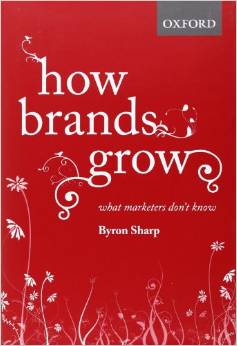
    Because the central argument of ‘How Brands Grow’ is that the most efficient role of advertising in all its guises is to reach as much of the market as you can.
    How

    In the wrong hands, this information can be really unhelpful.

    Confirmation bias means many of the awareness peddlers have leaped on it as proof of the ‘reach’ approach.

    For some it’s a genuine mistake.

    While the more devious have blatantly post rationalized it, to suit their argument that reach is all that matters.

    But, to quote Rob Campbell (I admit I’ve passed this off as my own how and again), most people are aware of Hitler. I don’t many who are particularly fans.

    Even worse for the digital reach brigade, simply getting stuff into people’s timelines or clicks on YouTube Trueview or whatever doesn’t mean people have taken anything out of the communication at all.

    Even worse, many display ads are really cunning at making us click by accident, but that click gets recorded as a score.

    The real argument that came from Byron Sharp was ‘salience’- Mental Availability. Making sure the brand gets front of mind in buying situations.

     That means you have land something distinctive with people. They need to remember.

    Which is why ‘Fame’ campaigns that get people talking work so well.

     They stir the emotions that generate longer term memory, they make the brand feel it’s on the up – while being seen to lead creates a feeling of quality.

    Because people can’t be bothered to think about buying most things.

    (which is also why my old client was daft not making everyone think about distribution – physical availability. In the case of some categories, especially FMCG, shoppers, even allegedly loyal ones, will simply buy what’s there. If your product isn’t you’ve lost the sale and given your customers the chance to build up a new habit).

    So, when it comes to digital brand communications, we need to apply exactly the same rigour that’s applied to TV and other channels.

    In fact, scratch that. I bring you back to my old client again. The entire brand tracking system needs an overhaul.

    Of course, knowing how many people saw and recall something about the advertising is fundamental.

    But understanding if it drove salience with those people is the measure that really matters.

    And the contribution both short and long term sales, or whatever the hard business measures are.

    Econometrics, real time reporting, control groups, whatever.

    Of course if you have a ‘response’ led client, you can measure the journey to sales online, but even in these cases, there will be plenty of people who didn’t convert right then who did later – or even bought offline.

    By the way, short term measures do matter, namely removing reasons not to buy, but overall, there’s enough evidence out there to show that the real contribution to profit is building long term brand salience over time.

    So yes.  

    Any great piece of writing or thinking can be used for evil in the wrong hands.

    It’s a real danger in marketing.

    With all those received wisdoms.

    All the different disciplines and agencies competing for, the increasingly squeezed budgets.

    The temptation digital presents to measure all sorts of vanity metrics that have nothing to do with growing a business.

    Back to Einstein. He also said we shouldn’t strive to be successful people.  We should strive to be people of value.

    Whatever the latest theory, that should never change.

    You can be successful getting loads of reach and totally fail in creating any value whatsoever.

    Plan on.



  •  

    Santa

    That's it for a while. Perhaps a long while.

    Back at some point in New Year. 

    Have a lovely festive break and excellent New Year. 

    Plan on. 

  • I refuse to call them audience.

    Curok

    'Audience' suggests people sitting and waiting for our stuff. 

    It suggests arrogance, that we don't need to impress them.

    We just need to fire things at them. 

    When we need to get noticed and earn space in their heads. 


    Now, nearly every strategy presentation should have some observations about your target customer. 

    Planning has evolved into all sorts of stuff, but at it's heart, it's our job to make sure the work does the right job with the right people. 

    That means understanding what we need them to think/feel/do in the first place. 

    But it also means a deep understanding of their lives. Not just some dry data on TGI -questionable personality traits or motivations and the like. 

    They're more likely to notice and maybe feel something about brand communication if it has some relation to their lives. 

    What they care about, what keeps them awake at night. What suprises them, what excites them.


    I have one golden rule that helps me do things quicker, get a true perspective and, ultimately, help doing stuff that works. 

    Find something to admire in your audience. 

    From defining a brand new customer group for the brand, to a specific quarterly comms brief, you'll get to something strategically useful quicker if you're able to edit out the extraneous rubbish in service of something that makes you admire them.

    Something that makes you care. 

    This matters. 

    Because great brands talk about what they love and that should include what they love about their customers. 

    But mostly because too many people in this business don't know their customers well enough and, worse, in some cases are quite sneery about them. 

    They do work for themselves, not the customers. 

    That won't be enjoyable, want capture the imagination. Won't get talked about. 

    More than the 'voice of the consumer' I think we need to be the champion of the customer.

    One way at looking at this work is admiring the work ethic of potential Chrysler customers and America at large..


    This largely came from admiring the growing independence of modern UK women.


    This came from the admiring the determination of the young Scottish people in adversity..


    While this admired the unquenchable hope and enthusiasm of Scottish sports supporters no matter.


    Even publicly thanking them…


    You get the picture I hope.


  • I'm convinced that the secret to great presentations, and meetings too, is two fold. 

    But mostly it's about love. 

    Heart-Love-Sky-Hands-Silhouette__1920x1200

    1. Hard work and preparation.

    If you know you're stuff inside out, if you have rehearsed, if the slides are engaging and more of a support to you than 'the show',if you've prepared for any difficult questions, you'll be fine.

    People will see the hard work, appreciate it and immediately warm to you. Even the most shy person can perform if they've done the work.

    2. But the real secret is being able to connect to people. 

    I don't think that has to be finding a link to what your audience deeply cares about, although that helps. I think it's more about getting folks to identify with YOU.

    Which means linking your presentation, or your part of the meeting to something you deeply care about. Link a personal story or passion to the theme of your stuff and you won't go wrong. 

    Firstly because when people see you the human, rather than the professional, they'll connect to you more. If they can see your enthusiasm, if they can see what brings you joy, pain or whatever, the mirror neurons will fire and they'll feel it too. 

    Secondly, by channeling what matters to you, you'll care more, so you'll perform better. Not least because, again, if people see your enthusiasm, if they know you care and they'll care too. 

    The best feedback I ever got from a client, apart from how I made things simple and clear, was how they loved I was enthusiastic about their brands. 

    Which is why nearly every presentation I do nearly always has a Star Wars slide (in fact, clients that know me well are usually wondering when the slide with a crow-barred Star Wars bit will arrive), a slide with the kids in, with guest appearances from swimming and cycling.

    In other words, like the key to advertising communication itself, rather than talking about yourself, talk about what you love – and make people feel something. 

    Seriously, naked emotion and humanity trumps slickness and 'performance' any day. 


  • I got knocked off my bike the other day. 

    Leg

    It hurt.

    I've never understood how clothing can remain un-ripped yet the skin can be stripped from your flesh, yet that's what happened to my leg.

    Then there's my ribs that are either bruised or broken. 

    Still on the bike though, a few pain killers etc and it's OK.

    Get back on the horse.


    Now it wasn't my fault, but it doesn't matter. 

    It doesn't make my ribs any less damaged, it doesn't put the skin back on my leg.

    If I didn't know how to fall, it wouldn't change more broken more bones or a mangled bike.  

    That's the problem with getting all self righteous about blame and fairness.

    It rarely changes your current predicament. 

    In fact it usually makes things worse.


    It's the same with the job. 

    It's not fair that strategy types have to earn the right to have any sort of point of view -and are expected to back it up with evidence. 

    While others can say what they bloody well like and it's taken as gospel.

    It's not fair that brief has largely been ignored by the folks working on it.

    It's not fair that your carefully crafted, well researched thinking has been torpedoed by a client, creative director, media partner or whoever without any evidence or logic whatsoever. 

    It is the job. Change what you can, deal with what you can't. 

    Treat rejection of your work as a chance to do something even better. Work even harder. Learn dirty rules to politely destabilise the thinking of louder mouthed people. Learn how to push emotional buttons when you share your work, no one gets excited by logic. 

    And if it's a lost cause, start the long term plotting to change your job, client or even department. But do make sure the problem isn't really you that's the problem. 


    Back to that bike incident. 


    I got up, ready to blister the offending driver with white hot rage.

    Only to see a mother and her little girl behind the dashboard, on their way to school. 

    No way am I going to upset a little girl. 

    I prepare for a withering look before I stuggle onto my bike and ride off. 

    But she opens her door, rushes out and gives me hug.

    My ribs are agony, but I let pass because she's in tears.

    She's actually in shock. She says she's so sorry, she's full of concern, she offers to drive me to work, pay for a new bike and God knows what else. 

    I end up calming HER down and making sure she's OK, before I eventually pedal away. 

    Why am I telling you this?

    Because no one has the right to be self-righteous if someone else feels bad and didn't mean it. 

    But more because, getting back to the job, it's worth making sure you know how someone else feels before they wade in. They may well surprise you – and head confrontation rarely works. 

    The person who blanks you because they're actually painfully shy.

    The client who won't even discuss why you're work won't get any further because they're inexperienced and they make you feel stupid. 

    The creatives shouting at you for work bombing in research, when they're actually terrified of a creative director. 

    The TV planner who's only way of dealing with stuff is 100% aggression, because that's what he's got from everyone else. If you give it back, you've only managed to cease to amaze him like everyone else. 


    Remember, I missed acting looking a total idiot on that road, by a matter of seconds, only because I happened to look through the windshield at the person.

    I've learned the hard way about rising to unfairness and being shafted at work. It never works. Pause, look behind the windshield instead. 


    On the other hand, she might have been using emotional blackmail on me, but that's OK, we've already covered how playing dirty can get you out of dodge. Being moral and fair and considered is all good of course, sometimes, you just need to be a little bit cunning too. 

  • 'Corporations don't own modern brands, consumers do' – try telling that to shareholders or venture capitalists. Consumers- let's call them customers or people – decide your fate, they don't reap the profits, and don't think about brands enough to even merit the word 'relationship'. 

    'Brands today are conversations' – true in the sense that a minority of strange people might spend time talking about a brand/with a brand, but they make up a tiny fraction of commercial  sales, while the people that growth and the big numbers come from, they indifferently get on with their lives. Just maybe, a decent amount of might notice the brand more, thanks to this minority doing stuff.

    ‘It’s all about content’ – well this is actually true, it always was. If you have nothing of value to add to what people are already doing, or your stuff isn’t good enough to merit your interruption, there’s little point. That’s not the same as the modern way of thinking though – the current fixation with the ‘build and they will come’ content model, or really entertaining stuff that’s not relevant to what the brand makes or does. Even worse if it’s nothing to do with any hard commercial objectives. That said, relevance can be overrated. People don’t need to rationally accept whatever you’re doing/saying/demonstrating, because they don’t buy that way. But if it feels intuitively wrong, or it doesn’t make sense somehow, if they can’t see the point, you have wasted your time.

    ‘Modern brand storytelling needs to leave lots of space for people to put the story together themselves in their own way’ – now, as Gossage said, “If you’re going to lay a mousetrap, leave some room for the mouse’. That was always true. In terms of culture, even more so these days. The entertainment we all enjoy has become more complex, less linear and asks more of us in terms of filling gaps in plots etc.

    Now there are limits even in popular culture. I give you exhibit A, the initially brilliant Lost. At first most loved the big questions, they loved debating what was going on. It was good. But then it got so complicated it seemed that not even the writers knew what was going on – and the ratings plummeted to the point only the die-hards stayed until the end.

    There are limits to the complexity we will accept in culture, even in a world where The Dark Knight and Interstellar can succeed as blockbusters.

    Which brings us to brands and back to that point about conversations.

    Most people cannot be bothered to work it out, let alone talk to anyone about it. Of course, any modern campaign needs to be respectful to the grammar of the media it’s in. Your creative really shouldn’t be the same everywhere. For example, you need to front load your message and brand attributes on a YouTube pre-roll before folks click away, while you can still afford the big reveal in a linear TV ad. But that’s about people noticing and accepting your stuff.

    ‘The agency model is dead’– which agency model?

    If you mean the one where shops that operate in different disciplines try and charge a fortune for selling a process that has a very obvious end, and the output is judges as effective because if the way it’s measured, there are still global corporations making a lot of money with big clients doing exactly this. Their shareholders are not complaining. Even if this might not be the way stuff should be done today, tomorrow or ever.

    If you mean the one where clients will pay a hefty fee for genuine creativity and ideas – again in all sorts of agencies, there are still clients that are more than happy to do this, but the thing about the successful agencies, is that there is a lot of hard work and thinking behind the great work. To quote John Hegarty, there is still money there for ‘Intelligence turned into magic’.

     If there are fewer who will pay for this kind of work, it’s probably because they’ve invested in agencies that are all for doing the crazy stuff, but not the hard work of understanding what the crazy stuff is supposed to be doing, or if it’s right for the people it’s aimed at.

    If you mean the kind who are willing to pay for fantastic service, a groovy reception and being made to feel special, it’s fair to say that world is gone.

    The people who say the ‘agency’ model is dead are usually people who are peddling something else. It probably works really well for them, but there are other ways.

    Ultimately the agency model is a place where you do stuff for clients they cannot do themselves. I’m not sure this will ever go away.


  • I was brought up in creative agencies.

    They had good points. They had bad points.

    I now work with the media folks. They have good and bad too.

    I really never thought I’d end up in a media agency though.

    Then again, there was a time I was sure I’d never get married, be a parent or go to a Queen concert.

    Now, beware of post rationalization, confirmation bias and the general way the brain makes you feel good about yourself, but I’m becoming more of the opinion that, maybe, media agencies are set fairer for today’s world than the various guises of today’s creative agencies.

    Here’s some reasons why. Based purely of my experience of working for some from both sides and working with even more.

    Let’s get one thing clear though, we’re all in marketing which means for the average person, we’re about as respected as estate agents. Still, if you work in this industry, may as well work on the side of the least evil.

    Media agencies are much nicer to their staff. While there one or two creative or digital agencies that don’t work mental hours, have a culture that nurtures and invests in their people, encourages staff to respect each other and is grounded in the reality of the people their work, is aimed at, creative agencies work much, much longer hours, tend to make their people redundant more quickly, celebrate loud mouth extroverts rather than talent and thoughtfulness, don’t train staff, expecting them to sink or swim, and generally chew their people up and spit them out.

    And they use creativity as an excuse for leaving things until the last minute and being disorganized as hell.

    Media does have its share of extroverts, there is still the odd late night and any service business is only one phone call away from having to shed staff, but they are much nicer places to work. Hours are more regular, yet all the work gets done. They manage to be much more flexible around the lives of their people. They invest a lot more in training and staff development. There are whole search departments full of shy science types who would melt in front of clients. And people do seem to have a life.

    This matters, because tired is stupid. Knackered, irritable people who never actually get out and experience the lives of the people they are selling to will simply not perform.

    And no amount of concrete hot desk tables, bean bags and ironic t-shirts will make up for it.

    Because media agencies respect their people, they also respect experience. So you’ll find far more mature people in media agencies than creative and digital species. Creative agencies, in general, seem to value the young and, even in a world where they’re competing against other professions that are now seen as more lucrative and even cooler for the newer generations– tech companies, The City to name but two, they don’t hold on to experience. Now a variety of studies have shown that you can’t fake experience, you need 10,000 hours of practice to be great a something. Moreover, in a little bubble forever pronouncing the death of this and the death of that year in year old, the more sane voices who see through the bullshit and have seen it all before are very valuable indeed.

    The number of older folks with kids and stuff in media agencies means their employers just can’t get away with working their staff to death and sane, humane culture built on respect, temperance and thoughtfulness just naturally bubbles up.

    You need your young blood to shake things up and inject fresh energy in an organization. But that constant renewal needs to be balances by experience.

    I’m sure the love of rash youth is why creative and digital agencies get all excited about the latest wheeze- they don’t have the frame of reference. Like the social media gurus who have never heard of Gossage, the Behavioural Economics proponents, the folks who suddenly discover co-creation and God know what else.

    Everyone in media is a doer. Creative agencies have departments. Account folks ‘handle the client’ with varying appreciation for planning, creative, developing or whatever. Creatives are probably as far away from pure craft as they have ever been. With art directors who cannot draw and writers who cannot write copy. It’s for the studio to visualize stuff and the suits to check copy. While the planners have stopped getting their hands dirty with research and don’t know how telly ads get made, the nuances of casting and many don’t go to client meetings that often. Digital folks of course, just sit in dark corners coding. I stereotype a bit, but you get the gist and probably recognize it.

    Now media organisations of course have their departments. But in each one, there is no client handler who can get away without knowing the minute details of their chosen field, and actually doing an element of the planning or buying themselves, based on good evidence based consumer insight. In a world where innovation and content ideas don’t just come from creative agencies, they also need to have ideas too.

    If anything, as the media landscape has become more complex, the craft skills have gone up. I’m still intimidated by the complexity and hard work that goes into good TV buying, it’s every bit as skillful and demanding as the shoot for the stuff that will fill the space bought.

    But putting together an integrated plan across channels, that will achieve cut through and makes the most of a list of available channels, innovations and prototypes that grows daily, that takes mix of deep knowledge, insight, imagination, rigour and hard work. And then the same people who have done the thinking need to sell it in and make it all happen.

    And when you’re at the sharp end of what’s going in your field, when you have to do so much yourself, rather than hand it all over to another department and forget about it..it keeps you at the top of the game, forces you to evolve, which in turn means the organization is always moving forward.

    Media is where the innovation happens as the great work by Steven Johnson shows,


    great leaps forward come from people building on others’ work. It comes from good people being around lots of other good people. Now some creative agencies are pretty good at bringing in other talents. Film makers, tech geniuses etc. But mostly, they jealously guard the creative project.

    My little three year old girl is very independent and insists on doing everything ‘all by myself’. It’s only when she gets in a terrible mess that she asks for help. It can be very entertaining, but watching her nearly strangling herself with her vest before finally holding it out and saying’ fink Daddy should do it’ doesn’t get us to swimming lessons on time now does it?

    Media agencies HAVE to work with media owners. We have no choice but to work with the very, very best in their field. Who knows social media better than Twitter? Exactly. Working in TV, especially on a sponsorship or partnership thingy, well, you’re working with people who know how to entertain people and make content people want to experience.

    So not only do you get the very best advice and stuff to play with, all that cleverness and expertise constantly challenges and rubs off on you.

    If you want to be good, hang around good people. Media agencies have that in the job description

    Media agencies have no choice but to constantly evolve. When you strip away the hype media agencies still think hard about where to buy space, and then buy it. They get paid for leading overall strategy a little more, they brief content more, they even make some of it, but it comes down to planning and buying media. That media is changing every day. The pace is only getting faster. Which means that evolution is built into a media agency’s business model. We’re automatically at the cutting edge and we know what is useful and what it Emperor’s New Clothes because we have to constantly talk to, collaborate and negotiate with the people who at right at the very sharp end of it all. We still sell TV plans of course, we still recommend 30 second commercials as the most efficient buy, because they are. But we know everything about sky Adsmart, we know that Programmatic TV is a possibility and that it’s likely TV might be bought on impressions, like digital, in the near future. Just as Twitter works directly with us on our briefs and tells us all about what they have in BETA

    Media agencies are not blinded by the word ‘brand’. At some point, creative agencies began to talk about ads that disrupted the category, that build brand values as credible objectives themselves. They justified ads that didn’t necessarily result in hard business effects by pointing to results in brand tracking studies. They began doing ‘brand planning’ and messing around with brand essences and such. Media agencies have bought brand ads of course, but as they’ve been charged more and more with taking responsibility for strategy on some level, because they don’t get to do brand planning, they don’t make brand ads and don’t create brand onions, they naturally look for real problems to solve, rather than brand problems, and then use their powers to solve them in the most efficient and effective way they can. The problem with being the custodian of the brand, is that you tend to think ‘brand’ is the problem, solution and Holy Grail all in one.

    So there you have it. Maybe I’m showing a new bias based on my new circumstances.

    Don’t get me wrong. There are fantastic creative and digital agencies that are just brilliant to work with and ace to be employed by. Just as there are terrible media agencies, some which are relics from the ‘luvvie age’ some that are blatantly steal partner agency turf. Many that don’t plan, they simply justify the biggest media budget they can get away with.

    But I am beginning to think as a general rule, they are increasingly where it’s at.

    Discuss. 

  • And so we have a new Star Wars trailer.


    No point telling you I’m looking forward to a new Star Wars film.

    Since I was born in 1974 and I’m male, it’s sort of inevitable.

    Sort of.

    Because the Star Wars world is divided between those too scarred by the prequel trilogy and those that insist on living in hope.

    Anyway, the prequels were not as bad as received wisdom likes to claim.

    It’s just that die hard original fans saw the first film as little boy and nothing can ever match how it felt to watch those films for the first time.

    When I listen to my five year old begging for a Darth Maul lightsabre you know those films had something good about them.

    From time to time, we all need to feel like little boys and little girls again.

    It’s why I just read the Hobbit again. When I was eight it was magical. It still is, not because I haven’t grown up, it’s just that the wonder of being that age comes flooding back.

    The feeling that everything was amazing and special.

    That Mummy and Daddy were much loved constants that knew everything and would always be there.  

    Where December seemed to take forever and ever.

    That nothing mattered more than if Vader really was Luke’s father, except, perhaps, the Raleigh Chopper you were hoping against hope would appear on Christmas morning.

    How lucky I am to have grown in a little world where I never had to worry about real things, apart from the odd bully and relentless teasing from my elder sisters.

    How fortunate (for now, you never know what’s around the corner) my children are able to grow up in a similar way. 

    That's why some folks can't get over Star Wars and similar things. It's what their childhood was made of and who doesn't want to feel like that again every now and then?


  • Trojanhorse

    One of my many failings is my useless sense of direction. SATNAV and Google Maps are a godsend for a numpty like me.

    Blatant excuse to show this……….


    I was lucky though to have grown up in a time when there were not the tools to do it for you. The AA Route planner and real maps became my friends.

    And I got very used to being lost. Got used to not panicking, leaving enough time in the first place and getting there.

    Which means when the tools let you down (and they frequently do) you actually want me in the car with you.

    When it comes to the tools for our job, media agencies tend to be amazed how loads of creative agencies you will have heard of don’t have some of the basic planning tools.

    I don’t mean the sexy stuff like TGI Worldpanel, NVision or the latest YouGov Profiles doo dah (you can get a watered down version of Profiles here).

    Stuff like basic TGI, Mintel, Touchpoints or access to WARC.

    Now these tools are bloody useful of course, but they have problems.

    TGI is based on claimed behavior and as has been said ad nauseum, people rarely say what they do.

    Touchpoints is more diarised of course, and real time reporting means you get a decent idea of what people do. But no clue about how they feel about it, or why they do what they do.

    Mintel is really someone else’s opinion on market share and TGI. And don’t believe their observed trends – it usually means it has been observed twice.

    WARC case studies are really helpful for all sorts of industry stuff, case studies and awards papers are great for inspiration but every single one is a representation of a perfect world, where everything works like clockwork, where there has been an ‘invented crisis’ and some earth shattering insight to overcome it. When of course, every agency process is a variation of chaos, post rationalization and gut feel.

    The tools are great for the ‘sell’ – case studies and data that justifies the thinking are great.

    But the problems with tools is they’re too easy.

    They keep you at your desk, settling for easy answers that at best tell you ‘what’ rather than ‘why’.

    They allow you to have an opinion and then justify it.

    Rather than finding a fresh perspective.  

    They allow you to have a point of view on your target customer without ever having met them.

    They are Trojan Horses of the obvious.

    Now, of course, creative folks without the tools can be VERY guilty of assertion without making any effort to prove it.

    And some quotes from Trendwatching or NVision loosely linked to your ‘insight’ don’t count.

    But the good organizations are great at having an informed opinion by constantly going out and meeting their customers, reading what they read and doing what they do.

    I think a great example was when AMV wanted to prove that Sainsbury’s customers sleep shopped, so they filmed a Gorilla roaming about instore, being mostly ignored by customers and showed it to the client.

    Deep insight you won’t get from TGI.

    Aligned with the fact that most bought cookbooks are left unread you have a lovely tension between the pressure of habit and routine and the pressure to be a ‘foodie’ you get ‘Try something new today’.


    So.

    By all means use the tools, but only as a starting point and by way of the final ‘sell’.

    Please do the desk research, all the crumbly stuff out there on the web.

    By you can’t beat leaving your desk and actually being your audience.

    Because the problem with relying on Satnav, and planning tools, is that you don’t know you’re lost.