• I was reminded last week that the internet grew out a US military drive to increase security.

    That’s right. It’s not up there with moveable type of course, but the internet has still created a seismic shift in freedom of information and control of content.

    Out of a drive to limit it. 

    Whereas the World Wide Web was one the unexpected by-products of setting CERN to send atoms whizzing around and smashing into each other.

    Which goes to show that when you set out to do stuff, not only do you not know where it all may end.

    If you open your mind to the possibility, all sorts of wonderful things can tumble out along the way.

    It can be the exact opposite of what you intended in the first place.

    I guess that’s why science funding is so important. Just by trying to do all sorts of improbable stuff, we often get far more unexpected value.

    Perhaps that’s an argument for more learning for learning’s sake and a subtle swipe at those who see education only in terms of economic ROI. But let’s not go there.

    Looking at the day job, it’s why I think pitching is healthy, even if you don’t win.

     The tight deadlines, adrenalin and the way they bring teams together can bring other benefits.

    Great ideas can develop along the way to save for later, along with the main crux of your pitch.

    Moreover, if you put together a pitch team of folks that don’t usually work together, it’s great for creating an even closer knit agency, while the getting used to other views and frames of reference develops everyone’s world view and skill set.

    It’s also why planners should be as interested in as much non-work stuff as possible.

    Great ideas are as much about drawing new connections between things as ‘bolts from the blue’. The more fodder you have, the more likely you’ll produce the goods.

    Put another way, read, watch and experience as much as you can, you never know when it might come in handy. 

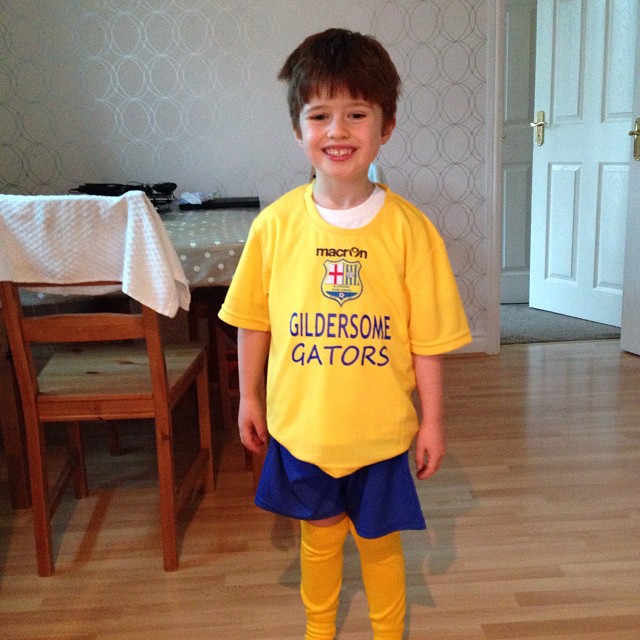
  • My little boy has recently turned 5 and started school.

    Will

    If that wasn't enough, he has his own football team kit and happily chases the ball with his little friends every Saturday morning. 

    I wasn't ready for this picture. He's all grown up. 

    I still remember the first time we brought him home like it was yesterday. 

    Of course, to be honest, there were times in the last five years when I wanted some time alone. Or just a sleep in.

    But these moments when he's suddenly all grown up make me want to re-tread every single moment with an even greater awareness and attention. Now he plays by himself more. Now, when his friends are around he sometimes forgets we're there.


  • I’ve worked in quite a few different agencies.

    Each has been very different, starting with a creative agency getting to grips having to do more than traditional ads, right at the start of the original  ‘What do about the internet?” question, when agencies began to think being able to design and build websites.

    Blogs were a long way off, let alone anything that looked like social media.

    This contrasts sharply with my experience these days in media agencies.

    They’re absolutely on top of their game dealing with the continuous upheaval and change their industry faces.

    Communications strategy is no longer owned by the creative (or digital) agency and, to some degree, nor is core brand strategy. How can it when a huge proportion is what gets planned, across paid and earned I hasten to add, doesn’t actually need much stuff created for the client by an external agency?

    (Can I just say I bloody hate the term ‘brand planning’ or ‘brand strategy’. Yes, I’ve seen the same numbers as you, that show the payback from great campaigns that build and refresh memory structures etc.

    But this is merely a constant need over time to reach as many buyers as possible with stuff that is consistent with, and develops, core associations in the mind.

    Rarely is the immediate PROBLEM the brand. The problem is nearly always about removing specific reasons not to buy. Defining the issue, then going about the job of solving it.

    Anyway)

    So many modern campaigns include content created in partnership – with the people that own the  media, or folks at an even sharper end of creativity – film makers, writers, technology outfits and whatever else – ‘strategy’ no longer means what you fill the ads with.

    Now, as a strategy type in a media agency, you’d expect me to say that.

    But the reason I jumped ship from the creative outfit a worked with wasn’t just down to the creative director with the ego dwarfing his skills, or head of new business that thought he was a planner, not even the general complacency of the place.

    It was simply that I was getting concerned at the amount of ‘ad tweaking’ briefs I was working on.

    After getting used to, in many cases, developing digital stuff around the work other creative agencies were doing, it was a little too much to find in latter years, I was mostly being given some core thinking from the media folks.  

    And lots of it was pretty good too.

    In fact, it seemed that much of the innovations and drive to solve business problems rather than just ‘marketing’ or even ‘creative’ problems was coming from the media folks.

    So here I am. Probably quite well qualified to comment on what’s different between creative/digital/media agencies and what is the same.

    5 things that are the same

     The other agencies are charlatans. They don’t work as hard, they get paid more, they’re not held to the same high standards as you are. It’s so easy on the other side, you’ve often thought of jumping ship for an easier life, to make a bigger impact and get paid more.

    Clients just don’t get how hard you work, how you’re always juggling, how their briefs are never clear enough. They always brief you at the last minute and expect a response now. But when it comes to invoices, they pay as late as possible and query everything.

    Suppliers to agency folk, researchers, media owners, production  companies, tech companies, printers etc think agency folk don’t get how hard they work, how they’re always juggling, how their briefs are never clear enough. They always brief you at the last minute and expect a response now.

    Many agency folk jump ship and work on the client side, only to get a nasty shock at the stuff they have to deal with, things well outside their experience or skills. Like dealing with a supermarket buyer if you’re in FMCG. Like dealing with sales team. Like being actually responsible for sales. Like working in a normal office without a groovy coffee machine. Like having to spend 90% of your time having to deal with stuff that is nothing to do with ‘campaigns’ or ‘communications’/ They miss the good old days.

    They wish they were paid more, they hate the new world of procurement and know for certain the other agencies get paid more than they do.


    5 Things that are different

    Creative agencies secretly wish it was 1995 again, they could just make ads and bamboozle clients. Media agencies are torn between the simplicity of the old days where you could just negotiate the right amount of TVR’s – vs the brilliance of the new world where they can be lead agency all of a sudden. Digital agencies wish it was 2003 again when no one understood what they did, including themselves, but they could charge the earth for it. PR agencies don’t care when it is, as long as no one asks them to report ROI in the detail everyone else does.

    Creative and digital agencies rarely have lunch breaks. Media agencies nearly always have lunch breaks and will not answer the phone to anyone between 1 and 2 pm. PR agencies are out to lunch all day.

    Creative agencies spend ages on two IPA Awards year to prove the stuff they do works. Media agencies report on everything they do, reach is actually a serious measure. Digital agencies can prove everything they do, clicks are a serious metric. PR agencies have got to grips with the new world of accountability and do far more than equivalent media value and share insightful stuff like ‘likes’.

    Media agencies have ‘invention’ or ‘content’ departments to disguise the fact they’re doing more creative and want to do even more. Creative and digital agencies have ‘creative departments’ (so little imagination) and planners that innocently trot out media recommendations in the guise of ‘brand behaviour. PR agencies do PR.

    Creative agencies make their money charging a lot of time for a make-believe process. Media agencies make their money on commissions and charging time for a make believe process. Digital agencies charge for what they can get the client to understand. PR agencies are lovely. 
  • I’m back in the pool again.

    One of the benefits of the new job is that only two minutes’ walk from a decent pool.

    The other is that it’s the kind of place where people actually take a lunch break.

    So it transpires that a few days a week, I’m in the pool for a go half hour.

    Now half an hour for swimmer isn’t much.

    When I was training as a boy, we did about four to six hours a day. There wasn’t a day when my body didn’t hurt. I don’t mean the actual training, I mean the ache in my muscle after. The only thing that would stop it is more training.

    It’s not even much next to what I was doing a few years ago to train for the Great North Swim – about a solid hour a day.

    But now I’m riding around 20 miles a day, it’s not about the fitness and stuff, it’s about just doing it.

    My obsession with getting on the road bike is all consuming, but my first love with always be swimming.

    Because I will always be a clumsy fool on land, but when I get in the pool, suddenly my body assumes an air of grace. It knows this is something it likes to do well.  

    Also, cycling is freedom but riding is solitude and for an introvert like me, being alone with your thoughts is a rare pleasure. When I used to train properly, it was far from lonely, with all my team mates, united in agony and loving what they did. But now, there isn’t a silence quite like being underwater.

    So how is it going?

    At first, muscles I forgot I had woke up in flaming torture.

    Then they calmed down.

    My feel in the water was dreadful. That’s the thing swimmers need the most, and what disappears the most quickly if you stay out of the pool.

    But it’s coming back.

    While all the hours on the bike mean stamina isn’t a problem, as far as the lungs are concerned anyway.

    What still hurts are the arms and shoulders.

    Anyway, as embracing my long lost lover has been great, especially as it coexists with my new flame, my beloved cycling.

    Anyway. 

  • Well it’s a sad day today as Rob Campbell shuts down his blog indefinitely.

    It's not because of this video……..


    It’s not because his employer has told him to.

    It’s not because the odd bunch that comment have finally got to him.

    It’s not because his best friend has asked him to cease and desist publicly admiring his genitals.

    It’s not even down to his considerable holiday time being cut back.

    It’s because Rob is expecting his first child very, very soon. A lucky little boy to have a Daddy like Rob.

    And not just because he will be the first in school to get whatever sad gadget is out this week.

    Once his Dad has had a play.

    As much as Rob tries to hide his kind generous spirit, that’s the man that comes out over years and years of posting every day.

    He is one of the most thoughtful people I’ve never met.

    Rob is also evil, somehow I’ve been maneuvered into seeing Queen live in January, all at the hands of this evil genius. I hate Queen, white hot hate and yet I live in fear of actually liking it and having to admit this publicly –along with the obligatory selfie.

    In fact, the only good thing to come out of the death of another planning blog is that I can’t be publicly ridiculed there.

    Any more than I have already anyway.

    So good luck Rob, all the best to you and your family. 

  • If you can get hold of The Big Lie, by  the Future Foundation, it's well worth a look. 

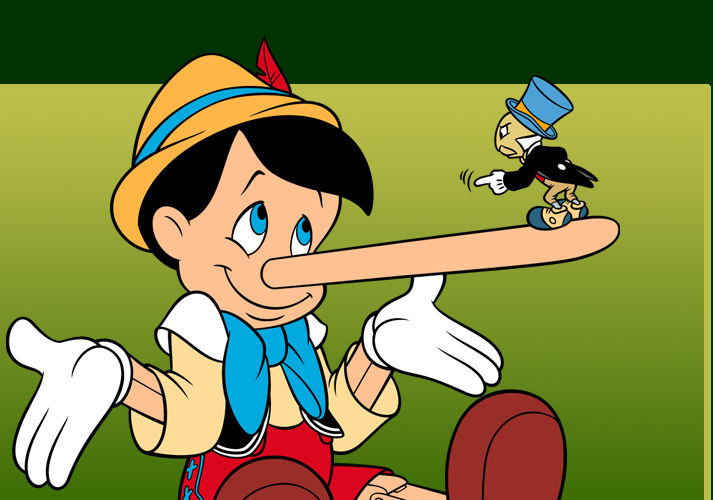
    Pinocchio

    It's a nice little window into what people in the UK care about right now, but more than that, it's a study into how research makes people tell lies. 

    It's evidence based, full of real data from real base sizes.

    It shows how the same group of people can claim to 'think/feel/do' one thing.

    Then claim to 'think/feel/do' something totally opposite.

    Even in the same questionnaire. 

    Everyone is usually at least two people – how they see themselves and how others see them. 

    This get's resolved a little as people get older. 

    But this has only been complicated by two develops in recent times.

    First, the porous nature of modern culture. There is so much choice of what to experience and 'how to be' that people genuinely are different versions of themselves in different situations and different groups. 

    Second, the way today's thirty and forty somethings are much 'younger' than generation before and actively try to avoid growing up. 

    Then there's social media, where we're seeing folks projecting a more 'perfect' social self, an idea of who they would like to be,rather than who they are. 

    For example, it's quite cool (people say) in the UK to have a work ethic and look disciplined, so loads of folks are exaggerating how much they go to the gym and what they do there.

    Just the data tends to show people claim to dismiss 'celebrity' yet the Daily Mail website is one of the most popular sites in the world. 

    So it's totally authentic for me to moan about work commitments getting in the way of time with the kids.

    Then moan about time with the kids getting in the way of cycling in other company.

    Both statements are true and authentic. 

    Which makes research and 'insight' bloody hard. 

    It means that if you come across a neat little insight, it's probably only half the story. 

    It means we should look for tensions and contradictions more. It means we're on to something. 

    It means we should avoid asking people direct questions, or at least, look for connections, patterns and tensions in their answers. 

    The tensions are the insights!

    It means that 80% of market research findings are, at best, questionable. 

    More likely, they are a pack of true lies. 


  • I like wine.

    No I love wine.

    Wine

    So when Naked Wines started emailing me, and offered a ridiculously good trial, naturally I had a go. 

    Now, the wine of great, the business model of supporting independent growers, so you pay more for the wine and less for the supply chain, and know the people that matter get paid is all ace.

    But that's not the good bit. The clever bit is how you get put on the waiting list to be a fully fledged member -and when you can you have real influence. 

    Because we live in an instant gratification culture today, where we can have it now at the click of a button  culture where more is better. 

    Creating scarcity, earned membership of a hard to enter club where you're treated as a connoisseur (even if you're not like me).

    That's really special these days and is commercial catnip if you can get it right. 

    Even in the mass market. If you can create perceived scarcity or exclusivity, you're on to something. 

    Because perversely,in today's have it all world, the thing we want the most is what we can't have. 

    E

  • I'm guessing that I come into Sainsbury's target market. 

    I know that I think about ads and stuff too much.

    I know that tapping into all that WW1 stuff around at the moment should create some natural traction.

    But I do wonder if this..


    Will be seen as a tune free version of this..


    Not to mention, I wonder if people who think about things a little less, might react a little adversely to something as serious as millions of men giving up their lives, in service of selling turkey and tinsel. 

    Winning Christmas is really important commercially and much of that can come from making people feel something profound, but I question the relevance here, the 'sharing' present element feels too bolted on.

    Borrowed interest can be really powerful, but you need to get the relevance. I wonder if folks might like the ad (if they can't remember Macca) but not attribute it to Sainsburys. 

    Anyway, my favourite Christmas commercial is this…


  • I read something or other from the APG, a summary of one of their speakers events. 

    Someone made the point that while there is an established link between creativity and effectiveness, there is less of a link between 'strategy' and effectiveness. 

    The evidence of creative payback comes from linking performers in the IPA Databank to creatively awarded campaigns. 

    The evidence of lack of strategic payback comes from the lack of APG Award winners in the IPA's.

    But this is highly flawed………….. 

    First, the IPA Databank is made of those who had the data that proved effectiveness. Mostly, those that could pay for, or had econometrics in house.

    This is a very small sample of ALL communications campaigns.

    Moreover, they tend to conform to what the IPA is looking for – prove traditional media is alive and well. 

    Which brings me to creatively awarded campaigns. Most creatively awarded campaigns are not 'effective'- let alone have won an IPA. And what drives creative awards is rarely stuff that would excite the non-creative community. 

    This is a little like the APG Awards. They are not really about effectiveness, they're about showing how clever you are. Hugely post rationalised case studies built on what other planners might like to hear. 

    You could say that creative awards and APG Awards are specialists talking to themselves, basically showing off to each other. 

    One final point, coming back to the IPA Awards. I'd argue that this is the best we have at showing strategy, only in that they tend to outline a clear problem, strategy and then claimed effect. 

    At their best, they define a clear problem and role for comms to judge results against. Which is really the basis of good strategy. 

    But proving the benefits of having people who's primary role is strategy? That goes well beyond a final sales affect or whatever the payback measure is. 

    From internal perspective, there is the role as buffer between suit, creative, client, media buyer, digital strategist and whoever else. By defining a clear jumping off point for everyone. 

    There is the role of non-threatening sounding board for everyone. 

    For clients, there is the role of someone who cares about the business. Not the work, not the plan and not the agency profit. 

    There is help with the 'sell'. Most agencies talk bollocks, I've often thought that planners make the right thing easy to buy and easy to sell on to the board for clients and such. They make it simple, understandable and compelling. 

    The (much hated by planners) but much appreciated role by everyone else of workshop facilitator. 

    I'm saying that much of the value of a strategy person isn't just in formal ROI. It's making life easy for everyone else. 

    I sort of know the stuff I've done that has 'worked'. I know the stuff that hasn't. You just know, so do clients.

    Evaluation is critical and should never, ever be dismissed, but I'd argue the value of a strategist is been dismissed because they do less strategy and more 'ad tweaking' or they focus on communications problems rather than how comms can solve BUSINESS problems. 

    Or they are hidden away from the client, or don't want to meet the client that often. Or hide in their ivory tower until it's time to push out the brief.

    Or they think they're the only one who can do 'strategy' v liberating the thinking of everyone around them. 

    I guess I'm saying it's the intangible as well as the tangible benefits of a planning type that need to be taken into account. 

    And it's down to planners to get their hands dirty, be generous, ego free and do what's needed to be wanted in the room.