• There is a calm fury to a true craftsman. The restless perfectionist who's work is never done, it just that time has run out. 

    I used to love John McEnroe, all waspy wayward genius and volcanic rage for perfection. But he couldn't control his passions – blowing up in his face as much as carrying him to even greater feats. 

    Compare that to the steely grace of a Federer, or the relentless intensity of a Nadal. Not an ounce of energy wasted, eveything in service of the next shot being even more perfectly weighted and judged than the last. 

    Or the solitary sculpter chipping away as his work slowly reveals itself. 

    Talent is common, the years of practise and dedication in the pursuit of the the perfection that will never be reached, that is rare. And it doesn't come cheap. Even rarer is the ability to keep that unrelenting focus. To never stop trying until the job is done, in fact, never finishing it, just having to let it go. 

    Planning is like sculpture. From the chaos of information, you're trying to cut out the rubbish, chipping away bit by but until you get something that looks usable. Then the real work begins. Edit, precis, distil, re-write, sometimes re-start, until you go from good to great and sometimes, even moderately happy with it.

    It takes focus. The anwers don't just magically appear. It takes a calm fury. Hating obvious, rejecting easy. 

    You can't get away from doing the work. 

  • So, I'm off to work here in a month after a year at PHD.

    It's with a heavy heart in many ways, I get attached to places and people quickly, but I was covering maternity leave and my brief sojourn is coming to an end. 

    I don't think I'd cover maternity leave again. The uncertainty is one thing, but leaving people you like is difficult.

    That said, I'm bloody excited about where I'm going. The people I've met are ace and I'm going to be doing some interesting stuff. I'm very lucky to be honest. 

    Like most times I've moved, it's going to be a challenge, but I do think careers are like sharks, you need to keep moving forward or you die.

    Adjusting to working in a media led agency was one of the hardest things I've ever done. But this year has been one of the most rewarding after the initial pain of getting to know what on earth I was talking about.

    I've only just found out what a TVR is (only kidding). 

    This feels like another terrifying leap forward but, in many ways it was the easiest series of job interviews ever as two out of three were really chats about road biking punctured with the odd bit about the work. 

    So here we go, Head down, ears open, mouth shut.

  • I have seen and done sone stupid things in my time. 

    I have seen Mission Impossible 2. 

    I bought a Mel and Kim single when I was very, very young. 

    I tried to boil an egg in the microwave. 

    More recently, I have been seriously riding a road bike for around two years, but only commuting for one. Riding in the city is tricky, but the problem with fast bikes is you don't want to slow down, you weave in and out of traffic, you jump red lights.

    You are not brave. You are stupid. 

    So I'm glad I got knocked off my bike in February. It wasn't my fault, but twinges I get from my poor neck even now tell me to not be an arse on the road, not when I'm surrounded by tons of very hard metal. 

    Painful experience in the job is so invaluable too. You need some planning scars to remind you not to be so daft. You might well be brilliant and a veritable genius, but if you haven't failed miserably, or felt like a complete numpty any number of times, you're not ready. 

    The scars from creatives who found out the clients' feedback was really your feedback. 

    The data you conveniently left out that contradicted your argument. Then you got found out. 

    The strategy you wanted to do because it was cool, rather than right. That got through and bombed. 

    That pitch. 

    That client. 

    The clever digital stunt thing that no one actually saw. 

    The time you tried to shaft the partner agency.

    The time you trusted the partner agency.

    The best work you've ever seen being eviscerated by bad research. 

    The bad work that got through because of research.

    The idea you wouldn't change, but were then too proud to alter when you thought about it. 


    Get some scars. Get some wisdom. 

    But don't let it stop you trying new things and moving forward. 

    It's just a lot easier to move forward when you've been knocked back a few times. 

  • This post about 'Would You' reminded me of one my favourite campaigns for police recruitment. 

    "Could you?"


    Simple insight, we respect the hell out people who do what we cannot, in service of a simple problem – quality recruits, not quantity.

    Great media thinking. Get to the chosen few by making them feel great in front of everyone else and putting off the undesirables at the same time.

    Which brings me to a point about the merits of positioning the audience, rather than positioning the customer. 


    Now I don't do much 'brand positioning' stuff these days, now that most of what I do is comms planning. Which suits me fine as I don't really believe brand positioning is that useful externally. 

    Sure, internally for tone of voice consistency, media behaviour and all that jazz, but people really don't care how a brand is positioned and according to most of the data from Byron Sharp, they couldn't tell you what it's position is anyway, not even how the brand is different.

    The only ones that can are the ones that matter little to growth, the wierdos that are loyal beyond reason. Not the lighter buyers who bring growth. 

    I don't believe most folks ever understood 'Just Do It'. The tag was so distinctive, it lodged in the brain. No one got what the hell 'The Future's Bright' meant, it just stood out.

    As did '1984'. But in this case, just like Crazy Ones, in fact, just like 'Could You', it did the neat trick of not positioning the brand, but the kind of people who bought it.

    No one got the sub-text of 'tools for creative minds' it just felt like it was the brand for people who didn't want to conform to the directives of 'the man'. We're back to the man-of-action archetype v the other directed man I guess. 


    Some of the most succesful campaigns ever focus more on behavioural reinforcement.

    Not some trite mirroring of an insight or any of that rubbish, they play back an aspirational image of who their audience would like to believe they are, or could be. Usually resolving some deep tension in their lives. 

    Like Herbal Essences today, affirming a modern woman's right to choose her identity rather than conform to the expecations from all sides. 


    I reckon this approach unlocks a more integrated approach, by focusing on some shared attitude or behaviour with the customer (or something the customer would like to believe), lending itself to more social media and ideas customers can play a part in – the loyalists that might add some amplication I mean of course. 

    It's certainly less arrogant and self-absorbed than the usual 'tell people about yourself' approach to brand marketing.

    Let's face it, who would you rather want to spend time with? Someone who talks about themself or someone who is more interested in you and what you care about?

    Don't get me wrong, a brand needs a strong point of view (much more useful as distilation than an 'essence' or 'proposition') but it's so much more powerful if it's articulated- and the media is then targeted- as collusion with the hopes, dreams, issues and fears of your customers. 


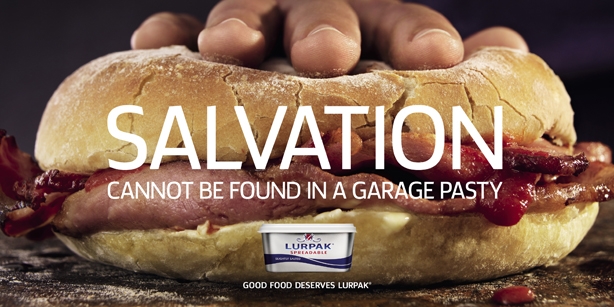
    The ultimate reinforcement campaign in my view is Lurpak. It's only butter, but it's the butter for foodies. 

    Lurpak


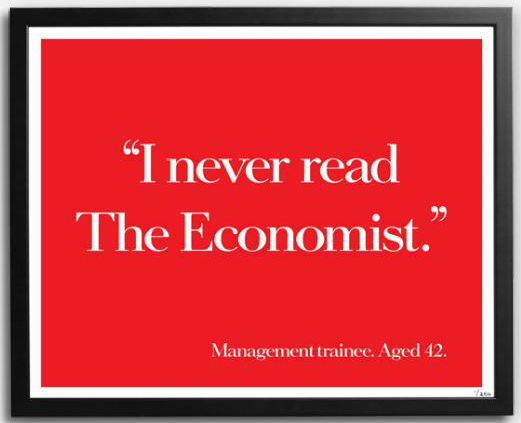
    And look at the Economist, who neatly position their customers as more informed and therefore more succesful. But the creative us only half the story. David Abbot's writing was without peer of course, but the media buy was genius. A niche audience targeted through outdoor was horribly inneficient, but not when the small audience was celebrated in front of the great unwashed and it became 'self selection'. 

    Economist

    While this great stuff from Chrysler neatly positions their luxury car drivers as hard workers, not pampered banker types – and taps into the unspoken American belief in grit and hard work. 


    So next time you get a brand position to work with, ask yourself WHO is the customer, why does the brand admire them? What could that mean and how could it get people talking?

  • The interwebs, it could be argued, are like a big purgatory.

    An 'in between' worlds for thousand upon thousands of interactive this and social media stuff, that no one ever bothered with.

    Digital tumbleweeds doomed to spend eternity in limbo where no one can be fagged to do interact with them, yet no one can be bothered to put them out of their misery. 

    But it's not just digital. There are thousands of integrated campaigns out there that were crushed underfoot by tracking studies, much-too-late rushes of common sense and, more importantly, no shifts in sales or behaviour.

    Spoof campaigns that folks didn't really were spoofs. 'Cultural strategies' that never inspected the culture properly and a general shower of work that just didn't connect. 

    All these doomed souls, that somehow got through approval processes and even pre-testing. Made and signed off by perfectly normal human beings that forgot to ask themselves the simplest of questions. "Would I..?"

    Would I take this campaign seriously?

    Would I really give up enough attention to understand this spoof was ironic?

    Would I really upload a video of myself?

    Would I really share that with my peers?

    Would I take a fizzy drink seriously as route to eternal happiness?

    For some reason, when most of us walk though the doors of out places of work, we forget how much we hated our commute, how much we don't pay attention to marketing, how important our time, family and friends are, how much we hate Truview ads and re-targeting. 

    We think people will do the strangest things, stuff we never do ourselves.

    Because we fall for the myth that people care about brands. 

    We believe the trend guys telling us that people want to co-create with brands. 

    We believe that young people want brands to be authentic, when really, as ever, they just notice the ones that are cool. Look at the queues in Primark. Does any of this lot care about authentic Primark is? Nope,just that they can get high fashion for buttons. 

    We believe the lies of segmentation studies that artificially make people who are very similar very different. 

    We believe it's all about earned media and that no one cares about telly anymore. Even though telly is more efficient that ever.

    Layers of self-delusion, or even worse, disrespect to people out there. 

    Resulting in a shadow world of spectres unable to find peace. 

    The ghosts of our hubris.

    Who's fate could have been avoided, if we could all just say, "What would I really think/feel/do?"

    The most important question in strategy and idea development. 

    "Would you?". 

    Really, would you?

  • A few years ago I attended the APG Planning Network.

    It was a great experience where I went to different agencies to hear different points of view on various bits of the job. Every talk was by a celebrated planning director, but I got a lot out of being around other inexperienced planners on our project task. 

    None of us has a clue, even though some thought they did.

    Which is why the best piece of advice on the whole course came from George Bryant. 

    "It takes seven years to get the experience you'll really need, but then you'll found your voice". 

    Seven years. A bloody long time before you can really fly solo. 

    But think about what you need to survive in the job…

    A working knowledge of research, what is can achieve, the strengths and weaknesses of methodologies. The ability to do some of your own moderation. 

    A deep knowledge of how brand communciations work. Not just what you have read, what you have been involved in. Accross as many clients and media you possibly can.

    Lots of practise at handling all kinds of individuals in other agencies.

    Even more at building relationships with clients. 

    A working knowledge of psychology and behind that, all sorts of broad knowledge about popular culture, and general wierd stuff. 

    Knowing how to build a trusting relationship with creative folk, media folk and digital folk. 

    Knowing instinctively how agencies tick, how traffic works, how things get commisioned, bought and made. How investment teams work in media agencies, what developers do in digital areas. 

    The stress of a pitch. 

    Handling campaigns that fail. 

    The big make or break presentations. 

    Dealing with new brooms in clients companies.

    The new boss you can't stand.

    The juniors you find impossible to manage. 

    And then of course, instictive knowledge of the basics in the job. Various models of brand positioning (really sorry), writing a strategy, comms planning, knowing how media works, evaluating creative work, assessing content plans getting stuff through research..and on it goes.

    To be honest, seven years is only the start, because you never stop learning. The industry changes, culture changes, media changes. 

    This kind of experience does not come cheap. 

    I'm not a believer in long hours for the sake of it. But this is not a desk job and it's not 9-5. The best people I've worked with simply work harder than other people.

    They have standards and stick to them.

    Their work is never finished, deadlines just mean they have no more time to improve it.

    They take the time to actually go out and meet the people they are selling clients stuff to. 

    They know how to switch off, but allow themselves the chance to notice stuff that might spark new thinking all the time. 

    They keep up with the latest thinking in the industy. 

    But they read everything and and anything, in the hope that 1% might end up useful – and nearly always more powerful than the industry stuff everyone reads. 

    Talent helps, but it's the application that matters. Anyone who believes otherwise of themselves are kidding themselves, or hanging around the wrong people. 


  • So I spent the day with my little girl yesterday. Evie is nearly three and not ready for nursery, while our eldest has just started school.

    Evie sue

    It was a lovely day. We only went to look at the fish and the parrots at the garden centre, saw the farm and bounced like loons on the trampoline. QWe read books and painted, along with some hardcore chasing of course. 

    And just chatting. 

    The kind of stuff we do most summer weekends, but this time, no older brother just her.

    So it means the world.

    Because it can be difficult with two, you need to divide your attention equally. No need to divide the love of course, but we're learning both need time on their own with one or both of us. Evie came second but will never be made to feel second.

    And I want to hold on to every single memory of her before she goes to nursery and loses every last trace of being a toddler. It goes so quickly, with her even quicker.

    Looking at some of the old pictures of Will at her age, it's painful sometimes. He's started school and the slow decay of his innocence has begun.

    He's more fun than ever, and I'm enjoying seeing his mind unfold.Will has a great imagination and is proving to be really creative, like Daddy was actually. At the same time, it's difficult to see the beginnings of introversion, which will be great for hime in some ways, but I know how difficult that will be and want t help him in every way I can.

    We have a great time though. 

    But it's hard to look at the pictures of that chubby little mass of chestnut hair and planet sized grin, from a couple of years ago,and not miss it sometimes. 

    There's no dodgy 'what this means for brands or planning' I'm afraid, it's just on my mind. All I might say is that you'll never be able to comprehend the waves of joy and sorrow that assault people with children until you have them yourself. Another reason why the worship of youth in this industry can be a bit daft. 

    Anyway. 


  • You can't move for storytelling in the corridors of communications agencies. We don't make ads, we don't market at folk, we tell stories. 

    This is nothing new. I give you exhibit A…….


    Exhibit B, a little vignette…


    But it's fair to say that 'storytelling' has become a little more complex of late. 

    Linear stories are out of fashion, with the end at the start, parallel story lines and God knows what else. 

    Memento was a pioneer…


    But it's all variations on the simple fact that you need to leave space for the viewer to feel involved, it just depends on how much effort you believe they want to make.

    With advertising, that's not much!

    One the most succesful stories in recent years was actually quite simple, with a clear hero and villain..


    Because some things are constant. 

    One of them is that we all like heroes.

    We also love to hate villains. 

    It's why comic book films are so successful in my view. Apart from escapism, I don't know of a genre that more clearly plays the hero v villain card. 

    That's something worth thinking about when you tell your own story. 

    I mean key presentations and pitches. 

    Tell a story. 

    A big inciting incident at the start. 

    Make the client/brand/product the hero. 

    And create a villain for it to struggle and ultimately win against (usually that's not another brand). 

    And leave stuff out you don't need. As Howard Gossage said, "If you're going to build a mousetrap, leave room for the mouse". 

    Don't put in the thousands of stats and bits of analysis. Just what they're telling you and what it means. 

    So you won't bore the pants of everyone.

    And more importantly, there's always a clever dick who is sitting, waiting to ask you difficult questions. 

    The more you get them to ask the easy ones, about what you've left out, that you're in total command of, the less chance they'll ask stuff you DON'T know. 

    And the more you'll develop your meeting into a conversation, the more they'll feel part of the story. 

    And more they feel they're part of it, the more they'll want to make it happen. 

    Let's face it. No one needed t know Darth Vader's background in the first film. In fact, I wager he was more scary when you DIDN'T know his Anakin Skywalker background. 


    Just as the Joker's total lack of background was what made him so powerful. 


    Anyway. 

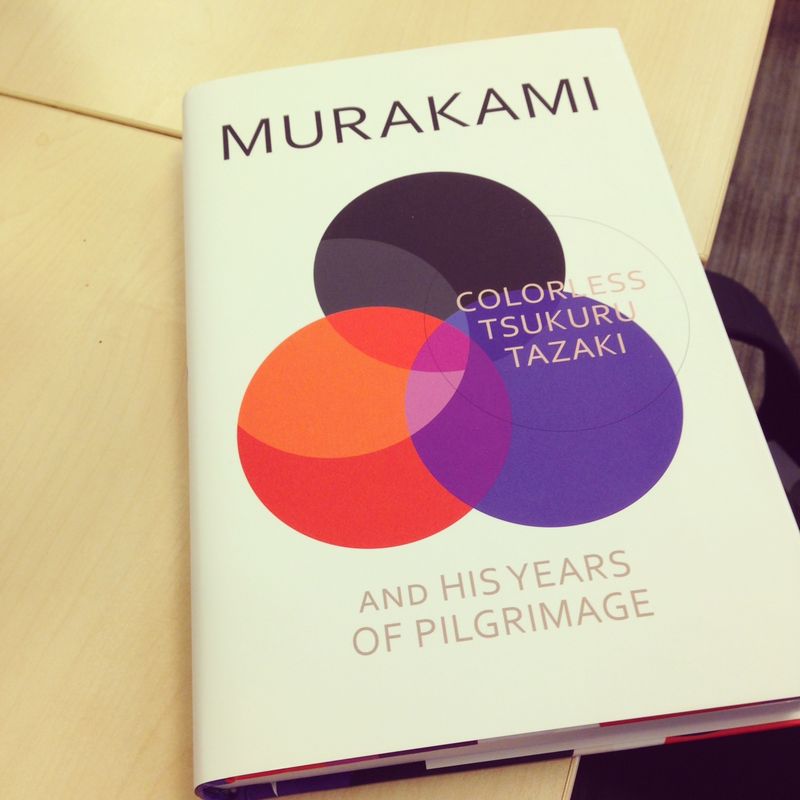
  • I bloody love Haruki Murukami. 

    To the point when I usually get his new book as soon as it is published. Forget paperbacks, I want it now. 

    Murukami

    Over a number of years, he's built up quite a following for largely writing variations on the same them. 

    A lonely man with unrealised ambitions, who cooks a lot of spaghetti, has a lost love and a past he cannot reconcile, with a new, enigmatic girl in his life, meanwhile a parallel world full of possibility begins to bleed into this one. There is a lingering sense of sadness and loss of what could have been, with a coming to terms of what is and what could be. 

    It's never boring because there is so much invention in every page. Every book is a surprise and delight, yet it always feels like coming home.

    I think brands have something to learn from this.

    I've often found that 'brands as people' is too artificial, not to mention that a rigid 'essence and values' model is just too limiting, especially for a fast moving media landscape like we have today. 

    But I've never bought 'brands as conversations' and 'relationships', which all the data tells us is, as far as generating business growth, hogwash. 

    I do like the idea of brands thinking of themselves more as content creators and less as advertisers. This shouldn't be news to anyone – the best advertising has never felt like an 'ad' it has always rewarded the viewer – but it's fair to say that more and more of what we do needs to add value where it shows up and what people are looking for.

    But of course, we also know that brands need to build consistent, yet distinctive. Continously interesting, yet familiar. 

    I venture being more like a Murukami, with a big flexible theme, rather than a tight, never to be messed with brand triangle/onion/key. 

    I reckon brands should think of themselves more like authors than advertisers. 

    You know what you'll be getting from Murukami, a Phillip Roth or even a Stephen King or Hillary Mantel. 

    You will be entering a familiar world in which you'll be entertained and surprised .

    In fact, you enter a particular world when you're listening to Radio 4 or watching HBO. 

    Maybe that's what we should start asking if we were an author, what are the constants in how we tell our story. Or what is the equivalent to 'Radio 4-ness' or 'HBO-ness'.

    I'm not saying that people are sitting and waiting for our stuff (and I'm a heavy Murukami buyer, most folks will have read two of his books  bet). But when we do stuff that hopefully get's us noticed by folks that don't care, it needs to build up a picture, a world, over time. 

    If you like, boil down any Lego construction, no matter how amazing, it's made of the same simple collection of bricks. 

    Anyway. 


  • I feel very lucky to be a planner/strategist or whatever you fancy calling it these days. I find it continually interesting and challenging and have come across some lovely, talented people. 

    But there are some things about the job that drive me up the wall. Tiny next to upsides of the job – anyone doing this job is incredibly fortunate to be doing this rather than real work. 

    Bu just like the only who can moan about my mother in law is my wife, I reserve the right to good naturedly point out the increbibly daft. 

    1. The tried and tested methodology of using human relationships as a metaphor for how people buy brands. You know, stuff like 'creating brand love'. 'Like marriage the secret is to show you care'. When the most appropriate human relationship for how most people buy brands is the annoying stalker who won't leave you alone no matter how much you try and ignore him.

    In fact it's not even that. It's that person in meeting you know you've met, you recognise the face but can't remember much about. 

    2. The habit of talking about brands like they're people. It's OK up to point of course, but like any 'model' it's only there as a representation, not fact. Loads of scientists have models of how stuff works, but when new evidence or insight comes to light, they develop the model.

    A rigid brand onion no one can mess with, based on a tenuous comparison between an intangible impression in folks' heads and real, capricious human behaviour seems plain daft. 

    3. The worship of the brand per se. Too many planning folks seem to hide under the comforting blanket of brand scores, rather than actual business performance.

    It's lovely not actually having to prove you sold anything, but eventually just shifting salience etc will get you fired, even the biggest, dumbest client companies. 

    4. Intelligent fools. You know, the poor sods who have been taught that complex language and even more complex powerpoints gives them gravitas and makes them look clever. It really doesn't .

    5. The over-use of culture. It's quite right when planning folk bring cultural insight to the table. You know, what matters in real lives rather than fake focus groups. But while the context of real lives to frame a task is a must, there's lots of over-use of how 'were going to change/influence/make culture'.

    You're really not.

    With very, very few exceptions, you're going to create stuff that might actually get noticed because it has some relevance and adds some value – a few people might interact with it to amplify your reach, but it's rare you have an Old Spice Guy on your hands.

    Even for the people who made the Old Spice Guy. 

    6. Mistaking what interesting to planners for what is interesting to real people. Thinkbox did some usueful research on the difference between media folk and the public at large, in terms of media habits and consumption.

    It's pretty big.

    So it the gulf between what media folks think people do and what they actually do. No wonder we see lots of obscure ads with clever references, genius apps no one uses and lots of augmented reality and such left untouched.

    Not enough planning folk get the bus, read the Sun or watch Corrie or Keeping with the Kardashians. Our job is not suprise and delight other agency folks, it's to get noticed by people who think Mrs Browns Boys is funny and have never watched Game of Thrones. 

    7. Seeing the brief and the strategy as the idea. I remember being taught at an APG thingy that a brief is 'your ad to the creative department'. 

    I dislike this sentiment as it suggests a brief is a piece of craft that should be worshiped all of itself. Most creatives barely read it to be honest. They remember the briefing. It should feel a great start and juicy challenge – the more it feels like a problem to be solved rather than an unchangeable solution, the more folks will want to work on it.

    In later years, I've found that a broad direction to talk to media owners is far better than 'give us a price for this'. I'm not as clever as YouTube or the Guardian. Like with creatives, you would be stupid not to take advantage of the brains of some really clever people who REALLY DO influence culture. 

    I'm talking about good creatives of course. I can't help you with the useless ones who ignore briefs AND can't get any good ideas – yet they are celebrated as untouchable Gods. 

    Just as there are media owners who come in an bombard you with chart after chart of the bleeding obvious. 

    8. Competitive planners. Many of us have been brought up to own the thinking. That doesn't work in real practise. Generosity does. That means sharing your thoughts, but also spotting someone else's greatness, using it and fully giving them credit.

    That goes for agencies working together. It's tough of course, you want the client to value your input, and it's really annoying when you've had an idea and credit gets lost on the chaos of getting an intregrated campaign out the door. But it's not as frustrating as getting fired when you're seen as not being able to get on with your clients' other partners. 

    I'm sure folks I've worked with would accuse me of much of the above too, we're all guilty I suppose. I wonder what I've missed (the habit making lists, planners who blog?).