• I'm married. I've learned the hard way that winning arguments is pointless. It's a very hollow victory you can only enjoy yourself why someone else sulks.

    All you get is a brief sense of victory followed by a very empty feeling. I don't want to feel like that. I want my wife to feel like that. Which is why one of the core skills of not being a terrible husband is learning how to be wrong.

    It's also a core skill for the planner, especially the grown up one who has realised the purist quest for the truth is very lonely journey, for the kind of planner who doesn't care who 'has the thought' as long as the thought is good . 

    Put another way, no one likes a smart arse, and let's face it, if there's one thing that prejudices folks against planners, it's that. And if you can makes someone feel bad about winning on something you don't care about enough, you've more chance of winning something that matters. 

    Here are some ways to not only be wrong and use it to your advantage…

    Write a bad proposition and know there's a much better one. Dig your heels in a little with the creatives and help them think of the better one for themselves. Worship them for their genuis.

    You know that bit of the data you left out to make your argument better? When you realise this is a battle you would better losing, casually bring it into the conversation and let yourself be taken apart and be pleased the argument was solved with evidence because next time you'll use evidence to win. 

    When you know you are losing the argument, admit you forgot what your actual point was. Let your antagonist put your argument back to together in way that is far kinder than you probably deserve. When they put it back together for you, they might even buy into it. 

    Never give a ultimatum, just in case someone calls your bluff. For a example, if a planner leaves a meeting, everyone will probably decide stuff quite happily without you complicating stuff. 

    Pretend you missed what the antagonists have actually said, and you only now fully understand their point. It's likely you were not listening anyway and you can now reframe their point to actually be your point. 

    You know that think about oversimplifying someone else's argument than destroying it? Like when someone is in favour of national service, "So you're in favour of young men having guns". Over simplify your own and let someone else destroy it. Then overcomplicate theirs, so they don't know what they were talking about, then help them see they were actually all for your original point. 

    Don't get into debates at all, that what suits or for, let them do it for you. If the problem is the suit, agitate the creatives folks, they hate suits. If it's the creative agency you're working with, never argue over the Polish Cinema reference, just gush how stupid you were to not have thought of that them damn it with faint praise. "Blimey, that's ace, just like Shindler's list but not as depressing, marvellous". Or, "Really great idea, I loved it when you presented it last year too!" Or the media agency, "So great to see that partership with Empire Magazine in the plan again, so consistent". 

    So, yes, revel in your wrongness. And remember, if you have to win, no one likes a self-righteous prick. Make sure there's a concession in their somewhere. Put another way, smile in someone's face while you stab them in the back. 


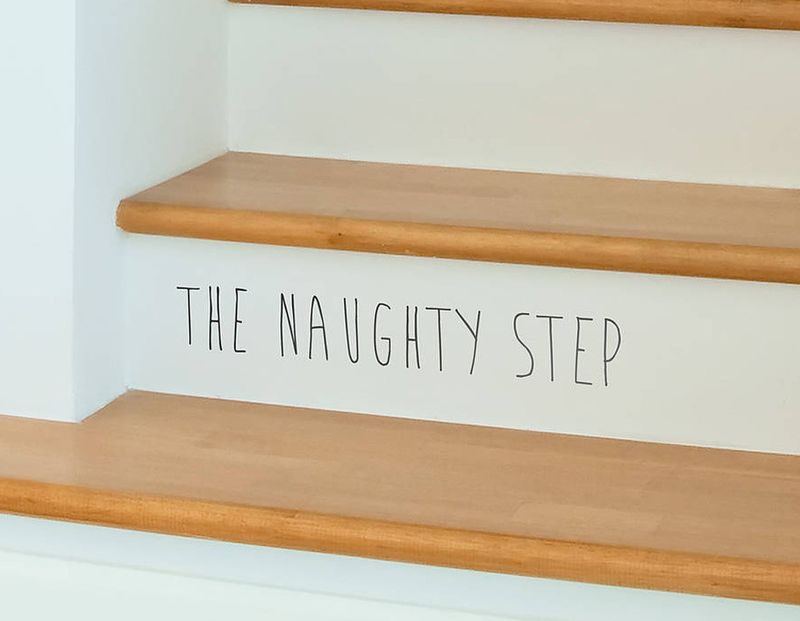
  • The-Naughty-Step-Childrens-Wall-Sticker

    I'm really sorry, but feedback will be late. It makes a mockery of the hard work folks have put in, not ti mention the work Rob has put into his judging feedback. 

    But a perfect storm of unexpected work and personal bits mean it's going to be Monday. I'm really sorry. 

  • I went to see Prince on Friday. Utter genius, over two hours of a blistering tour de force. Even if you can't stand him, you couldn't help but admire the talent and showmanship. 

    Here is a man famous for self indulgence, almost willfuly pissing off his fans at every turn. Yet when gets on stage, none of that matters. Especially when, as was the case this time, he obviously had designed a show meant to be a crowdpleaser. The best loved songs, played in full, without the odd jazz noodlings and frustrating snippets of the past. 

    Because he seems to have finally understood that enduring success comes down to knowing why people loved you in the first place, and why they might love you now.

    That's shouldn't be news to brand owners and creative types, but it kind of is.

    If people care at all, it's on their terms, and the reasons they enjoy your product and, if you're lucky, enjoy your advertising or even just recall it for something, won't be anything to do with what's in a brand onion or hidden reference in your 60 second extravanganza. 

    Which is why it's always more sensible to start with what people care about and work back. 

    Just as I saw people dancing to 1999 and the more clued up few in raptures over a Sign 0 The Times with real menace, while no one seemed to bother about a very, very small number of newer songs….what is about what you're working that will strike a real cord with people, and what will be over-indulgent, self referential irrelevance?

  • Once upon a time I thought that George Michael was quite a ladies man. I once believed Jimmy Saville was a lovable 'character'. Once upon a time, I thought I would never ever countenance the idea of having children. 

    I even liked a Queen song once. 

    So it's sensible to assume that everything you know might be wrong. That was is certain is just your current frame of reference.  

    It's no different for strategy folks, where it's easy to get taken in by the received wisdom, or what just scratching the surface seems to tell you.

    Here's some other stuff I've had to unlearn that's a bit more work related:

    1. TV ads don't work anymore. I can't believe I'm still feeling the need to say this, but the effectiveness of TV is going up and the average under 25 year in the UK still watches about 2 hours a night. There are more options these days, but discounting mass broadcast is just dumb, like any other media. 

    2. But what is even dumber is assuming the answer is any form of advertising anyway. The issue with being paid by project is that you get paid for an output. Being paid a fee for advice means you can advise on the right thing to do, rather than what you've already sold. 

    3. Digital folks don't get how brands work. Now it's still widely true that if you give a digital agency a hammer, they only see nails, but much of the same can be levelled at ad agencies and such, who think shifting brand metrics is all that matters. The IPA databank tells us that hard business objectives tend to drive success, which is why digital folks with the skills to make people do stuff, rather than make small  shifts on Millward Brown perhaps know more about how brands work. Or business, which maybe matters more. 

    4. Brands are about rational benefits wrapped in intangible meaning. We still want novelty and shortcuts, but digital doo dahs and sheer choice mean we're into tangible difference in brand meaning these days too- added value service and actions over image (Lynx helps actually pull women now, rather than just playing with ironic references to confidence). 

    5.Creatives are spoiled children. The bad ones are. The great ones are better planners, suits etc than everyone else too, they just get there without the bollocks, and work harder on what real people care about – something that might surprise and delight in the 95% of crap. 

    6. The mature creative markets like London and New York can teach Asia and co loads. From what I've seen, Asia isn't bogged down by received wisdom and just does stuff like social media much, much better. 

    7. It's ace working on big brands and famous clients. Many big clients are so process driven it's a nightmare. While the coolest clients are also the most demanding, you do great stuff, but you bleed for it. 

    8. Blogs are the future. All planners were saying this 10 years ago, then along came Facebook. Which is why assuming you know what media will be like in 1 years from now is ridiculous. 

    9. One day they'll stop with the 'this will be the year of xxx and the death of xxx' (insert self serving media or latest brand model). It will always be thus- perhaps the only safe prediction!

    10. I would never work for a media agency. I am now and increasingly, I'm seeing that's where the innovation is. Great agencies I venerated 10 years ago are looking very, very creaky these days and seem to be fiddling while Rome burns. 


    What have you unlearned?

  • Someone asked me what a reading list for a new planner would be, how to engage with creatives and how to get a job in the UK when you live in Australia. 

    This is what I said. Any other thoughts?

    Read, in this order:
    Truth Lies and Advertising By John Steele
    A masterclass in brand planning a collection of Stephen King Essays
    Eating the Big Fish by Adam Morgan
    The Book of Gossage by Howard Gossage
    Perfect Pitch by John Steele
    Testing to Destruction – a Paper you can get on the APG website for free
     
    Those are the big ones, that sort of stand the test of time. 
     
    Then:
    How Brands Grow by Byron Sharp
    Brand Immortality by the IPA
    The long and short of it – an IPA paper by Peter Field and Les Binet
    There are the ones with the most up to date data on how advertising and stuff really work and are essential – but it's essential to form your own opinion too. 
     
     
    Then:
    Cultural Strategy by Douglas Holt
    Transformations by Grant McCraken
    The stuff you can't bottle King Ads
    Very current, more about how to do imaginative work and great cultural insight. 
     
    And ongoing, blogs:
    Don't bother with my rubbish
    Read Canalside View by Martin Weigel, go to the start and work through
    Read Russell Davies' archive before around 2008
    Read Rob Campbell's wordpress blog
    Read Ad Contrarian
    Scamp (for a creative point of view)
     
    And if your agency has WARC, read ADMAP religiously. 
     
    Then read nothing else about planning, read as much as you can about popular culture. 
    Get interested in art, the latest digital art, the latest stuff in video etc. 
    Read as many psychology books as you can get your hands on
    Get good at economics – the best planners get commerce as well as culture
    And consume popular culture – the stuff the average Joe reads, watched and surfs. They are your audience, be one of them, learn why the like what they like. 
     
    On engaging creatives, read this:
    And more importantly:
    Make them lots of coffee
    By as up on their craft as you can – read Scamp's blog, they want to know you love what they love
    You'll be given small briefs at first I guess – look like you've worked bloody hard on it, make it better than it has to be, they'll love that
    Find out what they're interested in, how they like to work, tailor your approach to individual teams
    Never lose your temper
    Try and make them think they thought of everything themselves
    SURRENDER YOUR EGO!!
     
    On getting a job in the UK:
    I'll help if you help me get one in OZ!!
    But more seriously, write to planning directors in the agencies you think fit your bill, be clear why you want to move and what you can offer. They're more generous than you might think. 
  • I love food. If truth be told, after my children and wife, I probably love it more that anything, even swimming, cycling and Star Wars. 

    It's probably neck and neck with tea and way, way ahead of anything to do with work. 

    I relish the feeling of hollowness after a long bike ride, because I know I can stuff my face with impunity. 

    After I finish any meal, I'm already looking forward to the next. 

    I am greedy, so greedy I'm one of those rare cooks who just don't understand people who say they can't be bothered to eat after slaving over a stove. I can't bloody wait and you can sure anything I cook for you will be ten percent less than its original quantity because I've already eaten in. 

    So it's obvious I would enjoy books like this, by Jay Rayner. 

    As it happens, everyone should read it, because it makes really well argued points about the accepted wisdom about food.

    That farmers markers make a difference to our overall industry. 

    That supermarkerts are evil.

    That GM crops are always bad. 

    That buying local is the right thing to do. 

    That eating seasonally is the moral way forward. 

    Read it and make your own mind up of course, but logical argument bursting  received wisdom, is probably something needed in our industry too..

    TV is dead. 

    TV is the most effective, shut up. 

    Everybody wants a conversation with a brand. 

    Loyalty is commercially viable as a strategy. 

    Byron Sharp is the only argument in town. 

    The Ansoff's Matrix. 

    No one cares about brands anymore. 

    Marketing is dead, long live growth hacking. 

    You can't spend your way to growth.

    Innovation is only vanity and commercially wasteful. 

    And so on. 

    Anyway, I'm being taken out for a juicy steak for lunch. I rode 20 miles this morning, I've earned it. 

  • (this will be full of typos, I don't have time to check stuff these days, not that it was ever perfect)

    I been in this industry for more than five minutes and most of that is working in creative agencies of one type or another.

    Working in a media agency still means working with creatives, those in other agencies, not to mention the very understandable defensive stance of the suits and planners. 

    I used to hate media folks trying to own all elements of strategy, how that's come about is a whole post and a half. 

    Here's some stuff I picked up along the way. It's a little revealing I think, like a detective archetype who sometimes doesn't play by the book, you learn some dark, cunning arts along the way.

    In my defense, the end justifies the means. 

    1. Don't bother writing pithy, well written propositions, the first thing a creative team will do is challenge it. The more like a 'line' it is, the more they'll ignore it. Hide your best thinking in the brief and let them find it for themselves and let them call you a douchebag for not knowing a great proposition when you see it. 

    2. In fact, don't sweat propositions at all, look for great tasks and problems and insights. As long as you've got good creatives that is. Great creatives want to be given a great problem to solve, bad creatives want a simple proposition that doesn't challenge them too much. 

    3. Planners are either a necessary evil, or a pointless evil. That is your lot with creatives. Always be looking to liberate others' work, if you're getting the way, you'll get ignored. 

    4. My best briefs were already half written thanks to an off record chat with the creatives that would be getting it. Not only will creatives work from a brief more if they think they wrote it, the good ones are better planners than the planners, so you might as well steal their cleverness. 

    5. But be generous with your own ideas. No creative will use your stimulus, creative starters or general opinion on an idea if they think for one minute you'll take credit for anything. They're sociopaths, but I would be too if nearly all my work ended up in the bin. 

    6. Never be the first to speak in a creative review, in fact, try and get away with saying nothing. New ideas take a little time to get your head around, your first response will usually be wrong. Give yourself time to think about it. 

    7. If you're a junior planner, or to be honest, a senior one in a new place, the ability to make good tea or coffee will get you a long way with creatives. 

    8. Don't leave knowledge about execution and craft to suits. Learn about the nightmare that is TV production, casting and going on a shoot. Real people don't care what your brief was, they only care about the fact you've interrupted Game of Thrones and will ignore rubbish. Execution is everything. And the way to make friends is to share interests with people. Creatives care deeply about their craft. 

    9. Don't tell creatives if a route isn't any good, just don't talk about it, they'll soon get the message. 

    10. Designers are not creatives, they are brilliant an making stuff look good and perfect. Creatives know how to make people react. If you're in an agency that claims to do creative work, staffed by designers, run a mile. There is no hope. 

    11. Every creative team is different. Tailor your brief, briefing and entire relationship on what excites them. 

    12. Creatives hate suits more than planners. Make them think you're on their side (while simultaneously making the suits think you're on their side). 

    13. Creatives hate workshops. Don't waste your time. 

    14. You don't have to make the briefing a piece of theatre. Many creative teams simply like a decent, grown up conversation where they're not presented a signed off strategy that can't be changed. 

    15. Some creatives are ace in front of clients. Some are, erm, not. Get the good ones in meetings, no one sells work like the people who made it. 

    16. Never lose your temper. The unwritten rule is that creatives can say what they like, you need to keep calm. Angry planners get ignored. 

    17. They will try do stuff they've see in D&AD. Never call them out on it, just give better stimulus. 

    18. They're terrified of the blank page at the beginning of a project, they just don't admit it. 

    19. Creatives directors haven't had a great idea in years. Their job is get others to have them. If you see a creative director with a layout pad, you are in trouble, big trouble. 

    20. Share great work from other places with creatives, see what they like about and frame your conversations based on this is future. If they say stupid stuff like 'that was great because they didn't show the product' your are fucked.