• Amv

    So I was at AMV yesterday for something or other. Lovely place, lovely people. If ever there was evidence that you can be nice, decent AND really good and successful it is this place.

    Still the largest agency in the UK, after so many years, still doing really great work.

    That works.

    Not cool.

    Not really talked about all that much.

    Because they don't need to be.

    if you've ever suffered the kind of folks who seem to get ahead with the face that fits, or can't say anything without being arch, superior or downright rude, the bullies, the ones that work you to the ground then pull the rug from under your feet at the drop of the hat…………

    Keep places like this as living proof that decency and greatness are far from mutually exclusive, they are wonderful bedfellows.

  • There's a bit in Star Trek, after Spock has died and come to life, where Dr Bones McCoy asks him what being dead was like. Spock basically tells him he needs to die too before they can talk, as it's simply beyond his frame of reference.

    Normal, non-reincarnated folk don't have the chops to understand.

    Spock

    It's a little like the brave new world of digital, especially social media.The majority if specialists in these areas tend to have the same approach as Spock.

    There's is no way a digital/social guru can explain the intricacies of what they do – what clients are paying them for and what other specialists are asking them to support with – unless they're talking to another guru. It's beyond the frame of reference of most mortals.

    And yet, anyone brought up in the fairly complex world of managing conjoint analysis, the Link Test, the oceans of data from Nielsen or TNS, 20 page client briefs, the unpredictable behaviour of customers, the game-theory like dynamics of any category – folks in those quaint old dinosaurs called advertising or, these days, integrated agencies -  are continuously tasked with boiling everything down into a few sentences that are can unlock creativity, client buy in and, ultimately, the hearts and minds of people with better stuff to do. 

    Makes you wonder doesn't it?.

    Is this brave new world really that complex? Or is just that those that specialise in it don't know really know what they're doing?

    Usually, if someone can't explain something to you in plain English, they either don't understand it properly themselves, or they don't want YOU to understand.

    Unless we believe digital social stuff is as profoundly outside our normal realm of understanding as the afterlife, quantum physics or relativity.

    Actually, hold on there…….. 


    Can't help you with reincarnation though….

  • Once upon a time, after days of banging my head against a brick wall on a client brief, I got that curious sense of elation, relief and pure nuclear exhilaration when I hit on an idea. It was simply beautiful and beautifully simple.

    It was a game changer.

    Everyone agreed. My boss, the suits, even the creatives who just wanted to get their layout pads and scribble.

    So we presented the strategy to the client. It was a great presentation, you'd have liked it. The client did.

    But he didn't want to go with it, because he didn't feel he could sell it to the board.  

    Because it was game changer. It wasn't what they were used to. 

    The evidence was compelling, the potential was thrilling.

    But he said they didn't want business ideas, they wanted advertising.

    We were crushed.

    Then we decided to both ignored him and listened to him.

    We pushed on, but thought how to address the board issue.

    The main reason we got the business was because one of our account execs was friends with the CEO's daughter – who worked in the business. .

    So, in a totally immoral play, we got this account exec involved in the project.

    Who innocently talked to her friend about how excited she was about the new campaign.

    The daughter told her Dad.

    At the same time, we persuaded the client to let us present.

    By making great ads to show.

    With vox pops interviews showing what happened when his staff and customers (including the bosses daughter) saw them.

    Because no one gets excited by strategy, they get excited by creative work.

    Because everyone is scared of new ideas, the need permission to buy it.

    So he wanted to present it now.

    Especially when the CEO told him he wanted to see the work his beloved daughter was raving about.

    So we presented with him, to the board.

    The CEO was already pre-disposed to buy, and no-one would argue.

    Because only a fool calls the CEO's daughter an idiot.

    And by jingo,when everything got made it worked.

    Four lessons:

    No one gets excited by thinking, they get excited by creative ideas – you don't have a great strategy until you have great work.

    If you believe in something enough, there's a way to make it happen – creativity is not just about the work, it's also how you sell it.

    It's not who you know, it's who you know.

    Research can be weapon, as well as your enemy.

  • If I'm not swimming or doing other painful stuff on bikes, treadmills or rowers, or reading, watching a film or playing with the kids; you're likely to find me cooking. 

    Cooking

    I love it. Always have. This isn't a daily chore, it's a joy.

    I've been cooking in some shape or form since I was a little boy. What follows is why I love it and what it's taught me along the way. Some of that, believe it or not has beeb useful for the day job.

    1. It's more special if you've helped make it. Like I say, I've been doing it for a long time. Some of my earliest memories are standing on my little wooden stool and helping my Mum. Sieving the flour, carefull stirring the bechamel sauce for lasagne, the patience and staying power required to gradually whisk in the oil to make mayonnaise, the crash bang whallop of flambe steak. And that's partly why I love food so much. Because I've always made it. We all love stuff that we've had a hand in creating. Which is how I'm already teaching my kids to appreciate their food and enjoy eating it. A useful trick to get people to buy your strategy and stuff too – let them help make it.

    2. You can taste when someone's enjoyed making something. I call myself a cook, not a chef.  I don't believe in 'performing' or making stuff that only looks good. I cook, I make stuff to please myself and others. I don't slave over stuff that's over complex, or meals I don't enjoy doing, I make stuff that's a joy to make. Because I firmly believe the most vital ingredient in food is joy. Again, that's maybe why food I used to cook with my Mum was so great, something about the laughter and, well, the deep love shared between a little boy and his Mum just rubs off into the food. I'm convinced people get that from ads and stuff, the stuff that's a ball ache to make – because it's been researched to death, because the client wanted, or because the agency folk didn't care. Versus the stuff that people enjoyed making, that they cared about. You can just tell.

    3. It is better to give than to receive. I love having people around to eat. And it's great when I know them well. Because then I can cook stuff how they like, not always stuff I don't like to eat myself.I do love making things for me, savouring the anticipation of eating it; the 12 hour rabbit stew, a cassoulet that takes the best part of a weekend, but seeing the happiness on people's faces, the enjoyment, that's better. I don't believe that rubbish about refusing to make someone a well done steak. If that's what they want, I'll make them the best well done steak I can.  I also never cut corners, people can taste and appreciate the effort. Garlic puree? Pah! As it happens, a level of generosity, enthusiasm and empathy are great skill for a planner to have. As are the delicate balance between giving someone what they're used to and what they're going to love. Only when you really know someone can you delight them. That goes for clients, creatives and target audiences as well as fellow diners.

    4. Recipes are guides, not rules. I love trying new recipes. But getting to grips with them is only the start. Once you're familiar, then you can make it your own. It takes years of trial and error and learning the basics, but eventually, you develop the instincts to know what works, what goes together and what doesn't. And instinctive feel for the chemistry that rules food. Once you have that, you can create your own voice. Make your own version of classic stuff and even invent your own dishes, perhaps altering what you do depending on who you cook it for. That's the same for the job, like it or not, it takes years to not have to think about the basics and get inventive. To experiment, to create your own voice. Then, you can start to challenge, question and even discard the recieved wisdom of what works and do it your way. As long you respect what has gone before and understand why you're challenging it, rather than change for change sake.

    5. Some quality ingredients you can't avoid, some you can do without A risotto cannot be made with cheap long grain rice, you have to invest in Arborio,Carnaroli or any other high starch version. It also lives or dies by its stock. The better the chicken stock, the bettet the risotto. The best comes from homemade stock made from the bones of a free-range bird. The cheap versions are just not the same. Just as crap supermarket mince destroys meatballs, or a bolognese. But in my view, any olive oil will do for cooking, while only decent extra virgin oil works in a salad dressing. Let's get this straight too – cheap balsamic vinegar is a false economy. But eggs in cooking are, well eggs (I'm assuming  you won't buy battery). So is flour – unless you're making bread. And so it goes with the job, if you're going to base work in a killer insight, it has to be a genuine killer insight. If you're going to test work, for God's sake, don't scrimp on recruitment and pay for a good moderator. The wrong people looking at your work, in the unwell hands of a bad researcher is commercial suicide. On the other hand, if you're going to build your work on connecting a number of insights together (faster), they don't have to great, just reliable and ADD up to something great. In my experience, a great proposition is optional (especially with the kind of creatives that automatically ignore propositions) but a clear, juicy task is an absolute must.

    6. Lose yourself in the task. Playing music while cooking is a joy, and somehow, music that suits what you're making makes it all better. But it should never distract. One of the joys of cooking is when you lose yourself in the task, totally in the moment, yet totally in trance. So when you finish, it's like waking up. That state when you're instincts and your conscious brain seem to become one. It's a source of great joy to get into this kind of state and enables you to work wonders. Ditto doing stuff like creative briefs – it's only when you stop noticing you're thinking that you really think. Writing, editing, distilling, refining – you need to concentrate really hard and avoid distractions, then the thing seems to write itself, you've forgetten you're working. . Same for any written piece of work, or presentations or whatever.

    7. It's more fun when you do it together. I love cooking alone, it's quality 'me' time, but nothing brings people together like preparing a meal. I still like cooking with my Mum, but I also value that whole men and BBQ thing, the fellas clutching beer, chatting and working together through the acrid smoke on the meat and vegetable skewers. I love eating Christmas dinner, but I love the joint family effort to bring it together. It's great when Juliette helps me, that feeling of us working as a team. Eating at a table together is important, but making it together is even better. One of the joys of my life is my little boy helping me, perched on his little steps like I used to with my Mum. Experiences always last longer than things, and working side by side really brings people closer. It's the same with planning, if you're shy like me, it takes a shared task to get to know people. Nothing brings a team together like  pitch. And if you want other to let get involved in their stuff (client relationhsips, creative execution) you need to let them collaborate with you. Any team only bonds when it has to do a task together, especially men, who don't socialise 'face to face' but 'side by side'. This is why football is so important to some of us and why we miss having to work with our hands together (even though we don't know it).

    8. Some mistakes cannot be rectified, some can. There are some mistakes you can come back and repair in the course of preparing food, but some cock ups mean you have to abandon the whole thing and start again. For example, the secret to great curry is slowly cooked onions. But if you burn them there's no going back,nothing can hide the bitter taste and you must start again. On the other hand, if you over do it with the Chili or other fiery ingredients later on, you can just cook it for longer and that fire will gradually cool down.  Just like making a white wine sauce, that usually needs creme or creme fraiche – when you mix dairy stuff with something acidic, like wine or vinegar, you can't let it boil, or the dairy bit will curdle, leaving hideous white little lumps in a thin liquid. It can't be saved, do it again. But if you're making bechamel sauce (flour, butter and milk) lumps might appear but it doesn't matter, just whisk it to within an inch of your life. Roughly, there are deep foundations to dish, and if you get these wrong, the whole edifice will collapse. But when the secondary stuff goes wrong, you can usually save, sometimes with a bit of ingenuity and invention, sometimes with a lot of effort. It's like that with developing work. By and large, if the underlying strategy is totally wrong, or even worse, if you don't have one, the work that flows from it will be wrong – and you need to start again. But sometimes the thinking is mostly okay, but it's just not watertight, or a little wooly here or there. Here you can rectify things,but the further you get down the line with creative development, the more those little flaws become yawning great chasms of wrongness. Always admit when you're wrong or you've made a mistake, assess if the project can be saved, or if it's a rip-up and start again. Pride gets you nowhere and the quicker you tend to little problems, the easier it is to solve them. The only exception is happy accidents, some times work is so great, it informs strategy, not on purpose, it just does. Just as I put sherry into a bolognese instead of port, and have stuck to it ever since.

    9. It's okay to please yourself. One of my greatest joys is the evenings I get to cook for myself. Sometimes, this means Spaghetti Putanesca- the wonderful heat of the chilli, the pungency of the garlic and the dirty saltiness of the capers and anchovies makes for a big hearted gutsy dish. Mostly though, it's time to try new stuff and work out what I like and why I like it. I don't like experimenting on people, why would I ever give people stuff to eat I'm not sure I like myself? That I'm not proud of? So my first test of anything is,do I like it? Am I happy with it? Because we're all a little different, but we're also 99.99% the same. The chemistry of food reacting to taste buds isn't all that different for all of us, in fact, what we like can often be translated to 'what we're used to'. It has to work for me, as a mark of respect for the people I'm cooking for, and if it works for me, it will very likely work for them. It's just the same with strategy and the resulting work. Segmentations and stuff can be useful, but brands grow from mass penetration, you have to look for truths in what we all like, not what sets us apart. If you 'plan from within' and ensure it interests and excites you, and ensure it excites you as a human, not a planner, you'll do okay. Finally, if you treat people with respect and don't produce the 95% of crap this industry makes, you'll be rewarded with greater cut-through, greater salience, and in the end, greater long sales.

    10. Don't accept it when people say "I won't like that". My little boy's first reaction to new food is "I don't like that", so we have a first plate strategy where he has to eat a spoonful of what he doesn't want before gets food he likes. Gradually he gets used to new food and tastes and, mostly, he only has to try stuff a couple of times to realise it's actually quite yummy. My wife once told me she would never eat nuts in cooking, and was suitably chagrined to find that pesto has pine nuts in it and my homemade korma is replete with almonds. She also hates anchovies, despite still not knowing it's in 30% of my pasta sauces. We're all fond of the familiar, and, despite the fact we're hardwired to seek out novelty, not only do we reject surprising stuff out, we base predictions of what we'll like based on what we know now. Many grubs and insects taste like prawn or lobster, but we have too much cultural baggage to get past our disgust of creepy crawlies. This is a big learning for planners in my view. It's why most pre-testing is a waste – because people are telling how they feel about stuff based on what thet know now. Sometimes you have to ignore what folks tell you they like and push on regardless. Even more fundamental, people naturally hate bankers, just like my wife hates anchovies. A good strategy is to disguise them as something else, get in the business of pasta sauce rather than fish. Polaroid was once in the social lubrication business, not instant photography, if they'd remembered this, they'd be a lot stronger today. Also, sometimes peopl really don't like a meal, they don't like an ingredient. I can't eat beetroot, put it in anything and the dish is ruind. So it goes with creative work, sometimes people can't express this though – sometimes the idea is fine, the execution is fine but they don't like the voice over or the casting.

    And when it comes to clients, find a way to make them think they're getting what they like. Never confont them with 'you're wrong' – hide the anchovy in the sauce and let them marvel at how great it tastes.

    That's what a deep and abiding love of cooking teaches me about life and planning.

  • There's a great scene, in the quiz night episode of Phoenix Nights, when Brian Potter's team show him their plan to cheat their way to quiz victory.

    They reveal one of them has written all sorts answers on their forearm, concealed beneath their shirt sleave. 

    "Do you know the questions?", he asks.

    "No", the respond, "But you never know".

    It's here at at nine and a half minutes.


    If ever there was a metaphor for skewering the lunacy of pre-supposing any sort of media or marketing specialism answer, before fully interrogating the problem and getting an IDEA, it is this.

    Advertising is the answer, what is the question?

    Digital is the answer, what is the question?

    The brand onion is the answer, what is the question?

  • More email based advice. Just a reminder, this is what I think, not everyone.

    Hi Andrew, 

    Sorry to bombard you with
    questions. I feel that 'strategy's is not embraced within the client
    organization at all. Strategy is about retrofitting the execution as opposed to
    guiding the creative. While I know real life doesn't happen in textbook fashion,
    I believe this should not be happening all the time. What do you think?


    Hi

    You’re too right that real
    life doesn’t follow the textbooks,

    And most of the textbooks are wrong.

    I think the trick is to insert best practise into real life and
    not the other way around.

    Loads of clients only care about you making the best ads, and
    have got someone else to do the ‘grand strategy’.

    And yes, lots if planning tends to be a ‘ad tweaker’ as Stephen
    King put it.

    Now I’m not here to get bad/indulgent/plain wrong work through
    the client or research.

    I sure, neither are you.


    This about patient and playing the long game – and not bruising
    egos.


    I don’t like testing work, it’s mostly pointless and can kill
    great work, especially in the hands of a bad researcher. However, if you’re
    client is a fan of testing, use it to your advantage. It’s immoral, but as you
    say, we live in the real world.

    So use research defensively.

    If everyone is in love with an idea, but isn’t objective about
    how it works, and either won’t listen, or will hate you forever for killing
    their baby, be the voice of the consumer and test it.

    Which means moderate groups yourself (you can’t escape this and
    getting good at moderation gets you great at client meetings and managing
    workshops) or making friends with the researcher. Researchers are lonely folk
    who no one takes the time to befriend. Have influence on the discussion guide,
    tell the researcher what you’re looking for.

    In other words, fix work by getting people to say what you know
    is wrong with it, kill bad work if it’s begging to be put out its misery – but
    get people to say what you know is the right alternate approach.

    In other words,  people other than yourself to alter or
    crucify the work, but make sure you also have a clear, insightful and
    interesting way forward.

    And because it’s endorsed by real buyers, the client will buy
    into it too.


    Of course, you might not have the budget to do formal research
    and the client might not want to pay to test work (in most cases hallelujah!)
    so put the work in front of people of the doers in the agency who are not ‘comms
    professionals’ –accounts, PA’s etc. Get their feedback instead.  Or do
    cheap and cheerful street interviews. Works internally, while clients bloody
    love vox-pops. Just make sure the respondents match the clients ‘minds-eye’
    picture of their audience, not always the real audience, then they’ll accept it
    far more. Play to their prejudice. I once worked on a brand who’s CEO believed
    all their buyers where beautiful fashionista women (preferably with great
    breasts). So went out to do vox pops with precisely these kind of women (it’s a
    hard life).  And no, my natural charm and film star looks didn’t make it
    easy to attract this kind of respondent, I took an account exec to man the
    camera who, in the looks department, did.


    Now, as far as ‘grand strategy’ is concerned, this is really
    part of the same job. Folks, of course, don’t like work for surface reasons but
    mostly, when they talk about why the like or don’t like stuff, you can quickly
    root out the fact that the work is based in the wrong objective or direction.
    So, feeding back on work enables you to feedback on strategy and present a
    better approach with evidence as to why that’s the case.


    Failing time to do this, make sure you do work to brief, but
    then present and alternative, just make sure you have  strong, evidence
    argument for why it’s better, and let the account folk help with some of those
    dark arts of charm and persuasion.

    If you don’t have time or resources for that, this is where
    dirty planning really comes in. Don’t post rationalise why the wrong work is
    right, invent the argument for why the right work is right – convince them it’s
    on brief. Most ads and stuff have a specific strategy and a specific ‘way in’ –
    executional idea. Just make sure the execution does the job you want it to, but
    convince the client it does what THEY want it to.

    For example, a client thinks this about proving superiority by
    talking about quality ingredients,


    but it’s really about relevance and role, creating a specific
    feeling and context for the usage experience, and getting across a unique brand
    point of view without saying it (we’re for folks who like being outdoors and
    experiencing more low-fi, authentic stuff, bourgeois bohemians)  – a brand
    for ‘people like me’ that shares my values and aspirations. . It’s no good
    providing evidence without presenting the argument first.


    Hope this helps


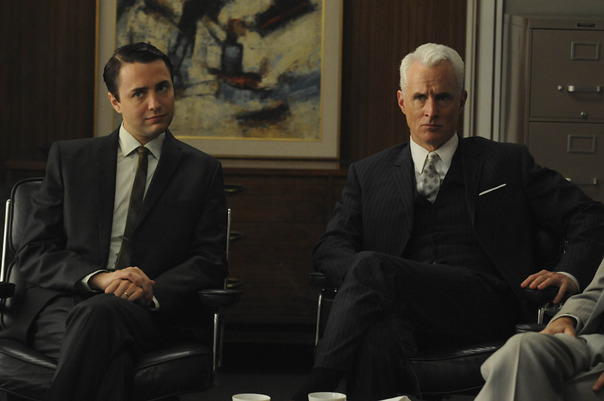
  • More email advice stuff. About these folks:

    Pete-Campbell-and-Roger-Sterling_gallery_primary

    Hi Andrew, 

    How are you? 

    One of the things I'm really struggling with at my current
    workplace is shaping my role. My role is a newly created role. I feel the
    client is execution focused and there is an enormous opportunity for strategic
    thinking to guide the brand. The thing is I haven't got a clue on how to do it,
    what I should be doing on a daily basis. I used to be a part of all meetings so
    I have a better sense of what's going on to identify opportunities where I can
    insert myself. That continued for a bit until we got an account director on the
    account. I felt a sense of relief as I thought this person might help pull me
    in at the right times instead of sitting through mindless meetings. What I'm
    starting to realize is I'm letting him dictate what my role and involvement
    should be as I don't have the confidence to tell him or figure out where
    and how I should be involved. In a nutshell, I just don't know what to do
    besides trial and error. How would you handle this situation? 

    Do you always attend client creative reviews? 

    By the way, I really like what you said about think about thinking
    about your audience as a protagonist in your story – it really helped when I
    was organizing my thoughts! 


    Hi

    Yes, shaping your role is a double edged sword- it’s great to
    have the flexibility, but others can shape it for you.

    In general, you should be following this job description.

    But when it comes to reality, the world isn't full of purists.

    Acccount directors can be tricky in particular because:

    1. They
      need to feel they are in control and need to get stuff done on time
    2. They
      want to own the client relationship
    3. In
      some cases they think they can do the strategy

    Ive written about working with suits before- here. But here's some other thoughts.

    I attend most client meetings and most creative reviews because
    I’ve worked hard to win a level of respect from everyone.

    More than that, people expect I’ll add something that won’t come
    from anyone else. Creatives, suits and clients can get along fine without
    planners, you have to make them WANT you in the room.

    With any account director, make them feel your making their job
    easier.

    That doesn’t mean you make them feel you’re cleverer than them,
    but that you respect what they do (I do I was failed suit) and want to earn
    theirs.

    So:

    Don’t do cleverer strategy, do more generative strategy. Average
    briefs, briefings and overall thinking tends to frame business objectives,
    stays within the ‘category’ and doesn’t really help creatives that much with
    having good ideas. A useful trick is not to ‘own the strategy’ but add to it,
    contribute that extra 10% of thinking that turns it into a creative rocket
    fuel, rather than instruction….by pushing into something that people will care
    about, that make them respond, that will provoke creative response. Because,
    ultimately, suits like less creative reviews and less time on a job, so the
    better the start and the more creatives can allocate to solving a creative task
    rather than a ‘business one’ the better. For example – one thing I worked on
    recently turned ‘We need increase usage occasions and increase the emotional
    relationship ’ (don’t get me going on the double task) into “Inspire women
    across the nation to get more creative”.

    Add more and more to the stuff you get invited to and you’ll see
    you’ll get included into more and more and more. Build a relationship with
    creatives – be a genuine bridge between them an suits. When suits see creatives
    want you around, they’ll want you too – creative are harder for suits to manage
    than clients.


    So you then need to make sure you can PROVE that people will be
    interested in this – data, insights, examples from real culture. Which brings
    me to point about relationships with clients. You’re not there for clients to
    like you more than the account director (take this from a painfully shy person
    who can never ‘own the room’ with force of personality) you’re there for
    clients to want to maintain an strengthen the relationship. By removing risk
    for them – with evidence that the work is the right thing to do. By 
    continually adding value with observations and nuggets into every meeting and
    by getting better work more smoothly out of the agency. The suits will get it
    right in terms of what they think the client will buy, you’ll get it right by
    proving it’s what the target will respond to, and how that response will help
    solve the BUSINESS problem.


    In other words, by being a source of ideas and then helping get
    those ideas through, you’ll make both creatives AND suits want you around more.


    In turn, that means surrendering your ego, be generous with all
    your thinking and ideas, let both creatives and suits take credit and they’ll
    want you around, because you make them look good (I even bury my best stuff
    within a creative brief, creatives’ natural response to a brief is to question
    it, let them discover the best stuff themselves. You need to know you’d thought
    of that, they don’t). But the moment you try and take credit for stuff, they’ll
    shut you out.


    So that’s the approach.


    Here’s some pointers to help you know what’s going on, which
    have always helped me:

    1. Traffic
      is the heart of the agency. They know everything going on. Make friends with
      traffic. They are the centre of the eternal creative v account person war, help
      smooth that and they’ll love you too.
    2. Account
      directors might rule, but it’s the account managers and execs that manage the
      day to day. Make friends with the junior suits. This will also pay back for
      tomorrow, since suits tend to rise very quickly and will become account
      directors and even CEO’s before you become board planner/planning director or
      whatever.
    3. If
      you’re the only planner, add value to the entire agency. Do a monthly trends
      meetings, innovation updates, case studies of great work from other places or
      whatever. Where I last worked, we put little nuggets of insight at eye level in
      the staff toilets and updated them weekly (Our insight us urinsight) – become
      visible go to source for great insight and new thinking.


    I hope I’ve answered the question and you find it helpful

  • …and here's the second chunk of vaguely useful advice. Four basic questions. Whatever the agency, the 'specialism', the client. the category or territory.

    Hi Andrew,

    I came across your previous post 
    and the way you found your voice as a planner is inspirational. It brought
    tears to my eyes. It gave me a lot of courage as I find myself in a similar
    situation. I've always wanted to be a planner. It took me several years until I
    landed that symbolic title. I'm without boss and I'm the only planner on my
    team. I feel lost and confused most of the time and feel foolish for
    feeling that way. I've been reading blogs to figure out how I should do my job
    but I'm still struggling to find my voice. 


    Glad it helped.

    By the way, EVERYTHING boils down to:

    Where are we now?

    Why are we here?

    Where could we be?

    How do we get there?


    Structure everything you do around this and you won’t go far
    wrong.


    Follow your instincts, just find a way to PROVE you’re doing the
    right thing

  • If you're not from the UK, it's unlikely you will understand the significance of working outside London.

    4190765300_2e010913fb_m

    Especially if you're a planner.

    It's not like many other countries where good agencies and talent are spread around. In the UK, most of the good jobs and the talented people are concentrated in its capital city.

    Now, you would expect companies in other cities to find some sort of competitive advantage, pehaps make damn sure they do it at LEAST as well as the London lot.

    As a mimimum, be hungrier, work harder and scrap for every piece of business going.

    But expectations are rarely matched with reality. If there's one thing that characterises agencies outside of London, it's complacency.

    Not good.

    I've been critical in the past of agency folk in London, who don't get outside of their bubble. Who talk about marketing or, even worse, social media,rather than the issues, hopes and dreams of the people they're trying to sell to. Or even mentioning selling stuff.

    Much of that is still fair. But at least they're trying to push things. At least they're interested in craft. Sometimes a little pretentiousness, embracing a bit of complexity or just reading stuff can go a very long way.

    There's still a big opportunity for folks outside of London. They should be doing the 'integrated thing' a lot better London folk, because they've been doing it for years. The fake divisions don't exist out here.

    It's just that 99% of it isn't any good.

    There are so many London outfits dining out on their postcode. 

    Not the strength of their work.

    So few genuine IDEAS agencies rather 'ad agencies pretending to be otherwise', or discipline specific design, digital  social media (Jesus) or whatever else agencies.

    So few that apply the level of thought and creativity you get and can still in 'advertising' outfits.

    There are pioneers of course, you know who they are. BBH, Mother, W+K, Albion etc. But they're expensive and, well based in London. 

    Masses of client companies, not London based, put up with the distance because they feel there is no alternative.

    No one with the mix of planning intelligence, creative magic and passion for business building ideas, rather than artificial discipline or media 'lines' or forcefields.

    Who also offer a postcode outside London, with the reduced cost, reduced arrogance and reduced superiority complex.

    Who just get on with it.

    Nope, little of the integrated work outside of London comes from rigour, innovation, or even real business thinking. It comes from accepting the crumbs that fall North of the Watford Gap. 

    It comes from lack of vision and the belief that we're fine as we are.That we know it all.

    Mediocrity that knows no higher than itself.

    I don't strictly mean a lack of planners, partly lack of willingness to think like a planner.

    (There's nothing wrong with account folks doing strategy, but when a suit mistakes half-baked thinking and writing a brief as strategy, that's where things get ugly)

    passion for work that actually matters. Not in the industry. In the lives of the people we're selling to.

    Not regurgitating the client brief to creatives and expecting the poor bastards to do the strategy.

    Even worse, accepting that creatives think they can.

    Not thinking that being a designer qualifies you to be an art director. Once makes things look nice, the other makes things work.

    Not working in the same regional outfit for 15 years and acting like you know it all, or, even worse, looking down your nose at folks trying to do somethimg different.

    Not worshipping outmoded models of brands (or worse, not even caring about them) and not even knowing the basics of the kind of stuff clients learn in college, let alone being able to challenge the recieved wisdom in this.

    Not commisioning average researchers so you don't have to think and make decisions (although having stuff with some sort of input beyond over indulged creatives and jobsworth suits would perhaps be a start).

    Not focusing on the money at the expense of the work – which in the end just stops the money.

    There's a massive opportunity to make something exceptional out here. To change things. To do work that people will actually care about.

    Because the 'advertising V digital v direct v PR' culture is already dead.

    It's just that we need to rediscover the passion for intelligence turned into magic (as John Hagarty would say).

    Because approach and mindset are much quicker to fix than infrastructure.

    That won't come from a few Cream Awards and a Grand Prix at the Roses. Really it won't.