It amazes me 4 or so people who read this blog bother. I get even more incredulous that after reading it, some actually ask for advice. Please remember, I'm just a tea drinking swimmer who works in one of the most god-forsaken planning outposts in the world.
Not even my little boy listens to anything I say, unless it's our weekly swimming lessons, or sharing deep knowledge about Star Wars (and yes, this is shameless excuse to publish my favourite picture of the two of us, but for balance, I'd better publish one of both kids, but if Evie ever wants to know about Star Wars remains to be seen)
Anyway, I still swelled with pride when an former APSOTW student let me know he has his first planning job. Brilliant, brilliant – and I'm sure, nothing to do with the blatherings on here.
But he let me know that his first job is about shaping his own role without mentoring. At once great, since you can write your own future, but also tough – we all need guidance from time to time.
So I was glad to share some thoughts on this and that through email and, on reflection, thought it might be of use to the other three readers.
Probably not, but you never know.
Just be mindful, what I share won't be what everyone thinks, it certainly won't be 100% right.
Because we're all different and so are different organisations. How you fit and develop is a reflections of amplifying the best parts of both. So you have to find your own voice and mould that to wherever you are, or wherever you want to be if they end up mutually exclusive. .
This is just what I think and the kind things I try and do do get through the day to day.
(and these were stream of consciousness emails, I will apologise for typos and grammar mistakes even less than usual)
Anyway, here's the first email chain. Names and clues to identity have, of course, been removed.
Hi Andrew,
As part of your job, do
you create storytelling platforms? If not, who's job would that normally
be?
Hi
That depends on the objective- if it requires overt storytelling then yes
because it's as much about comms planning as creative therefore it needs to be
collaborated on
If
you are a great writer it's something you can own a bit more than traditional
creatives
Just
a watch out try and develop stories that include customers as fellow
protagonists
Thank you, Andrew.
What do you mean by overt storytelling?
Can you please give me an example.
I'll go about creating
one with your advice about the customers.
Hi
Actually
telling a story that develops in your communication rather than just making all
your channels consistent
Also, think about the role of different channels they
shouldn't have identical executions but should play their own part in the
narrative ...they should make sense on their own and add to the wider whole
If you're not from the UK, it's unlikely you will understand the significance of working outside London.
Especially if you're a planner.
It's not like many other countries where good agencies and talent are spread around. In the UK, most of the good jobs and the talented people are concentrated in its capital city.
Now, you would expect companies in other cities to find some sort of competitive advantage, pehaps make damn sure they do it at LEAST as well as the London lot.
As a mimimum, be hungrier, work harder and scrap for every piece of business going.
But expectations are rarely matched with reality. If there's one thing that characterises agencies outside of London, it's complacency.
Not good.
I've been critical in the past of agency folk in London, who don't get outside of their bubble. Who talk about marketing or, even worse, social media,rather than the issues, hopes and dreams of the people they're trying to sell to. Or even mentioning selling stuff.
Much of that is still fair. But at least they're trying to push things. At least they're interested in craft. Sometimes a little pretentiousness, embracing a bit of complexity or just reading stuff can go a very long way.
There's still a big opportunity for folks outside of London. They should be doing the 'integrated thing' a lot better London folk, because they've been doing it for years. The fake divisions don't exist out here.
It's just that 99% of it isn't any good.
There are so many London outfits dining out on their postcode.
Not the strength of their work.
So few genuine IDEAS agencies rather 'ad agencies pretending to be otherwise', or discipline specific design, digital social media (Jesus) or whatever else agencies.
So few that apply the level of thought and creativity you get and can still in 'advertising' outfits.
There are pioneers of course, you know who they are. BBH, Mother, W+K, Albion etc. But they're expensive and, well based in London.
Masses of client companies, not London based, put up with the distance because they feel there is no alternative.
No one with the mix of planning intelligence, creative magic and passion for business building ideas, rather than artificial discipline or media 'lines' or forcefields.
Who also offer a postcode outside London, with the reduced cost, reduced arrogance and reduced superiority complex.
Who just get on with it.
Nope, little of the integrated work outside of London comes from rigour, innovation, or even real business thinking. It comes from accepting the crumbs that fall North of the Watford Gap.
It comes from lack of vision and the belief that we're fine as we are.That we know it all.
Mediocrity that knows no higher than itself.
I don't strictly mean a lack of planners, partly lack of willingness to think like a planner.
(There's nothing wrong with account folks doing strategy, but when a suit mistakes half-baked thinking and writing a brief as strategy, that's where things get ugly)
passion for work that actually matters. Not in the industry. In the lives of the people we're selling to.
Not regurgitating the client brief to creatives and expecting the poor bastards to do the strategy.
Even worse, accepting that creatives think they can.
Not thinking that being a designer qualifies you to be an art director. Once makes things look nice, the other makes things work.
Not working in the same regional outfit for 15 years and acting like you know it all, or, even worse, looking down your nose at folks trying to do somethimg different.
Not worshipping outmoded models of brands (or worse, not even caring about them) and not even knowing the basics of the kind of stuff clients learn in college, let alone being able to challenge the recieved wisdom in this.
Not commisioning average researchers so you don't have to think and make decisions (although having stuff with some sort of input beyond over indulged creatives and jobsworth suits would perhaps be a start).
Not focusing on the money at the expense of the work – which in the end just stops the money.
There's a massive opportunity to make something exceptional out here. To change things. To do work that people will actually care about.
Because the 'advertising V digital v direct v PR' culture is already dead.
It's just that we need to rediscover the passion for intelligence turned into magic (as John Hagarty would say).
Because approach and mindset are much quicker to fix than infrastructure.
That won't come from a few Cream Awards and a Grand Prix at the Roses. Really it won't.
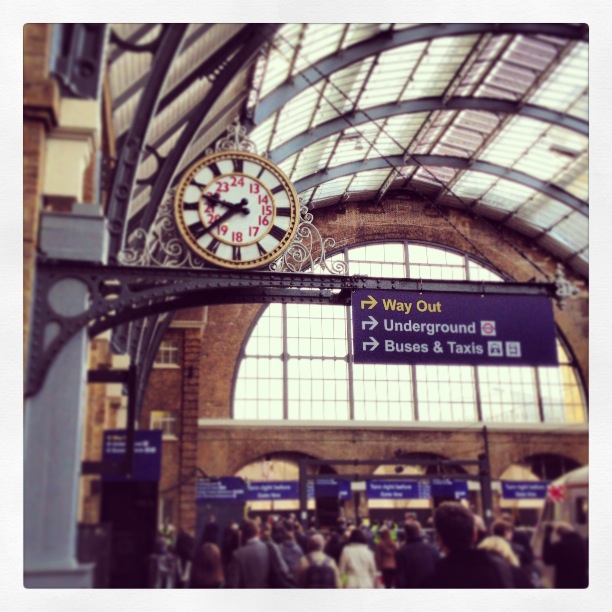
So last week, I ran with the velocity and tunnel vision of Forest Gump (run Forest, run)to catch the train home from sunny Newbury.
Only to find it was delayed.
Of course, I could have sulked, or melted like warm Nutella into an incandescant rage.
But the Year of Not Buying Stuff is about appreciating the present for what it is, being happy with what I have and not fussing about what I can't change,
Because, funilly enough, it's not changeable.
Also, usually, it doesn't matter that much and can present all sorts of good stuff - if you look at it right.
So instead, I got to appreciate 20 minutes sitting outside in the fresh air, on a nice sunny day watching odd southerners.
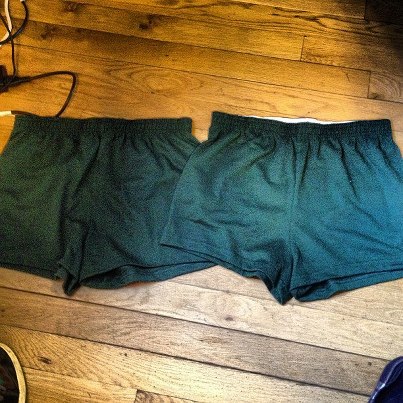
Decency forbids me showing you the state of my gym shorts. Falling apart, with holes in the most innapropriate places.
New shorts have been needed for more than a while.
The problem has been that I hate long shorts and the fashion police have decreed that sports shorts need to be long.
I haven't found any short enough that are also a jersey material. Fussy me.
This tendency to 80's style sports apparel is nothing to do with a specific style choice or the desire to look overly camp (already a colleague has decided to christen me Camp David).
It's simply that I when you train at any decent level, your legs sweat and soggy material against your thighs is not a turn on.I just don't see the point of long shorts when it comes to sport.
Sometimes, the conductors don’t even bother to check my
ticket, that’s how often I’m on an East Coast train.
So maybe I notice stuff a little more than the average rail
passenger, but then again maybe not. In any case, one thing I don’t seem to be
able to avoid is posters all over stations, and arterial routes into them,
telling me how great the complimentary food is inFirst Class.
As is the case for most of us, First Class is a
very rare experience indeed.
Now I know they’re trying to get folks to upgrade. I know good
prices are obtainable too, as long as you book early enough. Surely though they
must understand that the necessity of business travel tends to fall into the
‘book it the day before we travel’ camp.
So they’re not going to get many upgrades on that count.
Plus, they should also know the ‘class’ thing usually comes down to company policy
and, as such, won’t get shifted by mass advertising. Most business commuters
don’t make the decision.
Of course, I may have this wrong and they can see revenue
potential from leisure travel, but surely that should be targeted around
weekends?
In any case, even if the upgrade strategy is bang on, to
quote that James song, “If I hadn’t seen such riches I could live with being
poor”.
Most people are happy with what they’ve got until they
realise others have it better.
Being reminded how great First Class is reframes the
experience of standard class immediately – from what ‘one is used to so fair
enough’, to something inferior.
You notice the uncomfortable
seats a little more, suddenly resent the
crowding at peak time, while delays become big problems rather than
understandable hiccups.
(I personally am not fussed, the Year of Not Buying anything is teaching me to appreciate the simple joy of getting the train – the views, the chance to read the paper cover to cover and watch the oddness of people up front. I also enjoy berating people in the quiet coach for making a racket, but that's just the Larry David in me)
In short, they’re alienating most of their frequent
customers. Instead of feeling good about the brand, or at least not caring in
a benign manner, they’re made to feel East Coast doesn’t care and is prioritising
other people.
It’s the brand for ‘them’, not for ‘us’.
In a cultural climate where ‘the have nots’ are more than a
little resentful of the ‘haves’ being seen to pander to the imagined bankers,
CEO’s and others that have fucked things up for everyone else, doesn’t seem so smart.
If this wasn’t bad enough, East Coast are actually making promises
they can’t keep.
The majority of the journeys I go on come with the tannoy
announcement that, “ First Class breakfast/lunch/dinner is cancelled due to
circumstances beyond our control”.
Bad enough they’re reminding everyone in standard class
they’re merely cattle – apologising to
the imagined ‘better’s in comfy seats, acres of leg room and decent tea and
coffee – even worse, they’re telling EVERYONE over and over again how feckless they are.
It makes the commuter
think, if they can’t get dinner right for the people they’re bothered about,
how much are delays and cancellations due to crapness rather than unavoidable
circumstance?
Perception is reality. We all look for short cuts to help us make our minds up about things, constantly telling folks you can't get little things like food right begins to get neurons to burn an automatic 'East Coast are not reliable' path in the brain.
So if your client is asking you to make promises
about service or performance, however insignificant they may seem, make sure they can keep them and consider how it might affect the wider commercial context.
Because making promises that make the majority of their customers feel inferior isn't great.
Breaking them once is very bad.
Failing over and over again makes them look feckless and suggests
they’re crap at everything else.
Telling ALL YOUR ACTIVE CUSTOMERS about this, even
when it’s nothing to do with them, is plain dumb.
Because it’s the little things in the actual brand
experience that can make the biggest difference usually, not the glossy ads.
Because takes time to build trust and create a relationship, any sort of emotional context for that matter. But it only takes an instant to destroy it.
Because people remember how they felt about an experience far longer than the facts about that experience.
Because how you feel about anything is based on how it is framed. We all choose by comparison and reframing standard class from 'more convenient and comfortable than driving' to 'much worse than what people resent get" obliterates positive sentiment quicker than the Death Star annihilated Alderaan.
Ads and stuff deal in
illusion of course (especially our collective self- delusion) but they need to
stay firmly aware of reality too.
More years ago than I now care to share with you, I went on a creative briefing course chaired by Saint Russell Davies. It was really a two day,"How to go about strategy" bootcamp, although bootcamp is a little misleading, because it was fun and inspirational.
The biggest eye opener was when we discussed the classic, "Why are we advertising" part of the brief and, critical to any strategy, the setting of objectives.
I came away with a new way of looking at the the way communications would be evaluated.
The first epiphany was a purist one. The second was downright Machiavellian.
Number 1 – no one should never think about any sort of communications without considering the real business context.
All advertising, in it's many forms should be developed and evaluated in it's wider business context. Not 'building the brand' or addressing brand perceptions, not getting 'likes' 'retweets' or shifting sentiment scores.
It should live or die by how it addresses business issues.
Take Philadelphia Cheese. Whopping great market share, little need to spend any more money on much more communications when, surely, share in the category is as big as it can get (I don't know a thing about their numbers, this is pure deduction my Dear Watson). The only reason to part with cash, is to try and GROW the category.
Hence the ongoing strategy to introduce more 'foodie' variants and increase reasons to buy through by portraying it as a cooking ingredient for busy families with no time for fancy cooking (all of them!), not just a 'spread'.
You wouldn't get to this if you just looked at brand strength.
At best, you might ensure you maintained mental presence with customers, but just reminding people you exist is lazy and in, certainly FMCG companies, you'll try the patience of short term marketers who need to see quicker results.
In a purist sense, in my view, a rigorous approach to the business situation should inform everything you do, yes digital specialists and socia media gurus I mean you too.
Just because you're a digital agency, that doesn't mean you shouldn't be open to helping with stuff like distribution – perhaps you would create virtual pop- up stores for advocates to put on their Facebook pages.
If you're a bank and you want pissed off, but ultimately apathetic customers, to switch while they're still seeing red, perhaps looking for angry Tweets and responding personally and delightfully might be a place to start. That's what your social folks should be telling you, not, "Wouldn't it be cool to get people uploading pictures of themselves with funny angry faces".
But then we come to Epiphany 2.It's no good being a purist of your clients, or the people they report to are not.
Most of them are not.
Sorry about that.
The purist stuff is not that hard, most of us know the simple basics now:
Distinctiveness, not differentiation.
Penetration always wins over loyalty – so remove reasons to buy aim to connect with the widest audience possible
Fame and emotion, rather than rational
Build consistent memory structures, but refresh them
Spend above market share to grow it
Hard objectives always beat soft ones
But marketing folk and their agencies work very, very hard to make this much more complex and work to different agendas.
Passing the Link Test, reflecting the self image of the board, impressing shareholders, being seen to make a big change,winning creative awards, hitting sales volume figures, whatever the margin. Building loyalty and frequency with complex and needless CRM programmes. Building brand health scores.
Lord knows how many brand models and, of course, the legendary brand onion; as relevant to real people's relationship with brands as Neighbours is to Australian politics.
Lovemarks.
Media Arts.
The Transformation Way.
Big Ideas v Long Ideas.
This is the stuff that fills the agendas of folk that makes marketing stuff.
I've even been in a situation where our work grew consideration amongst non-buyers buy 10%, while econometrics showed we created a 3% sales uplift.
But it didn't grow brand awareness (it was already over 80% amongst target audience).
So we were fired.
Basically we forgot that the CEO only cared about campaigns that made him feel good about himself, not stuff that sold.
It's sad to say that the real, critical realities of creating business value quickly get lost in a quagmire of personal agenda, recieved wisdom and vanity.
I'm not being negative, I'm being realisistic. I'll even admit I've used research defensively to get work though I thought would help the agency shop window (the CEO was pretty 'persuasive').
So have you. Admit it.
So what to do?
A purist would say you should stick to your guns, since your job is to be objective.
A realist would say you should apply the same skills you use on creatives to the client business.
Just as you alter your brief and your briefing to creatives who want a tight proposition, or the ones who ignore propositions but love a clear task, perhaps the ones are comic book geeks and always respond to superhero metaphors.
You should find out what makes the senior marketer and the CEO of your client tick.
The marketing person is easy, ask them what stuff they like that other people have done, look at the patterns in what they've done elsewhere (I once worked with someone who would preface everything with "When I managed Quorn") what their vision is for the brand and what the single most important thing is they'll report to the board on.
The CEO is even easier, even if you never get to meet them. Read what they put in the annual report.
Then, naturally, you're going to do the right thing, but make sure you can link it back to whatever you've gleaned is the real agenda from your two stakeholders.
Like the Greeks in the Iliad, smuggle your true purpose in aTrojan Horse of ego massaging and percieved agenda.
In any case, don't fall into the trap of doing the right thing when it's not what anyone else wants.
History and poplular culture are, replete with tragic heroes, those who are doomed to suffer, even die, following their righteous cause to the end. In some cases driven to madness and self-destruction when they are taught the futility of their efforts.
(If you haven't seen The Dark Knight, Harvey Dent was a principled District Attorney who ultimately went nuts when his girlfriend died and he was disfigured in spite of, and also because, of his righteous mission).
However, it is also littered with those heroic but deeply flawed figures who ultimately did lots of right by doing a little wrong.They were a little more morally dubious, but they got the job done………..
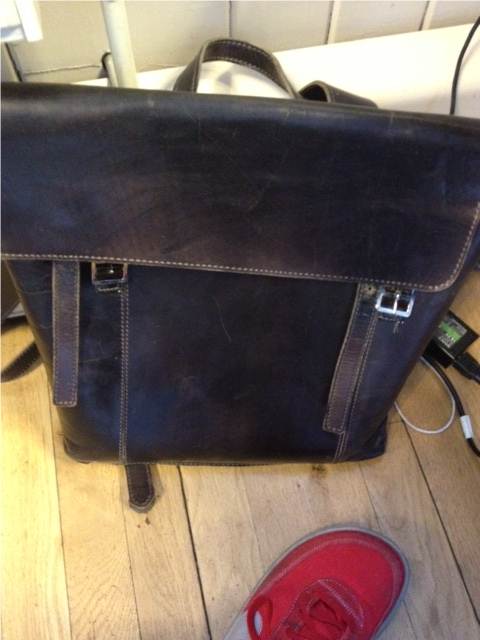
I love this leather rucksack/satchel/bag thing, it's just worn in enough to feel like mine.
But the other week, the buckles broke. In days of yore, that would be an excuse to get a new one, but in the new 'not buying stuff' regime, I took it to a traditonal cobblers and got new buckles fixed.
For just over a tenner.
Not only is nice to keep it now it's reached a great level of patina, it feels more mine than ever.
I was reading this post about working with suits, (for no other reason than the fact I needed a reminder myself), and wandered into the comments, where I re-read something about presentations.
"I would only expand them by saying
that in presentations a planner should be funny, witty and interesting
but a bit understating, not flamboyant. That's up to the creatives…"
This has been one of the best, common sensical pieces of advice I ever got.
It also helped me because, to be perfectly honest flamboyant I am not, I'm shy and a little absent minded, as, I suspect, is the case with most planning types.
Creatives have egos the size of planets (and that's no bad thing, if nearly all your work ended in the bin too I suspect you'd develop a few unique personality traits too) and, the good ones, present their work superbly, because they really care about it and understand how it works.
The very worst thing you can do is try muscle in on their glory.
Just as there's little point trying to be the laser focused, 'personality that fills the room' relationship builder. That's the main remit of the account people.
Planners are not cleverer than everyone else, but they are wired differently. The see things in a different way. What might seem obvious to you is not to others.
So the biggest challenge a planner tends to face is the way they get to thoughts that insinctively feel right thing that are interesting and fiz with with potential, much, much quicker.
Hunches you can't articulate, smears of stuff in your brain that might not make sense to you, they just feel right.
In fact much of the job is understanding how you got there, and bringing others on the journey. It can be frustrating when others 'don't get it' but if they don't, at best, you're not helping, you're just getting in the way while, at worst, you're coming accross as arrogant and superior.
And if you can't distill you're thinking down, it's not water-tight. Charm will only undo you in the end.
So aiming at slick flamboyancy isn't just political death, it also runs the risk of making you look too clever by half, making the folks you're trying to persuade miss the point and, if you can pull it off helping you get half-baked thinking through.
Which will unravel later, usually when there's more money, reputation and relationship at stake.
One should be aiming to tell an interesting, entertaining story with memorable hooks that hold it together of course.
But the trick, apart from looking like you've worked hard and you care, is to find a way to include your audience in the story (as in all communication, if you're going to use a mousetrap, leave some room for the mouse), be a little self effacing and even a touch shambolic.
Find the story, then tart it up. Never fall for the Michael Bay method of storytelling – namely special effects to cover up the fact you haven't really got one.
(sorry)
God help us, maybe in way I'm suggesting be a little more like him……
I knew someone with a stammer once. The person had tried all sorts of voice coaching with only moderate success. It was only when he tried counselling and dealt with the pain and indelible shock of seeing his father die, that the stammer all but disappeared.
Because stammering wasn't the problem, not having dealt with that un-imaginable pyschological scar was.
When I was a child, I had chest infections and bronchitis all the time. In fact, when it came to lungs and breathing, I seemed got everything apart from pneumonia. Anti-biotics dealt with every new illness, but it was only when I started swimming 5 days a week that I banished illness for good, because the problem wasn't infections, it was weak lungs and general mild asthma.
It's not just child illness and speech impediments. Many percieved problems are actually a symptom of something far more fundamental.
You can deal with the symptom of course, but like the mythical nine headed hydra, the heads will just grow back until you kill the actual beast.
You can pump up the flat tires on a bike before every journey, or you can actually change the inner tube.
You can continously look for dieting fads, or you can change your lifestyle for good. Or change your outlook and be happy with who you are.
Just as you can mask unhappiness with buying things, which just leads to buying more things, but at some piont, you need to address why you need validation from consumption and search for more sustainable source of happiness, rather than gratification.
Just as you can stimulate sales by cutting prices, but at some point you have to address why not enough people will pay full price.
This 'kill heads' or 'slay the beast' metaphor is useful when to applied directly to planning, and like everything else, planning is a lot more useful when it avoids chopping a few heads wthin in easy reach and valiantly gets on with ending the life of the fearsome serpent.
Solving business problems with creativity and brands, rather than solving advertising or brand problems as an end in itself.
This isn't self -serving opinion either. The IPA Databank has conclusively shown that campaigns that set out to solve 'hard' business problems (business or behavioural results) have a 50% success rate against campaigns that set 'soft targets' (brand awareness, advantage and all that rubbish) with an average rate of 11%.
Taking the easy option, apparently, isn't that easy after all.
Which means reaching non-buyers, which in turn means removing genuine reasons not to buy. Of course that means a brand needs to be distinctive, but that's more to get noticed at all with people who don't care that much, much less moving people through 'Familiarity to Bonding' and ad nauseum.
Intuively though, it makes complete sense, since most busines problems are not brand problems, they're business problems! Just trying to shift brand scores will not necessarilly shift sales, but trying to shift sales in manner that will maintain, or shift brand scores will.
This addressed the fact that less people were considering a Golf because it was being lumped with the Max Power brigade.
This was all built on the realisation that Skoda didn't need to persuade people to consider the brand, they needed to make them feel their peers wouldn't laugh at them.
Then, when enough people were brave enough to put Skoda on the long list, they needed to know more about the cars before they would test drive.
And you know what? The work I'm most proud of is actually for a bed retailer desperate for a sales uplift, where the problem wasn't conversion, it was footfall.
The research told them the blockage to people coming through their doors was brand awareness- no one knew where to go, or could be bothered to find out.
But their budget was tight and they didn't have the time to invest in a long term 'brand preference' campaign that takes months, even years to pay back.
But with a few additional depth interviews with people IN THE MARKET, we showed them that the gestation period between deciding you need a new bed and actually buying one was around ten months, and the biggest barrier blockage was the pain in the arse of getting rid of your old bed (back in the day, retailers wouldn't take away your old bed for claimed hygiene reasons all of them do it now).
So they were persuaded invest in their infrastucture, to take away beds as well as deliver them.
Then do cost effective , tactical outdoor, within the vicinity of the retail parks where the client's stores were.
With a clear, simple, message, 'We'll get rid of your old bed for free', to create the "Sod it,why not, since we're here" moment and trigger spontaneous action.
It was the biggest growth in footfall they'd experienced, the biggest growth in sales volume and, most significantly, the biggest leap in profit. Because the cost of doing the tactical ads AND setting up the new 'take-away' service was tiny next to budget a huge campaign to shift brand preference would have cost. And they were able to charge a higher price for the bed to offset the take-away cost.
Then they put it well bought television and continued to build proditable sales further, but, significantly, the unexpected message in a world of 'sale ads' and the DEMONSTRATION of leadership and 'we get what you need' achieved additional growth in brand awareness and, more significantly for how brands really work, 'salience' that was unprecedented for the category and, indeed, any low budget tactical campaign.
I guess someone would call his a Behavoural Econimics case study these days. I just see this and the other examples as addressing the fundamental blockage to business success.
Now, if you're lucky, many of the briefs will be about the fundamental problem, but the majority will be about symptoms.
They'll ask you to chop heads much more than killing the beast.
One of the real skills of planning folk isn't to justify the executions, to be an 'ad tweaker', it's finding the correct role for the communication in the first place -without telling to their face the brief was wrong.
Diplomacy and tact are not just required skills for account handling. Sorry.











 NORTHERN PLANNER